
Sitting for extended periods—whether at a desk, in the car, or on a flight—can take a toll on your lower back. Many people turn to back supports to alleviate discomfort and improve posture. Two popular options are the waffle bowknot lumbar pillow and inflatable back cushions. While both promise relief, they deliver very different experiences. Understanding their structure, materials, adjustability, and long-term comfort is essential when choosing what truly works for prolonged use.
Understanding the Design Differences
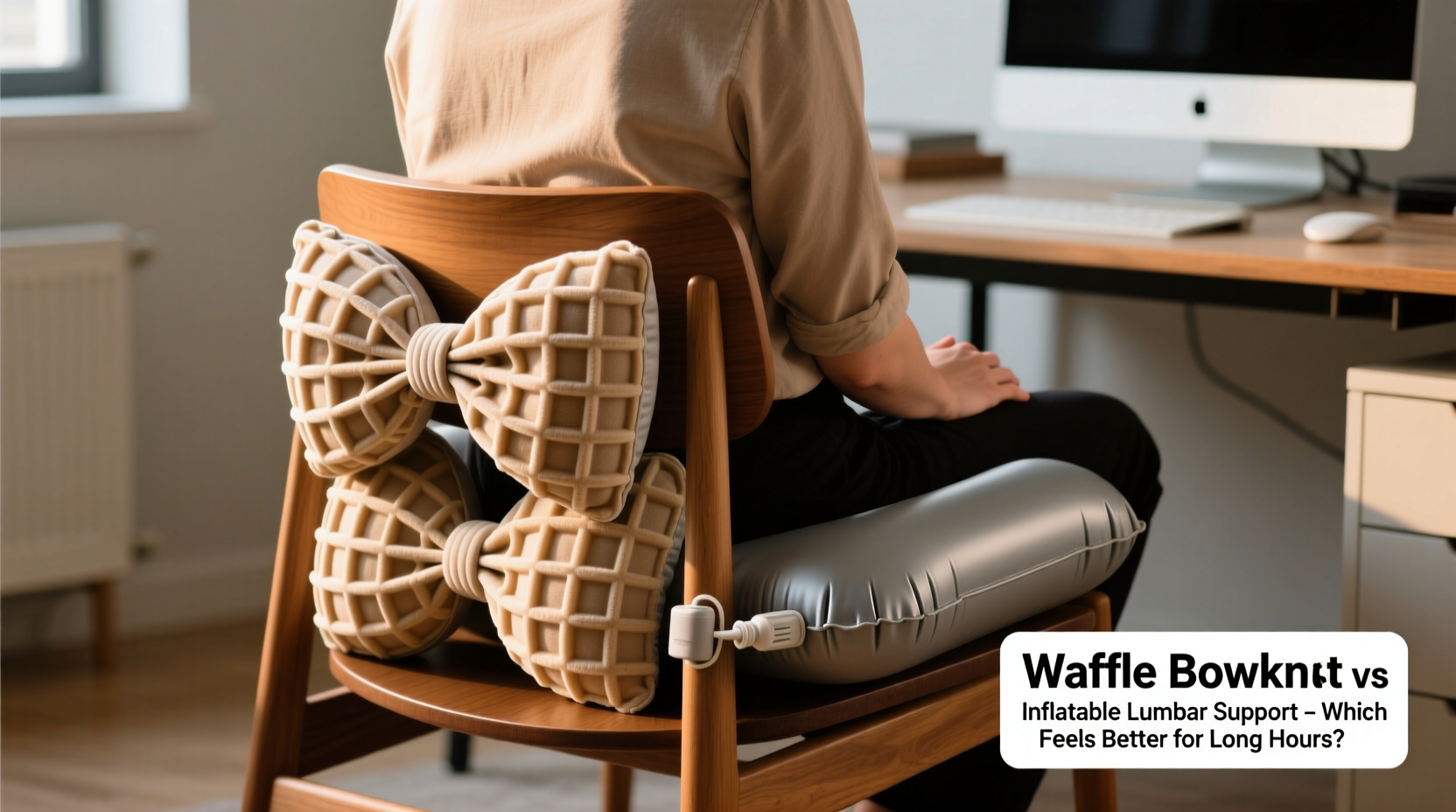
The fundamental distinction between a waffle bowknot lumbar pillow and an inflatable back support lies in their construction and intended function.
A waffle bowknot lumbar pillow typically features a dense foam core encased in a breathable, textured fabric—often with a “waffle” weave that enhances airflow. The bowknot refers to the adjustable straps or ties used to secure the pillow to a chair. These pillows are designed to offer consistent, firm support with a structured shape that mimics natural spinal curvature.
In contrast, an inflatable back support relies on air-filled chambers to provide customizable firmness. Users can pump more air into the cushion to increase support or release it for a softer feel. This adaptability makes them compact and portable, ideal for travel or temporary use.
While both aim to reduce lower back strain, their performance diverges significantly over time—especially during long sitting sessions exceeding two or more hours.
Comfort and Pressure Distribution Over Time
Long-term comfort isn't just about initial softness—it's about how well a support distributes pressure and prevents fatigue.
Waffle bowknot pillows excel in this area due to their high-density foam construction. The material conforms slightly to the body while retaining structural integrity, providing even pressure distribution across the lumbar region. The open-cell foam also dissipates heat, reducing the risk of sweating during extended use—a common complaint with memory foam products.
Inflatable supports, however, often create uneven pressure points. As air shifts within the chamber, localized firmness can develop, leading to discomfort after 60–90 minutes. Some users report a \"ballooning\" effect where the cushion expands upward into the mid-back, disrupting proper alignment. Additionally, sitting against a taut plastic surface can generate heat and friction, especially in warm environments.
Over multiple hours, many find that inflatable models require constant deflation adjustments to remain comfortable, breaking focus and reducing ergonomic consistency.
“Consistent lumbar contact is critical for sustained posture support. Foam-based supports tend to maintain alignment better than air-filled alternatives.” — Dr. Lena Torres, Physical Therapist & Ergonomics Consultant
Comparative Features: Waffle Bowknot vs Inflatable
| Feature | Waffle Bowknot Lumbar Pillow | Inflatable Back Support |
|---|---|---|
| Support Type | Firm, consistent foam | Adjustable air pressure |
| Heat Buildup | Low (breathable fabric) | High (plastic surface traps heat) |
| Durability | 3+ years with regular use | 1–2 years (risk of punctures/leaks) |
| Portability | Moderate (bulky but lightweight) | High (deflates to small size) |
| Adjustability | Fixed firmness, adjustable straps | Fully adjustable firmness |
| Best For | Office chairs, home seating, daily drivers | Travel, occasional use, short commutes |
Real-World Use Case: Office Worker vs Frequent Traveler
Consider two individuals with different needs:
Sarah, 34, software developer, spends 8–10 hours daily at her desk. She tried an inflatable lumbar cushion but found it uncomfortable by mid-afternoon. “It started firm, but after a few hours, the air shifted and pushed into my ribs,” she said. Switching to a waffle bowknot model gave her continuous support without needing adjustments. “I forget it’s there—which means it’s doing its job.”
James, 42, regional sales manager, travels 15 days a month. He values portability and uses an inflatable support in rental cars and airport lounges. “I can pack it in my carry-on and inflate it wherever I sit,” he explained. However, he admits it’s not ideal for full workdays: “If I’m stuck in a hotel chair for hours, I wish I had something more stable.”
This contrast highlights a key insight: the best choice depends on usage patterns. Daily, long-duration sitting favors structured foam. Occasional or mobile use benefits from inflatables’ flexibility.
Step-by-Step: How to Choose the Right Support for You
- Evaluate your sitting duration: If you sit more than 3 hours continuously, prioritize consistent support (foam).
- Assess your environment: Office chairs often need firm anchoring; look for bowknot straps or non-slip backs.
- Test adjustability needs: Do you prefer one firmness level or want to tweak support daily?
- Check material breathability: Waffle fabrics outperform vinyl or PVC in heat management.
- Try before you buy: If possible, test both types for at least 60 minutes in your typical seating setup.
- Consider long-term value: A $35 foam pillow lasting three years costs less per use than replacing a $25 inflatable annually.
Common Pitfalls to Avoid
- Using an oversized inflatable: Over-inflation can push the spine forward, increasing disc pressure.
- Placing the pillow too high: Lumbar support should align with the inward curve of your lower back, not your rib cage.
- Neglecting strap security: A slipping waffle pillow loses effectiveness; ensure ties are anchored tightly behind the chair.
- Ignoring seat depth: If your chair is deep, even a good pillow may sit too far back—use a rolled towel as a spacer if needed.
FAQ
Can I wash a waffle bowknot lumbar pillow?
Most models come with removable, machine-washable covers. Check the care label, but generally, gentle cycle and air drying are recommended. Never submerge the foam core.
Are inflatable supports safe for long-term use?
They’re safe but not optimal. Prolonged reliance may lead to inconsistent posture due to shifting air and lack of lateral support. Best used situationally, not as a primary solution for chronic back issues.
Do waffle pillows work in cars?
Yes, especially if they have secure tie-downs. Their firm support helps maintain posture during long drives, unlike inflatables that can shift or deflate unnoticed.
Final Verdict: Which Actually Feels Better?
For long hours, the **waffle bowknot lumbar pillow** consistently outperforms inflatable alternatives in comfort, stability, and thermal regulation. Its structured design provides uninterrupted support, allowing the spine to maintain a neutral position without user intervention. While inflatables win in portability and customization, their tendency to shift, overheat, and degrade faster makes them less suitable for sustained use.
Ergonomic experts and physical therapists overwhelmingly recommend foam-based supports for anyone dealing with daily sedentary work. As Dr. Torres notes, “The goal isn’t just comfort—it’s consistency. Your back shouldn’t have to ‘adjust’ to your cushion every hour.”
Conclusion
If you're serious about protecting your back during long sitting sessions, invest in a high-quality waffle bowknot lumbar pillow. It offers reliable, breathable, and durable support that adapts to your spine—not the other way around. Inflatable models have their place, particularly for travelers, but they fall short when endurance and posture matter most.




 浙公网安备
33010002000092号
浙公网安备
33010002000092号 浙B2-20120091-4
Comments
No comments yet. Why don't you start the discussion?