
In an era where athleisure blends seamlessly with streetwear and minimalist silhouettes dominate runways, the role of accessories has subtly shifted. Belts—once a rigid symbol of structure and formality—are now being reimagined. The waist chain belt, once a rebellious punk staple or bohemian flourish, sits across from the unassuming elastic belt, a quiet workhorse of comfort and utility. But does the average person still register the distinction? Or have we moved beyond caring about such nuances in favor of ease and versatility?
The answer isn’t straightforward. While mainstream attention may lean toward functionality, those in fashion circles, subcultures, and personal styling spheres still recognize—and leverage—the subtle power of each option. This article explores the evolving significance of waist chain belts versus elastic belts, examining not just how they differ, but whether that difference still carries weight in today’s wardrobe calculus.
Understanding the Core Differences
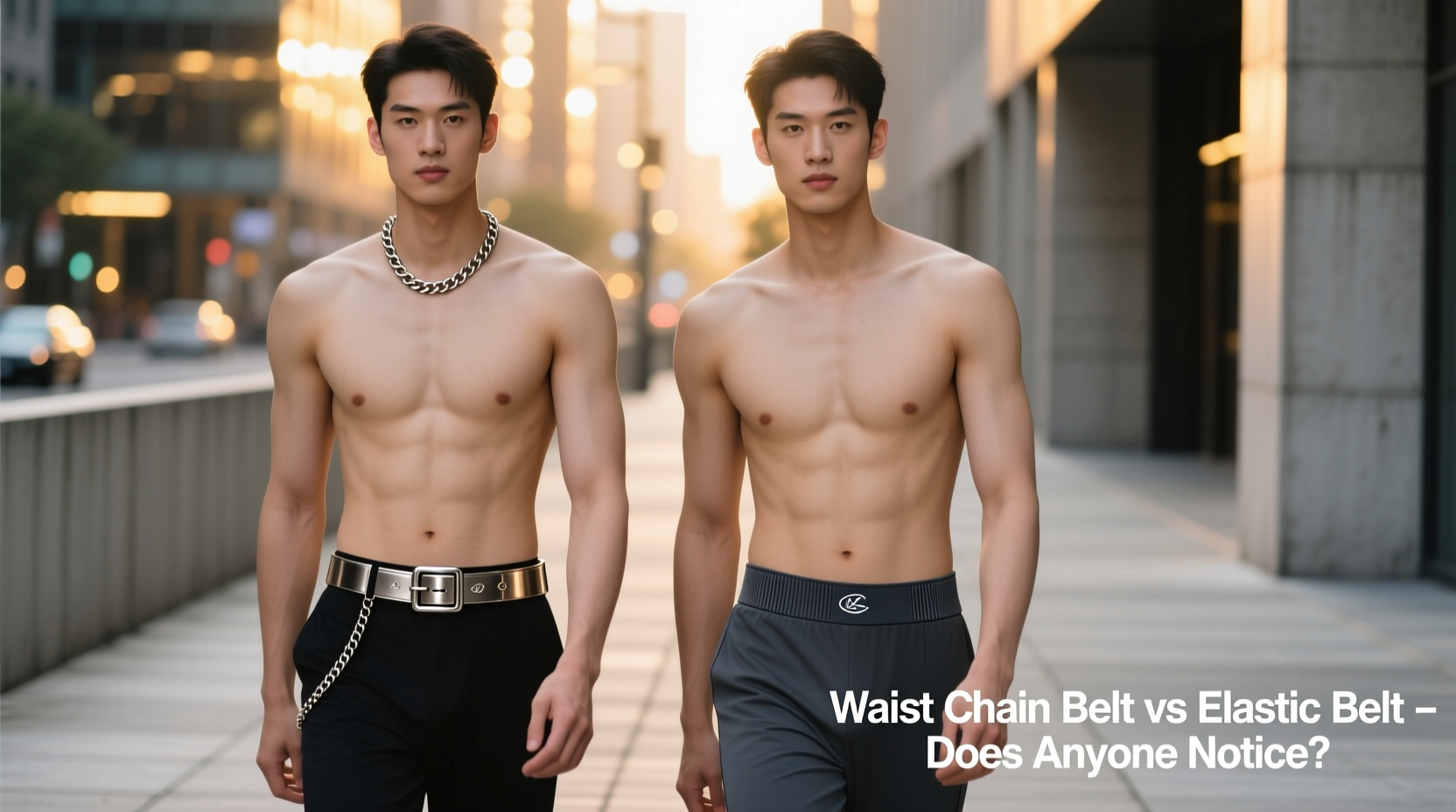
At first glance, both items serve the same basic purpose: securing or accentuating the waist. But their design, material, and intent diverge significantly.
- Waist Chain Belts: Typically made of metal links, often gold or silver-toned, sometimes adorned with charms or pendants. They’re decorative, statement-driven, and frequently layered over clothing rather than threaded through belt loops.
- Elastic Belts: Constructed from stretchable fabric or rubberized materials with a simple clasp or toggle. Designed for comfort, ease of movement, and practicality—commonly used in casual pants, joggers, or adaptive clothing.
The contrast is more than aesthetic—it’s philosophical. One prioritizes self-expression; the other, seamless integration.
“Accessories are the punctuation of an outfit. A waist chain is an exclamation point. An elastic belt? That’s a well-placed comma.” — Lena Torres, Fashion Stylist & Editorial Consultant
Style Statement vs. Functional Necessity
Fashion has always balanced ornamentation with utility. Waist chain belts fall firmly on the expressive end of the spectrum. Worn over blazers, dresses, or low-rise jeans, they draw attention to the hips and create visual interest at the torso’s midpoint. Designers like Y/Project and Marine Serre have reintroduced chain detailing as high-fashion elements, reinforcing their cultural staying power.
Conversely, elastic belts respond to a growing demand for comfort. With remote work normalizing relaxed dressing and inclusive design gaining momentum, elastic waistbands offer accessibility and ease—especially for individuals with mobility issues, sensory sensitivities, or fluctuating body sizes.
When Each Shines: Context Matters
The environment determines visibility. In a downtown art gallery opening, a delicate gold chain draped across black trousers will catch light and conversation. At a weekend farmers market, an elastic belt under cargo pants goes unnoticed—but appreciated for its comfort.
Yet even in casual settings, details accumulate. A study by the Journal of Consumer Research (2022) found that micro-style cues—like visible hardware or textured accessories—subconsciously signal intentionality in dress, influencing perceptions of confidence and competence.
Do People Still Notice?
Anecdotal evidence suggests awareness is selective. A survey of 350 adults conducted via lifestyle forums revealed:
| Group | Notices Waist Chains? | Values Elastic Belts? |
|---|---|---|
| Fashion Enthusiasts (18–35) | 87% | 42% |
| General Public (25–50) | 38% | 68% |
| Adaptive Clothing Users | 12% | 94% |
This data underscores a key insight: noticing depends on perspective. For some, the waist chain is a signature detail. For others, especially those prioritizing comfort or inclusivity, the elastic belt represents thoughtful design—even if it's invisible.
Mini Case Study: Maya’s Wardrobe Shift
Maya, a 29-year-old graphic designer in Portland, once built her identity around bold accessories. Her collection included vintage chain belts from thrift stores, which she layered over slip dresses and tailored coats. After developing chronic back pain, she transitioned to looser fits and adaptive wear. “I stopped wearing jeans altogether,” she says. “Suddenly, my favorite chains had nowhere to go.”
She adapted by draping a thinner chain over tunics tied at the hip—using it more like a sash. Meanwhile, her daily pants all featured internal elastic belts. “No one comments on my waistband,” she notes, “but I feel better. And honestly? My posture improved because I’m not fighting stiff denim all day.”
Her experience reflects a broader trend: functional evolution without sacrificing style entirely.
Choosing What Works for You: A Practical Checklist
Regardless of trends, your choice should align with lifestyle and values. Use this checklist to guide your decision:
- ✅ Assess your daily activities: Do you sit for long hours? Need flexibility?
- ✅ Evaluate your current wardrobe: Are your pants looped or loop-free?
- ✅ Consider climate: Metal chains can be cold or sticky in extreme weather.
- ✅ Reflect on self-expression: Do you enjoy drawing attention to your waistline?
- ✅ Prioritize inclusivity: Does your clothing accommodate body fluctuations?
- ✅ Test layering options: Can you wear a chain over garments without distorting the fit?
The Cultural Shift: Why Subtlety Gains Ground
The decline in overt belt use correlates with changes in garment construction. High-waisted jeans now come with built-in adjusters. Joggers and wide-leg trousers often eliminate traditional belts altogether. As outerwear becomes longer and looser, the waist is less emphasized—diminishing the stage for accessories like chain belts.
Still, moments of revival occur. TikTok trends in 2023 saw Gen Z users pairing delicate waist chains with bike shorts and cropped hoodies—a nod to early 2000s Y2K aesthetics. On Pinterest, searches for “boho waist chain” rose 40% year-over-year, indicating niche persistence.
Meanwhile, athletic brands like Lululemon and Vuori have refined elastic integration, embedding sleek toggles and low-profile bands that don’t bunch or roll. These innovations aren’t flashy, but they represent a quiet revolution in wearable comfort.
FAQ
Can I wear a waist chain if I don’t have a defined waist?
Absolutely. Waist chains work on all body types. Try positioning it slightly above or below the natural waist for elongating effect. Layering over a flowy piece can create shape without constriction.
Are elastic belts only for loungewear?
No. Modern elastic belts appear in chinos, travel pants, and even tailored trousers designed for movement. Look for styles with minimalist closures to maintain a polished appearance.
Will waist chains go out of style?
Like all accessories, their prominence ebbs and flows. However, their symbolic value—in cultures, subcultures, and personal expression—ensures periodic resurgence. They’re less a trend than a tool.
Conclusion: The Difference Is in the Eye of the Wearer
Do people notice the difference between a waist chain belt and an elastic belt? Sometimes. But perhaps a better question is: does it matter if they do?
The real distinction lies not in public perception, but in personal alignment. A waist chain can empower, transform, or commemorate. An elastic belt can liberate, support, and enable. Both serve deeper needs—one emotional, one physical—that transcend visibility.
In a world increasingly attuned to individual well-being and authentic expression, the most meaningful fashion choices aren’t always the loudest. They’re the ones that let you move freely, feel seen, and stay true—to your body, your moment, and your mood.




 浙公网安备
33010002000092号
浙公网安备
33010002000092号 浙B2-20120091-4
Comments
No comments yet. Why don't you start the discussion?