
The resurgence of waist chains in fashion has sparked a quiet but persistent debate: Are they just another fleeting trend, or do they offer something meaningful compared to the classic belt? While belts have long been the default for securing pants and adding structure to outfits, waist chains are carving out space as both jewelry and functional accessory. But beyond aesthetics, how do they stack up in terms of utility, comfort, and versatility?
This isn’t just about choosing between two accessories—it’s about understanding how modern fashion balances form and function. Whether you're dressing for a night out, navigating a workweek, or building a capsule wardrobe, knowing when to reach for a belt versus a delicate chain can impact both your look and your comfort.
Defining the Difference: What Exactly Is a Waist Chain vs a Belt?
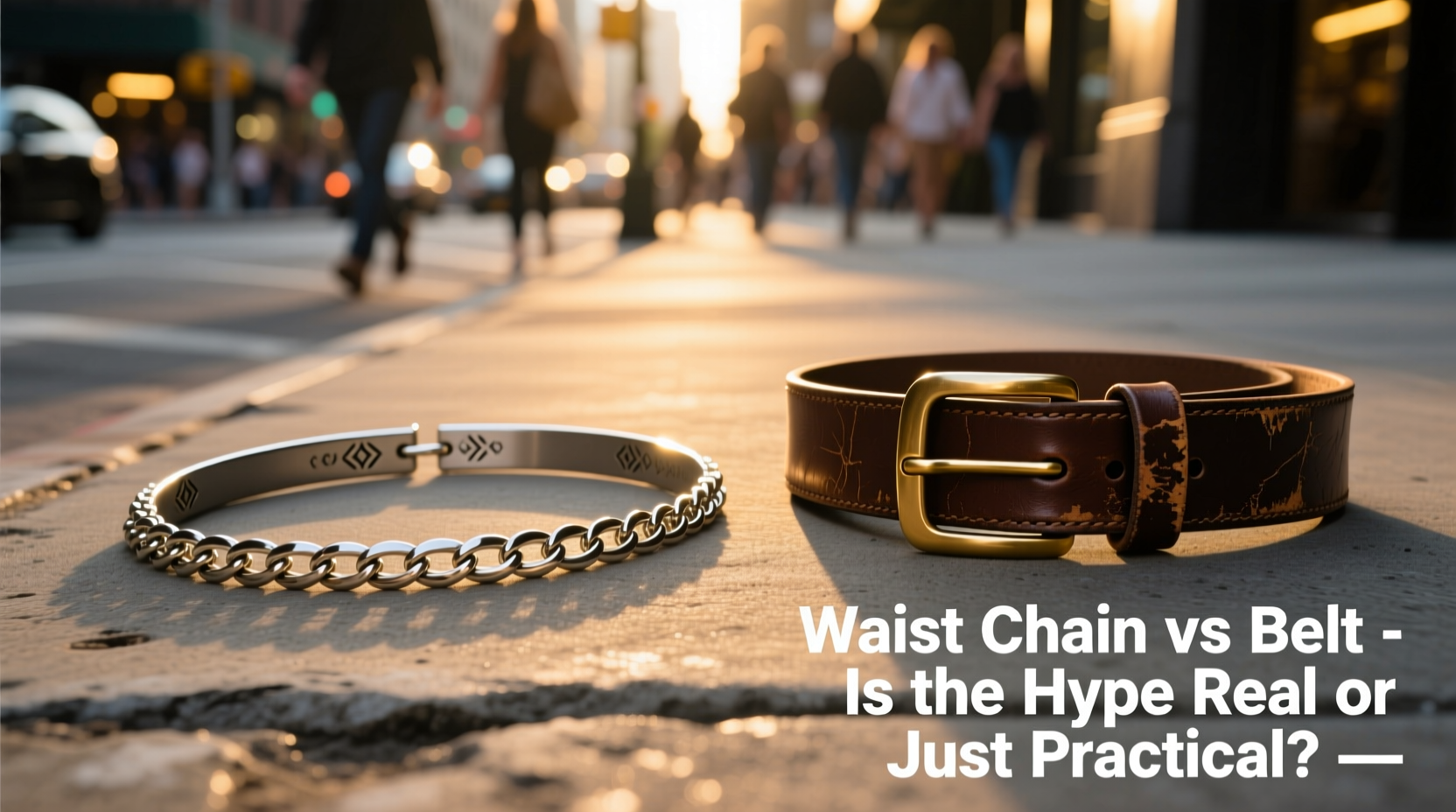
At first glance, both sit around the waist, but their purposes diverge significantly.
A belt is primarily functional. It secures trousers, cinches dresses, and adds definition to silhouettes. Made from leather, fabric, or synthetic materials, belts feature a buckle or clasp and are built for durability. They’re engineered to withstand daily wear, support garment fit, and endure tension without breaking.
In contrast, a waste chain—often called a belly chain or hip chain—is rooted in adornment. Historically worn across cultures in South Asia, the Middle East, and parts of Africa, these chains serve symbolic, ceremonial, or decorative roles. Modern versions are typically made of gold, silver, or plated metals with delicate links, charms, or pendants. They drape loosely over hips or rest just above the waistband, meant to catch light and draw attention rather than hold anything in place.
The key distinction lies in intent: belts anchor; waist chains accentuate.
Design & Construction Breakdown
| Feature | Belt | Waist Chain |
|---|---|---|
| Primary Purpose | Functional (securing clothing) | Decorative (styling accent) |
| Materials | Leather, nylon, canvas, rubber | Silver, gold, alloy, beaded threads |
| Closure Type | Buckle, snap, loop | Hook-and-eye, lobster clasp, magnetic |
| Durability | High (designed for repeated use) | Variable (delicate pieces require care) |
| Wear Frequency | Daily, seasonal rotation | Occasional, event-specific |
The Practicality Factor: When Functionality Matters Most
No matter how stylish a waist chain may be, it cannot replace a belt when structural support is needed. Consider jeans that run slightly loose, tailored trousers without suspenders, or high-waisted skirts prone to slipping. In these cases, a belt ensures your outfit stays where it should—without constant readjustment.
Belts also integrate seamlessly into professional wardrobes. A slim black leather belt paired with dress pants conveys polish and intentionality. It completes an ensemble without drawing undue attention. Try pairing a chunky gold chain with a blazer and slacks in a corporate setting, and you risk appearing underdressed or overly theatrical.
Comfort Over Time
While waist chains can feel luxurious at first, prolonged wear reveals limitations. Thin metal links may dig into skin during sitting or bending. Chains with clasps near the front can shift uncomfortably throughout the day. Belts, especially those with padded or flexible materials, distribute pressure evenly and stay put with minimal adjustment.
For all-day events like conferences, travel days, or outdoor festivals, belts consistently outperform waist chains in comfort and reliability.
Style & Symbolism: The Rise of the Waist Chain as Fashion Statement
Despite their lack of utility, waist chains have surged in popularity—particularly among Gen Z and fashion-forward millennials. Designers like Harris Reed, Simone Rocha, and Chopova Lowena have featured them on runways, blending historical references with contemporary flair. Social media influencers pair them with low-rise jeans, crop tops, and swimwear, turning the waist chain into a symbol of confidence and body positivity.
“The waist chain reclaims the body as a canvas,” says stylist Lena Tran in a recent interview with *Vogue*. “It’s not about holding things up—it’s about celebrating movement, sensuality, and personal expression.”
This cultural shift reframes adornment as empowerment. For many, wearing a waist chain isn’t impractical—it’s intentional. It signals a departure from rigid norms and embraces fashion as art.
Where Waist Chains Shine
- Evening wear: Paired with slip dresses or open-back gowns, a shimmering chain adds subtle drama.
- Beach-to-bar transitions: Layered over swimsuits with cover-ups, they elevate resort looks effortlessly.
- Festival fashion: Combined with flowy fabrics and bold makeup, waist chains enhance bohemian aesthetics.
- Photo shoots and special occasions: Designed to catch light and frame the torso, they enhance visual composition.
Real-World Example: Two Outfits, Two Choices
Case Study: Maya’s Friday Night Out vs. Monday Office Meeting
Maya, a marketing executive in her early 30s, plans two very different looks.
On Friday, she wears wide-leg linen pants with a cropped silk top. She secures the pants with a thin brown leather belt but layers a hammered brass waist chain slightly lower on her hips. The combination works because the belt provides stability while the chain adds texture and movement. As she dances, the chain catches the light—exactly the effect she wanted.
On Monday, she opts for tailored wool trousers and a structured blazer. Here, only the belt appears—minimalist, matching her shoes, and discreet. Adding a waist chain would clash with the clean lines and undermine professionalism.
The takeaway? Context determines success. Mixing both accessories thoughtfully expands styling potential—but confusing their roles leads to discomfort or missteps.
How to Choose: A Practical Checklist
Not sure which accessory suits your needs? Use this checklist before deciding:
- Is the garment already secure without additional support? → If no, choose a belt.
- Am I dressing for a formal or conservative environment? → If yes, lean toward belts.
- Do I want to highlight my waist or add visual interest? → If yes, consider a waist chain.
- Will I be sitting, moving, or traveling extensively? → If yes, prioritize comfort—likely a belt.
- Is this a photo moment, date night, or creative event? → If yes, a waist chain could enhance the vibe.
- Can I layer both? → Yes—try a slim belt underneath a longer chain for hybrid style.
Frequently Asked Questions
Can a waist chain replace a belt entirely?
No. Waist chains lack the tensile strength and closure mechanisms to reliably hold clothing in place. They complement but don’t substitute for belts, especially with heavier fabrics or loose fits.
Are waist chains suitable for all body types?
Absolutely. The key is proportion and placement. Curvier figures often suit wider or double-layered chains, while slimmer builds may prefer delicate single strands. Ultimately, confidence matters more than size.
How do I care for a waist chain?
Store separately in soft pouches to prevent tangling or scratching. Clean gently with a polishing cloth; avoid water exposure if plated. Remove before swimming, showering, or applying lotions.
Final Verdict: Hype or Worth It?
The hype around waist chains isn’t baseless—it reflects a broader evolution in fashion toward self-expression and fluid gender norms. However, calling them “practical” in the traditional sense misses the point. Their value isn’t in utility but in storytelling, identity, and aesthetic nuance.
Belts remain indispensable for function, longevity, and versatility. They are the backbone of organized dressing. Waist chains, meanwhile, are the flourish—the detail that transforms an outfit from polished to memorable.
The smart approach isn’t choosing one over the other, but understanding when each excels. Build a foundation with reliable belts in neutral tones, then invest in one or two quality waist chains that resonate with your personal style. Used intentionally, both can coexist in a thoughtful, dynamic wardrobe.




 浙公网安备
33010002000092号
浙公网安备
33010002000092号 浙B2-20120091-4
Comments
No comments yet. Why don't you start the discussion?