
When Disney released its animated hit Zootopia in 2016, audiences around the world were captivated by its vibrant cityscape, clever social commentary, and memorable characters like Judy Hopps and Nick Wilde. But viewers outside North America might have noticed something different: the film was titled Zootropolis instead. This isn’t a typo or piracy—it’s an intentional rebranding decision made by Disney for international markets. The dual naming has sparked curiosity, confusion, and even debate among fans. So why does one movie have two names? The answer lies in trademark law, linguistic nuance, and strategic global marketing.
The Origins of the Name Split
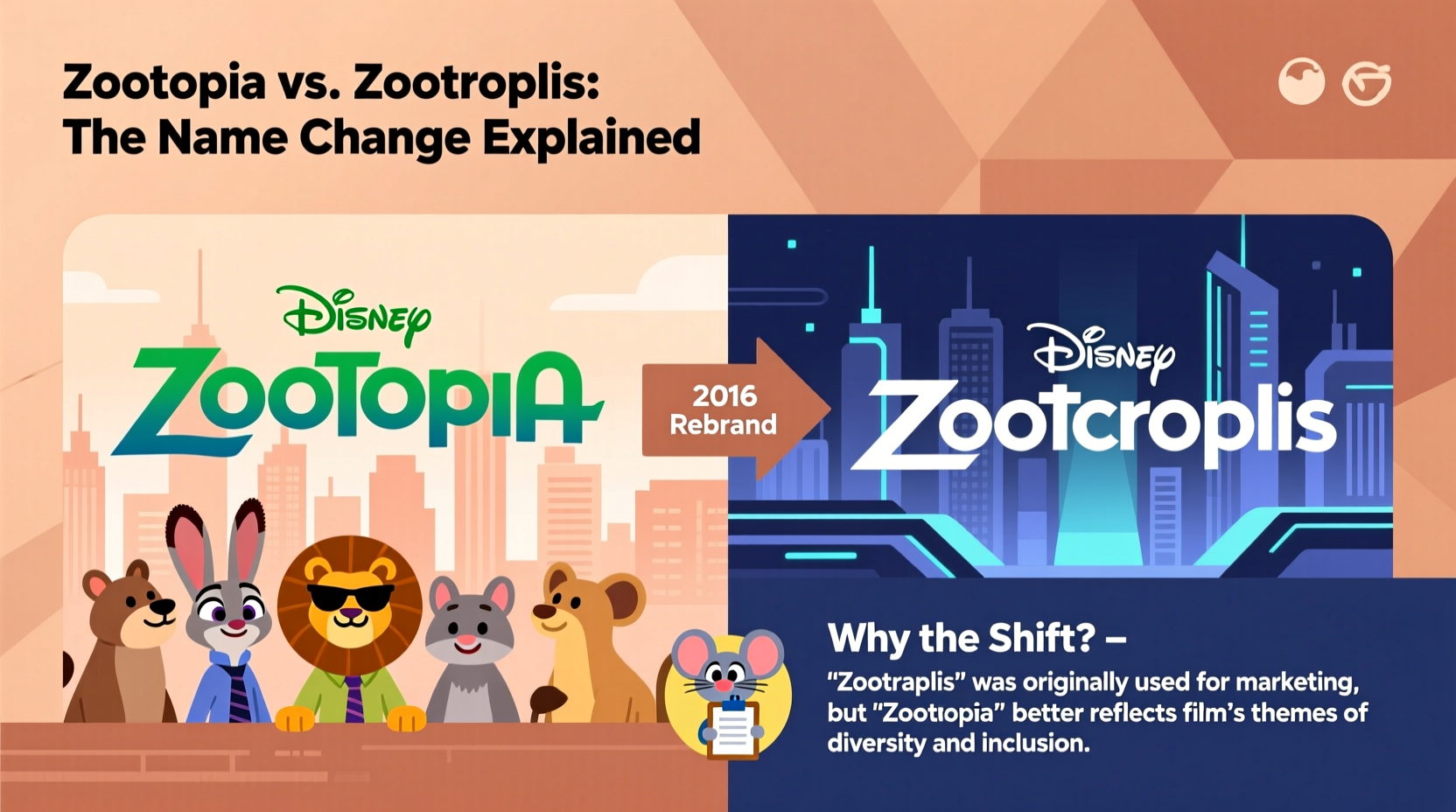
Zootopia and Zootropolis refer to the same fictional metropolis—a sprawling, modern animal city where predators and prey live together in harmony. The name itself is a portmanteau: “zoo” from zoological, and “topia” or “tropolis” suggesting utopia or metropolis. While both versions convey a futuristic animal society, Disney chose different titles for different regions based on legal and branding considerations.
In the United States, Canada, and a few other territories, the film was released as Zootopia. However, in much of Europe—including the UK, Germany, France, and Scandinavia—the title became Zootropolis. This wasn’t a random switch; it followed months of pre-release planning and legal vetting.
Trademark Conflicts and Legal Necessity
The primary reason for the name change boils down to trademark ownership. Before launching a global film, studios must ensure that the title isn’t already registered or in use in key markets. In this case, the name Zootopia was already trademarked in several European countries by unrelated entities.
One notable conflict arose with a British educational game company that had used Zootropolis in the early 2000s for an online children’s platform focused on wildlife learning. Though defunct, the trademark rights still existed, making it legally risky for Disney to use Zootopia in those regions without potential litigation.
“Trademark clearance is non-negotiable in global entertainment launches. A single conflict can delay release or trigger costly legal battles.” — Lena Peters, International Media Rights Attorney
Linguistic and Cultural Nuances
Beyond legal issues, Disney also considered how each name would resonate linguistically across cultures. While “Zootopia” combines “zoo” and “utopia,” the suffix “-topia” may not carry the same connotation in non-English-speaking countries. In contrast, “-tropolis” (from “metropolis”) is more universally recognized as denoting a large, bustling city.
In languages like German and Dutch, compound words are common, and “Zootropolis” fits more naturally into existing vocabulary patterns. For example, “Metropole” is a familiar term in French and German, making “Zootropolis” feel more intuitive than “Zootopia,” which could be misread as “Zoo-topia” and associated solely with vacation resorts or theme parks.
Marketing Strategy and Brand Consistency
Disney’s decision wasn’t purely defensive—it was also proactive branding. By choosing Zootropolis in Europe, the studio aligned the title with a more urban, dynamic image. The film’s core theme revolves around a complex, fast-paced city with systemic challenges, not just an idealistic paradise. “Tropolis” subtly emphasizes infrastructure, diversity, and movement—key elements of the narrative.
Moreover, Disney maintained consistent promotional materials, logos, and merchandise under each regional title. This ensured that despite the name difference, brand recognition remained strong. Trailers, posters, and toys all carried the local title, avoiding consumer confusion at the point of purchase.
| Region | Title Used | Primary Reason |
|---|---|---|
| United States, Canada | Zootopia | No trademark conflict; preferred creative choice |
| United Kingdom, Ireland | Zootropolis | Existing trademark held by third party |
| Germany, Austria, Switzerland | Zootropolis | Linguistic clarity and market testing |
| Australia, New Zealand | Zootopia | No legal barriers; alignment with U.S. branding |
| France, Spain, Italy | Zootropolis | Stronger phonetic flow in Romance languages |
Public Reaction and Fan Confusion
Despite Disney’s careful planning, the dual naming caused confusion. Fans discussing the film online often assumed they were referring to different movies. Social media threads, merchandise listings, and streaming platforms sometimes used inconsistent titles, leading to misinformation.
A mini case study emerged in 2017 when a UK-based parent purchased a DVD labeled Zootropolis, only to find their child couldn’t find related content on U.S.-based platforms using the same search terms. After contacting customer support, they learned it was the same film—just regionally renamed. This prompted Disney to improve metadata tagging across digital stores, ensuring cross-region searchability.
Over time, fan communities adapted. Online forums now commonly list both titles, and Wikipedia maintains a disambiguation note. Streaming services like Disney+ display the appropriate title based on the user’s geographic location, minimizing confusion.
Expert Insight on Global Naming Challenges
“Global brands face constant tension between creative vision and legal reality. Sometimes the best name isn’t the available one. Adaptation isn’t failure—it’s professionalism.” — Dr. Marcus Lin, Cross-Cultural Branding Professor at Copenhagen Business School
How Common Is This Practice?
Name changes for international releases are more common than many realize. Film studios, tech companies, and consumer brands routinely adjust names to fit legal, linguistic, or cultural contexts.
- Pokémon: Originally “Pocket Monsters” in Japan, shortened globally for brevity.
- Harry Potter and the Philosopher’s Stone: Changed to “Sorcerer’s Stone” in the U.S. to appeal to younger readers.
- Subway’s “Footlong”: Rebranded in Australia due to slang implications.
- BMW’s “X5 ActiveHybrid”: Renamed in certain markets to avoid unintended meanings.
These examples show that localization isn’t just about translation—it’s about perception, legality, and market readiness.
Step-by-Step: How Studios Decide on Regional Titles
Behind every name change is a structured process. Here’s how major studios like Disney evaluate title options:
- Initial Creative Naming: Brainstorm titles that reflect the film’s theme and tone.
- Trademark Screening: Conduct global database searches to identify conflicts.
- Linguistic Testing: Assess how the name sounds and is interpreted in key languages.
- Consumer Focus Groups: Test audience reactions in target regions.
- Final Localization Decision: Choose the optimal version per territory.
- Brand Rollout Coordination: Align marketing, packaging, and digital assets accordingly.
FAQ
Is Zootopia and Zootropolis the same movie?
Yes. Zootopia and Zootropolis are the same film. The different titles were used for legal and marketing reasons in various regions.
Which name did Disney prefer?
Internally, Disney developed the film as Zootopia, which remains the original and preferred title. However, Zootropolis was adopted where necessary for compliance and clarity.
Does the name affect the content of the movie?
No. The storyline, characters, voice acting, and animation are identical regardless of the title. Only promotional materials and packaging differ regionally.
Checklist: What to Consider When Naming a Global Product
- ✅ Conduct comprehensive trademark searches in all target markets
- ✅ Evaluate phonetic pronunciation across languages
- ✅ Avoid unintended slang or offensive connotations
- ✅ Test audience reception with focus groups
- ✅ Ensure domain and social media handle availability
- ✅ Plan for consistent branding across regions
- ✅ Prepare localized metadata for digital platforms
Conclusion
The dual naming of Zootopia and Zootropolis is a textbook example of how global entertainment navigates the intersection of creativity, law, and culture. What might seem like a minor detail—a single syllable change—is actually the result of meticulous research and strategic decision-making. It reflects the complexity of bringing a unified story to a fragmented world of regulations and languages.
Understanding these nuances doesn’t just satisfy curiosity—it offers valuable insight for creators, marketers, and entrepreneurs aiming to go global. Whether you're launching a film, app, or fashion line, the lesson is clear: the right name isn’t always the most obvious one. It’s the one that works everywhere it needs to.




 浙公网安备
33010002000092号
浙公网安备
33010002000092号 浙B2-20120091-4
Comments
No comments yet. Why don't you start the discussion?