
As holiday seasons approach, homes come alive with glowing trees, festive scents, and soft illumination that wraps spaces in warmth and nostalgia. Among the most impactful choices in holiday décor is something many overlook: the color temperature of string lights. While both warm white and cool white options are widely available, their effects on mood, atmosphere, and even sleep patterns can be surprisingly profound. Understanding the science and psychology behind light color temperature allows you to make intentional design decisions that enhance not only aesthetics but emotional well-being.
The Science Behind Light Color Temperature
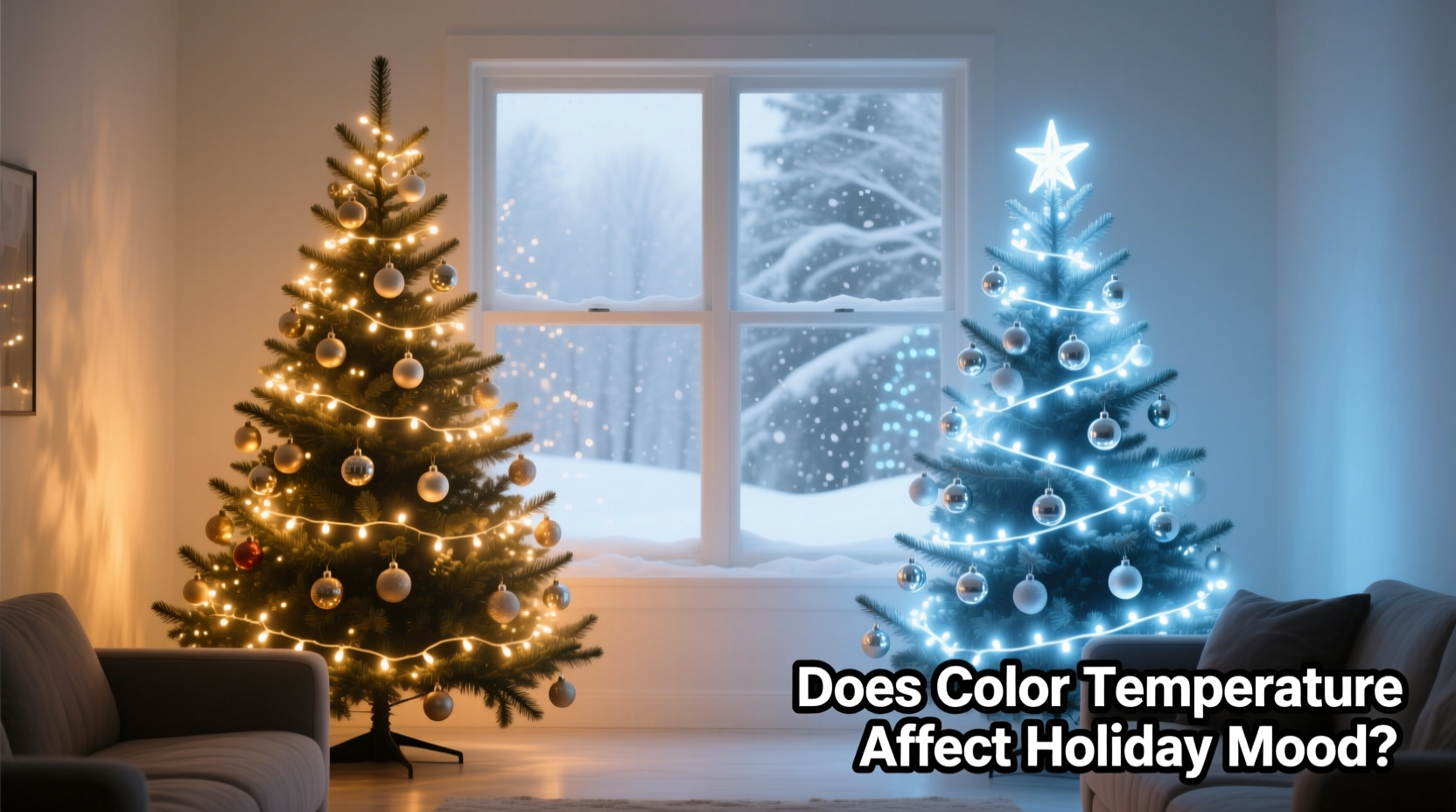
Color temperature is measured in Kelvin (K), a unit that describes the hue of visible light emitted by a source. Lower Kelvin values indicate warmer tones—those leaning toward red, orange, and yellow—while higher values produce cooler, bluer light.
In practical terms:
- Warm white typically ranges from 2700K to 3000K, resembling the glow of candlelight or traditional incandescent bulbs.
- Cool white spans from 4000K to 5000K, mimicking midday sunlight and often used in offices or task lighting.
- Natural daylight sits around 5500K–6500K, which feels bright and alerting but may feel too harsh indoors during evening hours.
The human circadian rhythm—the internal clock regulating sleep-wake cycles—is highly sensitive to these variations. Exposure to cooler, blue-enriched light suppresses melatonin, the hormone responsible for sleep onset, while warmer light has minimal impact, making it more conducive to relaxation.
“Light isn’t just about visibility—it’s a biological signal. The wrong temperature at the wrong time can disrupt mood, focus, and rest.” — Dr. Lena Patel, Circadian Health Researcher, University of Michigan
How Warm White Lights Shape Holiday Mood
Warm white string lights evoke intimacy and comfort. Their golden glow mirrors fireplaces, candles, and sunset skies—visual cues deeply tied to safety, gathering, and tradition. When wrapped around an indoor tree, this lighting creates a cocoon-like environment, ideal for quiet evenings, family gatherings, and nostalgic reflection.
Psychologically, warm lighting activates the parasympathetic nervous system, promoting calmness and reducing stress. This makes warm white particularly effective in living rooms, bedrooms, or any space meant for unwinding during the busy holiday season.
Additionally, warm white complements traditional holiday palettes—deep reds, evergreen greens, golds, and browns—without washing out textures or creating glare. It enhances the tactile richness of ornaments and tinsel, giving them depth rather than sharp reflection.
The Role of Cool White in Modern Holiday Design
Cool white string lights offer a crisp, clean aesthetic. With their slight blue undertone, they create a sense of brightness and clarity, often associated with modernity, minimalism, and winter landscapes. For those aiming for a sleek, contemporary look—such as a monochrome silver-and-white theme or a frosted forest motif—cool white provides visual punch and contrast.
However, timing matters. Because cool white light stimulates alertness, it can be energizing in daytime settings or short-term displays. But prolonged exposure in the evening may interfere with relaxation and sleep quality, especially in households with children or individuals sensitive to light changes.
That said, cool white shines in specific contexts:
- Entryways or foyers where first impressions matter
- Kitchens or dining areas during holiday parties, where activity levels are high
- Outdoor trees visible through windows, where brightness improves visibility
One designer in Denver reported using cool white exclusively for a rooftop display intended to be viewed from across the neighborhood. “We wanted it to stand out against the night sky,” she explained. “Warm white would’ve blended into the background. Cool white gave us that signature sparkle people associate with cityscapes during Christmas.”
Comparing Warm White and Cool White: A Practical Guide
| Feature | Warm White (2700K–3000K) | Cool White (4000K–5000K) |
|---|---|---|
| Mood Effect | Calming, cozy, nostalgic | Awake, alert, energetic |
| Best Room Placement | Living room, bedroom, den | Kitchen, entryway, office |
| Aesthetic Style | Traditional, rustic, vintage | Modern, minimalist, icy |
| Impact on Sleep | Minimal disruption; supports melatonin | Potential delay in sleep onset |
| Ornament Compatibility | Rich colors, matte finishes, wood accents | Metallics, glass, mirrored decor |
| Ideal Usage Time | Evening through bedtime | Daytime, early evening, short durations |
Real-Life Example: Two Homes, Two Choices
Consider two neighboring households preparing for the same holiday dinner.
In the first home, Sarah opts for warm white lights on her 7-foot fir tree. She layers them with handmade ornaments and dim ambient floor lamps. Guests arrive to soft music and the scent of cinnamon. Children curl up under blankets nearby, watching holiday films. One guest comments, “It feels like stepping into a storybook.”
Across the street, James chooses cool white lights for his sleek, artificial tree in a silver-and-blue theme. His living room is brighter, more vibrant. Music is upbeat, drinks are flowing, and guests move between kitchen and lounge with energy. Later, however, James’ young niece struggles to fall asleep after staying late. Her mother notes, “She was still buzzing at 9:30—usually she’s out by 8.”
Both homes succeed in creating memorable experiences—but with different emotional outcomes. Sarah’s space nurtures tranquility; James’ encourages celebration. Neither is wrong—but awareness of light’s role helps align design with intention.
Step-by-Step: Choosing the Right Light for Your Indoor Tree
Follow this sequence to make an informed decision based on your household’s needs and habits:
- Assess the room’s primary function. Is it for relaxation (choose warm) or social activity (cool may work)?
- Consider who uses the space most. Young children, elderly relatives, or those with anxiety may benefit more from warm lighting.
- Evaluate existing décor style. Match light tone to your palette—warm for earthy tones, cool for metallics and glass.
- Test before committing. Buy one strand of each type and drape them on the tree at dusk. Observe how each affects the room’s feel.
- Plan usage times. If the tree will be lit past 8 PM regularly, prioritize warm white to support natural wind-down rhythms.
- Layer lighting sources. Combine string lights with dimmable overheads or accent lamps to fine-tune ambiance.
Expert Insight: Lighting and Emotional Resonance
Dr. Alan Zhou, an environmental psychologist specializing in interior design, emphasizes that lighting shapes emotional memory. “Holidays are loaded with sensory triggers,” he says. “The way a room looks under certain light becomes part of how people remember the experience. A warm-lit tree might later be recalled as ‘cozy’ or ‘safe,’ while a cool-lit one might register as ‘exciting’ or ‘busy.’ These associations linger long after the decorations come down.”
“We don’t just see light—we feel it. And during emotionally charged times like the holidays, that feeling becomes part of the tradition.” — Dr. Alan Zhou, Environmental Psychologist
FAQ: Common Questions About Holiday String Light Temperatures
Can I mix warm and cool white lights on the same tree?
Technically yes, but visually it can create inconsistency unless carefully balanced. Some designers use warm white as the base and add a few cool white strands for “snowflake” effect highlights. However, for cohesive ambiance, sticking to one temperature is recommended.
Do LED lights come in adjustable color temperatures?
Yes—many smart LED string lights now offer tunable white settings via app or remote control. Brands like Philips Hue, Govee, and LIFX offer holiday-ready options that let you shift from 2200K (extra warm) to 6500K (daylight) seamlessly.
Are warm white lights less bright than cool white?
Not necessarily. Brightness is measured in lumens, not Kelvin. A warm white LED can be just as bright as a cool one. However, due to its softer tone, it may appear less intense to the eye, which is often preferable in residential settings.
Action Checklist: Optimizing Your Holiday Lighting
Before hanging your next strand, run through this checklist:
- ☐ Determine the main purpose of the room with the tree (relaxation, entertaining, display)
- ☐ Choose warm white for evening-heavy use or family-centered spaces
- ☐ Reserve cool white for daytime visibility, modern themes, or temporary setups
- ☐ Test a sample strand at the same time you plan to view the tree nightly
- ☐ Consider smart bulbs for seasonal flexibility
- ☐ Avoid placing cool white lights in bedrooms or spaces used before bedtime
- ☐ Layer with other soft lighting to avoid over-reliance on strings alone
Conclusion: Let Light Reflect Your Intent
The choice between warm white and cool white string lights goes beyond preference—it reflects what kind of holiday experience you want to create. Whether you’re drawn to the hushed serenity of candle-like glows or the crisp vibrancy of a winter wonderland, your lighting sets the emotional tone of the season.
This year, let intention guide your décor. Choose warmth not just in color, but in effect—crafting moments of peace, connection, and presence. Or embrace cool tones deliberately, knowing they bring energy and clarity to celebrations. Either way, understanding the subtle power of light empowers you to shape memories, support well-being, and celebrate in alignment with your values.




 浙公网安备
33010002000092号
浙公网安备
33010002000092号 浙B2-20120091-4
Comments
No comments yet. Why don't you start the discussion?