
A washing machine that won’t drain is one of the most frustrating household appliance problems. Water pooling in the drum halts your laundry routine, creates unpleasant odors, and can even lead to mold or water damage if left unresolved. The good news is that many causes are simple to identify and fix—often without calling a technician. This guide walks you through diagnosing the root issue, applying practical solutions, and preventing future drainage failures.
Common Causes of Poor Drainage
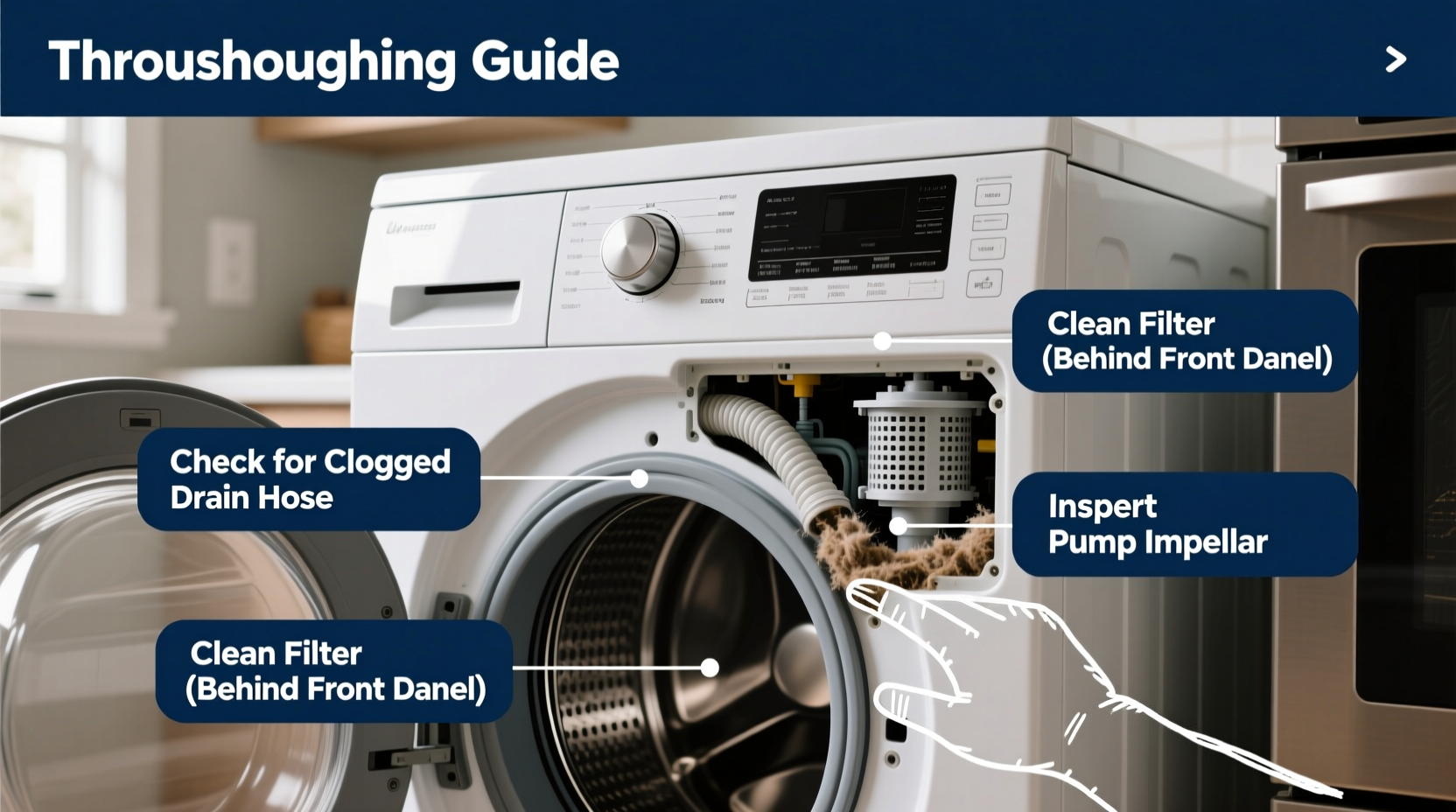
Before attempting repairs, it’s essential to understand what might be blocking your machine’s ability to drain. Most issues stem from mechanical obstructions, electrical faults, or user error. The following are the most frequent culprits:
- Clogged drain pump or hose: Small items like socks, coins, or lint can block the pump or hose, preventing water from exiting.
- Kinked or obstructed drain hose: If the hose is bent, crushed, or installed too high, gravity can’t assist proper drainage.
- Faulty drain pump: Even if clear of debris, the pump motor may fail due to wear or electrical issues.
- Blocked coin trap (filter): Front-load models often have a filter that collects debris; when full, it restricts flow.
- Drain hose installation errors: Incorrect height or improper connection to the standpipe can cause siphoning problems.
- Lid switch malfunction: On older top-loaders, a faulty lid switch prevents the spin cycle, which includes draining.
- Control board failure: Rare but possible—electronics may fail to signal the pump to activate.
Step-by-Step Troubleshooting Guide
Follow this logical sequence to isolate and resolve the issue efficiently. Start with the simplest checks and progress to more involved repairs.
- Check for error codes: Modern machines display fault indicators (e.g., “E1,” “ND”). Consult your manual to interpret these.
- Pause and restart the cycle: Sometimes a software glitch interrupts drainage. Restart the machine after a 5-minute power-off period.
- Inspect the drain hose: Locate the hose at the back of the machine. Ensure it’s not kinked, twisted, or elevated above 96 inches (as per most manufacturer specs).
- Clear the filter/coin trap: For front-load washers, open the access panel near the bottom right. Place a towel underneath—water will spill out. Remove the filter, clean out debris, and reinstall.
- Test the drain pump manually: Disconnect power, remove the drain hose from the pump, and check for obstructions using a flashlight and tweezers.
- Listen for pump operation: Run a drain-only cycle. If you hear no humming sound, the pump may be dead or not receiving power.
- Examine the lid switch (top loaders): Press the switch manually while running a spin cycle. If the machine starts draining, the switch needs replacement.
When to Suspect the Drain Pump
If all hoses and filters are clear but the machine still won’t drain, the pump itself may be faulty. Signs include:
- No noise during the drain phase.
- Burning smell near the base of the machine.
- Visible cracks or leaks on the pump housing.
Replacing a drain pump typically takes 30–60 minutes and requires basic tools. Most units are held by clips or screws and connected with two hoses and an electrical plug.
Do’s and Don’ts: Maintenance Best Practices
| Do | Don't |
|---|---|
| Clean the filter every 1–2 months. | Overload the machine, which strains the pump. |
| Use high-efficiency (HE) detergent in HE machines. | Pour liquid fabric softener directly into the drum—it can gum up the pump. |
| Inspect hoses annually for cracks or blockages. | Ignore small puddles under the machine—they signal early leaks. |
| Secure the drain hose with a clip to prevent slippage. | Connect the drain hose without an air gap—this risks backflow contamination. |
Real-World Example: Sarah’s Blocked Filter Fix
Sarah noticed her front-loading washer was leaving clothes soaking wet. The drum filled and agitated normally, but never entered the final spin cycle. After reading the manual, she located the filter compartment. Upon opening it, she found a tangled mess of hair, a button, and a lost sock fragment clogging the chamber. She cleaned the filter, reassembled the unit, and ran a quick test cycle. The machine drained perfectly. What could have led to a costly service call took less than 15 minutes and zero parts.
“Over 60% of ‘failed’ washing machine pumps are actually just blocked. Cleaning the filter resolves the issue in most households.” — James Reed, Appliance Repair Technician with 18 years of field experience
Essential Checklist for Immediate Action
Use this checklist the next time your washing machine fails to drain:
- ✅ Unplug the machine for safety.
- ✅ Check for standing water and remove manually if needed (use a bucket or wet vac).
- ✅ Inspect the drain hose for kinks or clogs.
- ✅ Clean the filter/coin trap thoroughly.
- ✅ Listen for the drain pump during a cycle.
- ✅ Verify the machine is level—tilt can affect pump performance.
- ✅ Confirm the cycle settings (e.g., “Rinse & Spin” mode may skip full drainage).
Frequently Asked Questions
Can I use a plunger to unclog my washing machine?
No—plungers are designed for toilets and sinks. Using one on a washing machine can damage internal seals or dislodge hoses. Instead, disconnect and inspect the drain hose or pump directly.
Why does my machine drain slowly instead of completely?
Partial drainage usually indicates a partial blockage in the hose, filter, or pump. It may also result from a weak pump motor or incorrect hose elevation. Check each component systematically.
How much does it cost to replace a drain pump?
Replacement pumps range from $30 to $120 depending on brand and model. Labor costs for professional repair average $100–$180. Doing it yourself saves significantly, especially if the part is accessible.
Preventing Future Drainage Issues
Proactive maintenance extends your machine’s lifespan and avoids inconvenient breakdowns. Adopt these habits:
- Pre-wash checks: Empty pockets and secure zippers to reduce debris.
- Monthly cleaning: Run an empty hot water cycle with a washing machine cleaner or vinegar-baking soda mix.
- Hose inspection: Every six months, examine hoses for bulges, brittleness, or loose fittings.
- Filter schedule: Mark your calendar to clean the filter regularly—especially if you wash pet bedding or towels frequently.
Conclusion: Take Control of Your Machine’s Health
A washing machine that won’t drain doesn’t automatically mean a major repair. In most cases, the solution lies in simple maintenance or clearing a physical obstruction. By understanding how your machine works and responding promptly to warning signs, you can restore function quickly and avoid unnecessary expenses. Don’t wait for a minor issue to become a flood. Apply these steps today, stay consistent with care routines, and keep your laundry running smoothly.




 浙公网安备
33010002000092号
浙公网安备
33010002000092号 浙B2-20120091-4
Comments
No comments yet. Why don't you start the discussion?