
For decades, dental professionals have emphasized the importance of daily flossing to remove plaque from between teeth—areas a toothbrush can't reach. Yet despite this advice, many people still skip flossing due to discomfort, dexterity issues, or simply finding it tedious. In recent years, water flossers have emerged as a popular alternative, promising a more comfortable and efficient way to clean interdental spaces. But do they truly match—or surpass—the benefits of traditional string floss? And perhaps most importantly: are dentists actually recommending patients switch?
The answer isn’t a simple yes or no. It depends on individual needs, oral health conditions, and consistency of use. To understand what dentists really think and which option might be best for you, it’s essential to examine how each method works, their pros and cons, clinical evidence, and expert recommendations.
How String Floss Works—and Why It’s Been the Gold Standard
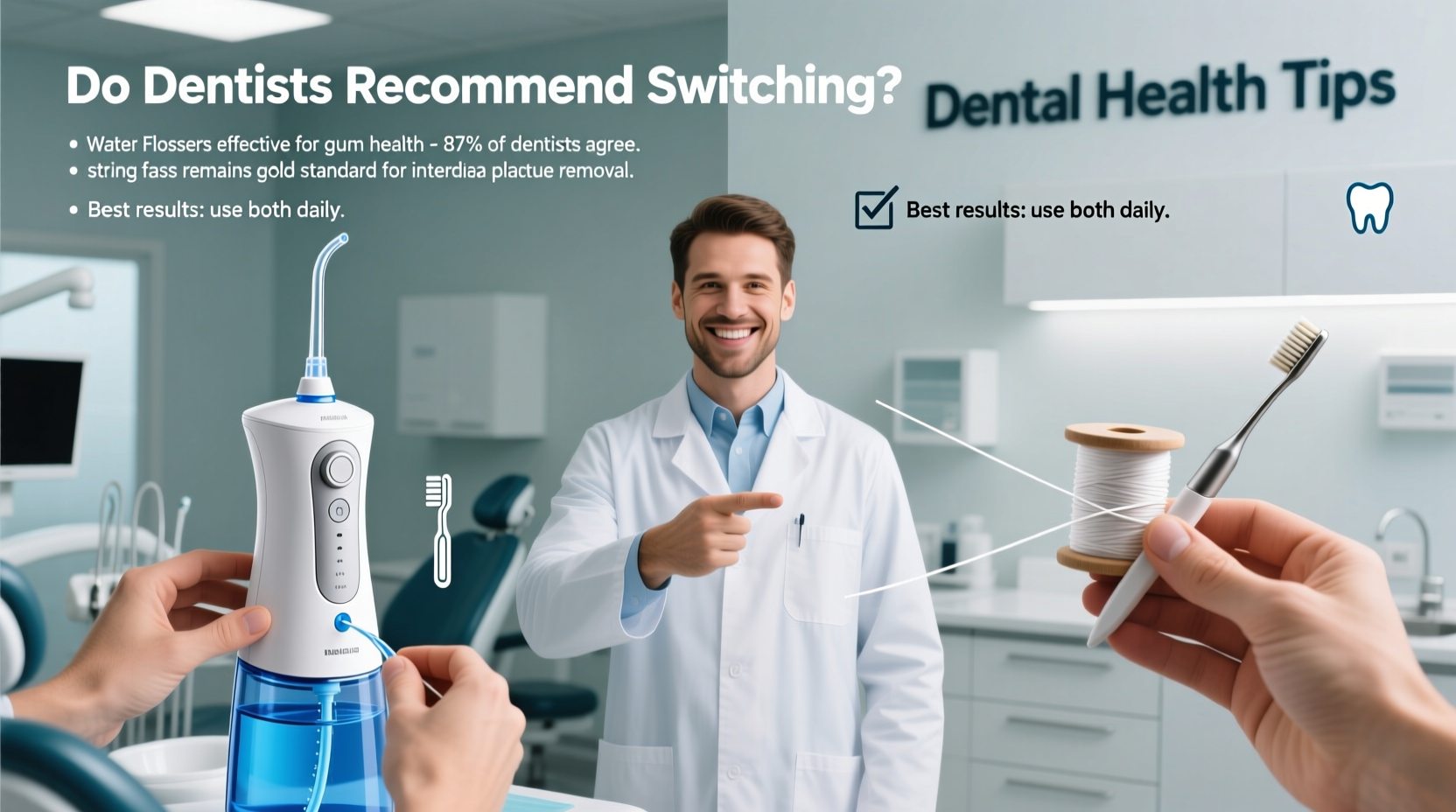
Traditional string floss—typically made of nylon or PTFE (polytetrafluoroethylene)—is designed to physically scrape plaque and food debris from between teeth and just below the gumline. When used correctly, it disrupts bacterial colonies that contribute to gingivitis, periodontal disease, and cavities in tight contact areas.
Dentists have long recommended string floss because it provides direct mechanical action. The friction created by sliding the floss up and down along the sides of each tooth helps remove biofilm effectively. For patients with tightly spaced teeth, waxed floss or floss threaders can improve ease of use.
However, technique matters significantly. Many people don’t floss properly—they may snap the floss instead of curving it around each tooth, miss back molars, or avoid areas where gums bleed. This inconsistency reduces its real-world effectiveness, even if the tool itself is highly capable.
Water Flossers: How They Work and Who Benefits Most
A water flosser, also known as an oral irrigator, uses a stream of pulsating water to flush out debris and bacteria from between teeth and along the gumline. Devices like Waterpik, Philips Sonicare AirFloss, and countertop models deliver targeted bursts of water at adjustable pressure levels.
Unlike string floss, water flossers don’t rely on physical scraping. Instead, they use hydrodynamic forces—where the water stream creates turbulence below the gumline, disrupting plaque without direct contact. This makes them especially useful for individuals with braces, implants, bridges, or crowns, where threading traditional floss can be difficult or damaging.
Clinical studies support their efficacy. A 2013 study published in the Journal of Clinical Dentistry found that water flossers were 74% more effective than string floss at reducing gingival bleeding. Another review in the International Journal of Dental Hygiene concluded that water flossers significantly reduce plaque and gingivitis compared to no flossing—and perform comparably to string floss when used consistently.
“Water flossers are particularly beneficial for patients with orthodontic appliances or periodontal pockets. They offer a practical solution for maintaining hygiene in hard-to-reach areas.” — Dr. Linda Young, Board-Certified Periodontist
Comparative Analysis: Water Flosser vs String Floss
| Feature | String Floss | Water Flosser |
|---|---|---|
| Mechanism | Physical removal via friction | Hydrodynamic disruption with water pulses |
| Effectiveness on Plaque | High (with proper technique) | Moderate to high, especially below gumline |
| Gum Bleeding Reduction | Effective with consistent use | Often superior, per clinical trials |
| Best For | Tightly spaced teeth, manual dexterity | Braces, implants, sensitive gums, arthritis |
| Portability | Excellent (compact, travel-friendly) | Limited (requires power and water source) |
| Cost Over Time | Low ($5–$10/month) | Higher upfront ($30–$100+), low refill cost |
| Learning Curve | Moderate (technique-dependent) | Low (easier to adopt) |
The data suggests that while both tools are effective, they serve different patient profiles. String floss remains unmatched in precision cleaning between tightly aligned teeth, but only if used correctly. Water flossers excel in accessibility and comfort, increasing the likelihood of daily use—especially among those who’ve struggled with traditional floss.
What Dentists Actually Recommend: A Closer Look
So, are dentists encouraging patients to switch from string floss to water flossers?
Not universally—but increasingly, yes, under certain circumstances. The American Dental Association (ADA) has accepted several water flosser models based on clinical evidence of safety and efficacy. However, the ADA does not state that water flossers replace string floss; rather, they are considered an acceptable alternative.
In practice, many dentists take a personalized approach:
- Patients with braces often receive strong recommendations for water flossers.
- Those with periodontal disease may be advised to combine both methods.
- Elderly patients or those with limited hand mobility are frequently steered toward oral irrigators.
- For young adults with healthy gums and good dexterity, string floss remains the default suggestion.
The key factor isn’t the tool itself—it’s consistency. As one hygienist put it: “The best floss is the one you’ll actually use every day.” If someone hates string floss and never does it, a water flosser—even if slightly less precise—is a better choice than nothing.
Real-World Example: Sarah’s Switch to Water Flossing
Sarah, a 42-year-old teacher, had always avoided flossing. She tried string floss occasionally but found it painful and time-consuming. Her annual checkups consistently showed mild gingivitis and recurring bleeding gums. After her dentist noticed worsening pocket depths, he suggested she try a water flosser.
She purchased a mid-range countertop model and began using it nightly. Within three weeks, she noticed less bleeding when brushing. At her six-month recall, her hygienist reported a 30% reduction in inflamed sites and improved gum attachment. While Sarah still uses string floss occasionally for tight spots, the water flosser became her primary interdental cleaner—and the first tool she actually used daily.
Her case illustrates a common trend: when convenience meets effectiveness, compliance improves—and so does oral health.
Step-by-Step Guide: Choosing and Using the Right Tool
Whether you’re sticking with string floss or considering a switch, follow these steps to maximize results:
- Assess Your Oral Health Needs: Do you have braces, implants, wide gaps, or gum recession? These factors influence which tool will work best.
- Consult Your Dentist or Hygienist: Get a professional opinion tailored to your anatomy and risk profile.
- Try Both Methods: Spend two weeks using string floss properly, then two weeks with a water flosser. Note differences in comfort, bleeding, and ease.
- Optimize Technique: For string floss, use the C-shape method. For water flossers, aim the tip just above the gumline and move systematically through all interdental spaces.
- Combine if Needed: Some patients benefit from using water flossing for general cleaning and string floss for stubborn tight contacts.
- Monitor Results: Track gum bleeding, bad breath, and dental feedback over time to evaluate effectiveness.
Frequently Asked Questions
Can a water flosser completely replace string floss?
For many people, yes—especially those with braces, implants, or difficulty with manual dexterity. However, in cases of extremely tight contacts, string floss may still be necessary for complete plaque removal. Some dental professionals recommend using both for optimal results.
Are water flossers safe for people with sensitive gums?
Yes. In fact, many find them gentler than string floss. Start at the lowest pressure setting and gradually increase as tolerated. The pulsating action can even improve circulation in the gums over time.
Do I still need to visit the dentist if I use a water flosser every day?
Absolutely. No home care routine replaces professional cleanings and exams. Even with excellent hygiene, tartar can accumulate in inaccessible areas, and early signs of decay or gum disease require clinical detection.
Final Verdict: Should You Make the Switch?
The question isn’t whether water flossers are “better” than string floss across the board—it’s whether they’re better for you. Dentists aren’t issuing blanket mandates to abandon string floss. Instead, they’re embracing a more nuanced view: the best interdental cleaning method is the one that fits your lifestyle, addresses your specific dental anatomy, and gets used consistently.
If you’ve struggled with traditional flossing, a water flosser could be the solution that finally gets you to clean between your teeth every day. If you already floss without issue, there’s little reason to switch—unless you want added comfort or have developing dental work that complicates string floss use.
Ultimately, the goal is healthier gums, fresher breath, and reduced risk of periodontal disease. Whether you achieve that with a spool of nylon or a reservoir of pulsating water matters far less than showing up every night and doing the work.




 浙公网安备
33010002000092号
浙公网安备
33010002000092号 浙B2-20120091-4
Comments
No comments yet. Why don't you start the discussion?