
For decades, dental professionals have emphasized the importance of cleaning between teeth—areas a toothbrush can't reach. Traditional string floss has long been the gold standard for interdental cleaning. But in recent years, water flossers have surged in popularity, promising a simpler, more comfortable alternative. With sleek designs and claims of superior plaque removal, it’s no wonder consumers are asking: do water flossers actually work as well as string floss? Or are they just another overpriced gadget?
This article dives deep into the science, user experience, and clinical evidence to answer that question. Whether you’re frustrated with traditional flossing, have braces, implants, or sensitive gums, understanding the real differences between these tools can help you make an informed decision about your oral hygiene routine.
The Science of Interdental Cleaning
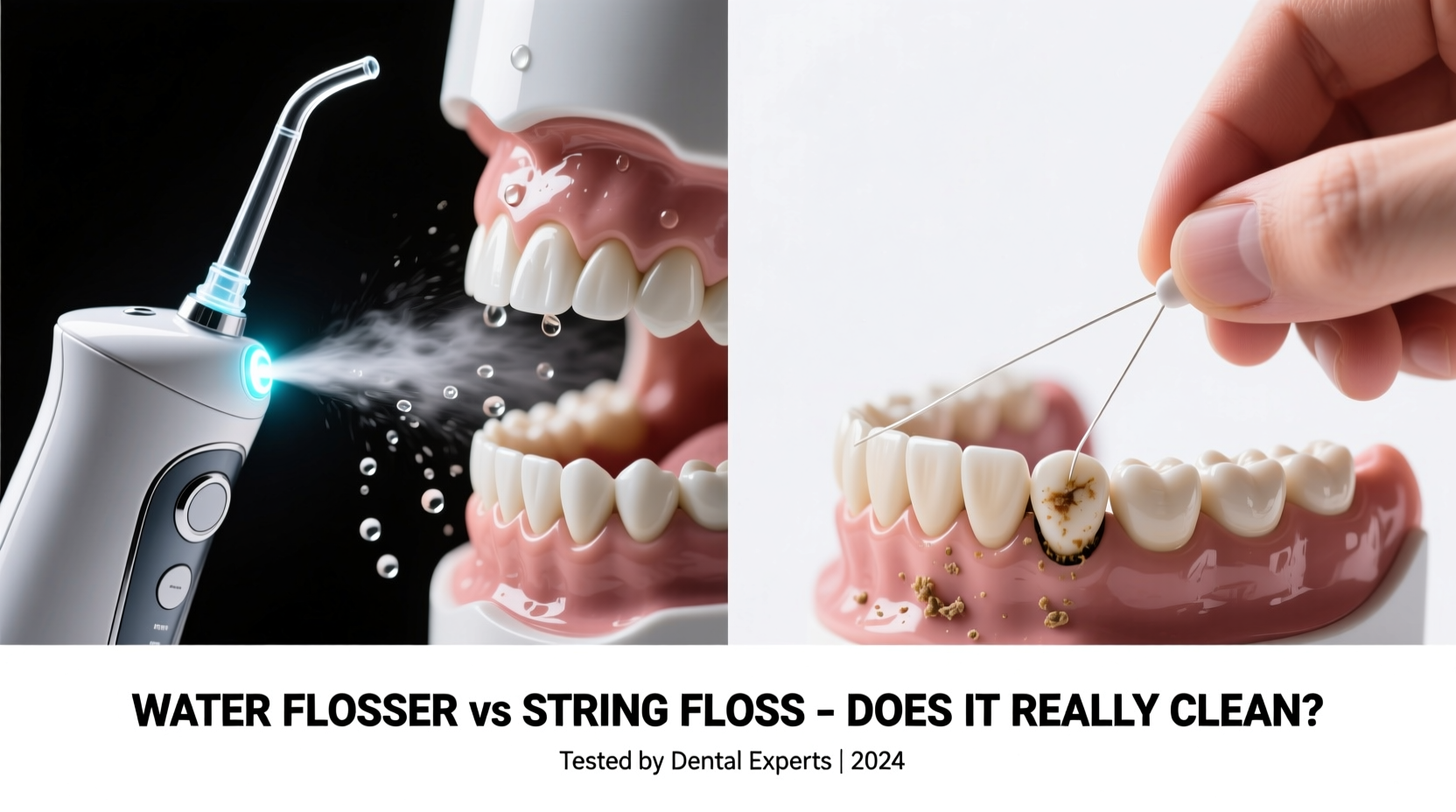
Cleaning between teeth isn’t just about removing food particles—it's about disrupting plaque biofilm, a sticky matrix of bacteria that forms on tooth surfaces within hours after brushing. If not removed daily, this plaque hardens into tartar, leading to gingivitis, periodontal disease, and even tooth loss.
Interdental spaces are breeding grounds for bacteria because they're sheltered from the mechanical action of brushing. That’s why both string floss and water flossers aim to disrupt this biofilm. However, they operate on fundamentally different principles:
- String floss uses physical abrasion—sliding a thin thread between teeth to scrape away plaque.
- Water flossers use pulsating streams of water to flush out debris and bacteria from gum pockets and tight spaces.
The key metric for effectiveness is plaque reduction. Numerous studies have evaluated both methods, often comparing them head-to-head. The American Dental Association (ADA) recognizes both tools as effective when used correctly, but nuances matter—especially for individuals with specific dental conditions.
Comparing Effectiveness: What the Research Says
A 2013 study published in the Journal of Clinical Dentistry compared water flossing to string flossing over a four-week period. Participants using a water flosser showed a 79.5% reduction in whole-mouth plaque, compared to 57.7% for those using string floss. The difference was even more pronounced in areas around orthodontic appliances and dental restorations.
Another meta-analysis in the International Journal of Dental Hygiene concluded that water flossers were consistently more effective than string floss at reducing gingival bleeding—a key sign of inflammation. This is particularly relevant for people with gum disease or sensitive tissues.
However, critics argue that many studies are funded by manufacturers of water flossers, raising questions about bias. Independent research remains limited, though existing data still leans toward water flossers offering slightly better outcomes for gingival health, especially among users who struggle with manual dexterity.
“Water flossers can be particularly beneficial for patients with bridges, implants, or braces, where threading floss is difficult or impossible.” — Dr. Linda Fang, Board-Certified Periodontist
Detailed Comparison: Water Flosser vs String Floss
| Feature | Water Flosser | String Floss |
|---|---|---|
| Plaque Removal | High, especially below the gumline due to pressurized pulses | Effective with proper technique, but inconsistent if rushed |
| Gum Bleeding Reduction | Superior in multiple clinical trials | Moderate improvement with consistent use |
| Accessibility | Excellent for braces, crowns, implants, and tight spaces | Difficult with orthodontics or limited hand mobility |
| Convenience | Requires outlet, water reservoir, cleanup | Pocket-sized, no setup needed |
| Cost Over Time | Higher initial cost ($50–$100), low ongoing expense | Negligible initial cost, recurring supply cost |
| User Compliance | Higher reported adherence due to comfort | Only 30% of adults floss daily, per CDC data |
| Learning Curve | Minimal—point and pulse | Technique-sensitive; improper use reduces efficacy |
The table reveals a clear trade-off: water flossers offer superior clinical performance and ease of use but come with logistical and financial overhead. String floss wins on portability and simplicity but suffers from widespread underuse due to discomfort or inconvenience.
Real-World Case: Sarah’s Experience with Braces and Gum Sensitivity
Sarah, a 28-year-old graphic designer, had struggled with gum bleeding and bad breath despite brushing twice daily. After getting braces, her dentist recommended flossing, but she found traditional floss nearly impossible to thread around brackets and wires. “I’d spend ten minutes trying to get one section clean,” she said. “Most days, I gave up.”
Her hygienist suggested a countertop water flosser. Skeptical but willing to try, Sarah incorporated it into her nightly routine. Within two weeks, her gums stopped bleeding during cleanings. At her three-month checkup, her hygienist noted a significant drop in gingival inflammation.
“It’s not magic,” Sarah admitted. “But it’s easier. I actually do it every night now because it doesn’t feel like a chore.”
Sarah’s story reflects a broader trend: compliance improves when tools align with user comfort. For people with orthodontia, arthritis, or crowded teeth, water flossers aren’t just convenient—they enable consistent care that might otherwise be neglected.
When Each Tool Excels: Practical Guidance
Neither tool is universally superior. The best choice depends on individual needs, anatomy, and lifestyle. Here’s how to decide which works best for you:
Choose a Water Flosser If You:
- Have braces, bridges, implants, or crowns
- Suffer from gum disease or frequent bleeding
- Have limited hand mobility or arthritis
- Find string floss painful or time-consuming
- Want deeper cleaning below the gumline
Stick with String Floss If You:
- Travel frequently and need a compact solution
- Prefer a zero-waste, low-tech approach
- Have wide interdental spaces where floss glides easily
- Are on a tight budget and don’t want upfront investment
- Master proper flossing technique and do it consistently
Step-by-Step: How to Maximize Results with Either Tool
Effectiveness hinges on correct usage. Follow these steps to ensure you’re getting the full benefit:
- Start with clean hands and tools. Rinse flossers and tips after each use. Replace floss heads every 3–6 months.
- Use the right settings. On a water flosser, begin at the lowest pressure and increase gradually. Sensitive modes are ideal for beginners.
- Aim at a 90-degree angle to the gumline. For water flossing, trace along the space between teeth, letting the pulse dislodge debris. Don’t rush—spend 2–3 seconds per gap.
- For string floss, use a C-shape motion. Wrap the floss around each tooth and slide it gently beneath the gumline. Avoid sawing motions that damage tissue.
- Cover all teeth, including molars. It’s easy to skip back teeth, but they’re prone to decay and buildup.
- Rinse afterward. Swish with water or mouthwash to remove loosened particles.
- Be consistent. Daily use matters more than perfection. Skipping days allows plaque to re-establish.
Frequently Asked Questions
Can a water flosser replace string floss entirely?
For most people, yes—but with caveats. Water flossers excel at flushing out bacteria and improving gum health, but they may not remove tightly adherent plaque as effectively as physical scraping. Some dental professionals recommend using both: water floss first to loosen debris, then string floss for final polishing in tight spots.
Are water flossers safe for sensitive gums?
Absolutely. In fact, they’re often gentler than string floss. The pulsating action stimulates circulation without abrasion. Start at the lowest pressure setting and use a soft tip. Many users report reduced sensitivity and bleeding after switching.
Do dentists prefer one method over the other?
Most dentists prioritize consistency over tool choice. As long as interdental cleaning happens daily, they’ll support your method. However, when patients struggle with compliance, many proactively recommend water flossers due to higher adherence rates. The ADA accepts both as effective options.
Expert Insight: Bridging the Gap Between Technology and Tradition
“The goal isn’t to pick sides—it’s to find what works for the patient. If someone hates flossing and skips it, no amount of lecturing will help. A water flosser might be the bridge to better oral health.” — Dr. Carlos Mendez, DDS, Dental Public Health Specialist
This philosophy underscores a shift in modern dentistry: from rigid prescriptions to personalized solutions. Technology like water flossers isn’t about replacing fundamentals—it’s about removing barriers to care. When a tool increases the likelihood that someone will clean between their teeth every day, it becomes clinically valuable, regardless of tradition.
Final Verdict: Does the Gadget Really Work?
Yes—water flossers do clean between teeth, often more effectively than string floss, particularly for gum health. They’re not just marketing hype. Clinical evidence supports their ability to reduce plaque and gingival inflammation, especially in populations with complex dental work or dexterity challenges.
That said, they aren’t a magic fix. They require time, counter space, and maintenance. And while they improve accessibility, they don’t eliminate the need for proper technique. Meanwhile, string floss remains a powerful, low-cost option—if used correctly and consistently.
The real takeaway? The best tool is the one you’ll use every day. For many, that’s a water flosser. For others, it’s waxed floss and determination. Some even combine both for maximum benefit. What matters most is the habit, not the hardware.
“Patients often ask me which is better. I tell them: the one you’ll actually use.” — Dr. Naomi Patel, Family Dentist
Take Action Today: Build a Sustainable Routine
Oral health isn’t built in a day—it’s shaped by small, repeated choices. If you’ve avoided flossing because it’s uncomfortable or tedious, consider giving a water flosser a trial run. Many models come with return windows or travel versions. If you prefer simplicity, invest in quality floss (waxed or PTFE-based for tight spaces) and practice proper technique.
Track your gum health over a month: note bleeding, bad breath, and how your teeth feel. Small improvements compound into lasting protection against decay and disease.




 浙公网安备
33010002000092号
浙公网安备
33010002000092号 浙B2-20120091-4
Comments
No comments yet. Why don't you start the discussion?