
For decades, dental professionals have emphasized the importance of cleaning between teeth to prevent plaque buildup, gum disease, and tooth decay. Traditional string floss has long been the gold standard for interdental cleaning. But in recent years, water flossers—also known as oral irrigators—have surged in popularity, promising a more comfortable, efficient alternative. With sleek designs, pulsating jets, and bold claims about plaque removal, it’s no wonder consumers are asking: does the water jet really clean between teeth as well as string floss? The answer isn’t black and white. It depends on your goals, dexterity, oral anatomy, and consistency.
How Each Method Works
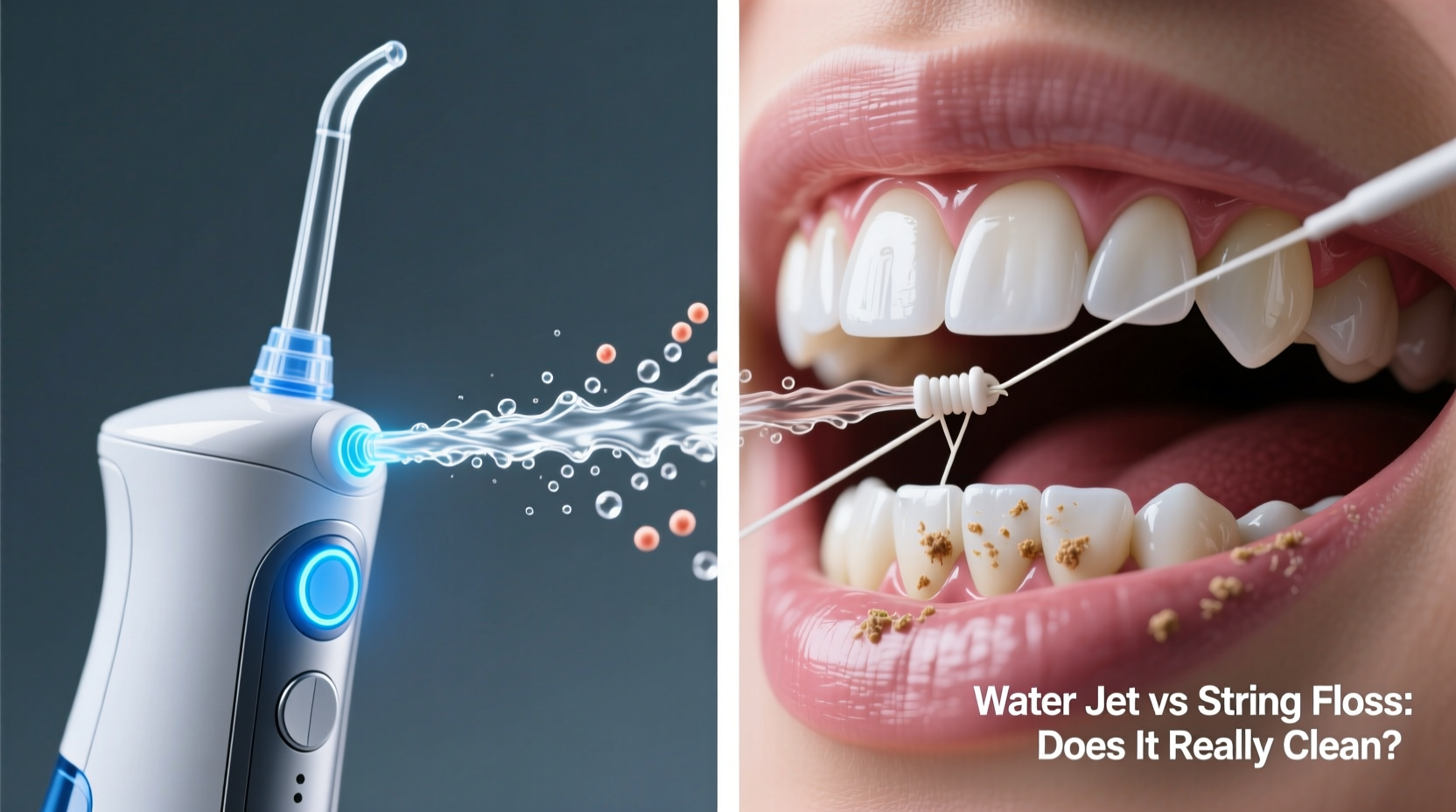
Understanding the mechanics behind each tool is key to evaluating their effectiveness.
String floss involves manually guiding a thin nylon or PTFE filament between teeth. When used correctly, it physically scrapes plaque from the sides of teeth and just below the gumline. The friction created by sliding the floss up and down each surface disrupts bacterial colonies that brushing alone can't reach.
Water flossers, on the other hand, use a stream of pulsating water directed at the spaces between teeth and along the gumline. The pressure dislodges food particles and bacteria, flushing them out rather than scraping them away. Devices typically offer adjustable pressure settings and specialized tips for implants, braces, or periodontal pockets.
While both aim to reduce interproximal plaque and gingivitis, their mechanisms differ fundamentally—one relies on mechanical abrasion, the other on hydrodynamic force.
Scientific Evidence: What Studies Say
The debate isn’t just anecdotal—numerous clinical studies have compared water flossers and string floss across various metrics, including plaque reduction, gingival inflammation, and patient compliance.
A 2005 study published in the Journal of Clinical Dentistry found that users of a water flosser (specifically the Waterpik device) experienced a 29.7% greater reduction in plaque than those using traditional floss after four weeks. Another randomized trial showed that water flossing was up to 50% more effective than string floss at reducing gingivitis.
However, these results don’t mean string floss is ineffective. In fact, when used properly, string floss remains highly effective at removing biofilm directly from tooth surfaces. The advantage of water flossers appears to lie in their ability to penetrate deeper into periodontal pockets and around complex dental work like bridges, implants, and braces—areas where string floss may struggle to reach.
“Water flossers are particularly beneficial for patients with orthodontic appliances or periodontal conditions. They provide an accessible way to maintain interdental hygiene without requiring advanced manual dexterity.” — Dr. Linda Green, Board-Certified Periodontist
It's also worth noting that many comparative studies are funded or conducted in collaboration with manufacturers of water flossing devices, which warrants cautious interpretation. Still, independent reviews, including those from the Cochrane Collaboration, acknowledge that water flossers can be a viable alternative—especially for individuals who find string floss difficult or painful to use.
Pros and Cons Compared
To make an informed decision, consider the strengths and limitations of each method. The following table summarizes key differences:
| Factor | String Floss | Water Flosser |
|---|---|---|
| Plaque Removal (Interproximal) | Excellent with proper technique | Very good; slightly less direct contact |
| Gum Health Improvement | Effective | Often superior due to subgingival irrigation |
| Ease of Use | Requires dexterity; can be awkward | Easy; minimal hand coordination needed |
| Time Required | 3–5 minutes daily | 1–2 minutes once set up |
| Portability | Highly portable (floss picks, travel containers) | Bulky; requires power and water source |
| Cost Over Time | Low (under $10/year) | Higher initial cost ($50–$100+); replacement tips add up |
| Best For | People with tight contacts, no braces, high dexterity | Braces wearers, implants, gum disease, arthritis |
Ultimately, the “best” option depends on individual needs. For someone with arthritis or sensitive gums, a water flosser may be not just preferable but essential for maintaining daily hygiene. Conversely, travelers or budget-conscious users might favor the simplicity and low cost of string floss.
Real-World Example: Sarah’s Switch to Water Flossing
Sarah, a 34-year-old graphic designer, wore braces for two years to correct a crowded lower arch. During treatment, her dentist repeatedly stressed the importance of interdental cleaning. Despite trying waxed floss and floss threaders, she struggled to clean around brackets and wires. Bleeding gums and persistent bad breath became routine.
After six months of inconsistent flossing and recurring inflammation, her orthodontist recommended a water flosser. Skeptical at first, Sarah purchased a mid-range model and began using it daily. Within three weeks, her gum bleeding decreased significantly. Her hygienist noted improved tissue health during her next cleaning. “I didn’t think a gadget could make such a difference,” she said. “Now I use it every night—it’s faster and actually feels refreshing.”
Sarah’s experience highlights a common reality: for people with orthodontic appliances or physical limitations, water flossing isn’t just convenient—it enables consistent care that might otherwise be neglected.
Step-by-Step Guide to Effective Interdental Cleaning
No matter which tool you choose, proper technique maximizes results. Follow this guide to get the most out of your routine:
- Start with a clean mouth: Brush first to loosen surface plaque, making interdental cleaning more effective.
- Choose the right tool: If you have braces, implants, or gum pockets, a water flosser may be ideal. For tight contacts and simple spacing, string floss works well.
- Use proper string floss technique:
- Cut 18 inches of floss and wind most around one middle finger, the rest around the other.
- Gently slide the floss between teeth using a sawing motion—never snap it.
- Curve the floss into a C-shape against one tooth and move it up and down, going slightly below the gumline.
- Repeat for each tooth, using a clean section of floss.
- Use proper water flosser technique:
- Fill the reservoir with warm water (add mouthwash if desired).
- Select a medium-pressure setting initially.
- Lean over the sink, place the tip in your mouth, and start at the back teeth.
- Pause briefly between each tooth, directing the jet at the gumline and between contacts.
- Move systematically around the mouth—don’t skip areas.
- Rinse and maintain your device: Empty and dry the water flosser reservoir after use. Replace tips every 3–6 months.
Frequently Asked Questions
Can a water flosser replace string floss completely?
For many people, yes—especially those with braces, implants, or gum disease. However, some dentists recommend combining both: use string floss for tight spaces where debris gets stuck, and a water flosser for deep cleaning and ease of use. Ultimately, consistency matters most. If a water flosser helps you clean between teeth daily, it’s a valid choice.
Do water flossers cause gum damage?
When used correctly, water flossers do not harm gums. In fact, studies show they improve gum health by reducing inflammation. However, using excessively high pressure or aiming the jet directly at delicate gum tissue may cause irritation. Start at a low setting and gradually increase as tolerated.
Is there anyone who shouldn’t use a water flosser?
Most people can safely use a water flosser. However, individuals with severe untreated periodontitis or open sores should consult a dentist before starting. Also, those with electric medical devices (like pacemakers) should check with their doctor, though modern water flossers are generally considered safe.
Final Verdict: Which One Should You Choose?
The question isn’t whether water flossers *can* clean between teeth—they absolutely can. Research and real-world use confirm they effectively reduce plaque and improve gum health. But they don’t always remove adhered biofilm as thoroughly as physical flossing, especially in tightly spaced teeth.
Here’s the bottom line: the best interdental cleaner is the one you’ll use consistently and correctly. If string floss frustrates you, causes pain, or ends up unused in a drawer, it’s not serving its purpose. A water flosser offers a practical, often more enjoyable alternative that delivers clinically meaningful benefits.
Dental associations, including the American Dental Association (ADA), accept both methods when backed by proper technique. Some water flosser models even carry the ADA Seal of Acceptance, indicating safety and efficacy based on rigorous testing.
Action Plan: Make the Right Choice for Your Mouth
Still unsure which method suits you? Try this checklist to decide:
- ☐ Do you wear braces, have implants, or use bridges? → Water flosser likely better.
- ☐ Do you have arthritis, limited hand mobility, or difficulty maneuvering floss? → Water flosser recommended.
- ☐ Are your teeth tightly spaced with frequent food trapping? → String floss may be more effective.
- ☐ Do you travel frequently or prefer minimalist routines? → String floss more practical.
- ☐ Have you struggled with gum bleeding or gingivitis despite brushing? → Try a water flosser for deeper cleansing.
You’re not locked into one method forever. Many people alternate or combine both. For example, use a water flosser nightly for general cleaning and keep string floss on hand for spot-cleaning stubborn areas.
“The goal isn’t perfection with one tool—it’s sustainable oral hygiene. Meet patients where they are, and help them find what works.” — Dr. Alan Kim, Dental Hygiene Educator
Conclusion
The debate between water flossers and string floss isn’t about declaring a winner—it’s about matching the right tool to the right user. While string floss remains a time-tested, affordable option, water flossers have proven themselves as powerful allies in the fight against gum disease and plaque. They’re not magic, but for many, they make daily interdental care achievable, comfortable, and even enjoyable.
If you’ve avoided flossing because it’s tedious or painful, give a water flosser a fair trial. If you’re already flossing successfully with string, there’s no urgent need to switch—unless you want to. The true measure of success isn’t the tool, but the result: healthier gums, fresher breath, and a lifetime of stronger teeth.




 浙公网安备
33010002000092号
浙公网安备
33010002000092号 浙B2-20120091-4
Comments
No comments yet. Why don't you start the discussion?