
Maintaining oral health goes beyond brushing teeth twice a day. Interdental cleaning—cleaning between the teeth—is essential to prevent plaque buildup, gum disease, and bad breath. Two primary tools dominate this space: traditional string floss and water flossers. While string floss has been the gold standard for decades, water flossers have surged in popularity, promising a more convenient, effective way to clean hard-to-reach areas. But does the water pressure from these devices truly remove plaque as effectively as manual flossing? The answer isn’t binary—it depends on technique, consistency, and individual dental anatomy.
This article dives into the mechanics of both methods, evaluates clinical evidence, compares pros and cons, and offers practical guidance to help you make an informed decision about which tool—or combination—best supports your oral health goals.
How Plaque Forms and Why It Matters
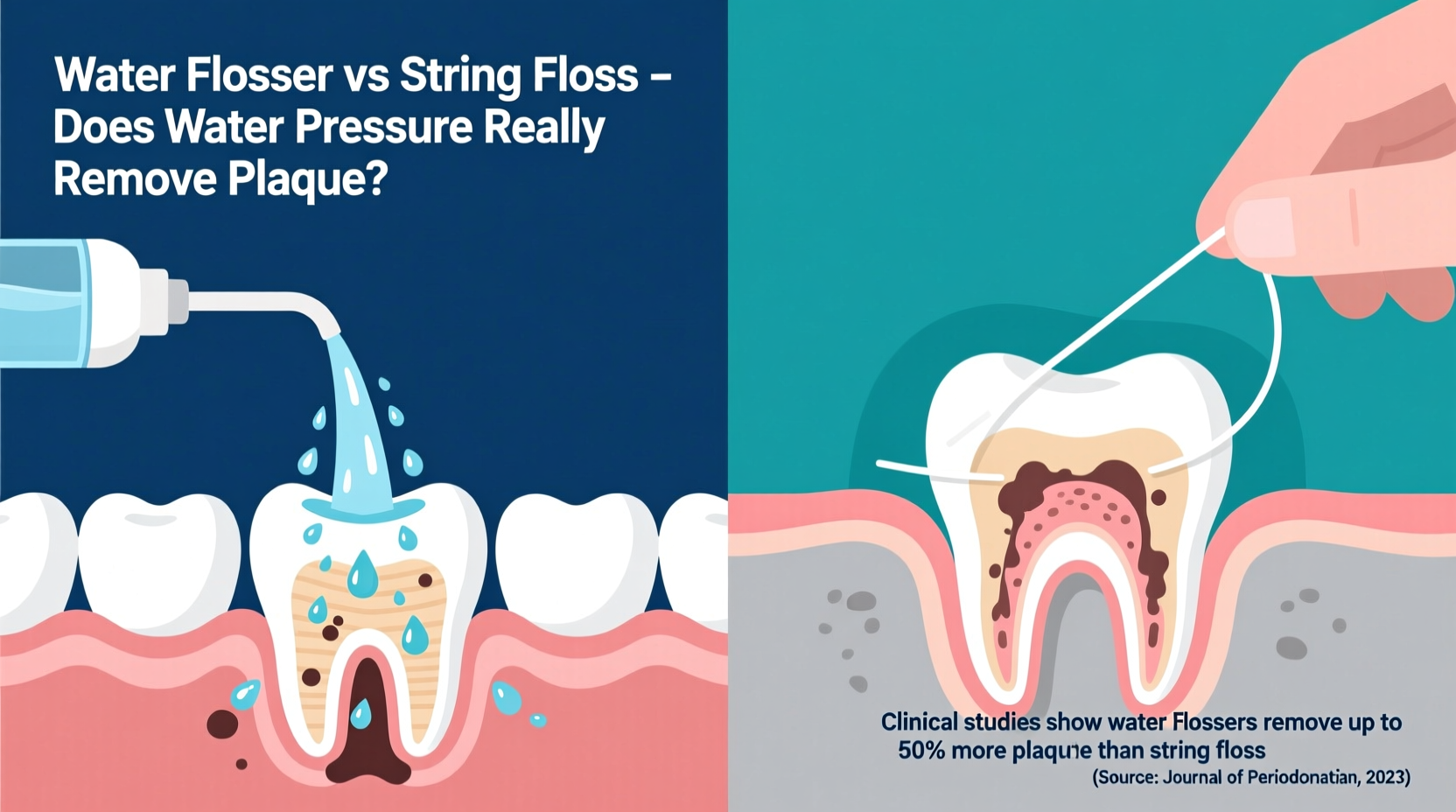
Dental plaque is a sticky biofilm composed of bacteria, food debris, and saliva components that adheres to tooth surfaces. Within hours of brushing, bacteria begin colonizing the enamel, especially along the gumline and between teeth. If not removed regularly, plaque mineralizes into tartar (calculus), which can only be removed by a dental professional. Left unchecked, plaque accumulation leads to gingivitis—an early stage of gum disease—and eventually periodontitis, which affects the supporting structures of the teeth.
The spaces between teeth are particularly vulnerable because toothbrush bristles often cannot reach them effectively. This is where interdental cleaning becomes non-negotiable. Whether using string floss or a water flosser, disrupting plaque colonies daily is crucial for long-term oral health.
String Floss: The Traditional Standard
String floss—typically made of nylon or PTFE (polytetrafluoroethylene)—is designed to slide between teeth and physically scrape away plaque. When used correctly, it conforms to the shape of each tooth, allowing users to clean below the gumline and disrupt biofilm.
Proper technique involves gently curving the floss around the base of each tooth in a C-shape and moving it up and down several times. Skipping this step or merely snapping the floss through the contact point reduces effectiveness significantly.
Despite its proven efficacy, adherence to daily flossing remains low. A 2019 survey by the American Dental Association found that only 30% of adults floss daily, with many citing difficulty, discomfort, or lack of time as barriers.
“Mechanical disruption of plaque via physical contact is still the most reliable method for interdental cleaning.” — Dr. Linda Chen, Periodontist and Clinical Researcher
Water Flossers: How They Work and What the Science Says
Water flossers, also known as oral irrigators, use a stream of pulsating water to flush out debris and bacteria from between teeth and below the gumline. Devices like the Waterpik® operate at pressures ranging from 50 to 90 psi, with adjustable settings to accommodate sensitivity.
The key mechanism isn’t just rinsing—it’s hydrodynamic action. The pulsations create shear forces that destabilize plaque biofilm, even in pockets deeper than what string floss can typically access. Studies show that water flossers can reduce gingival bleeding and plaque by up to 70% when used consistently over two weeks.
A landmark study published in the *Journal of Clinical Dentistry* (2005) compared water flossing to string flossing and found that the water flosser was 29% more effective at reducing gingivitis and 52% more effective at reducing bleeding after four weeks of use. Another randomized trial in *Compendium of Continuing Education in Dentistry* (2013) concluded that water flossers removed significantly more plaque than string floss, especially among individuals with orthodontic appliances or dental implants.
However, water flossers do not “scrape” plaque off like string floss. Instead, they rely on fluid dynamics to dislodge and rinse away biofilm. This means their success depends heavily on proper aiming, duration, and consistent use.
Does Water Pressure Actually Remove Plaque?
Yes—but conditionally. Water pressure alone isn’t enough; the pulsation frequency and tip design play critical roles. Most effective models deliver 1,200 to 1,600 pulses per minute, creating micro-vortices that penetrate beneath the gumline.
Research indicates that water flossers remove approximately 99.9% of plaque from treated areas when used correctly. However, this assumes the user systematically targets every interdental space for at least three seconds each. Rushing through the process diminishes results.
It’s also important to note that while water flossers excel at removing loose debris and reducing inflammation, they may not fully eliminate tightly adhered plaque without some form of mechanical abrasion. For this reason, many dentists recommend combining both methods—or using specialized tips (like the Pik Pocket™ tip) designed for deeper pocket cleaning.
Comparative Analysis: Water Flosser vs String Floss
| Feature | Water Flosser | String Floss |
|---|---|---|
| Plaque Removal Efficacy | High, especially with pulsation and correct use | High, when used with proper technique |
| Gum Health Improvement | Superior reduction in bleeding and inflammation | Moderate improvement with consistent use |
| Accessibility | Excellent for braces, implants, bridges | Limited in tight or complex restorations |
| Learning Curve | Low—easy to learn and use | High—requires dexterity and practice |
| Convenience | Requires sink access and setup | Portable, no equipment needed |
| Cost Over Time | Higher initial cost, low recurring expense | Negligible cost, but frequent replacement |
| User Compliance | Higher due to ease of use | Lower due to perceived hassle |
Real-World Example: Managing Braces with a Water Flosser
Sophia, a 16-year-old high school student, recently got traditional metal braces. Her orthodontist emphasized strict oral hygiene to avoid white spot lesions—a common side effect of plaque buildup during orthodontic treatment. Initially, she tried string floss with a threader but found it frustrating and time-consuming. After two months, her gums were inflamed, and her next checkup revealed early signs of decalcification near her brackets.
Her dentist recommended switching to a water flosser with an orthodontic tip. Within three weeks of using it twice daily, Sophia noticed less bleeding and improved comfort. At her next appointment, her hygienist commented on the visible improvement in gum health and reduced plaque retention around the brackets. Sophia now uses the water flosser exclusively and reports greater confidence in her routine.
This case illustrates how technology can overcome real-world compliance challenges, especially for individuals with dental hardware or limited manual dexterity.
Best Practices for Maximizing Plaque Removal
Whether you choose string floss, a water flosser, or both, following best practices ensures optimal results. Here’s a step-by-step guide to get the most out of your interdental cleaning:
- Brush thoroughly first: Remove surface plaque so interdental tools can focus on tight spaces.
- Use the right settings: For water flossers, start on low pressure if you’re new or have sensitive gums.
- Aim below the gumline: Angle the tip slightly below the edge of the gums to target subgingival plaque.
- Move systematically: Spend 2–3 seconds per gap, progressing from back to front on each side.
- Floss before bedtime: This prevents overnight bacterial growth and acid production.
- Rinse the tip regularly: Prevent clogging by flushing the nozzle under running water after use.
- Replace worn tips: Most manufacturers recommend replacing tips every 3–6 months.
Checklist: Choosing the Right Tool for You
- ☐ Do you wear braces, implants, or bridges? → Water flosser may be more effective.
- ☐ Do you struggle with hand mobility or arthritis? → Water flosser reduces manual effort.
- ☐ Are you inconsistent with flossing? → Consider a water flosser for higher compliance.
- ☐ Do you prefer minimal equipment and travel light? → String floss is more portable.
- ☐ Are you looking for maximum plaque control? → Combine both methods for synergistic effect.
Frequently Asked Questions
Can a water flosser replace string floss completely?
For most people, yes—especially if used correctly. Clinical studies support water flossers as an effective standalone option. However, some dental professionals still recommend occasional string flossing for tactile feedback and thorough mechanical removal, particularly in tight contacts.
Is water flossing safe for people with gum disease?
Yes, and it’s often recommended. Water flossers can reduce bleeding and inflammation in patients with gingivitis or mild periodontitis. In fact, the American Dental Association (ADA) has accepted certain water flosser models specifically for improving gum health. Always consult your dentist for personalized advice.
Can children use water flossers?
Absolutely. Many pediatric dentists encourage water flossers for kids who resist traditional flossing. Use a lower pressure setting and supervise young children to ensure proper technique and safety around the mouth.
Conclusion: Making the Right Choice for Your Oral Health
The debate between water flossers and string floss isn’t about declaring a single winner—it’s about matching the tool to the user. Water pressure from modern oral irrigators does remove plaque effectively, supported by clinical research and real-world outcomes. Its ability to improve gum health, especially in complex dental situations, makes it a powerful ally in preventive care.
Yet, string floss remains a simple, cost-effective, and highly portable option that works exceptionally well when technique is mastered. The truth is, consistency matters more than the tool itself. Missing interdental cleaning altogether poses far greater risks than choosing one method over another.
For those seeking convenience and enhanced gum health, a water flosser offers compelling advantages. For others who value simplicity and direct control, string floss continues to deliver results. And for optimal outcomes, many dental experts now advocate combining both: using string floss for mechanical disruption and a water flosser for deep rinsing and inflammation control.




 浙公网安备
33010002000092号
浙公网安备
33010002000092号 浙B2-20120091-4
Comments
No comments yet. Why don't you start the discussion?