
Dental hygiene is a cornerstone of overall health, and flossing plays a critical role in maintaining clean teeth and healthy gums. Yet, many people still debate the best method for removing plaque and food debris between teeth. Traditional string floss has long been the gold standard, but water flossers have gained popularity in recent years as a convenient and effective alternative. The central question remains: does water actually remove debris as effectively as string floss? This article examines the science, practicality, and real-world performance of both methods to help you make an informed decision.
How Each Method Works
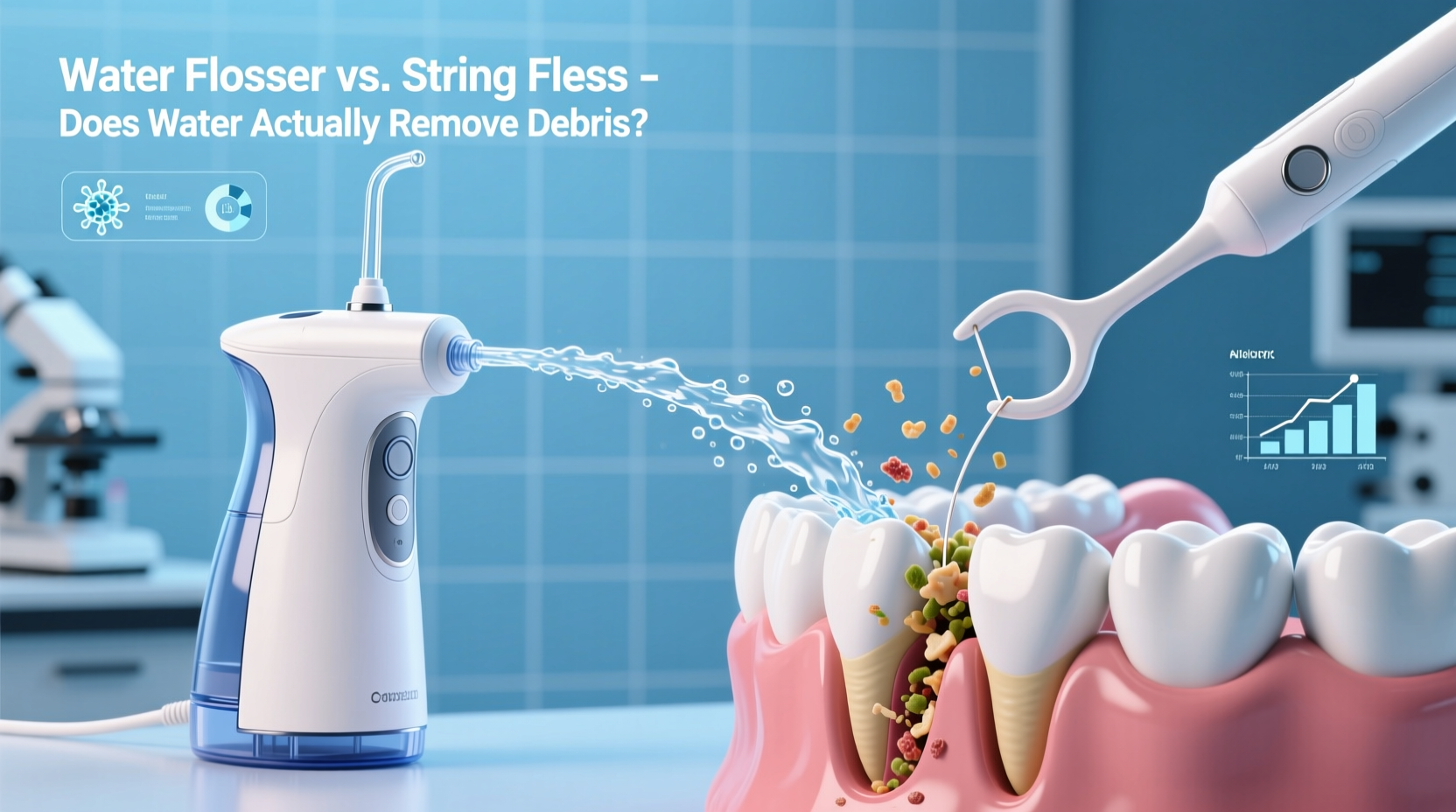
Understanding the mechanics behind each flossing tool is essential to evaluating their effectiveness.
String floss involves manually guiding a thin filament—waxed or unwaxed—between teeth. By sliding it up and down along the tooth surface and slightly beneath the gumline, it mechanically scrapes away plaque and dislodges trapped food particles. Its success depends heavily on technique, dexterity, and consistency.
Water flossers, also known as oral irrigators, use a stream of pulsating water directed at the spaces between teeth and along the gumline. The pressure and pulsation disrupt bacterial colonies and flush out debris without physical contact. Devices typically feature adjustable pressure settings and specialized tips for implants, orthodontics, or periodontal pockets.
While string floss relies on friction and manual control, water flossers depend on hydrodynamic force. Both aim to reduce interdental plaque and gingivitis, but they achieve this through fundamentally different mechanisms.
Scientific Evidence: Which Removes More Debris?
Multiple clinical studies have compared the efficacy of water flossers and string floss in plaque removal and gum health improvement.
A 2005 study published in the Journal of Clinical Dentistry found that water flossers removed significantly more plaque than string floss when used consistently over two weeks. Participants using water flossers experienced a 29.7% greater reduction in plaque compared to those using traditional floss.
Another study from 2013 in the American Journal of Dentistry concluded that water flossers were up to 50% more effective than string floss at reducing gingival bleeding, a key indicator of inflammation caused by plaque buildup.
“Water flossers offer a clinically proven alternative for patients who struggle with traditional flossing. They’re particularly beneficial for those with braces, implants, or limited manual dexterity.” — Dr. Jonathan Levine, DMD, Faculty Member at NYU College of Dentistry
However, these results don’t mean water flossers universally outperform string floss in every scenario. String floss excels at removing adhered plaque through direct contact, especially when used correctly. Water flossers may not always eliminate sticky biofilm residues but are highly effective at flushing loose debris and bacteria from hard-to-reach areas.
Comparative Analysis: Pros and Cons
| Feature | String Floss | Water Flosser |
|---|---|---|
| Plaque Removal (Contact Surfaces) | Excellent – physically scrapes plaque off sides of teeth | Fair to Good – less effective on adhered plaque without scrubbing |
| Debris Flushing (Deep Pockets/Spaces) | Limited – cannot flush material beyond floss reach | Excellent – reaches 3–6 mm below gumline with proper tip |
| Gentleness on Gums | Poor if done aggressively; can cause cuts or bleeding | High – gentle pulsation soothes gums when properly adjusted |
| Ease of Use | Moderate to Difficult – requires coordination and access | Easy – point-and-shoot operation; ideal for braces or bridges |
| Portability & Cost | Highly portable; low cost per use | Bulky; higher upfront cost ($50–$100+) |
| Best For | People with good dexterity, no orthodontic work, seeking maximum plaque removal | Those with braces, implants, arthritis, deep pockets, or sensitivity |
The data shows that while string floss maintains an edge in mechanical plaque disruption, water flossers excel in accessibility, comfort, and subgingival cleaning. Neither is inherently superior across all metrics—the choice often depends on individual needs and limitations.
Real-World Effectiveness: A Case Study
Samantha, a 34-year-old graphic designer, had struggled with gum bleeding and persistent bad breath despite daily brushing. Her dentist noted signs of early gingivitis and recommended flossing. Initially resistant due to painful gums and difficulty reaching her back molars, she tried waxed string floss but gave up after a week.
She then purchased a countertop water flosser on her hygienist’s suggestion. Within ten days, she noticed reduced bleeding and fresher breath. After six weeks, her next dental checkup revealed a 40% reduction in gum pocket depth and improved tissue firmness.
Her experience highlights a common reality: compliance matters more than perfection. For many, the ease and comfort of a water flosser lead to consistent use—something difficult to achieve with string floss alone.
Combining Both Methods for Optimal Results
Rather than treating water flossing and string flossing as mutually exclusive, many dental professionals advocate for a hybrid approach. Using both tools leverages their respective strengths.
Here’s a step-by-step guide to integrating them into your routine:
- Brush thoroughly with fluoride toothpaste to loosen surface plaque.
- Use string floss first to physically remove adhered plaque between teeth. Focus on the \"C-shape\" motion around each tooth.
- Follow with a water flosser to flush out any remaining debris, especially below the gumline or around orthodontic hardware.
- Rinse with mouthwash to kill residual bacteria and freshen breath.
This sequence ensures both mechanical disruption and deep cleansing. It's particularly useful for individuals with crowns, bridges, or crowded teeth where debris tends to accumulate.
“We see better long-term outcomes when patients combine modalities. Think of string floss as precision scraping and water flossing as deep irrigation.” — Dr. Linda Fang, Periodontist and ADA Member
Common Misconceptions About Water Flossing
Despite growing acceptance, several myths persist about water flossers:
- Myth: Water flossers replace brushing and flossing.
Truth: They complement—not replace—brushing and should be used alongside other hygiene practices. - Myth: They’re only for people with braces.
Truth: While excellent for orthodontic patients, they benefit anyone seeking improved gum health. - Myth: The water stream just pushes bacteria around.
Truth: Pulsed irrigation disrupts biofilm and flushes microbes out of the mouth, reducing their ability to reattach. - Myth: They cause dry sockets or gum recession.
Truth: When used properly, water flossers are safe post-surgery and may even aid healing by keeping extraction sites clean.
Understanding these misconceptions helps users adopt water flossing confidently and correctly.
Checklist: Choosing the Right Option for You
Answer the following questions to determine which method—or combination—best suits your needs:
- Do you have braces, implants, or dental bridges? → Water flosser recommended
- Do you experience gum sensitivity or bleeding? → Water flosser may be gentler
- Are you consistent with daily flossing? → If not, consider switching to water
- Do you travel frequently? → String floss is more portable
- Can you afford a $60–$100 investment? → Water flosser is a long-term value
- Do you struggle with hand mobility or arthritis? → Water flosser greatly improves accessibility
If most answers lean toward water flossing, investing in a model with multiple tips and variable pressure settings could transform your oral care routine.
FAQ
Can water flossers remove tartar?
No, water flossers cannot remove hardened tartar (calculus). Only professional scaling by a dentist or hygienist can do that. However, regular use helps prevent plaque from mineralizing into tartar by keeping interdental areas clean.
Is it safe to use a water flosser every day?
Yes, daily use is not only safe but encouraged. Most manufacturers and dental associations recommend once-daily use, preferably at night before bed, to clear food particles and reduce overnight bacterial growth.
Does Medicare or dental insurance cover water flossers?
Generally, no. Most insurance plans classify water flossers as elective devices. However, some flexible spending accounts (FSAs) or health savings accounts (HSAs) may allow reimbursement with a letter of medical necessity from your dentist.
Final Thoughts: Does Water Actually Remove Debris?
The evidence confirms that yes, water flossers do remove debris—effectively and safely. While they don’t provide the same tactile plaque-scraping action as string floss, their ability to flush out food particles, bacteria, and inflammatory agents from beneath the gumline makes them a powerful addition to any oral hygiene regimen.
For individuals who skip flossing altogether due to discomfort or inconvenience, a water flosser offers a realistic path to better gum health. And for those already committed to string flossing, adding a water flosser can enhance cleanliness, particularly in anatomical crevices where string simply can’t reach.
Ultimately, the goal isn’t adherence to tradition—it’s achieving optimal oral health. Whether you choose string floss, a water flosser, or both, consistency and correct technique matter most.




 浙公网安备
33010002000092号
浙公网安备
33010002000092号 浙B2-20120091-4
Comments
No comments yet. Why don't you start the discussion?