
Choosing the right carpet pattern isn’t just about aesthetics—it’s a decision that impacts your home’s long-term cleanliness, comfort, and visual appeal. Two of the most talked-about styles in contemporary interior design are wavy and geometric carpets. While both offer distinct textures and personalities, homeowners often struggle to determine which is more practical, especially when it comes to concealing everyday wear like footprints, spills, and stains. This guide breaks down the differences, current trends, and functional performance of each style to help you make an informed choice.
Understanding Wavy and Geometric Carpet Patterns
Before comparing performance, it's essential to understand what defines each style.
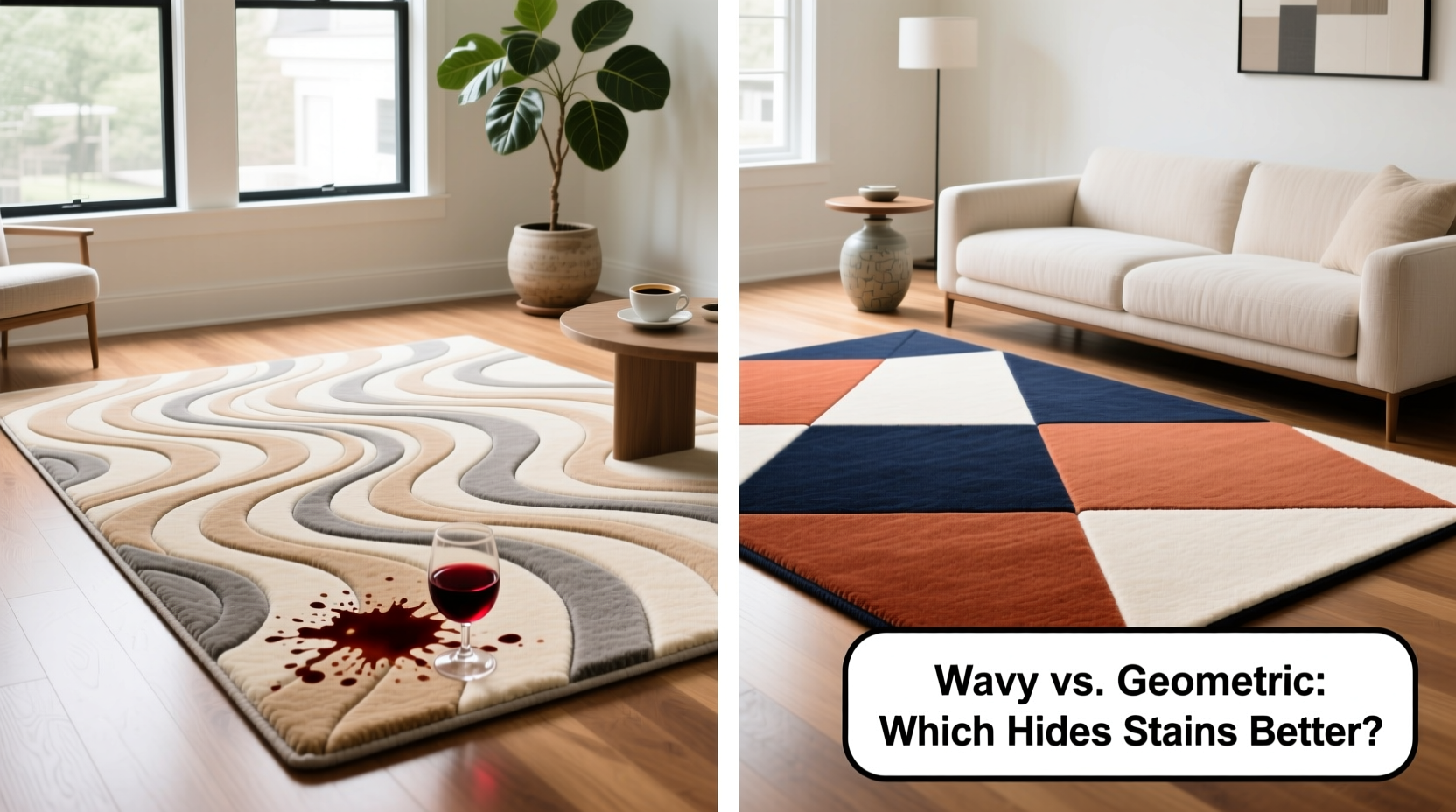
Wavy carpets feature flowing, organic lines that mimic natural movement—think ocean waves or wind-swept sand dunes. These designs are typically subtle, with tonal variations rather than bold contrasts. They're often found in looped or textured plush pile constructions, giving them a soft, inviting feel underfoot.
Geometric carpets, on the other hand, rely on structured shapes—squares, diamonds, hexagons, or angular motifs—arranged in repeating or asymmetrical patterns. These designs tend to be bolder, using contrast in color and direction to create visual rhythm. They’re popular in modern, minimalist, and industrial interiors.
The structural difference between these two styles influences not only their appearance but also how they age and respond to soiling.
Trend Analysis: What’s Popular in 2024?
Interior design trends shift with cultural preferences, material innovations, and lifestyle changes. In recent years, both wavy and geometric carpets have seen surges in popularity—but for different reasons.
Geometric patterns have dominated high-end residential and commercial spaces due to their strong visual impact and compatibility with architectural lines. Designers appreciate their ability to define zones in open-plan living areas. According to Interior Design Today's 2023 report, geometric carpet tiles were specified in 68% of new urban apartment developments, particularly in home offices and entryways.
However, wavy carpets are gaining momentum in family homes and wellness-centered environments. Their softer, biomorphic forms align with the growing biophilic design movement, which emphasizes nature-inspired elements to promote calm and well-being. A survey by the National Association of Home Builders (NAHB) revealed a 22% increase in demand for textured, organic-patterned flooring in bedrooms and living rooms from 2022 to 2024.
“People are moving away from stark minimalism toward warmth and sensory comfort. Wavy patterns provide motion without chaos—they feel alive but not overwhelming.” — Lena Torres, Interior Designer & Sustainable Materials Consultant
Stain and Soil Concealment: A Practical Comparison
For most homeowners, longevity and low maintenance outweigh pure aesthetics. The key question: which pattern hides dirt and stains more effectively?
It might seem intuitive that busier patterns conceal messes better, but the reality depends on contrast, scale, and color blending.
- Wavy carpets excel at disguising stains when they use low-contrast, multi-tonal shading within the same color family. Because the pattern mimics irregular natural textures, small spills or smudges blend into the flow. However, if the wavy design uses sharp tonal shifts (e.g., cream waves on gray), spills can stand out more due to disrupted continuity.
- Geometric carpets can hide stains well—if the pattern is small-scale and colors are blended. Larger geometric shapes with high contrast (like black-and-white chevrons) make any discoloration immediately noticeable. But mid-sized, muted geometric repeats (e.g., taupe diamonds on beige) scatter light unevenly, masking minor imperfections through optical distraction.
Comparison Table: Wavy vs Geometric Carpets
| Feature | Wavy Carpets | Geometric Carpets |
|---|---|---|
| Trend Status (2024) | Rising in residential spaces; favored for calming effect | Dominant in modern/urban design; widely used in offices |
| Stain Hiding Ability | High (with tonal variation); blends spills into curves | Moderate to high (depends on scale and contrast) |
| Dirt & Footprint Visibility | Low—texture disrupts clean lines of footprints | Medium—patterns may show compression along edges |
| Cleaning Difficulty | Easy—no directional emphasis simplifies spot treatment | May require careful alignment during cleaning |
| Suitability for High-Traffic Areas | Good (if looped or twist pile) | Excellent—especially modular geometric tiles |
| Design Flexibility | Better in cozy, organic interiors | Strong in contemporary, defined spaces |
Real-World Example: A Family Living Room Dilemma
The Patel family renovated their suburban home in early 2023. With two young children and a dog, they needed a carpet that looked stylish but could handle messes. They initially chose a bold black-and-white geometric rug for the living room, drawn to its modern edge. Within six months, however, spilled juice and muddy paw prints became glaringly obvious, requiring weekly professional cleaning.
They replaced it with a wavy, heather-gray carpet featuring subtle undulations in tone. Despite similar usage, stains now blend into the texture. “It still gets dirty,” says Meera Patel, “but you don’t notice it until you’re right on top of it. It looks lived-in, not worn out.”
This case illustrates how function should drive form—especially in homes where perfection is unrealistic.
Actionable Checklist: Choosing the Right Pattern for Your Needs
Use this checklist to evaluate whether a wavy or geometric carpet suits your space:
- ✅ Assess traffic level: High-traffic areas benefit from geometric tiles or tightly woven wavy textures.
- ✅ Prioritize color depth: Mid-tone palettes hide stains better than white or jet black.
- ✅ Consider pile type: Loop pile resists matting; cut pile feels softer but shows footprints more.
- ✅ Test lighting: Harsh overhead lights exaggerate pattern flaws—view samples under real conditions.
- ✅ Think long-term: Can you live with this pattern after a year of use? Avoid overly trendy geometrics if you prefer timeless appeal.
- ✅ Evaluate maintenance access: Are you able to clean regularly? Geometric patterns may need more frequent attention.
Step-by-Step Guide to Testing Carpet Performance
- Obtain large samples (at least 2' x 2') of both wavy and geometric options.
- Place them in your actual space for 3–5 days to observe how light and furniture affect visibility.
- Simulate wear: Walk on them barefoot and with shoes; sprinkle a small amount of cinnamon or cocoa powder to mimic dust.
- Test spill concealment: Use water or diluted coffee to create a small stain, then assess visibility after drying.
- Evaluate cleaning ease: Blot the stain with a damp cloth and note residue or pattern distortion.
- Make your decision based on real-world performance, not showroom appeal.
Frequently Asked Questions
Do geometric carpets show vacuum tracks more than wavy ones?
Yes, especially if the pile has a directional sheen. Geometric patterns with uniform pile orientation can reveal vacuum lines that disrupt the design’s symmetry. Wavy carpets, with their irregular texture, naturally diffuse light and minimize track visibility.
Which carpet type lasts longer?
Durability depends more on fiber material (nylon, polyester, wool) and construction than pattern. However, geometric carpet tiles often last longer in high-traffic zones because damaged sections can be replaced individually, whereas wavy broadloom carpets usually require full replacement if a section is ruined.
Can I mix wavy and geometric rugs in one home?
Absolutely. Many designers layer styles intentionally—for example, a geometric hallway runner leading into a living room with a wavy area rug. Just ensure cohesive color tones to avoid visual clutter.
Final Recommendation: Balance Trend and Practicality
If your priority is hiding stains and maintaining a relaxed, lived-in look, **wavy carpets with tonal variation** are generally the better choice. Their fluid design camouflages imperfections and ages gracefully. For modern aesthetics and modularity—especially in offices or entryways—**geometric carpets** offer unmatched structure and repairability.
The trend today favors hybrid solutions: manufacturers are introducing \"organic geometry\"—patterns that combine soft curves with subtle angular elements—to merge the best of both worlds. Look for these innovative weaves if you want visual interest without sacrificing practicality.




 浙公网安备
33010002000092号
浙公网安备
33010002000092号 浙B2-20120091-4
Comments
No comments yet. Why don't you start the discussion?