
When selecting bedroom accessories, most people focus on comfort, material, and size. But an often-overlooked detail—pillow pattern—can quietly influence both the ambiance of your space and even your sense of well-being. Wavy and geometric patterns are two of the most popular design choices in modern home decor. While they may seem like purely aesthetic decisions, research in environmental psychology and textile design suggests that these patterns do more than just look good—they can shape mood, perception, and even sleep quality.
The question isn’t whether one is “better” than the other, but rather how each functions in different contexts. Understanding the subtle yet real differences between wavy (organic, flowing) and geometric (structured, angular) pillow patterns helps you make intentional choices that align with both personal style and psychological comfort.
Understanding Pattern Psychology in Interior Design
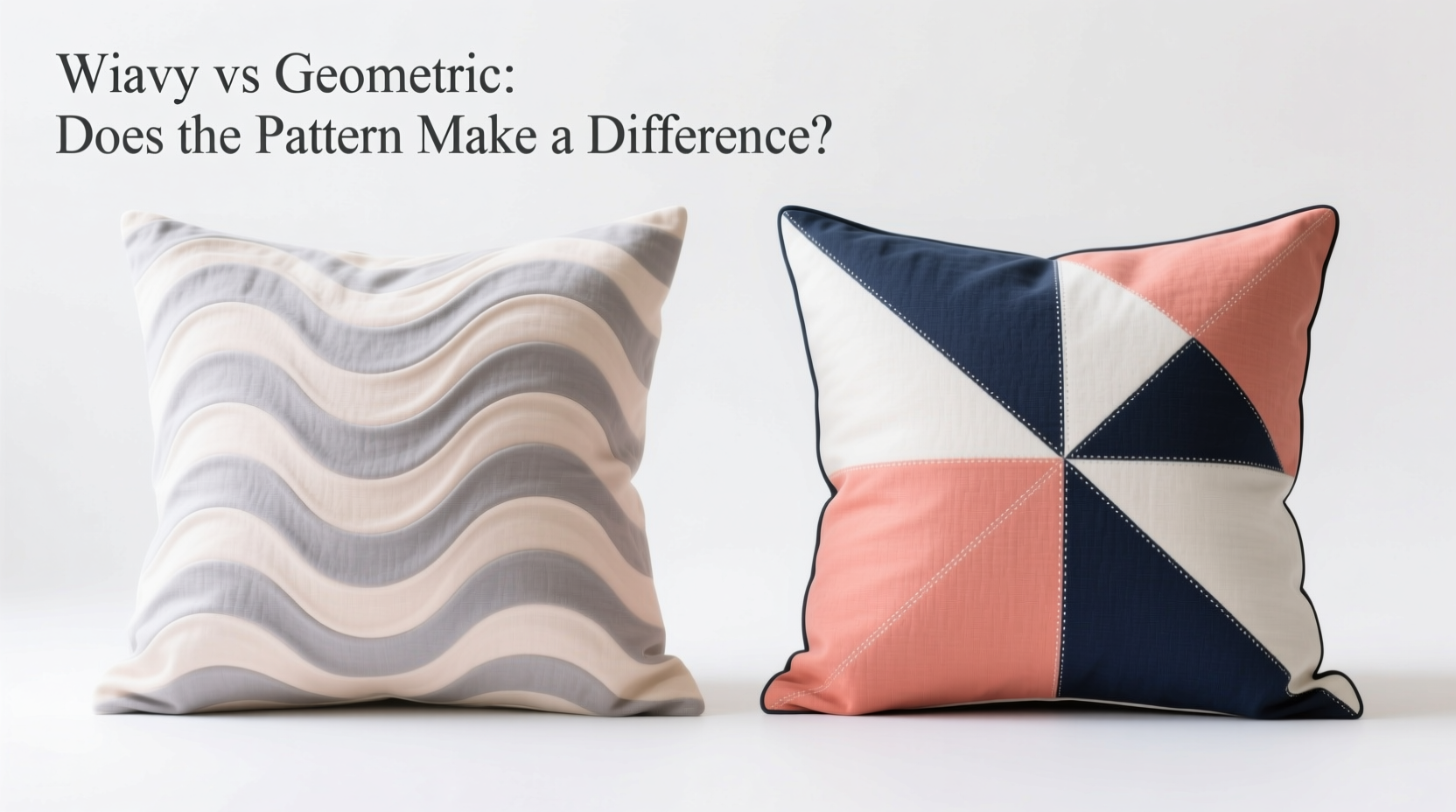
Patterns are not neutral. They communicate visual language through rhythm, repetition, and form. In interior design, this language influences emotional responses. Wavy patterns—characterized by curves, ripples, and soft undulations—are associated with natural elements like water, wind, and plant growth. These organic forms tend to evoke calmness, fluidity, and relaxation.
In contrast, geometric patterns—such as triangles, squares, zigzags, or repeating grids—signal order, precision, and energy. Their sharp lines and symmetry can stimulate alertness and mental engagement. While this might be ideal for workspaces, it may interfere with the restful atmosphere needed in a bedroom.
“Visual stimuli in the sleeping environment directly impact the nervous system. Soft, irregular patterns promote parasympathetic activation—the body’s ‘rest and digest’ state.” — Dr. Lena Torres, Environmental Psychologist
This doesn’t mean geometric pillows should be banned from the bedroom. Rather, their placement and proportion matter. Used as accent pieces among softer designs, they can add visual interest without disrupting tranquility.
Wavy Patterns: The Case for Organic Flow
Wavy-patterned pillows often feature motifs inspired by ocean waves, rolling hills, or abstract brushstrokes. These designs are inherently asymmetrical and dynamic, creating a sense of gentle movement. Because the human eye follows curves more easily than sharp angles, wavy patterns are visually soothing and less likely to cause subconscious tension.
From a design perspective, wavy patterns excel in spaces aiming for a coastal, bohemian, or minimalist Scandinavian aesthetic. They blend seamlessly with neutral palettes and natural textures like linen, cotton, or wool. Their versatility makes them ideal for creating a serene retreat.
Moreover, studies in neuroaesthetics suggest curved lines activate brain regions linked to positive emotion and approach behavior, while angular shapes can trigger mild stress responses. This neurological preference for curves supports the use of wavy designs in rest-oriented environments.
Geometric Patterns: Structure, Energy, and Bold Style
Geometric pillows bring boldness and definition. Whether featuring chevrons, hexagons, or Moroccan trellises, these patterns command attention. Their strength lies in creating focal points and adding rhythm to otherwise simple bedding arrangements.
Because geometric designs rely on repetition and alignment, they work best when balanced with solid colors or softer textures. A bed with three identical geometric pillows aligned symmetrically feels intentional and curated. However, overuse—especially of high-contrast black-and-white geometrics—can create visual clutter, which may subconsciously disrupt relaxation.
That said, geometric patterns have practical advantages. Their structured nature often makes them easier to coordinate with existing furniture lines, artwork, or architectural details. For modern, urban lofts or contemporary bedrooms, they reinforce a clean, design-forward identity.
When Geometric Works Best
- In rooms with strong architectural lines (exposed beams, angular furniture)
- As accent pieces against solid-colored bedding
- In shared rooms where a bolder aesthetic appeals to multiple tastes
- For renters wanting temporary style impact without permanent changes
Comparative Analysis: Wavy vs Geometric Pillows
| Feature | Wavy Patterns | Geometric Patterns |
|---|---|---|
| Emotional Impact | Calm, soothing, nurturing | Energetic, stimulating, bold |
| Design Flexibility | High—blends with many styles | Moderate—requires careful pairing |
| Sleep Environment Suitability | Ideal for primary bedrooms | Better for guest rooms or multi-use spaces |
| Pattern Longevity | Timeless; rarely feels dated | Trend-sensitive; may age faster |
| Maintenance Visibility | Hides wear and minor stains well | Shows misalignment and fading more clearly |
Real-World Application: A Mini Case Study
Sarah, a graphic designer living in Portland, struggled with insomnia despite following good sleep hygiene. Her bedroom featured crisp white bedding accented with three black-and-white triangular pillows—a stylish choice she loved. After consulting a sleep wellness coach, she learned that her room’s high-contrast, angular visuals might be contributing to nighttime alertness.
She replaced the geometric pillows with two large wavy-patterned ones in soft sage green and cream. Within a week, she reported falling asleep faster and feeling more refreshed. “I didn’t think pillows could make a difference,” she said. “But removing those sharp lines changed the whole vibe. It feels like the room finally breathes.”
This anecdote illustrates how seemingly minor design choices can have tangible effects on daily well-being. It’s not about discarding personal taste, but about aligning aesthetics with function.
Actionable Checklist: Choosing the Right Pillow Pattern
Before purchasing new decorative pillows, consider the following checklist to ensure your choice supports both style and comfort:
- Assess your bedroom’s primary function—is it for deep rest or multi-purpose use?
- Determine your dominant design style (minimalist, boho, modern, etc.)
- Evaluate existing color palette and texture balance
- Limit geometric pillows to 1–2 accents unless the room thrives on energy
- Prioritize wavy or organic patterns for master bedrooms focused on relaxation
- Test visual impact by placing sample images on your phone screen at night
- Choose washable covers to maintain pattern clarity over time
Expert Insight: The Role of Repetition and Contrast
“The issue isn’t geometry itself, but repetition and contrast. A single diamond-pattern pillow adds flair. Three identical high-contrast geometrics create visual noise. Balance is key.” — Marcus Lin, Interior Designer & Author of *Calm Spaces*
Lin emphasizes that pattern impact depends on scale, quantity, and context. A large, low-contrast geometric print may feel calmer than a small, high-frequency wave pattern. Always view the pillow in the actual lighting and setting where it will live.
Frequently Asked Questions
Do wavy patterns make a room feel bigger?
Yes, in many cases. Curved, horizontal wave patterns can create an illusion of movement and expansion, especially when aligned with the bed’s width. Vertical wavy lines may add height perception. This effect is subtle but supported by spatial design principles.
Can I mix wavy and geometric pillows?
Absolutely—and doing so thoughtfully creates dynamic harmony. Try pairing one geometric pillow with two wavy ones, using shared colors to unify the look. Avoid equal numbers, which can create visual competition.
Are certain patterns better for kids’ rooms?
Children often respond well to geometric shapes, which support cognitive development through pattern recognition. However, bedtime areas should still lean toward softer designs. Consider using geometric pillows in play zones and wavy ones near sleeping areas.
Conclusion: Make Your Patterns Work for You
The debate between wavy and geometric pillows isn’t about superiority—it’s about intentionality. Every pattern sends a message, whether it’s one of flow and ease or structure and vibrancy. By understanding how these designs interact with human psychology and room function, you transform decorative choices into tools for better living.
If your goal is rest, recovery, and tranquility, wavy patterns offer a quiet advantage. If you value bold expression and modern flair, geometric pillows can shine—when used with restraint. The most effective interiors don’t follow trends blindly; they reflect thoughtful decisions that serve both beauty and well-being.




 浙公网安备
33010002000092号
浙公网安备
33010002000092号 浙B2-20120091-4
Comments
No comments yet. Why don't you start the discussion?