
As winter nights grow longer and colder, many people struggle to fall asleep quickly or stay asleep through the night. Two popular solutions have gained widespread attention: weighted blankets and heated blankets. Both promise improved comfort and deeper rest, but they work in fundamentally different ways. Choosing between them isn't just about preference—it's about understanding how each affects your nervous system, body temperature, and sleep cycle. This article dives into the science, benefits, risks, and real-world effectiveness of both options to help you make an informed decision.
The Science Behind Sleep and Winter Disruptions
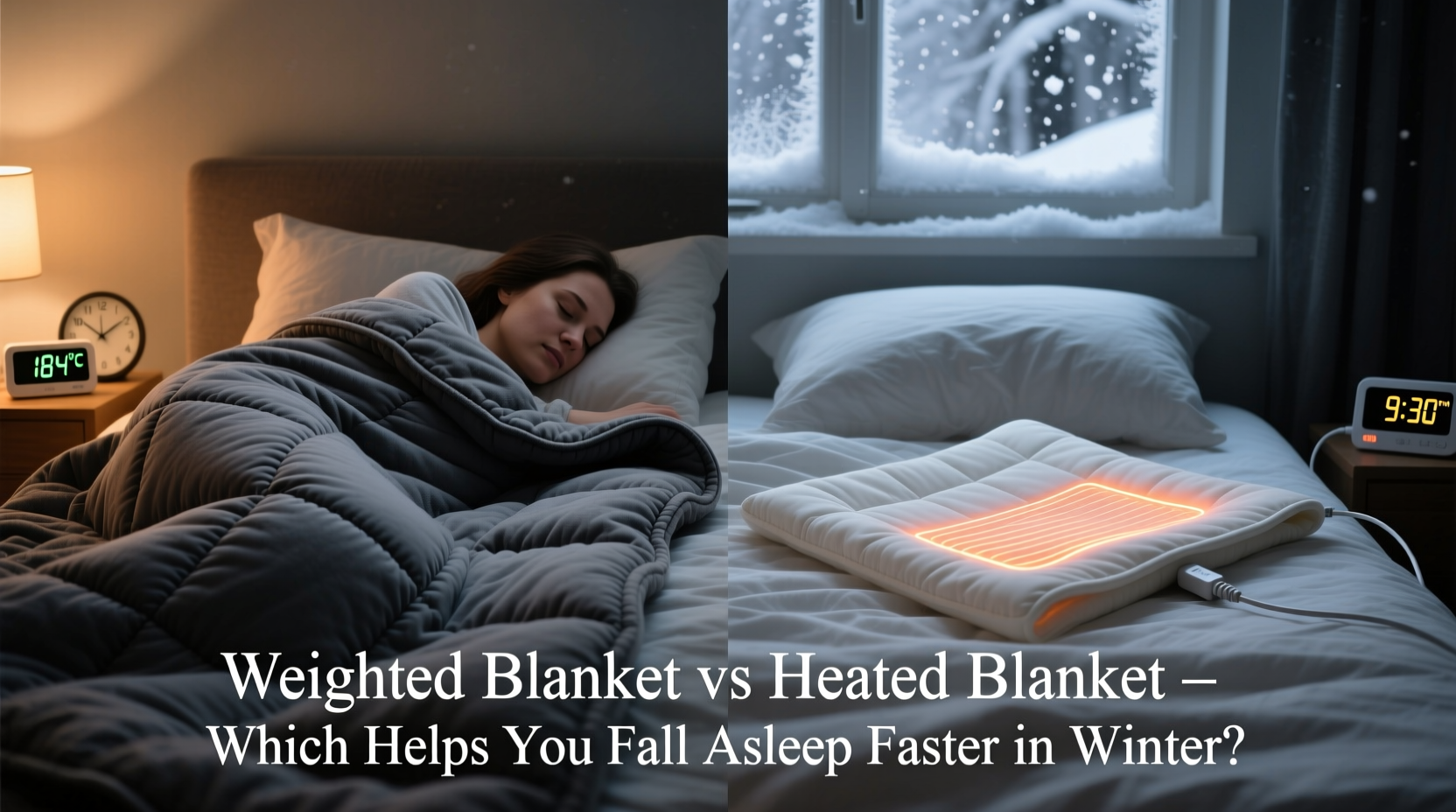
Winter introduces several challenges to quality sleep. Shorter daylight hours disrupt circadian rhythms by reducing natural melatonin production. Cold temperatures can cause discomfort, especially if bedding fails to maintain a stable thermal environment. Additionally, seasonal affective disorder (SAD) and increased stress levels during the holidays can elevate cortisol, making it harder to wind down.
Sleep onset—the time it takes to transition from wakefulness to sleep—is influenced by two key factors: core body temperature and nervous system state. To initiate sleep, your core temperature must drop slightly, while your nervous system shifts from sympathetic (\"fight-or-flight\") to parasympathetic (\"rest-and-digest\") dominance. Both weighted and heated blankets influence these systems, but in opposite directions.
“Thermal regulation and sensory input are two of the most underappreciated levers for improving sleep onset.” — Dr. Lena Torres, Sleep Neurologist at Boston Sleep Institute
How Weighted Blankets Work: Deep Pressure Stimulation
Weighted blankets typically range from 5 to 30 pounds and are filled with glass beads, plastic pellets, or metal chains distributed evenly across fabric layers. Their primary mechanism is deep pressure stimulation (DPS), a form of tactile input that applies gentle, consistent pressure across the body.
DPS has been studied extensively in clinical settings, particularly for individuals with anxiety, autism, and PTSD. Research shows it can increase serotonin and melatonin production while decreasing cortisol levels. A 2020 study published in the Journal of Clinical Sleep Medicine found that participants using a 12-pound weighted blanket fell asleep an average of 18 minutes faster than those using a standard blanket.
The sensation mimics being hugged or swaddled, which activates the parasympathetic nervous system. This calming effect reduces physical tension and mental rumination—two common barriers to falling asleep quickly in winter.
Pros and Cons of Weighted Blankets in Winter
| Advantages | Drawbacks |
|---|---|
| Reduces anxiety and racing thoughts | May feel too heavy or restrictive for some |
| No electricity or cords required | Limited warmth; may require layering |
| Safe for long-term use, including children (with supervision) | Not recommended for people with respiratory issues or circulatory problems |
| Portable and machine-washable (many models) | Can overheat if combined with thick comforters |
How Heated Blankets Work: Thermal Regulation for Sleep Onset
Heated blankets use embedded wires or carbon fiber elements to generate warmth when plugged into a power source. Most modern versions offer multiple heat settings and auto-shutoff features for safety. The goal is to raise skin temperature without overheating the core—a crucial distinction for sleep.
While your core temperature needs to drop to initiate sleep, warming your extremities (hands and feet) dilates blood vessels and promotes heat loss from the core. This paradoxical process accelerates the natural cooling process. A 2018 study in Temperature journal showed that pre-sleep warming of hands and feet reduced sleep onset latency by up to 25% in cold environments.
In winter, heated blankets provide immediate relief from cold sheets and drafts. They’re particularly effective for people with poor circulation, Raynaud’s syndrome, or chronic pain conditions like arthritis, where stiffness worsens at night.
Pros and Cons of Heated Blankets in Winter
| Advantages | Drawbacks |
|---|---|
| Provides instant, adjustable warmth | Requires electrical outlet and poses minor fire risk if damaged |
| Improves blood flow and reduces muscle stiffness | Overuse can lead to dehydration or overheating |
| Ideal for very cold bedrooms | Less effective for anxiety-related insomnia |
| Some models integrate with smart home systems | Higher upfront cost and maintenance concerns |
“Heated bedding is one of the most effective tools we recommend for older adults struggling with cold-induced sleep fragmentation.” — Dr. Rajiv Mehta, Geriatric Sleep Specialist
Direct Comparison: Which Helps You Fall Asleep Faster?
To determine which blanket type leads to faster sleep onset in winter, consider three criteria: speed of effect, physiological impact, and user suitability.
- Speed of Effect: Heated blankets deliver near-instant warmth, helping users feel comfortable within minutes. Weighted blankets take longer—typically 10–15 minutes—to induce a noticeable calming effect.
- Physiological Impact: Heated blankets primarily influence thermoregulation. Weighted blankets target the nervous system directly via pressure input.
- User Suitability: People with anxiety, ADHD, or sensory processing differences often respond better to weighted blankets. Those with circulation issues or extreme cold sensitivity benefit more from heated options.
A hybrid approach is increasingly popular: using a heated blanket to warm the bed before sleep, then replacing it with a weighted blanket once the body is relaxed. This leverages the strengths of both technologies without risking overheating during the night.
Mini Case Study: Sarah’s Winter Insomnia Solution
Sarah, a 34-year-old graphic designer from Minnesota, struggled with falling asleep during harsh winters. She lived in an older home with uneven heating and often woke up shivering. Initially, she bought a heated blanket and noticed immediate improvement in comfort. However, she still experienced racing thoughts and took over an hour to fall asleep.
After consulting a sleep coach, she added a 15-pound weighted blanket to her routine. She began pre-warming her bed with the heated blanket for 30 minutes before turning it off and switching to the weighted option. Within a week, her sleep onset dropped from 70 minutes to under 25. “It was the combination that made the difference,” she said. “The heat got me physically ready, and the weight quieted my mind.”
Step-by-Step Guide to Choosing the Right Option
- Assess Your Primary Sleep Challenge: Are you cold, anxious, or both? If coldness is the main barrier, start with a heated blanket. If stress or overthinking keeps you awake, prioritize a weighted option.
- Evaluate Bedroom Temperature: If your room consistently stays below 60°F (15°C), a heated blanket may be essential. Warmer rooms allow for greater flexibility.
- Consider Health Conditions: Avoid heated blankets if you have diabetes or neuropathy (reduced sensation). Avoid weighted blankets if you have sleep apnea, asthma, or mobility limitations.
- Test One at a Time: Introduce only one new product per week to accurately gauge its impact on sleep onset.
- Track Results: Use a sleep journal or wearable tracker to measure changes in time to fall asleep, awakenings, and perceived restfulness.
- Combine Strategically: Once you understand your individual response, experiment with sequential use—heat first, then weight—for maximum benefit.
Checklist: What to Look for When Buying
- ✅ For Weighted Blankets:
- Weight is ~10% of body weight
- Filling is non-toxic and evenly distributed
- Removable, washable cover
- Breathable fabric (cotton, bamboo, or microfiber)
- Reinforced stitching to prevent shifting
- ✅ For Heated Blankets:
- UL-certified safety rating
- Auto shut-off after 10 hours
- Multiple heat settings (at least 3)
- Machine-washable or spot-cleanable
- Low EMF emission design
Frequently Asked Questions
Can I use a weighted blanket and heated blanket together?
Yes, but not simultaneously. Layering them while powered can trap excessive heat and increase fire risk. Instead, use the heated blanket to warm the bed before sleep, then remove it and add the weighted blanket. Some dual-function products exist, but they are rare and require careful monitoring.
Are heated blankets safe to leave on all night?
Modern heated blankets with auto-shutoff features are generally safe for overnight use, but it’s not recommended unless medically necessary. Prolonged exposure to low-level heat can dry out skin, cause mild burns in sensitive individuals, or disrupt natural sleep cycles by preventing core temperature drop.
Who should avoid weighted blankets?
People with obstructive sleep apnea, chronic respiratory conditions, circulatory disorders, or limited mobility should consult a doctor before use. Children under 50 pounds (23 kg) should not use adult-weighted blankets due to suffocation risk. Always supervise older children and pets around weighted bedding.
Final Recommendation: Match the Tool to Your Need
When it comes to falling asleep faster in winter, neither blanket is universally superior. The choice depends on your specific sleep obstacles. If cold is your enemy, a heated blanket provides rapid, tangible relief. If your mind won’t shut off despite warm feet, a weighted blanket offers neurological support that heat alone cannot replicate.
For best results, don’t treat them as mutually exclusive. Many sleep experts now recommend a phased approach: warm the body first, calm the nervous system second. This dual strategy aligns with the body’s natural sleep preparation sequence and addresses both physical and psychological barriers to rest.
Ultimately, winter sleep success isn’t about choosing one technology over another—it’s about understanding your body’s signals and responding with precision. Whether you reach for weight, warmth, or both in rotation, the goal remains the same: faster sleep onset, deeper rest, and waking up refreshed, even in the coldest months.




 浙公网安备
33010002000092号
浙公网安备
33010002000092号 浙B2-20120091-4
Comments
No comments yet. Why don't you start the discussion?