
One of the most deceptively simple yet revealing questions in modern interviews is: “If you were an animal, which one would you be—and why?” At first glance, it seems playful or even irrelevant. But hiring managers use this question to assess personality, self-awareness, cultural fit, and how candidates frame their strengths under pressure. The key isn’t just picking an animal—it’s aligning your answer with the values of the role and organization while staying authentic.
A well-crafted response can set you apart by showcasing emotional intelligence, communication skills, and professional insight. A poorly chosen or vague answer, however, can make you appear unprepared or misaligned with team dynamics. This guide breaks down how to approach the question strategically, avoid common pitfalls, and deliver a memorable, impactful response.
Why Interviewers Ask This Question
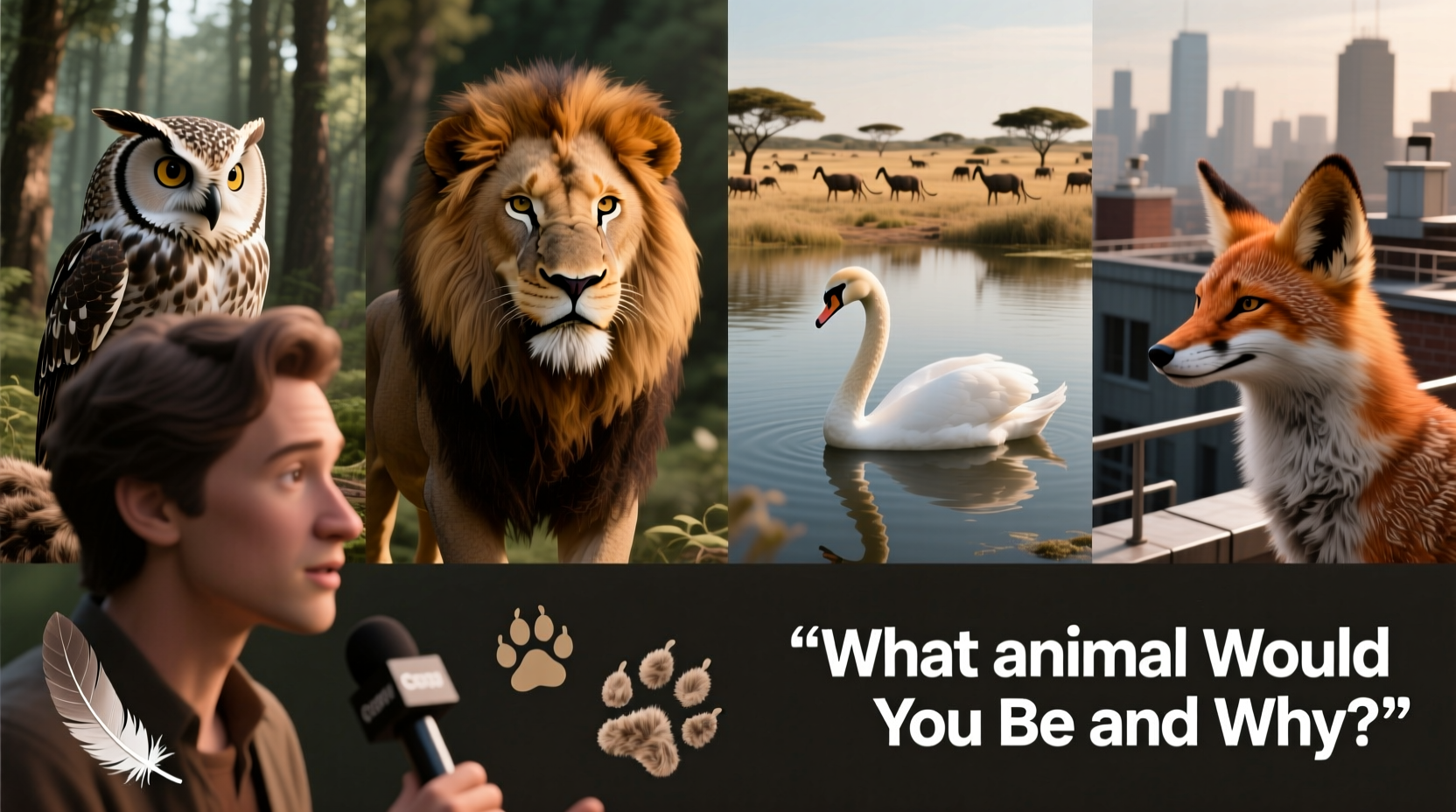
This behavioral question is less about zoology and more about psychology. Employers want to understand:
- How you perceive your own strengths and work style
- Your ability to think creatively under pressure
- Whether your traits match the company culture (e.g., collaborative, innovative, resilient)
- If you can articulate abstract ideas clearly and confidently
According to career strategist Dr. Lena Peterson, “Metaphorical questions like this bypass rehearsed answers. They reveal how people see themselves in relation to others, challenges, and goals.”
“Candidates who connect their animal choice to real workplace behaviors tend to leave a stronger impression than those who rely on clichés.” — Dr. Lena Peterson, Organizational Psychologist
Choosing the Right Animal: Strategy Over Cuteness
The best choices aren’t necessarily the most exotic or powerful animals—they’re the ones whose natural behaviors reflect qualities relevant to the job. For example:
- Leadership roles might benefit from comparisons to wolves (team-oriented leaders) or elephants (wise, protective, long-term thinkers)
- Creative positions may align with octopuses (adaptable, problem-solvers) or hummingbirds (energetic, detail-focused)
- Support or operations roles could draw parallels to beavers (diligent, builders) or ants (collaborative, efficient)
Steer clear of animals with negative connotations in professional settings—such as sloths (lazy), hyenas (disruptive), or lemmings (mindless followers)—even if said ironically. Humor rarely lands safely in high-stakes interviews.
Do’s and Don’ts: What Works and What Doesn’t
| Do | Don’t |
|---|---|
| Choose an animal whose traits mirror core job requirements | Pick based solely on personal preference without relevance |
| Explain *why* with specific examples (“like a dolphin, I thrive in teams and communicate clearly”) | Say “I’d be a unicorn because I’m unique” without elaboration |
| Tie your answer to company values (e.g., innovation, resilience, collaboration) | Mention animals associated with solitude unless applying for independent research roles |
| Keep it concise—60 to 90 seconds max | Go into excessive biological detail about migration patterns |
| Show humility—even strong animals have interdependence (e.g., wolves need packs) | Frame yourself as superior or irreplaceable |
Step-by-Step: Crafting Your Answer
Follow this five-step process to build a compelling, tailored response:
- Analyze the Role: Identify 3–5 key competencies (e.g., adaptability, attention to detail, teamwork).
- Reflect on Strengths: Match those competencies to personal traits you genuinely embody.
- Select the Animal: Choose one known for similar behaviors in nature.
- Build the Analogy: Link each trait to a brief, vivid behavior (e.g., “Like a beaver, I focus on building reliable systems”)
- Rehearse Naturally: Practice until it sounds conversational, not scripted.
Example Answer: Project Manager Applying at a Tech Startup
“I’d say I’m most like an octopus. They’re incredibly adaptable—changing color, shape, and strategy depending on the environment. In my last role, our product timeline shifted twice due to client feedback. Instead of resisting, I reorganized workflows, reassigned tasks, and kept the team aligned—all within 48 hours. Like an octopus navigating tight spaces, I stay flexible under pressure while keeping sight of the bigger goal.”
Real-World Case: Turning a Quirky Question Into a Job Offer
Jamal, a marketing coordinator, was interviewing for a fast-paced agency role known for creative thinking. When asked the animal question, he paused briefly, then said:
“I’d be a honeybee. Not because I buzz around—but because bees are highly organized, communicate effectively through dance, and every action supports the hive’s success. In my current job, I initiated a weekly cross-departmental sync that improved campaign launch times by 30%. I see myself as someone who doesn’t just produce work but enables others to do their best work too.”
The hiring manager later told him that answer stood out because it demonstrated systems thinking, humility, and alignment with their collaborative culture. He got the offer.
Common Animals and Their Professional Interpretations
Not all animals send the same message. Here’s a quick reference guide:
- Dolphin: Intelligent, social, communicative – ideal for client-facing or team-based roles
- Eagle: Visionary, strategic, observant – suits leadership or analytical positions
- Ant: Diligent, structured, team-oriented – great for operations, logistics, or support functions
- Beaver: Persistent builder, detail-focused – perfect for engineering, design, or project management
- Wolf: Loyal pack leader, decisive – effective for managerial or security-related roles
- Owl: Thoughtful, wise, perceptive – fits research, advisory, or mentoring roles
- Elephant: Strong, loyal, long-memory – conveys reliability and emotional intelligence
- Chameleon: Adaptable, observant – useful for consultants or change management experts
Frequently Asked Questions
Can I use a fictional animal?
No. While creative, mythical creatures like dragons or phoenixes lack shared behavioral references and may come across as unserious. Stick to real animals with observable traits.
What if I freeze during the interview?
It’s okay to pause and think. Say, “That’s an interesting question—let me think for a moment.” Even 10 seconds of silence beats a rushed, incoherent answer. If completely stuck, default to a safe, positive animal like a dog (loyal, eager) or bee (hardworking, social).
Should I match the animal to the company brand?
Yes, when appropriate. Outdoor brands might appreciate mountain goats (resilient, sure-footed); financial firms may value owls (cautious, wise). Research the company culture beforehand to inform your choice.
Final Checklist Before Your Interview
📋 Preparation Checklist:- Reviewed the job description and identified 3 core traits needed
- Selected an animal whose natural behavior reflects those traits
- Prepared a 2–3 sentence explanation linking animal traits to work experience
- Practiced saying it aloud without sounding rehearsed
- Considered company culture and adjusted choice accordingly
- Avoided humor, exaggeration, or overused picks like lions or eagles without fresh framing
Conclusion: Turn a Curveball Into a Career Opportunity
The “what animal would you be” question isn’t a trap—it’s an invitation to tell your professional story in a memorable way. When approached with intention, it becomes a chance to demonstrate self-awareness, cultural fit, and communication skill. The strongest answers don’t just describe an animal; they reveal character, competence, and compatibility.
Prepare yours not as a gimmick, but as a polished reflection of who you are at work. Whether you identify with the quiet persistence of a beaver or the strategic vision of an eagle, let your answer speak to the value you bring—and watch it become one of the most impactful moments of your interview.




 浙公网安备
33010002000092号
浙公网安备
33010002000092号 浙B2-20120091-4
Comments
No comments yet. Why don't you start the discussion?