
Running out of thyme mid-recipe is a common kitchen dilemma. Whether you're simmering a stew, roasting chicken, or crafting a herb-infused sauce, thyme’s earthy, slightly minty presence often anchors the dish. But when the jar is empty, knowing what to use instead—without compromising flavor—is essential. The right substitute can preserve the integrity of your meal, while the wrong one may throw off balance and depth. Understanding which herbs mimic thyme’s complexity, how their flavors differ, and when to adjust quantities ensures you’re never derailed by a missing ingredient.
Thyme isn’t just a background note; it’s a foundational herb in many global cuisines, especially French, Mediterranean, and Creole cooking. Its absence requires thoughtful replacement, not random substitution. This guide explores the most effective alternatives, explains their flavor dynamics, and provides practical guidance for using them across everyday and advanced culinary applications.
Definition & Overview
Thyme (Thymus vulgaris) is a perennial herb native to the Mediterranean region and a member of the Lamiaceae (mint) family. It features small, narrow leaves on woody stems and is used widely in both fresh and dried forms. With over 300 varieties, common garden thyme is the standard in Western kitchens.
Culinarily, thyme delivers a complex profile: earthy, slightly floral, with hints of camphor, mint, and lemon depending on the cultivar. It has moderate pungency and blends seamlessly into long-cooked dishes like braises, stocks, and sauces, where its oils infuse gradually. Unlike more volatile herbs such as basil or cilantro, thyme withstands prolonged heat, making it ideal for slow cooking.
Its role extends beyond flavor. Thyme contributes aromatic depth and subtle bitterness that balances rich ingredients like meat, butter, and cream. In spice blends such as bouquet garni, herbes de Provence, and za’atar, it acts as a structural component, linking other herbs and spices harmoniously.
Key Characteristics of Thyme
| Attribute | Description |
|---|---|
| Flavor Profile | Earthy, woodsy, with notes of mint, camphor, and slight citrus (especially in lemon thyme) |
| Aroma | Fragrant, herbal, warm, slightly medicinal due to thymol content |
| Form | Fresh sprigs, dried leaves, ground powder |
| Heat Tolerance | High—ideal for long cooking; fresh holds up better than delicate herbs |
| Culinary Function | Base layer herb, aromatic foundation, flavor enhancer in savory dishes |
| Shelf Life | Fresh: 10–14 days refrigerated; Dried: 1–3 years if stored properly |
Best Substitutes for Thyme
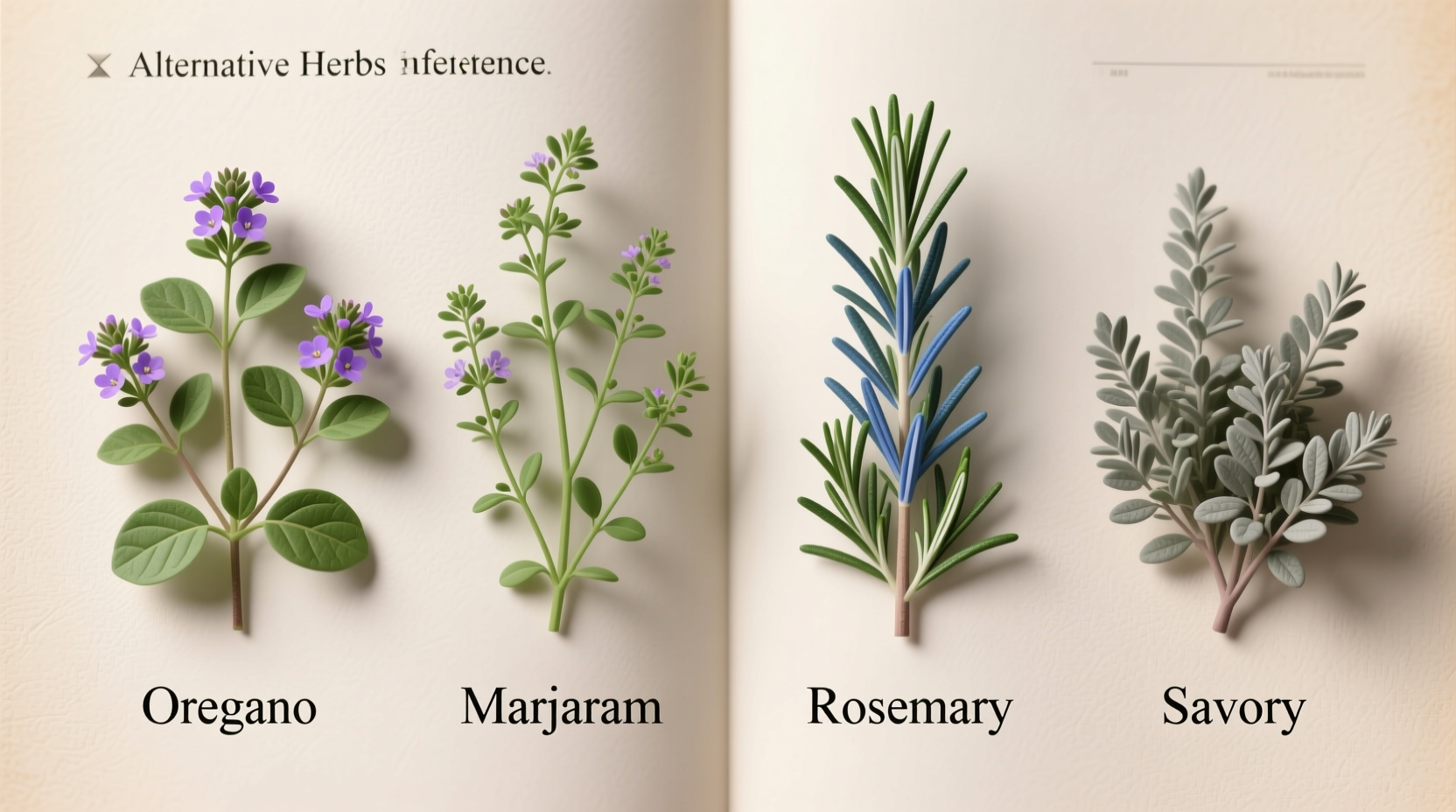
No single herb replicates thyme exactly, but several come close in function and flavor. The best choice depends on the dish type, cooking method, and availability. Below are the top alternatives, ranked by similarity and versatility.
1. Oregano
Oregano shares thyme’s Mediterranean origin and robust structure. While more pungent and slightly peppery, oregano offers a comparable earthiness and works exceptionally well in tomato-based dishes, grilled meats, and roasted vegetables.
Substitution ratio: Use ¾ teaspoon dried oregano for every 1 teaspoon dried thyme. For fresh, substitute 1 tablespoon fresh oregano for 1 tablespoon fresh thyme. Reduce slightly due to stronger flavor.
Oregano shines in Italian, Greek, and Mexican cuisines. It stands up well to high heat and complements garlic, onion, and olive oil. Avoid in delicate fish or poultry dishes where its boldness might dominate.
2. Marjoram
Often called “sweet oregano,” marjoram is thyme’s closest relative in taste and aroma. It’s milder, sweeter, and less camphorous, making it an elegant substitute in lighter dishes.
Substitution ratio: Use a 1:1 ratio, whether fresh or dried. Marjoram can be used interchangeably in soups, egg dishes, and herb rubs.
It excels in chicken stuffing, vegetable sautés, and creamy sauces. Because it lacks thyme’s sharp edge, add a pinch of rosemary or sage if depth is needed.
3. Rosemary
Rosemary is more intense and pine-like, so caution is required. However, in hearty dishes like lamb roasts, bean stews, or rustic breads, it can stand in for thyme when used sparingly.
Substitution ratio: Use ½ teaspoon dried rosemary or 1 small sprig fresh for every 1 teaspoon dried thyme. Always chop finely to avoid woody bites.
Due to its strong resinous character, rosemary should not replace thyme in large quantities. Best reserved for robust recipes where assertive herbs are welcome.
4. Savory (Summer or Winter)
Savory—particularly summer savory—is sometimes known as “the poor man’s thyme” for its historical use as a direct substitute. It has a peppery, faintly minty flavor with excellent compatibility in legume dishes and sausages.
Substitution ratio: 1:1 for dried or fresh. Summer savory is milder; winter savory is stronger and more camphoraceous—closer to thyme.
This underused herb deserves attention. It enhances lentil soups, bean pots, and poultry seasoning blends. In French cuisine, it's traditional in *faiselles* (herb cheeses) and charcuterie.
5. Herbes de Provence
This commercial blend typically contains thyme, rosemary, marjoram, oregano, and lavender. If your blend includes thyme, it's already partway there—but even without, it mimics the overall profile.
Substitution ratio: Use 1 teaspoon herbes de Provence for every 1 teaspoon thyme. Adjust if the blend contains salt or lavender (reduce if floral notes are undesirable).
Best in roasted meats, tomato sauces, and vegetable gratins. Avoid in delicate seafood or sweet-leaning dishes due to potential floral elements.
6. Basil (in specific contexts)
Basil is not a direct substitute due to its sweet, anise-like freshness, but in certain tomato or Mediterranean dishes, it can fulfill a similar aromatic role when combined with other herbs.
Use case: In a caprese-inspired sauce or fresh tomato salad, a mix of basil and oregano can replace thyme effectively. Not suitable for long-cooked dishes unless added at the end.
Always use fresh basil here—dried lacks vibrancy. Pair with garlic and olive oil to anchor the flavor.
7. Sage
Sage is bold, slightly bitter, and eucalyptus-like. It overlaps with thyme in poultry and stuffing applications but must be used with restraint.
Substitution ratio: ½ teaspoon dried sage or 4–5 fresh leaves, finely chopped, per teaspoon of thyme.
Best in autumnal dishes: turkey, squash, brown butter sauces. Overuse results in medicinal or overpowering notes.
Expert Tip: When substituting strongly flavored herbs like rosemary or sage, start with half the amount, taste after 10 minutes of cooking, and adjust. Dried herbs release flavor slowly, so patience is key.
Variants & Types of Thyme
Understanding thyme’s variations helps refine substitutions. Some types offer distinct profiles that influence which alternative works best.
- Common Thyme (Thymus vulgaris): The standard dried or fresh form. Earthy, balanced, slightly medicinal. Most recipes assume this variety.
- Lemon Thyme (Thymus citriodorus): Bright citrus notes. Substitute with regular thyme plus a few drops of lemon zest or juice, or use lemongrass in Southeast Asian dishes.
- French vs. English Thyme: French thyme has smaller leaves and more intense flavor; English thyme is milder. French is preferred in fine dining; English suits home cooking.
- Dried vs. Fresh: Dried thyme is more concentrated—use ⅓ the amount of fresh. Rehydrate in warm liquid for better dispersion.
Comparison with Similar Ingredients
Thyme is often confused with other woody herbs. Clarifying differences ensures accurate usage and substitution.
| Herb | Similarities to Thyme | Differences | When to Substitute |
|---|---|---|---|
| Oregano | Mediterranean, earthy, robust | More pungent, peppery, less minty | Tomato sauces, grilled meats, pizza |
| Marjoram | Sweet, floral, related species | Milder, no camphor note | Light soups, chicken, eggs |
| Rosemary | Woody stem, high heat tolerance | Pine-like, stronger, can dominate | Roasts, stews, breads (use sparingly) |
| Savory | Nearly identical in flavor profile | Less common, peppery finish | Beans, lentils, sausages |
| Sage | Bitter edge, pairs with thyme in blends | Much stronger, mentholated | Stuffing, poultry, fall dishes |
“In classical French technique, thyme is part of the holy trinity with bay leaf and parsley. When replacing it, consider the entire aromatic base—not just the individual herb.” — Chef Antoine Morel, Culinary Instructor, Institut Le Cordon Bleu
Practical Usage: How to Substitute Thyme in Real Recipes
Substitutions aren’t one-size-fits-all. Context matters. Below are real-world examples showing how to adapt based on dish type.
1. Beef Stew
A classic beef stew relies on thyme for depth. Without it, the broth may taste flat.
- Best substitute: 1 tsp dried marjoram + ½ tsp dried rosemary
- Why: Marjoram adds sweetness, rosemary brings backbone. Together, they mimic thyme’s complexity.
- Method: Add early with onions and garlic. Tie in cheesecloth if using whole sprigs.
2. Roasted Chicken
Thyme is often tucked under the skin or scattered in the pan.
- Best substitute: Herbes de Provence (1:1) or oregano + sage (¾ tsp oregano + ¼ tsp sage)
- Tip: Mix with softened butter and lemon zest for basting. Enhances crisp skin and juicy meat.
3. Lentil Soup
Thyme enhances earthy legumes without overpowering.
- Best substitute: Summer savory (1:1) or 1 tsp dried marjoram
- Optional boost: Add a strip of kombu seaweed for umami depth.
4. Tomato Sauce
Thyme rounds out acidity in marinara or ragù.
- Best substitute: 1 tsp dried oregano
- Enhancement: Add a pinch of red pepper flakes and 1 crushed bay leaf.
5. Fish Baked en Papillote
Delicate white fish with herbs and lemon.
- Best substitute: Lemon zest + 1 tsp fresh marjoram or basil
- Avoid: Strong herbs like rosemary or sage—they overwhelm.
Actionable Checklist: Substituting Thyme Successfully
- Identify the dish’s flavor profile: robust or delicate?
- Choose a substitute with matching intensity.
- Adjust quantity: stronger herbs need reduction.
- Consider adding complementary notes (e.g., lemon for brightness, garlic for depth).
- Taste during cooking and adjust before serving.
Storage & Shelf Life Tips
Proper storage preserves potency and reduces the need for substitutes.
- Fresh Thyme: Wrap in damp paper towel, store in airtight container in the fridge. Lasts 10–14 days. Alternatively, freeze in olive oil cubes for long-term use.
- Dried Thyme: Keep in a cool, dark place in a sealed glass jar. Loses potency after 12 months; label with purchase date.
- Testing Potency: Crush a bit between fingers. If aroma is weak, it’s time to replace.
Freezing fresh thyme whole (on the stem) is effective. Simply drop frozen sprigs into soups or stews—no need to thaw.
Frequently Asked Questions
Can I skip thyme entirely?
You can, but the dish may lack depth, especially in slow-cooked meals. If omitting, boost other aromatics—add extra garlic, onion, or a bay leaf—to compensate.
Is dried thyme as good as fresh?
Not identical, but functional. Dried thyme is more concentrated and better suited to long cooking. Fresh thyme offers brighter top notes and is preferable in finishing dishes or salads. Use 1 tsp dried for every 1 tbsp fresh.
Can I use Italian seasoning instead of thyme?
Yes. Italian seasoning usually contains thyme, oregano, basil, and rosemary. Use a 1:1 ratio, but check the label—some blends are salt-heavy or overly sweet. Adjust sodium accordingly.
What’s the best thyme substitute for tea?
For herbal tea, lemon balm or lemon verbena work well for lemon thyme. Regular thyme tea can be replaced with oregano or savory, but use sparingly—stronger herbs may taste medicinal.
Are there non-herb thyme substitutes?
In rare cases, mushroom powder or smoked paprika can add earthiness, but they don’t replicate aroma. These are flavor enhancers, not true substitutes. Stick to herbs for authenticity.
Summary & Key Takeaways
Thyme is a cornerstone herb in savory cooking, prized for its earthy warmth and resilience in long-cooked dishes. When unavailable, the best substitutes—oregano, marjoram, savory, and herbes de Provence—can maintain flavor integrity with careful adjustment.
Key principles for successful substitution include understanding intensity levels, adjusting ratios (especially with potent herbs like rosemary), and considering the dish’s overall profile. No substitute is perfect, but informed choices prevent culinary missteps.
Keep a well-stocked herb cabinet, store dried spices properly, and consider freezing fresh thyme for emergencies. And remember: great cooking isn’t about rigid adherence to recipes—it’s about intelligent adaptation.
Final Thought: Next time you reach for thyme, consider planting a small pot on your windowsill. It’s drought-tolerant, perennial, and always within reach—eliminating the need for substitutes altogether.




 浙公网安备
33010002000092号
浙公网安备
33010002000092号 浙B2-20120091-4
Comments
No comments yet. Why don't you start the discussion?