
It’s a familiar scene: you step out of your warm car on a cold winter morning, shut the door, and—zap—a sharp static shock jolts through your finger. This small but startling experience is more than just an annoyance; it’s a common physics phenomenon amplified by seasonal conditions. While harmless in most cases, repeated shocks can be uncomfortable and even disruptive. Understanding the science behind this occurrence and knowing how to prevent it instantly can make your daily routine significantly smoother.
Static shocks from car doors are not random acts of nature. They result from predictable electrostatic principles influenced by environmental factors, clothing materials, and human behavior. More importantly, they can be prevented with simple, immediate actions. This guide breaks down exactly what causes these shocks, why winter makes them worse, and offers practical, proven strategies to eliminate them—some taking less than a second.
The Science Behind Static Electricity in Winter
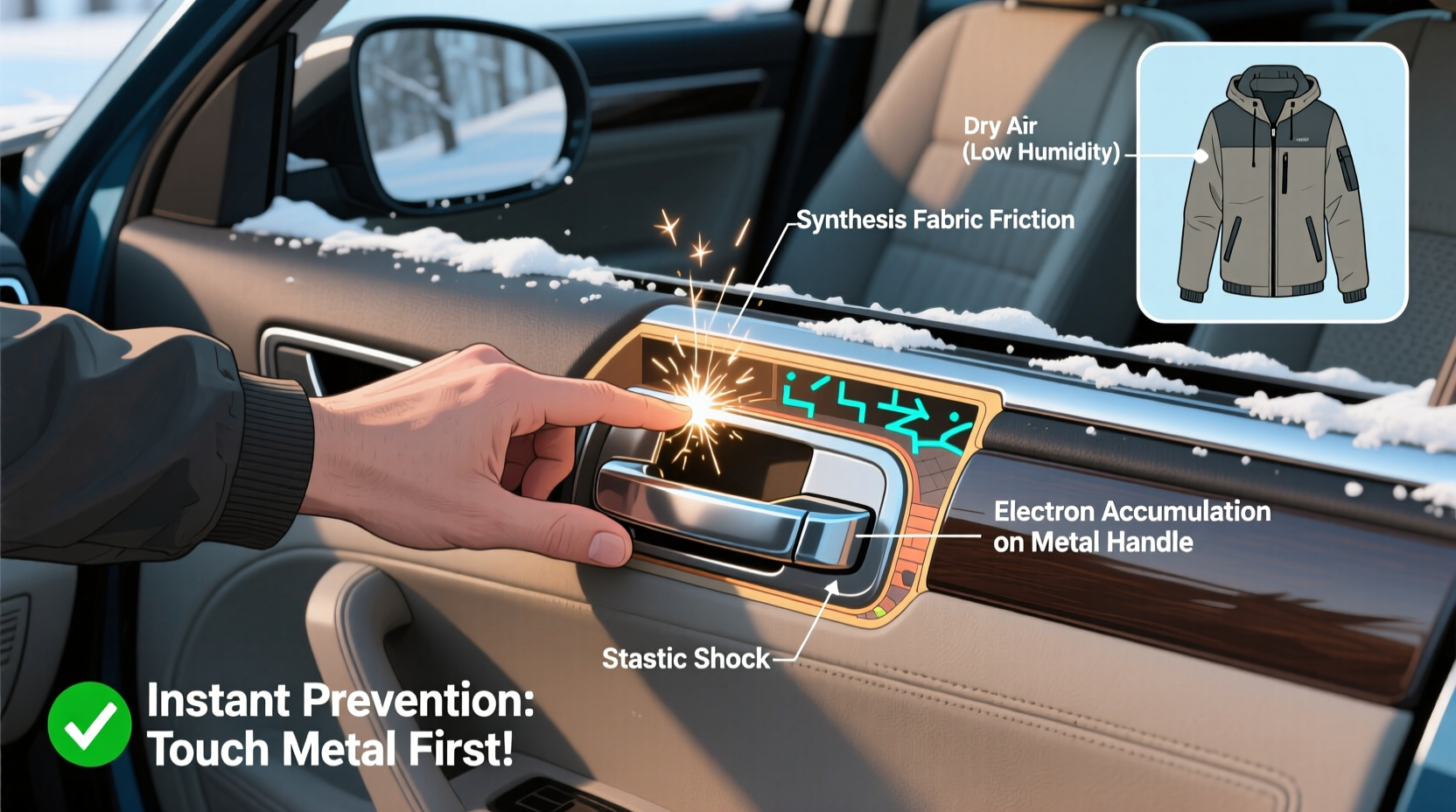
Static electricity occurs when two surfaces come into contact and then separate, causing electrons to transfer from one surface to another. One object becomes positively charged (loses electrons), while the other becomes negatively charged (gains electrons). When you touch a conductive object like a metal car door, the excess charge discharges rapidly, creating the familiar spark and sting.
This process, known as triboelectric charging, happens constantly in daily life. However, it's far more noticeable in winter due to low humidity. Cold air holds less moisture than warm air, and dry environments inhibit the natural dissipation of electric charges. In humid conditions, water molecules in the air help conduct away small charges before they build up. But in winter, especially in heated indoor spaces or during dry outdoor days, that protective layer vanishes.
Inside your car, friction between your clothes—especially synthetic fabrics like polyester or nylon—and the seat material (often vinyl or fabric blends) generates a charge on your body. When you slide out of the seat, your body retains that charge. The moment your hand approaches the metal door frame, which is grounded, the charge leaps across the gap, completing the circuit and shocking you.
“Static buildup is inevitable in dry conditions, but discharge can be controlled with awareness and technique.” — Dr. Lena Peterson, Physicist specializing in electrostatics, MIT Lincoln Laboratory
Why Car Doors Are Shock Hotspots
Car doors act as ideal discharge points for several reasons:
- They’re made of metal, which is highly conductive and connected to the vehicle’s chassis (a large grounding mass).
- You approach them after movement, such as exiting the vehicle, which maximizes charge separation.
- Your shoes insulate you from the ground, preventing gradual charge leakage as you walk.
- Modern interiors use synthetic materials that easily generate static when rubbed against clothing.
The combination of insulating soles, fabric friction, and sudden contact with a grounded conductor creates the perfect storm for a shock. It’s not the car’s fault—it’s a natural consequence of physics under specific conditions.
Instant Methods to Stop Static Shocks (Zero Cost, No Tools)
You don’t need special devices or expensive products to avoid static shocks. Several immediate techniques work within seconds and require no preparation.
1. Discharge Before You Step Out
Before lifting yourself off the seat, maintain contact with a metal part of the car—such as the door frame, window edge, or lock mechanism—with your hand. Do this while your feet are still inside the vehicle. This allows any accumulated charge to flow back into the car’s chassis without a spark.
2. Use Your Knuckle Instead of Your Fingertip
If you forget to discharge beforehand, use the back of your knuckle to touch the door first. The skin there is thicker and less sensitive than your fingertip, making the shock less painful if it occurs. Additionally, the larger surface area can sometimes allow a slower, less intense discharge.
3. Hold Onto the Door Frame While Exiting
Keep one hand in constant contact with the metal portion of the door as you swing your legs out and stand up. This continuous connection prevents charge buildup by allowing electrons to equalize gradually.
4. Touch the Glass First
Car windows are non-conductive. If you touch the glass before the metal, any potential difference equalizes slowly through capacitance rather than a sudden spark. Then, when you touch the metal, the risk of shock drops significantly.
5. Carry a Metal Key and Tap It First
Hold your car key and tap the metal part of the door with its tip before touching it with your hand. The spark will jump to the key instead of your finger, and because the current passes through the metal, you won’t feel the shock—or will feel only a faint tingle.
| Method | Speed | Effectiveness | Notes |
|---|---|---|---|
| Touch metal while seated | Instant | ★★★★★ | Most reliable prevention method |
| Use key to discharge | 1–2 seconds | ★★★★☆ | Requires carrying a key; very effective |
| Knuckle touch | Instant | ★★★☆☆ | Reduces pain, doesn’t prevent charge |
| Touch glass first | 1 second | ★★★★☆ | Good alternative when keys aren’t handy |
| Hold frame while exiting | Ongoing | ★★★★★ | Requires coordination but highly effective |
Long-Term Prevention Strategies
While instant fixes help in the moment, modifying habits and environment reduces the frequency of static buildup altogether.
Wear Natural Fibers
Synthetic clothing—common in winter wear like fleece jackets, polyester blends, and nylon-lined coats—is highly prone to generating static. Cotton, wool, and leather are less likely to create charge imbalances. Choosing natural fibers for layers that contact car seats reduces friction-based charging.
Use Anti-Static Sprays or Wipes
A light application of anti-static spray on car seats or clothing can neutralize surface charges. Alternatively, wipe seats occasionally with a dryer sheet, which contains cationic surfactants that reduce static cling. A single swipe every few days can make a noticeable difference.
Install a Grounding Strap (For Frequent Sufferers)
Some drivers attach a static discharge strap—a rubber strip with conductive fibers—to the underside of their car. It drags along the ground and continuously dissipates charge from the vehicle’s body. While primarily designed to prevent fuel ignition risks, it also minimizes personal shocks by stabilizing the car’s electrical potential.
Moisturize Skin Regularly
Dry skin increases personal conductivity resistance, making shocks more intense. Using hand lotion after washing hands or before driving helps your body dissipate minor charges gradually. Hydrated skin conducts electricity more evenly, reducing sudden discharges.
Humidify Indoor Parking Areas
If you park in a garage or enclosed space, using a small humidifier can raise moisture levels enough to suppress static buildup. Even a bowl of water near a heat source can add trace humidity to the air over time.
Real-Life Scenario: Commuter Avoids Daily Shocks
James, a software engineer in Minnesota, used to dread his morning commute. Every time he exited his car at the office, he received a painful shock from the driver’s door. Over three months, he tested various methods. At first, he tried holding the door frame while getting out, but often forgot. Then he started keeping a metal keychain clipped to his belt loop. Each time he parked, he’d tap the door with the key before touching it. Within a week, the shocks stopped completely. He later switched to touching the window glass first, which worked nearly as well and didn’t require extra gear. James now teaches his family the same technique, calling it “the winter handshake rule.”
Checklist: Prevent Static Shocks in 7 Simple Steps
- ✅ Before exiting, touch unpainted metal inside the car (door frame, lock, etc.)
- ✅ Wear cotton or wool layers when possible, especially on lower body
- ✅ Keep a metal key or coin to discharge the door safely
- ✅ Moisturize hands regularly, especially in heated environments
- ✅ Wipe car seats monthly with a dryer sheet or anti-static wipe
- ✅ Avoid sliding across seats—exit smoothly to reduce friction
- ✅ Consider using a humidifier if parking indoors
Frequently Asked Questions
Can static shocks from cars damage electronics?
In rare cases, a strong static discharge can interfere with sensitive electronics, especially if you touch a key fob or smartphone immediately after a shock. However, modern devices have some level of ESD (electrostatic discharge) protection. To be safe, discharge yourself on metal before handling electronic devices after exiting the car.
Are some people more prone to static shocks than others?
Yes. People with drier skin, those who wear synthetic clothing, or individuals who frequently move across insulating surfaces (like carpeted floors or vinyl seats) tend to experience more shocks. Body chemistry and hydration levels also play minor roles in charge retention.
Does the type of car affect static shock frequency?
Indirectly. Cars with more synthetic interior materials (common in economy models) may generate more friction-based charge. Leather seats generally produce less static than cloth or vinyl. However, all vehicles are equally conductive, so the discharge mechanism remains the same regardless of make or model.
Conclusion: Take Control of Winter Static Today
Static shocks from car doors are a seasonal nuisance rooted in basic physics, not bad luck. With dry winter air and synthetic materials amplifying charge buildup, the zap may seem unavoidable—but it isn’t. By understanding how static forms and applying instant discharge techniques, you can eliminate these shocks entirely. Whether you choose to use a key, adjust your clothing, or simply change how you exit the vehicle, the solution is always within reach.
These small adjustments cost nothing and take seconds, yet they deliver lasting comfort. Start tonight: the next time you park, remember to touch metal before stepping out. Break the cycle of surprise shocks and reclaim control over your daily routine. Share your favorite trick with friends or family—they’ll thank you the next time they reach for their car door.




 浙公网安备
33010002000092号
浙公网安备
33010002000092号 浙B2-20120091-4
Comments
No comments yet. Why don't you start the discussion?