
Static shock—especially the sudden zap you feel when touching a doorknob, car door, or faucet—is more than just an annoyance. For some, it’s a recurring discomfort that disrupts daily routines. While not dangerous in most cases, frequent static shocks can be startling and even painful. The good news is that understanding the science behind this phenomenon opens the door to practical, natural solutions. This article breaks down the root causes of static electricity buildup and discharge, explains why metal triggers such intense zaps, and provides actionable strategies to minimize occurrences without relying on chemical sprays or synthetic products.
The Science Behind Static Shock
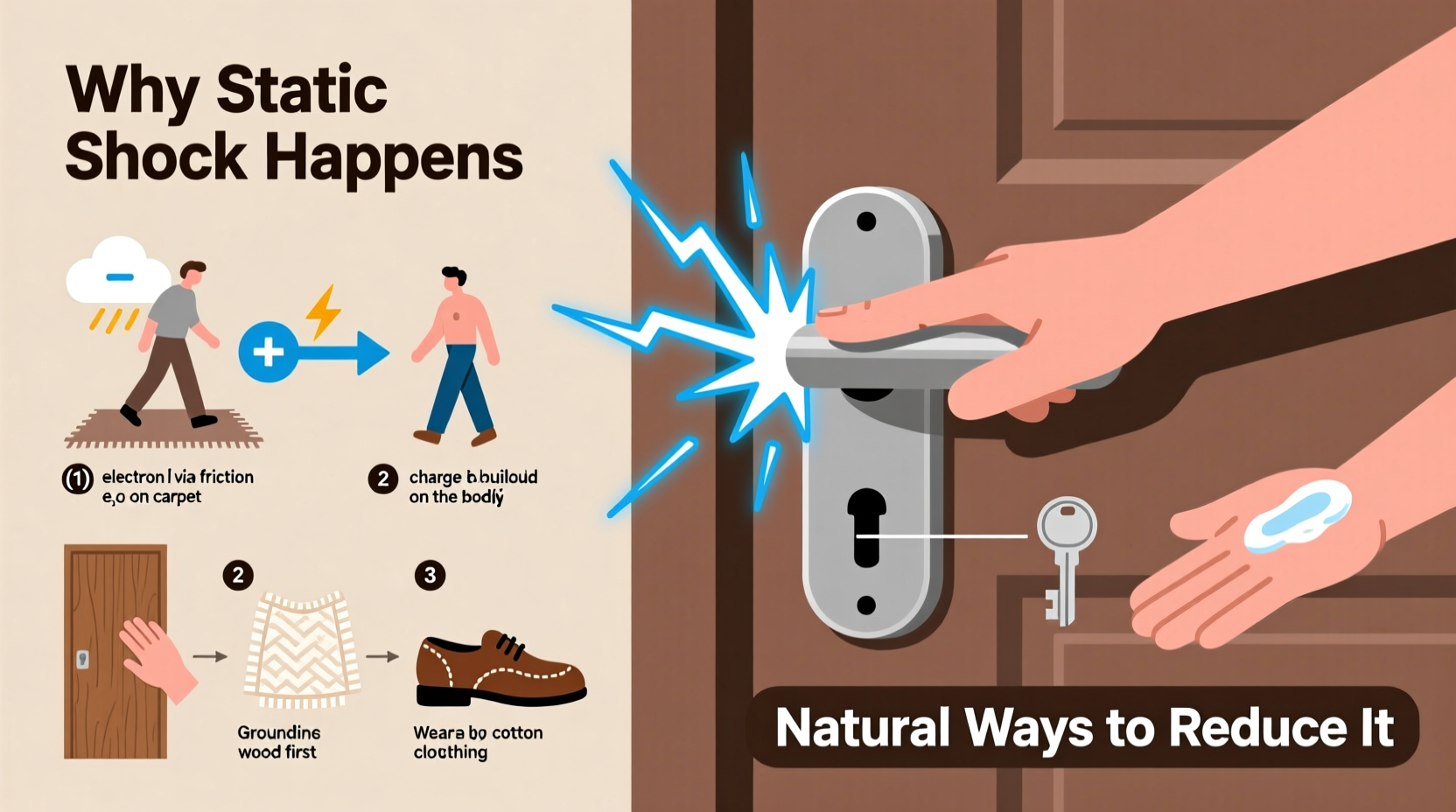
Static electricity occurs when there’s an imbalance of electric charges on the surface of a material. Unlike current electricity, which flows through wires, static electricity remains stationary until discharged—often through contact with a conductor like metal. This discharge is what you feel as a shock.
All matter is made up of atoms containing positively charged protons, neutral neutrons, and negatively charged electrons. When two materials rub together—such as your shoes on carpet or clothing against a chair—electrons can transfer from one surface to another. One material becomes negatively charged (gains electrons), while the other becomes positively charged (loses electrons). This process is known as triboelectric charging.
Metal objects are excellent conductors of electricity. When your body has accumulated excess charge and you touch a metal surface, the electrons rapidly jump from your skin to the metal, creating a spark. Because metal allows for fast electron movement, the discharge happens instantly and intensely, resulting in that familiar sharp sensation.
Why Metal Triggers Stronger Shocks
While static discharge can happen between any two conductive surfaces, metal amplifies the effect due to its high electrical conductivity. Materials like wood or plastic resist electron flow, slowing or preventing discharge. But metal offers minimal resistance, allowing all stored electrons to rush out at once.
Additionally, metal objects are often grounded—connected directly or indirectly to the Earth—which acts as a reservoir for excess charge. Your body, insulated by rubber-soled shoes or carpet, holds onto charge until contact with a grounded conductor releases it completely. That sudden equalization is felt as a shock.
This explains why shocks are common after walking across synthetic carpet and then reaching for a metal doorknob, or exiting a car (where friction between clothes and upholstery builds charge) and touching the metal frame.
Natural Ways to Reduce Static Buildup
Instead of relying on anti-static sprays or dryer sheets filled with chemicals, several natural methods effectively reduce static electricity in homes and personal environments.
Increase Indoor Humidity
Dry air is a primary contributor to static buildup. In winter months, indoor heating systems reduce relative humidity to as low as 10–20%, turning homes into ideal environments for static shocks. Moist air helps dissipate electric charges before they accumulate.
Using a humidifier is one of the most effective natural solutions. Maintaining indoor humidity between 40% and 60% dramatically reduces static incidents. Alternatively, placing bowls of water near heat sources or boiling water on the stove adds moisture to the air.
Choose Natural Fiber Clothing and Footwear
Synthetic fabrics like polyester, nylon, and acrylic are notorious for generating static charge through friction. These materials easily gain or lose electrons when rubbed against other surfaces, including your skin or furniture.
Wearing clothing made from natural fibers—such as cotton, wool, linen, or silk—reduces charge accumulation. Similarly, leather-soled shoes allow slight grounding compared to insulating rubber soles, helping prevent charge buildup as you walk.
Moisturize Skin Regularly
Dry skin increases susceptibility to static shocks. Hydrated skin conducts electricity more evenly and dissipates minor charges before they build up. Applying natural moisturizers like coconut oil, shea butter, or aloe vera after showers helps maintain skin conductivity and reduces surface resistance.
Especially during colder months, consistent hydration of hands and arms can make a noticeable difference in how often you experience shocks when touching metal surfaces.
Do’s and Don’ts of Managing Static Electricity
| Do’s | Don’ts |
|---|---|
| Use a humidifier to maintain 40–60% indoor humidity | Avoid overusing central heating without moisture control |
| Wear cotton, wool, or silk clothing instead of synthetics | Don’t wear polyester blends in dry environments |
| Apply natural oils or lotions to keep skin hydrated | Don’t skip moisturizing in winter |
| Touch walls or wooden surfaces before metal objects | Don’t reach directly for metal after walking on carpet |
| Go barefoot indoors when possible to ground yourself | Don’t wear thick rubber-soled shoes inside for long periods |
Step-by-Step Guide to Avoiding Static Shock Daily
Integrating simple habits into your routine can drastically reduce the frequency of static shocks. Follow this sequence each day, especially during dry seasons:
- Morning Routine – Skin & Clothing Check
After showering, apply a natural moisturizer to arms, legs, and hands. Choose loose-fitting clothes made of cotton or wool. Avoid layering synthetic fabrics. - Shoes Matter – Opt for Grounding Soles
Select leather-soled slippers or shoes at home. If wearing rubber soles, take them off upon entering the house to reduce insulation from the floor. - Adjust Indoor Climate
Turn on a humidifier, especially in bedrooms and living areas. Monitor humidity levels with an inexpensive hygrometer. - Before Touching Metal – Discharge Safely
Prior to grabbing a doorknob, car door, or light switch, first touch a non-conductive surface like a wall, wooden table, or brick. This allows gradual discharge without a shock. - Night Reset – Rehydrate and Relax
Reapply lotion before bed. Consider sleeping with a cotton sheet instead of synthetic blends to minimize overnight charge buildup.
“Maintaining proper humidity and choosing breathable, natural textiles are among the most effective, overlooked defenses against everyday static.” — Dr. Lena Patel, Environmental Health Researcher
Real-Life Example: Office Worker’s Breakthrough
Jamie, a graphic designer working in a downtown office building, experienced frequent static shocks every winter. Each morning, reaching for the elevator button or her desk lamp resulted in painful zaps. Her workspace had sealed windows, constant HVAC circulation, and carpeted floors—ideal conditions for static accumulation.
She began tracking patterns and noticed shocks were worst after lunch, following a walk across the lobby’s nylon carpet. After consulting an occupational wellness guide, she implemented three changes: switched to leather flats, kept a small humidifier on her desk, and applied almond oil to her hands hourly.
Within a week, the shocks stopped entirely. Jamie also encouraged her team to place shared humidifiers in common areas. Over the next month, complaints about static dropped by 80%. Her case illustrates how environmental and behavioral adjustments can resolve chronic static issues without costly interventions.
Checklist: Natural Static Reduction Plan
- ✅ Measure indoor humidity and aim for 40–60%
- ✅ Replace synthetic bedding and clothing with natural fibers
- ✅ Use a humidifier during dry months
- ✅ Apply natural moisturizers daily, especially after bathing
- ✅ Wear leather-soled or barefoot indoors when safe
- ✅ Touch walls or wood before handling metal objects
- ✅ Avoid plastic combs and brushes; use wood or metal with natural bristles
- ✅ Lightly mist clothes with water if experiencing static cling
Frequently Asked Questions
Can static shock harm my health?
For most people, static shocks are harmless, though uncomfortable. They typically measure under 5 millijoules—far below dangerous levels. However, individuals with pacemakers or sensitive electronic medical devices should consult their doctor, as strong discharges near equipment could theoretically interfere, though risk is extremely low in daily scenarios.
Why do I get shocked more in winter?
Cold air holds less moisture, and indoor heating further reduces humidity. Dry conditions prevent natural dissipation of electric charges, allowing them to build up on your body. Additionally, people wear more layers and synthetic fabrics in winter, increasing friction-based charging.
Is there a way to ground myself without special tools?
Yes. Walking barefoot on concrete, stone, or soil grounds your body by allowing electrons to balance with the Earth—a practice sometimes called “earthing.” Even touching unpainted walls or large wooden furniture before metal can safely discharge built-up static.
Conclusion: Take Control Naturally
Static shock when touching metal isn’t inevitable—it’s a symptom of environmental and lifestyle factors that can be managed naturally. By adjusting humidity, choosing appropriate clothing and footwear, hydrating your skin, and adopting simple grounding techniques, you can eliminate most shocks without artificial products or complex gadgets.
The key lies in consistency and awareness. Small changes compound over time, transforming a jolt-filled winter into a season of comfort. Start today by checking your indoor humidity, swapping out one synthetic garment, or applying a natural oil before bed. Your body—and fingertips—will thank you.




 浙公网安备
33010002000092号
浙公网安备
33010002000092号 浙B2-20120091-4
Comments
No comments yet. Why don't you start the discussion?