
The flavor of chili is one of the most distinctive and transformative elements in global cuisine. It is not merely heat—it is a complex interplay of pungency, aroma, fruitiness, bitterness, and umami that can elevate a dish from ordinary to unforgettable. Understanding what defines the unique flavor of chili goes beyond measuring Scoville units; it requires exploring the chemistry of capsaicinoids, the influence of terpenes, the role of ripeness, and the impact of preparation methods like drying, roasting, and fermenting. For home cooks and culinary professionals alike, mastering the nuances of chili flavor unlocks new dimensions in seasoning, balancing, and layering taste.
Chili peppers are used across cultures—not just for their ability to ignite the palate, but for their capacity to add depth, brightness, and complexity. From smoky chipotles in Mexican moles to bright Thai bird’s eye chilies in sambals, each variety contributes a signature profile shaped by genetics, terroir, and technique. This article dissects the science and art behind chili flavor, offering practical insights into how to harness its full potential in everyday cooking.
Definition & Overview
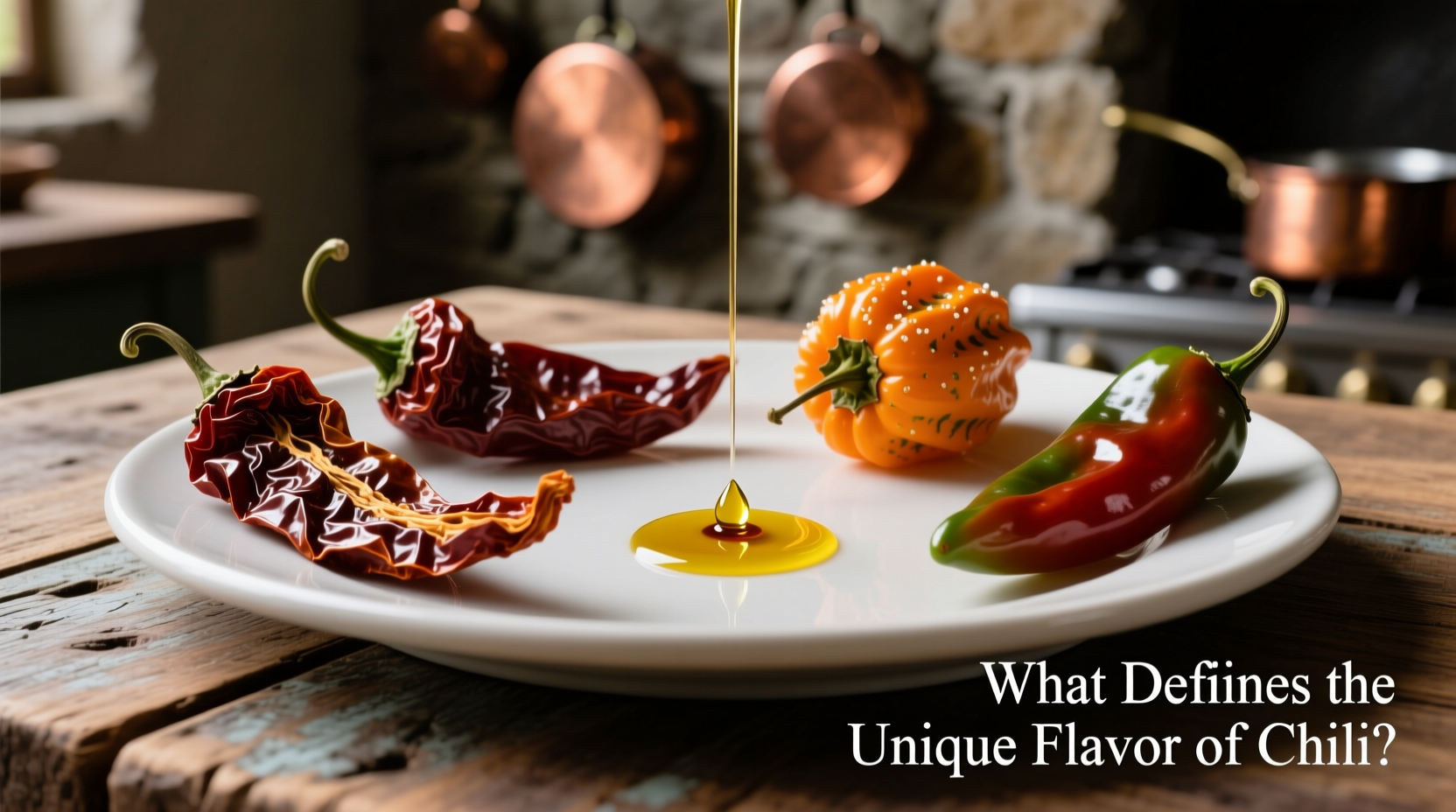
Chili, or chili pepper, refers to any member of the *Capsicum* genus, a group of flowering plants native to the Americas. While often associated with heat, chilies are botanically fruits and vary widely in size, color, shape, and flavor intensity. The most commonly cultivated species include *Capsicum annuum* (jalapeño, cayenne, bell pepper), *C. frutescens* (tabasco, malagueta), *C. chinense* (habanero, ghost pepper), *C. baccatum* (aji amarillo), and *C. pubescens* (rocoto).
The defining chemical compound responsible for chili’s heat is **capsaicin**, a lipid-soluble alkaloid concentrated primarily in the placental tissue surrounding the seeds. However, capsaicin is only one component of a much broader sensory experience. Chilies also contain volatile aromatic compounds such as **terpenes**, **esters**, and **pyrazines**, which contribute floral, citrusy, earthy, or roasted notes. These compounds interact with taste receptors, trigeminal nerves (responsible for heat and pain perception), and olfactory pathways to create a multidimensional flavor profile.
Globally, chilies are used fresh, dried, smoked, fermented, or powdered. Their integration into regional cuisines reflects centuries of adaptation—from the smoky ancho-infused stews of Oaxaca to the fermented gochujang pastes of Korea. The versatility of chili lies not just in its heat, but in its ability to function as both accent and foundation in flavor construction.
Key Characteristics
The unique flavor of chili emerges from a combination of physical, chemical, and sensory traits. Below is a breakdown of the core characteristics that define chili's taste and application:
| Characteristic | Description |
|---|---|
| Heat Level | Measured on the Scoville Heat Scale (SHU), ranging from 0 (bell pepper) to over 2 million (Carolina Reaper). Heat intensity depends on capsaicin concentration and varies by variety, growing conditions, and ripeness. |
| Flavor Profile | Beyond heat: includes fruity (mango, apricot), floral, smoky, grassy, earthy, or bitter notes. Ripe red chilies tend to be sweeter; green ones more vegetal and sharp. |
| Aroma | Determined by volatile oils. Fresh chilies emit green, herbal scents; dried or smoked versions release deeper, toastier aromas (e.g., guajillo, chipotle). |
| Color & Form | Available fresh, dried, flaked, powdered, or paste form. Color ranges from green to red, orange, yellow, purple, and brown—each indicating different maturity and flavor development. |
| Culinary Function | Acts as seasoning, preservative (via antimicrobial properties), colorant, and flavor base. Can balance sweetness, cut richness, or enhance umami in sauces and stews. |
| Shelf Life | Fresh: 1–3 weeks refrigerated. Dried: up to 1 year in airtight container. Powdered: 6–12 months before flavor degradation. Freezing preserves freshness and texture. |
Practical Usage: How to Use Chili in Cooking
Using chili effectively requires understanding not just how hot it is, but when, where, and how to apply it for maximum flavor impact. The goal is integration—not domination.
1. Timing of Addition
- Early in cooking: Whole dried chilies or ground spices added to oil or sofrito build foundational flavor. Capsaicin dissolves in fat, distributing heat evenly.
- Mid-cooking: Fresh chopped chilies added to curries, stir-fries, or salsas retain some brightness while mellowing slightly.
- At the end: Raw sliced chilies (e.g., serrano in pico de gallo) deliver sharp, clean heat and fresh aroma.
2. Heat Control Techniques
To moderate heat without sacrificing flavor:
- Remove seeds and inner membranes—the primary source of capsaicin.
- Blanch fresh chilies in boiling water for 30 seconds to reduce pungency.
- Balance with fat (cream, coconut milk), acid (lime, vinegar), sugar, or starch (potatoes, beans).
3. Building Layered Heat
Professional kitchens often use multiple forms of chili in one dish to create complexity:
Tip: Combine smoked paprika (depth), fresh jalapeño (brightness), and a pinch of cayenne (intensity) in a chili con carne for a multi-dimensional heat profile.
4. Pairing Suggestions
Chili pairs well with ingredients that complement or contrast its heat:
- Dairy: Yogurt, sour cream, queso fresco—cool the palate and contrast spice.
- Sweetness: Mango, pineapple, honey—counterbalance heat and highlight fruity notes in habaneros.
- Acidity: Lime, tamarind, rice vinegar—brighten and lift heavy, spicy dishes.
- Umami: Soy sauce, fish sauce, mushrooms—deepen savory backbone in spicy broths.
5. Ratio Guidelines for Home Cooks
Start small and scale up:
- 1 small fresh chili (e.g., serrano): serves 4 in a stew (finely minced).
- ½ tsp crushed red pepper: per quart of tomato sauce.
- 1 dried ancho chili (soaked): ideal for mole or chili powder blends.
- ¼ tsp cayenne: maximum for sensitive palates unless building heat intentionally.
Variants & Types
With thousands of cultivars worldwide, chilies vary dramatically in flavor and use. Here are the most influential types grouped by category:
Fresh Chilies
- Jalapeño (2,500–8,000 SHU): Green, crisp, moderately spicy. Ideal for salsas, nachos, poppers.
- Serrano (10,000–23,000 SHU): Brighter and hotter than jalapeño. Excellent raw or in pico de gallo.
- Habanero (100,000–350,000 SHU): Fruity, floral, intensely hot. Use sparingly in Caribbean or Yucatán sauces.
- Thai Bird’s Eye (50,000–100,000 SHU): Punchy, sharp heat. Essential in Thai curries and Vietnamese dipping sauces.
Dried Chilies
- Ancho (dried poblano, 1,000–2,000 SHU): Sweet, raisin-like, mild. Base for moles and adobos.
- Guajillo (2,500–5,000 SHU): Tangy, berry-like, medium heat. Used in marinades and soups.
- Chipotle (smoked jalapeño, 2,500–8,000 SHU): Smoky, leathery, slightly sweet. Adds depth to braises and rubs.
- Arbol (15,000–30,000 SHU): Sharp, clean heat. Common in salsas secas and infused oils.
Processed Forms
- Crushed Red Pepper: Blend of dried chilies (often cayenne). Pantry staple for pasta, pizza, eggs.
- Chili Powder: Spice blend containing ground chili, cumin, garlic. Not pure chili—check labels.
- Paste & Fermented Products: Gochujang (Korean, sweet-spicy-fermented), harissa (North African, garlic-chili), sambal oelek (Indonesian, raw chili-vinegar).
| Type | Best Used In | Flavor Highlight |
|---|---|---|
| Fresh Jalapeño | Salsas, tacos, infusions | Crisp, vegetal, approachable heat |
| Dried Ancho | Moles, stews, rubs | Prune, cocoa, mild warmth |
| Chipotle in Adobo | BBQ sauces, chili, marinades | Smoky, tangy, medium-hot |
| Gochujang | Stir-fries, marinades, dressings | Umami-rich, sweet, fermented depth |
Comparison with Similar Ingredients
Chili is often confused with other pungent ingredients, but key differences exist in origin, chemistry, and sensory effect.
| Ingredient | Heat Source | Flavor Profile | Use Case |
|---|---|---|---|
| Black Pepper | Piperine (sharp, short-lived heat) | Woody, warm, aromatic | Finishing salt-and-pepper, European sauces |
| Horseradish / Wasabi | Allyl isothiocyanate (volatile, nasal heat) | Pungent, green, fleeting burn | Sushi, roast beef, cocktail sauce |
| Chili Pepper | Capsaicin (lingering, tongue-based burn) | Fruity, smoky, layered, long finish | Global cuisines, foundational seasoning |
“Chili doesn’t just add heat—it adds memory. The warmth lingers, the aroma recalls place and culture, and the flavor evolves with time. That’s why it’s irreplaceable.” — Chef Elena Morales, James Beard nominee for Latin American Cuisine
Practical Tips & FAQs
How do I reduce the heat of a dish that’s too spicy?
Add dairy (milk, yogurt), sugar, or acid (lemon juice). Serve with starchy sides like rice or bread to absorb capsaicin. Avoid water—it spreads the burn.
Can I substitute fresh chili for dried?
Yes, but adjust ratios: 1 dried chili ≈ 1–2 fresh chilies, depending on type. Rehydrate dried chilies in hot water before use for sauces or grinding.
Why do some chilies taste sweet?
Ripeness increases sugar content. Red chilies are fully ripe and often have natural sweetness (e.g., pasilla, mulato). Drying further concentrates sugars and deepens flavor.
Does roasting chilies change their flavor?
Yes. Roasting (over flame or in oven) caramelizes natural sugars and introduces smoky notes. Ideal for poblanos, jalapeños, and anchos. Peel after roasting for smoother texture.
How should I store chili peppers?
- Fresh: In a paper bag in the crisper drawer (up to 2 weeks).
- Dried: Airtight container, away from light and moisture (up to 1 year).
- Freezing: Whole or chopped—freeze without blanching. Thaw before use.
Are chili seeds edible?
Yes, but they are bitter and carry high concentrations of capsaicin. Most recipes recommend removing them to control heat and improve texture.
What’s the difference between “spicy” and “hot”?
In culinary terms, “spicy” refers to complex seasoning (including warm spices like cinnamon), while “hot” specifically denotes pungency from capsaicin. A dish can be spicy without being hot.
Expert Tip: Toast dried chilies in a dry skillet for 30–60 seconds before soaking. This enhances aroma and removes mustiness, especially important for older stock.
Summary & Key Takeaways
The unique flavor of chili is defined by far more than heat. It is a synergy of capsaicin-driven pungency, aromatic volatiles, ripeness-derived sweetness, and preparation-induced complexity. Whether used fresh, dried, smoked, or fermented, chilies offer unmatched versatility in building layered, memorable dishes.
Key points to remember:
- Heat is only one dimension—flavor, aroma, and texture matter equally.
- Different forms (fresh, dried, smoked, fermented) serve distinct culinary roles.
- Timing, preparation, and pairing determine how chili integrates into a dish.
- Substitutions require understanding both heat level and flavor profile.
- Storage and handling affect potency and shelf life.
Mastering chili means learning to listen to its voice in a recipe—not as a shout, but as a nuanced conversation between fire, fruit, smoke, and earth. Whether you're crafting a fiery Thai curry or a gently spiced Moroccan tagine, the right chili choice transforms the ordinary into the extraordinary.
Next time you reach for a chili, pause—taste it raw, smell it, consider its form. Then ask: not just “how hot?”, but “what does it add?” The answer will redefine your cooking.




 浙公网安备
33010002000092号
浙公网安备
33010002000092号 浙B2-20120091-4
Comments
No comments yet. Why don't you start the discussion?