
Saffron is one of the most revered spices in global cuisine, prized not only for its vivid golden hue but also for its complex, nuanced flavor. When home cooks or even seasoned chefs encounter saffron for the first time, a fundamental question arises: What does saffron actually taste like? The answer goes beyond a simple description—it involves understanding its floral depth, subtle bitterness, and honeyed warmth that transforms dishes at the molecular level. More than just a coloring agent, saffron imparts a sensory experience that defines iconic dishes from Spanish paella to Persian rice pilaf. Understanding its taste is essential for using it effectively, avoiding waste, and unlocking its full potential in both traditional and modern cooking.
Definition & Overview
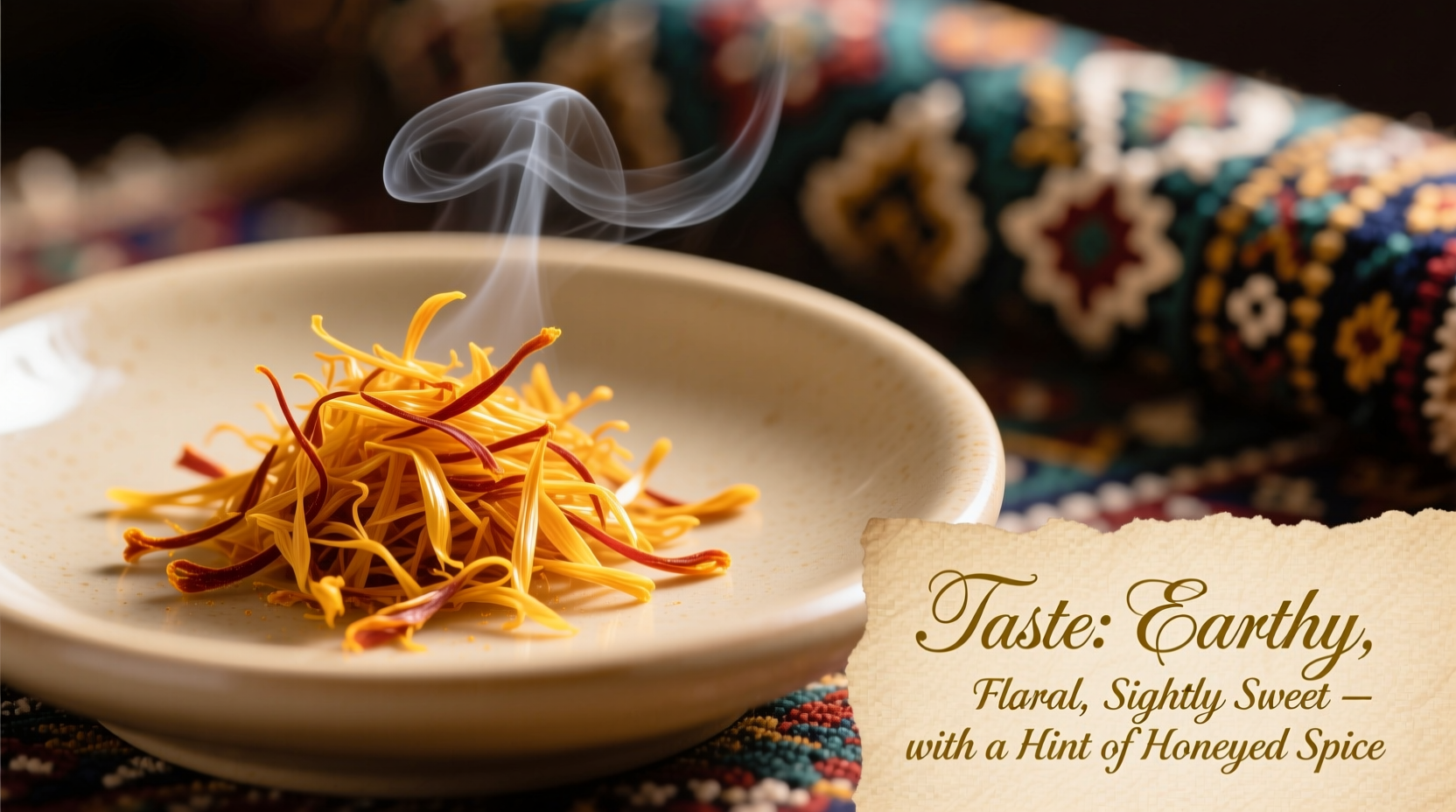
Saffron is derived from the dried stigmas of the Crocus sativus flower, a sterile crocus cultivated exclusively for its spice-producing properties. Each flower yields only three thread-like stigmas, which must be hand-harvested at dawn when the blooms are still closed—a labor-intensive process that contributes to saffron’s status as the world’s most expensive spice by weight. Originating in Southwest Asia, likely ancient Persia, saffron has been traded across continents for over 3,000 years, appearing in medicinal texts, religious rituals, and royal kitchens alike.
Culinarily, saffron belongs to the category of aromatic floral spices, distinct from pungent or heat-driven spices like chili or black pepper. It functions primarily as a flavor modulator and natural colorant, capable of transforming neutral bases like rice, broth, or milk into something luxuriously fragrant and visually striking. Its chemical complexity includes over 150 volatile compounds, with crocin (responsible for color), picrocrocin (for bitterness), and safranal (for aroma) being the most influential.
Key Characteristics
| Characteristic | Description |
|---|---|
| Flavor Profile | Floral, honeyed, slightly bitter, with earthy undertones; develops richness when steeped. |
| Aroma | Pronounced hay-like, perfumed fragrance with notes of dried apricot and iodine; intensifies when hydrated. |
| Color | Vibrant crimson threads; releases deep golden-yellow pigment when infused. |
| Heat Level | None. Not a spicy or pungent spice. |
| Culinary Function | Flavor enhancer, colorant, aromatic base ingredient. |
| Shelf Life | Up to 2 years when stored properly; degrades with exposure to light, heat, or moisture. |
The taste of saffron is best described as simultaneously delicate and assertive. On initial contact, it presents a faint floral sweetness reminiscent of dried rose petals or honeysuckle. This is quickly followed by a gentle bitterness—similar to the aftertaste of strong tea or orange peel—that prevents cloyingness and adds dimension. When used correctly, saffron doesn’t dominate but rather lifts and unifies other ingredients, creating a sense of harmony in complex dishes.
Practical Usage: How to Use Saffron in Cooking
To truly understand saffron’s taste, one must engage with its transformation through preparation. Raw threads have limited solubility; their flavor compounds are locked within cellular structures and require activation. The key to unlocking saffron’s full spectrum lies in proper hydration.
- Crush and Bloom: Gently crush 10–15 threads using a mortar and pestle. Transfer to a small bowl and add 2–3 tablespoons of warm (not boiling) liquid—water, milk, stock, or even alcohol like white wine or vermouth. Let steep for 10–20 minutes until the liquid turns deep amber.
- Add Early in Cooking: Incorporate the infused liquid during the early stages of cooking to allow flavors to meld. In rice dishes, add it after sautéing rice but before adding main liquid.
- Use Sparingly: A little goes a long way. For four servings, 0.1 grams (about 20 threads) is typically sufficient. Overuse can result in an overpowering medicinal or iodine-like taste.
In professional kitchens, chefs often toast saffron lightly before infusion to enhance aroma, though this technique requires care—excessive heat destroys volatile oils. At home, blooming in warm liquid remains the safest and most effective method.
TIP: Never add dry saffron directly to a dish. Without prior infusion, the threads will remain intact, releasing only minimal color and flavor. Always bloom saffron for maximum impact.
Common applications include:
- Rice Dishes: Paella, risotto alla Milanese, Persian tahdig, Indian biryanis.
- Soups & Stews: French bouillabaisse, Swedish saffron buns (lussekatter), Moroccan tagines.
- Dairy-Based Preparations: Ice creams, custards, crème brûlée, saffron-infused whipped cream.
- Baked Goods: Holiday breads, Portuguese convento pastries, Persian naan-e barbari.
A classic example is risotto alla Milanese. Arborio rice is first toasted with onions in butter, then deglazed with white wine. The bloomed saffron infusion is added along with hot broth, stirred slowly over 18–20 minutes. The result is a creamy, radiant dish where saffron's warmth complements the starch without masking it—an exemplar of balance.
Variants & Types of Saffron
Not all saffron is created equal. Quality varies significantly based on origin, harvest method, and processing standards. The most recognized types are classified by region and grading systems:
| Type | Origin | Characteristics | Best For |
|---|---|---|---|
| Sargol (Iran) | Iran (produces ~90% of global supply) | Deep red tips only; highest concentration of active compounds; intense color and aroma. | Professional kitchens, premium applications requiring strong infusion. |
| Pushal | Iran/India | Whole stigmas with some yellow style attached; milder flavor, lighter color yield. | Affordable everyday use; acceptable in soups or baked goods. |
| Mongra | Kashmir, India | Curly, dark maroon threads; earthier, more robust profile; lower crocin content. | Traditional Indian and Kashmiri dishes like rogan josh or kahwa tea. |
| La Mancha (PDO) | Spain | Certified protected designation; consistent quality; balanced aroma and coloring power. | Authentic Spanish paella; reliable for home cooks seeking consistency. |
When selecting saffron, prioritize whole threads over powdered forms, which are frequently adulterated with turmeric, paprika, or safflower. Genuine saffron threads should be uniformly deep red, brittle to the touch, and release color gradually—not instantly—when soaked.
Comparison with Similar Ingredients
Saffron is often confused with cheaper alternatives that mimic its color but fail to replicate its flavor. Understanding these distinctions ensures authentic results.
| Ingredient | Color | Flavor | Key Difference |
|---|---|---|---|
| Saffron | Golden-yellow, luminous | Floral, honeyed, subtly bitter | Complex aromatic profile; slow-release coloring; high cost reflects labor. |
| Turmeric | Bright yellow-orange | Earthy, peppery, slightly bitter | Overpowers delicate dishes; lacks floral notes; immediate staining. |
| Annatto (Achiote) | Yellow to reddish-orange | Mild, nutty, almost neutral | Used mainly for color; no floral or bitter complexity. |
| Safflower | Yellow (fades quickly) | Nearly flavorless | Frequently sold as “Mexican saffron”; visually similar but functionally inferior. |
\"Saffron isn't just about color. If you're only using it to make things yellow, you're missing half its purpose. It’s the soul of a dish—the quiet note that makes everything else sing.\" — Chef Yotam Ottolenghi, on Middle Eastern spice philosophy
Practical Tips & FAQs
How much saffron should I use per serving?
For most savory dishes, 0.02–0.03 grams (4–6 threads) per person is ideal. Start conservatively; you can always increase in future batches.
Can I substitute ground saffron for threads?
Powdered saffron dissolves faster but is highly prone to adulteration and loses potency quicker. If using powder, halve the quantity compared to threads and verify source authenticity.
Why does my saffron taste medicinal?
This usually indicates overuse or poor-quality product. High-grade saffron should never taste like iodine or antiseptic. Try reducing the amount and ensure proper blooming in warm (not hot) liquid.
How do I store saffron?
Keep threads in an airtight container, away from light and moisture. A dark glass vial in a cool cupboard is ideal. Avoid refrigeration, which introduces humidity.
Is saffron worth the price?
Yes, when used correctly. A single gram (approx. 200 threads) can season dozens of meals. Given its transformative effect on flavor and presentation, it offers exceptional value in signature dishes.
Can saffron be grown at home?
Possibly, but impractical for spice production. Crocus sativus flowers bloom once a year in autumn, each yielding only three stigmas. You’d need hundreds of plants to harvest enough for one meal.
Does saffron have health benefits?
Traditionally used in Ayurvedic and Persian medicine for mood support and digestion, modern studies suggest saffron may have mild antidepressant and antioxidant properties. However, culinary doses are too low for therapeutic effects.
PRO TIP: Test saffron authenticity by soaking a few threads in warm water. Real saffron releases color gradually over 10–15 minutes and retains thread integrity. Fake versions (dyed fibers or safflower) bleed color immediately and disintegrate.
Summary & Key Takeaways
Saffron’s taste is a symphony of floral elegance and restrained bitterness, elevated by honeyed warmth and earthy depth. It does not shout but whispers—enhancing, illuminating, and binding flavors together. Unlike artificial colorants or blunt substitutes, real saffron brings a multidimensional presence to food that cannot be replicated.
Understanding its flavor begins with recognizing that saffron is not merely a pigment. It is a living ingredient whose chemistry responds to temperature, time, and technique. Proper blooming unlocks its full potential, while mindful usage ensures balance rather than domination.
Among the world’s spices, few command such reverence—and for good reason. Whether crafting a festive paella, a delicate custard, or a spiced chai, saffron offers a bridge between the ordinary and the extraordinary. Once you’ve tasted a dish elevated by genuine saffron, there’s no going back.




 浙公网安备
33010002000092号
浙公网安备
33010002000092号 浙B2-20120091-4
Comments
No comments yet. Why don't you start the discussion?