
The term “string onion” may not appear in standard culinary glossaries, but it carries real significance in specific regional, agricultural, and home-cooking contexts. Often misunderstood or mistaken for a variety of scallion, shallot, or pickling onion, the string onion refers not to a botanical classification but to a method of preparation and preservation. These are small onions—typically pearl or boiler onions—strung together on twine or raffia for storage, drying, or decorative display. Used historically across Europe, the Middle East, and parts of Asia, string onions offer both practical utility and rustic charm. Understanding their nature, proper handling, and culinary applications unlocks a traditional yet underappreciated ingredient that blends function with heritage.
Definition & Overview
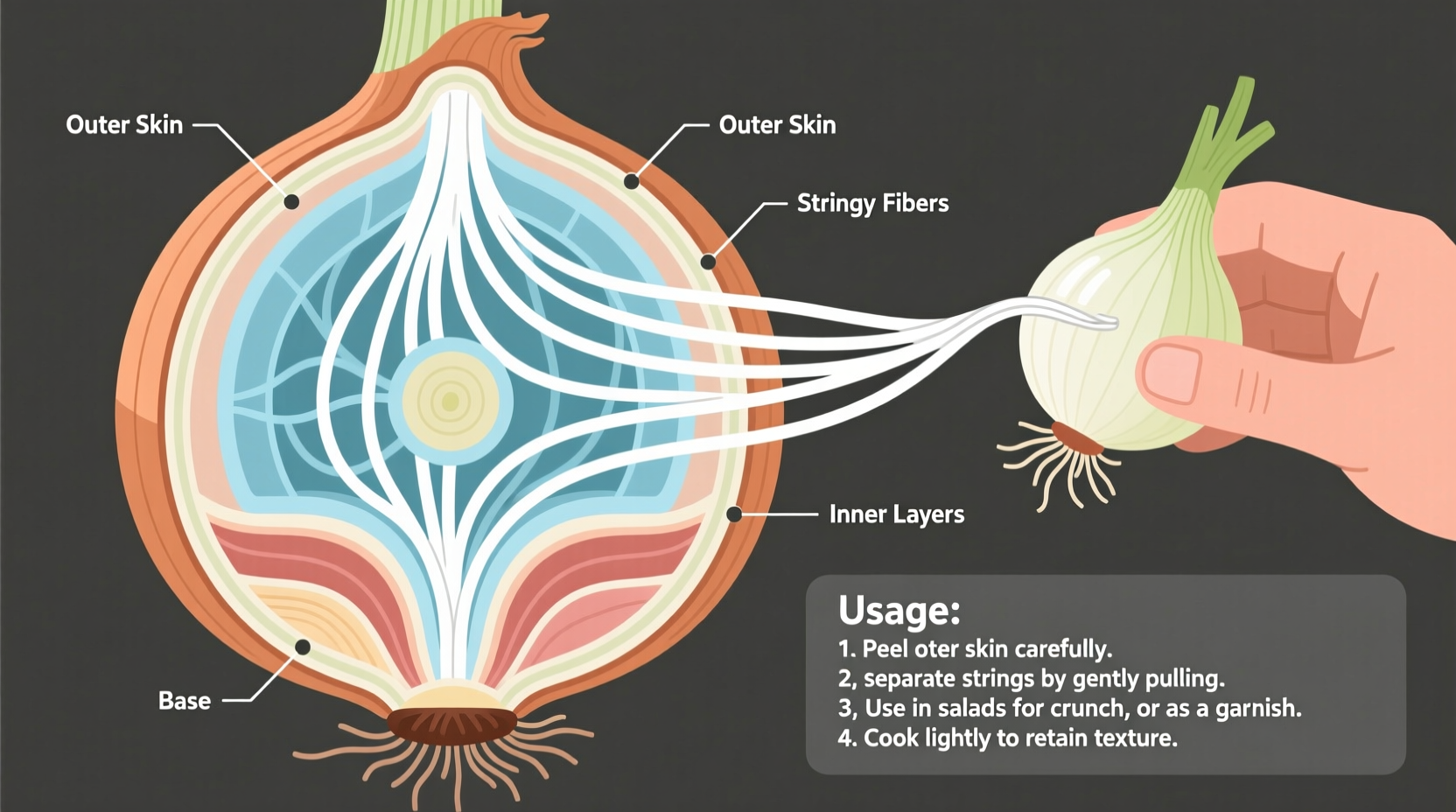
A string onion is not a distinct species or cultivar of onion (*Allium cepa*), but rather a preservation technique involving multiple small onions threaded onto a string. The onions used are typically mature, firm, and uniform in size—most commonly pearl onions (about 1 inch in diameter) or small boiler onions. Once harvested, they are cleaned, trimmed, and pierced through the root end with durable natural fiber such as jute, raffia, or hemp, then hung in long strands. This method allows for air circulation, facilitating gradual curing and extended shelf life.
Historically, stringing onions was a common practice among small-scale farmers and homesteaders before refrigeration. By suspending onions in a cool, dry, ventilated space—such as a pantry, cellar, or kitchen rafters—they could remain edible for several months. Beyond utility, string onions also serve decorative purposes, frequently seen in farmhouse kitchens, farmers’ markets, and autumnal displays. In some Mediterranean and Eastern European cuisines, they are still used in traditional dishes where slow-released flavor from dried but rehydratable onions is desired.
Key Characteristics
| Attribute | Description |
|---|---|
| Flavor Profile | Mildly sweet when fresh; develops deeper, more concentrated notes after curing. Less pungent than raw white or yellow onions. |
| Aroma | Subtle allium scent when whole; becomes aromatic when cooked. Dried strings have an earthy, dried herb-like fragrance. |
| Color/Form | Usually white, cream, or pale yellow skin. Uniform small globes strung linearly. Length varies by number—commonly 12–30 onions per strand. |
| Heat Level | Low to moderate. Minimal bite when raw; mellows significantly when sautéed, braised, or roasted. |
| Culinary Function | Aromatic base, slow-release flavor agent, garnish, pickling candidate. Ideal for stews, braises, and stocks. |
| Shelf Life | 4–6 months when properly cured and stored in a cool, dark, well-ventilated area. |
Practical Usage: How to Use String Onions in Cooking
String onions are best appreciated not as a flashy ingredient but as a quiet contributor to depth and balance in savory preparations. Their compact size and mild flavor make them ideal for dishes where texture and subtle sweetness matter more than sharpness.
In Home Cooking
To use string onions, first remove individual bulbs from the strand using scissors or a knife. Trim the root remnants and peel off the papery outer skin. Because they are small, peeling can be time-consuming; a quick blanch in boiling water for 30–60 seconds loosens the skin, making it easy to slip off.
Once peeled, string onions shine in the following applications:
- Braised Dishes: Add whole or halved onions to beef bourguignon, coq au vin, or lamb stew. They absorb wine, stock, and herb flavors while contributing gentle sweetness.
- Roasted Vegetables: Toss with carrots, turnips, and thyme, drizzle with olive oil, and roast at 400°F (200°C) until caramelized—about 35 minutes.
- Pickling: Their size and firmness make them perfect for quick-pickling in vinegar brine with mustard seeds, peppercorns, and bay leaves. Serve alongside charcuterie or in grain bowls.
- Stocks and Broths: Simmer whole unpeeled onions in bone broth or vegetable stock for background sweetness without clouding the liquid excessively.
Pro Tip: Do not discard the trimmings. Save root ends, skins, and any unusable bits in a freezer bag to make homemade onion powder or vegetable stock base later.
Professional & Restaurant Applications
In professional kitchens, string onions are valued for consistency and visual appeal. Chefs often use them in refined presentations where uniformity enhances plating aesthetics. For example:
- Glazed Onions: Cook peeled onions in a mixture of butter, sugar, and balsamic vinegar until glossy and tender. Serve as a side dish or accompaniment to duck confit.
- Confits: Slow-poach in duck fat or neutral oil at low heat (225°F / 110°C) for 1.5 hours. Resulting onions are silky, rich, and excellent in tarts or mashed potatoes.
- Garnishes: Deep-fry battered string onions for a crispy appetizer similar to onion rings—but more delicate and elegant.
Some high-end restaurants preserve the cultural authenticity of string onions by displaying them above service stations or incorporating them into themed menus, especially during harvest seasons or farm-to-table events.
Pairing Suggestions & Ratios
When substituting or integrating string onions into recipes, consider these pairings and proportions:
- With Proteins: Complement fatty meats like pork belly, short ribs, or goose. Balance lean proteins like chicken thighs with braised string onions in creamy sauces.
- Herb Pairings: Thyme, rosemary, sage, and tarragon enhance their natural sweetness. Avoid overpowering herbs like oregano unless balanced with acid.
- Liquid Ratios: For every cup of liquid in a braise, use 1/2 cup peeled string onions. Adjust based on desired texture—whole for integrity, halved for faster infusion.
- Sweetness Balance: When roasting or glazing, use a 2:1 ratio of fat (butter/oil) to sweetener (honey/maple syrup). Add splash of vinegar to cut richness.
Variants & Types
While all string onions share the same basic form—small onions on a strand—variations exist based on onion type, curing method, and regional tradition.
By Onion Variety
- Pearl Onions (White): Most common. Mild, crisp, ideal for pickling and slow cooking.
- Red Boiler Onions: Slightly more pigment and tang. Retain color when pickled; great for salads.
- Yellow Baby Onions: A bit larger, with stronger flavor. Suitable for roasting or grilling.
By Preparation Style
| Type | Characteristics | Best Uses |
|---|---|---|
| Fresh-Stringed | Newly harvested, recently strung. Higher moisture, brighter taste. | Immediate use in roasting, sautéing, or grilling. |
| Cured/Dried Strings | Hanging for weeks; skins are brittle, flesh firmer. More concentrated flavor. | Rehydrate in soups, stews, or grind into powder. |
| Smoked String Onions | Rare specialty. Exposed to light smoke before stringing. | Add smoky depth to bean pots, casseroles, or Bloody Mary mixes. |
| Decorative Strings | Often waxed or treated for appearance. Not food-safe. | Ornamental only—do not consume. |
Comparison with Similar Ingredients
String onions are frequently confused with other small alliums. Clarifying distinctions ensures correct usage.
| Ingredient | Differences from String Onion | When to Substitute |
|---|---|---|
| Scallions (Green Onions) | Eaten whole with green tops; much milder, used raw or briefly cooked. | Only if recipe calls for mild onion flavor and texture—cannot replicate the body of a cooked string onion. |
| Shallots | More complex, garlicky-sweet flavor; grow individually, not strung. | In vinaigrettes or fine sauces—superior for emulsions. Not interchangeable in rustic dishes. |
| Chives | Herbaceous, grass-like, entirely different plant (*Allium schoenoprasum*). | As garnish only. No substitution possible in cooked applications. |
| Spring Onions | Juicier, with edible stems; harvested young. Less dense than cured string onions. | In stir-fries or grilled dishes—similar size, but shorter cook time needed. |
| French Grey Shallots (Échalion) | Bulkier, elongated, expensive. Grown for gourmet markets. | Not a substitute. Distinct culinary role in haute cuisine. |
“String onions represent a bridge between agriculture and artistry. They’re not just food—they’re a testament to how cooks once worked with seasons, not supermarkets.” — Chef Lila Moreau, Culinary Historian & Author of \"Rooted Kitchens\"
Practical Tips & FAQs
How do I store string onions?
Hang in a cool (50–60°F / 10–15°C), dark, dry place with good airflow—like a pantry or cellar. Avoid humidity to prevent mold. Do not refrigerate unless peeled and destined for immediate use.
Can I eat string onions raw?
Yes, but they are firmer and less juicy than spring onions. Best finely diced in salads or salsas if using raw. Cured versions should be rehydrated first.
Are string onions the same as pickling onions?
Not exactly. Pickling onions refer to a size category (small, round onions), which may or may not be strung. All string onions can be pickled, but not all pickling onions come on a string.
How long does it take to cure string onions?
Typically 2–4 weeks. The necks should dry completely, and the outer skin become papery. Check weekly for soft spots or mildew.
Can I grow my own string onions?
Absolutely. Plant varieties like ‘Paris Market’ or ‘Candy’ pearl onions. Harvest when tops fall over naturally. Cure in a shaded, airy spot for one week before stringing.
Is the string itself edible?
No. The twine or raffia is purely functional. Always remove onions before cooking. Some decorative strings may be coated with wax or preservatives—never consume these.
Can I freeze string onions?
Yes, but only after peeling and blanching. Spread on a tray, freeze individually, then transfer to airtight bags. Use within 10 months. Texture will soften upon thawing—best for cooked dishes only.
What dishes highlight string onions best?
Classic French boeuf à la mode, Persian khoresh (stews), Southern-style creamed onions, and German zwiebelmuster (onion tart) all showcase their unique qualities. Also excellent in Thanksgiving stuffing or holiday relish trays.
Storage Checklist:
✔ Hang vertically
✔ Keep away from potatoes (they emit moisture and gases)
✔ Inspect monthly for spoilage
✔ Label with harvest date
✔ Store no lower than 12 inches off the floor
Summary & Key Takeaways
String onions are more than a quaint kitchen decoration—they are a functional, flavorful, and historically rooted ingredient rooted in sustainable food practices. Defined not by species but by preservation method, they consist of small, cured onions strung together for long-term storage and ease of access. Primarily made from pearl or boiler onions, they offer a mild, sweet flavor profile ideal for braising, roasting, pickling, and enhancing stocks.
Key points to remember:
- String onions are a preparation style, not a botanical type.
- They excel in slow-cooked dishes where texture and subtle sweetness matter.
- Proper storage extends shelf life up to six months in optimal conditions.
- They differ significantly from scallions, shallots, and chives—do not substitute interchangeably.
- Chefs and home cooks alike can leverage them for both culinary depth and aesthetic presentation.
Whether sourcing from a farmer’s market, growing your own, or repurposing leftovers into stock, string onions invite a return to mindful cooking—one bulb at a time. Embrace their simplicity, honor their history, and let them enrich your meals with quiet elegance.
Next time you see a strand of onions hanging in a country kitchen, don’t just admire it—take one down, peel it, and let it simmer into your next stew. Tradition tastes best when it’s tasted.




 浙公网安备
33010002000092号
浙公网安备
33010002000092号 浙B2-20120091-4
Comments
No comments yet. Why don't you start the discussion?