
Adjika—sometimes spelled adjika, azhika, or cherkesskaya pastirma—is not just a spice blend; it's a culinary statement from the Caucasus that delivers heat, tang, earthiness, and depth in one bold stroke. If you've encountered dishes with a fiery red paste clinging to grilled meats or swirling through stews, you’ve likely tasted adjika, even if you didn’t know its name. More than a condiment, adjika functions as a marinade base, seasoning rub, sauce foundation, and fermented flavor bomb across Georgian, Abkhazian, and broader Black Sea cuisines. For home cooks seeking to elevate proteins, vegetables, or legumes with complex heat and herbal brightness, understanding adjika is essential. This guide unpacks its origins, composition, variations, and practical applications, offering actionable insight for integrating this under-the-radar powerhouse into modern kitchens.
Definition & Overview
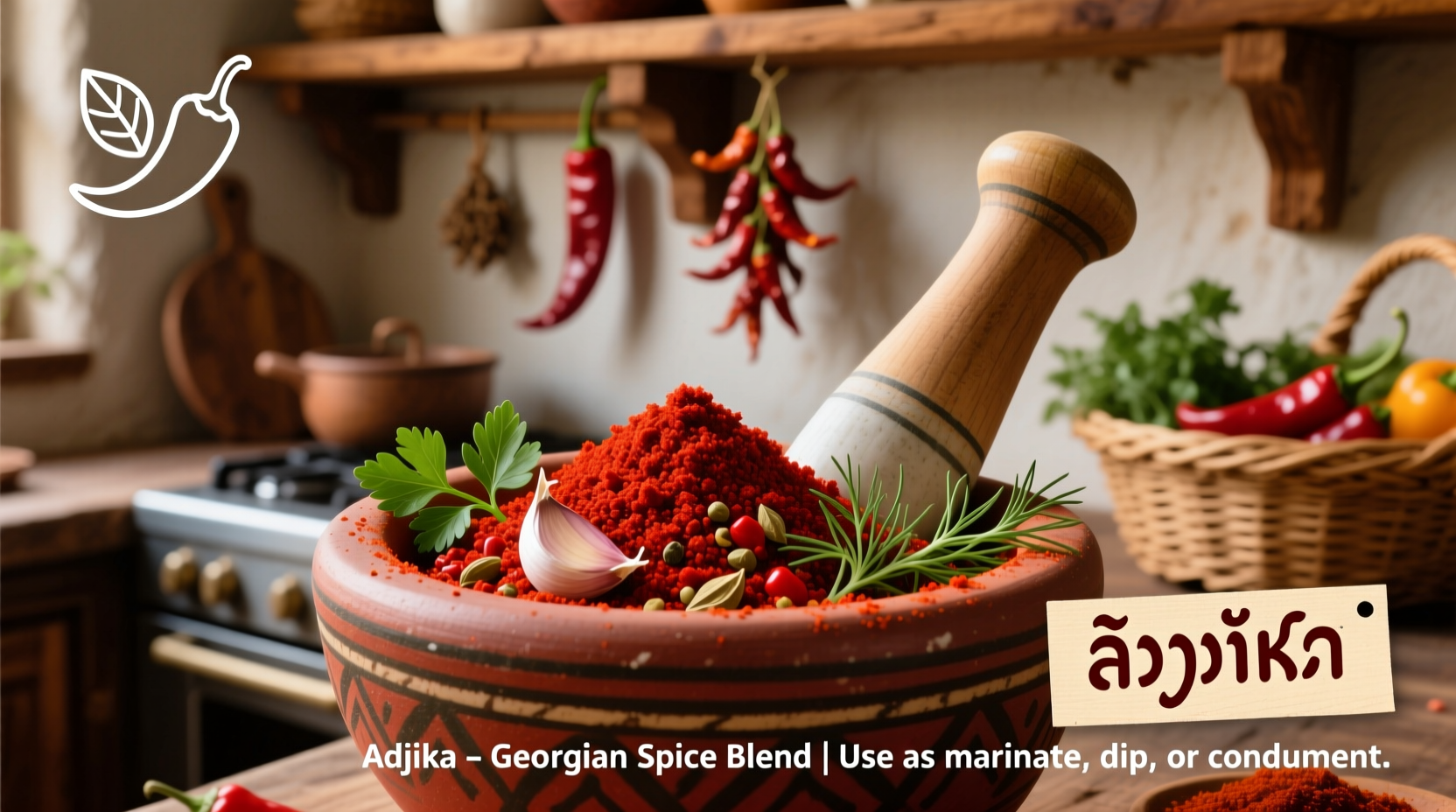
Adjika is a pungent, spicy paste or dry spice blend rooted in the mountainous regions of Georgia and Abkhazia along the eastern Black Sea coast. Traditionally made in large batches during late summer when hot peppers and herbs are at peak freshness, adjika begins as a wet preparation—ground fresh chili peppers, garlic, coriander seeds, walnuts, and salt—then either used immediately as a paste or sun-dried into a concentrated powder. The name “adjika” derives from the Abkhaz word *j’ch’a*, meaning “to make something hot,” underscoring its primary function: intensifying flavor with controlled fire.
While often grouped with Middle Eastern zhug or North African harissa, adjika occupies its own niche due to its heavy reliance on coriander seed and subtle use of smoked paprika or local herbs like blue fenugreek (*utskho suneli*) and marigold petals. Unlike many commercial chili pastes, authentic adjika balances heat with aromatic complexity rather than overwhelming the palate. In traditional settings, it’s layered between slabs of pickled fish, rubbed into lamb before grilling, or stirred into bean stews for depth. Today, both artisanal producers and home cooks adapt adjika for global pantries, where its versatility shines beyond its regional roots.
Key Characteristics
| Characteristic | Description |
|---|---|
| Flavor Profile | Spicy, garlicky, earthy, slightly sour, with warm herbal notes (especially coriander). Fermented versions add umami depth. |
| Aroma | Pronounced garlic and toasted coriander; smoky if paprika is included; fermented batches have a sharp, lactic tang. |
| Color/Form | Bright red paste or deep brick-red powder. Texture ranges from coarse to smooth depending on preparation. |
| Heat Level | Moderate to high (5,000–30,000 SHU), depending on pepper variety. Often tempered by salt, fat, or fermentation. |
| Culinary Function | Marinade accelerator, rub for meats, seasoning for soups/stews, condiment, fermenting agent. |
| Shelf Life | Fresh paste: up to 6 months refrigerated in oil. Dry powder: 12–18 months in airtight container away from light. |
Variants & Types
Adjika exists in two dominant forms—wet (fresh) and dry (dried)—each serving different purposes in cooking. Understanding these variants ensures proper application and storage.
Wet Adjika (Fresh Paste)
This is the original form: a coarse emulsion of raw or lightly fermented ingredients. Fresh adjika typically includes:
- Red hot peppers (such as cayenne, saba, or local Caucasian varieties)
- Garlic (up to 25% by weight in some recipes)
- Salt (acts as preservative and fermentation starter)
- Fresh cilantro and dill
- Ground coriander seed
- Optional: walnuts, blue fenugreek, marigold, vinegar
The mixture is pounded in a mortar or processed until cohesive, then stored under a layer of sunflower or walnut oil. Over weeks, natural lacto-fermentation develops deeper flavor and slight effervescence. Used within days or preserved for months, wet adjika excels as a marinade or finishing sauce.
Dry Adjika (Powdered Blend)
To extend shelf life and ease transport, many households dehydrate fresh adjika in the sun or oven until brittle, then grind it into a fine powder. This version lacks moisture but concentrates flavor. Dry adjika is rehydrated with water, oil, or broth before use or sprinkled directly into dishes like a spice rub. It’s ideal for long-term storage and travel, commonly found in diaspora communities and specialty spice shops.
Regional Variations
Across the Caucasus, adjika reflects local tastes and available ingredients:
- Abkhazian Adjika: The spiciest variant, using minimal herbs and maximum chili and garlic. Often contains no tomatoes or carrots.
- Georgian Adjika: Slightly milder, with added herbs, walnuts, and sometimes tomato or carrot for sweetness and body.
- Smoked Adjika: Uses smoked red peppers (like pimentón) for a campfire-like depth, popular in restaurant adaptations.
- Vegetable-Enhanced: Some versions include roasted eggplant, beet, or plum for tartness and texture—closer to a chutney than a spice.
Tip: When buying adjika, check the ingredient list. Authentic versions contain only peppers, salt, garlic, and herbs. Avoid brands with added sugar, citric acid, or preservatives—they mask inferior quality and alter fermentation potential.
Practical Usage: How to Use Adjika in Cooking
Adjika is remarkably adaptable, functioning across multiple stages of food preparation—from pre-cook marinades to final garnishes. Its combination of salt, acid (from fermentation), heat, and umami makes it a complete flavor system in one ingredient.
As a Marinade for Meats and Poultry
Adjika penetrates deeply into muscle fibers thanks to its high salt and acid content. For best results:
- Mix 2 tablespoons wet adjika per pound of meat.
- Add 1 tablespoon oil to prevent drying and help adhesion.
- Rub thoroughly into chicken thighs, lamb chops, pork shoulder, or beef brisket.
- Refrigerate for 4–12 hours (longer for larger cuts).
The result is tender, deeply seasoned protein with a caramelized crust when grilled or roasted. Try it with Georgian-style kebabs (mchadi) or slow-roasted leg of lamb.
In Stews and Braises
Add 1–2 teaspoons of dry adjika or 1 tablespoon of wet paste to bean soups, lentil stews, or tomato-based braises. It enhances savory depth without dominating. For example, stir into lobio (Georgian kidney bean stew) during the last 10 minutes of cooking to preserve aroma.
With Vegetables
Toss roasted root vegetables—carrots, beets, sweet potatoes—with a teaspoon of reconstituted dry adjika mixed with olive oil before roasting. Alternatively, fold fresh adjika into warm sautéed greens like kale or chard for a spicy finish.
As a Condiment or Sauce Base
Thin wet adjika with water, lemon juice, or yogurt to create a dipping sauce for bread, grilled meats, or boiled potatoes. A classic pairing is adjika-swirled matsoni (Georgian yogurt) served alongside fried cheese (sulguni). For sandwiches or burgers, spread a thin layer as you would mustard or harissa.
In Egg and Grain Dishes
Stir a pinch of dry adjika into scrambled eggs, frittatas, or grain bowls. It pairs especially well with buckwheat, farro, or barley salads dressed with walnut oil and herbs.
Fermentation Starter
Due to its high garlic and salt content, fresh adjika can inoculate vegetable ferments. Add a spoonful to jars of pickling cucumbers, cabbage, or green tomatoes to accelerate fermentation and introduce complex flavor.
Pro Tip: Rehydrate dry adjika by mixing 1 tsp with 2 tsp warm water or broth and letting it sit for 10 minutes. This unlocks volatile oils and mimics fresh paste consistency.
Comparison with Similar Ingredients
Adjika is frequently mistaken for other spicy pastes, but key differences set it apart.
| Ingredient | How It Differs from Adjika |
|---|---|
| Harissa (Tunisian) | Based on roasted red peppers and caraway; often includes rose petals or mint. Less herbal, more fruity-sweet. Typically smoother in texture. |
| Zhug (Yemeni/Israeli) | Higher ratio of fresh herbs (parsley, cilantro, mint); sharper, greener flavor. Usually less salty and rarely fermented. |
| Chili Oil (Chinese) | Oil-based infusion without garlic or herbs. Focuses on heat and numbing (if Sichuan peppercorns added). No fermentation component. |
| Peri Peri Sauce (African/Portuguese) | Lemon-heavy, vinegar-forward, with bay leaf and oregano. Lighter, brighter profile compared to adjika’s earthy depth. |
| Tapenade (French) | Olive-based, briny, with capers and anchovies. Umami comes from seafood, not fermentation or spices. |
“Adjika isn’t about heat alone—it’s about balance. The garlic opens the sinuses, the coriander rounds it out, and the salt binds it all together. You taste the mountains in every bite.” — Chef Ana Kinkladze, Tbilisi Culinary Institute
Practical Tips & FAQs
How spicy is adjika?
Heat varies widely. Homemade versions can range from medium (using bell peppers blended with a few chilies) to extremely hot (pure cayenne or wild Caucasian peppers). Start with ½ teaspoon and adjust upward. Wear gloves when handling fresh peppers during preparation.
Can I make adjika at home?
Yes—and doing so yields superior flavor. Combine:
- 200g red chili peppers (stemmed, seeded for milder heat)
- 60g garlic (peeled)
- 30g salt
- 2 tbsp ground coriander
- 1 tbsp blue fenugreek (optional)
- Small bunch cilantro (leaves only)
How should I store adjika?
Wet adjika must be refrigerated. Keep submerged under oil to prevent mold. Stir before each use. Discard if surface develops pink spots or foul odor. Dry adjika should be kept in an airtight glass jar away from sunlight and moisture.
Is adjika vegan and gluten-free?
Traditional adjika is naturally vegan and gluten-free. Always verify labels on commercial products, as some may include thickeners or anti-caking agents derived from non-vegan sources.
What are good substitutes?
If adjika is unavailable:
- Mild option: Mix harissa with extra ground coriander (2:1 ratio).
- Closest match: Blend sriracha, minced garlic, toasted coriander, and a splash of vinegar.
- Dry substitute: Combine smoked paprika, cayenne, garlic powder, and ground coriander (3:1:1:1).
Which dishes pair best with adjika?
Classic pairings include:
- Grilled lamb chops or chicken skewers
- Kidney bean or white bean stews
- Boiled or roasted potatoes
- Fried cornbread (mchadi)
- Matsoni or Greek yogurt
- Grilled eggplant or stuffed peppers
Summary & Key Takeaways
Adjika is far more than a spicy condiment—it is a cultural artifact of the Caucasus, engineered for flavor preservation, meat enhancement, and sensory excitement. Its core components—chili, garlic, salt, and coriander—are simple, but their synergy creates a dynamic seasoning capable of transforming everyday dishes.
Key points to remember:
- Adjika originates from Georgia and Abkhazia and comes in wet (paste) and dry (powder) forms.
- Its defining traits are heat balanced by earthy coriander, pungent garlic, and optional fermentation.
- Use it as a marinade, rub, soup enhancer, condiment, or fermentation booster.
- Differentiate it from harissa, zhug, and chili oil by its herbal warmth and lower fruitiness.
- Homemade adjika offers superior flavor and control over heat and salt levels.
- Store wet versions refrigerated under oil; keep dry blends sealed and dark.
Ready to experiment? Start with 1 teaspoon of dry adjika in your next pot of lentil soup or mix a small batch of paste for weekend grilled chicken. Notice how it builds layers of flavor beyond mere heat—this is the essence of intelligent spicing.




 浙公网安备
33010002000092号
浙公网安备
33010002000092号 浙B2-20120091-4
Comments
No comments yet. Why don't you start the discussion?