
The onion burger—also known as a \"smash burger with onions\"—is more than just a hamburger with added flavor. It’s a culinary tradition rooted in American diner culture, where simplicity meets bold taste through the alchemy of searing ground beef and sweet, caramelized onions into one cohesive, savory patty. Often associated with regional specialties in Oklahoma and Texas, the onion burger has gained national attention thanks to food historians and competitive eaters alike. But beyond nostalgia or viral fame, the onion burger offers home cooks a masterclass in texture, browning, and ingredient layering. Understanding how it works—and why it tastes so satisfying—reveals deeper principles of meat cookery and flavor development that apply far beyond the grill.
Definition & Overview
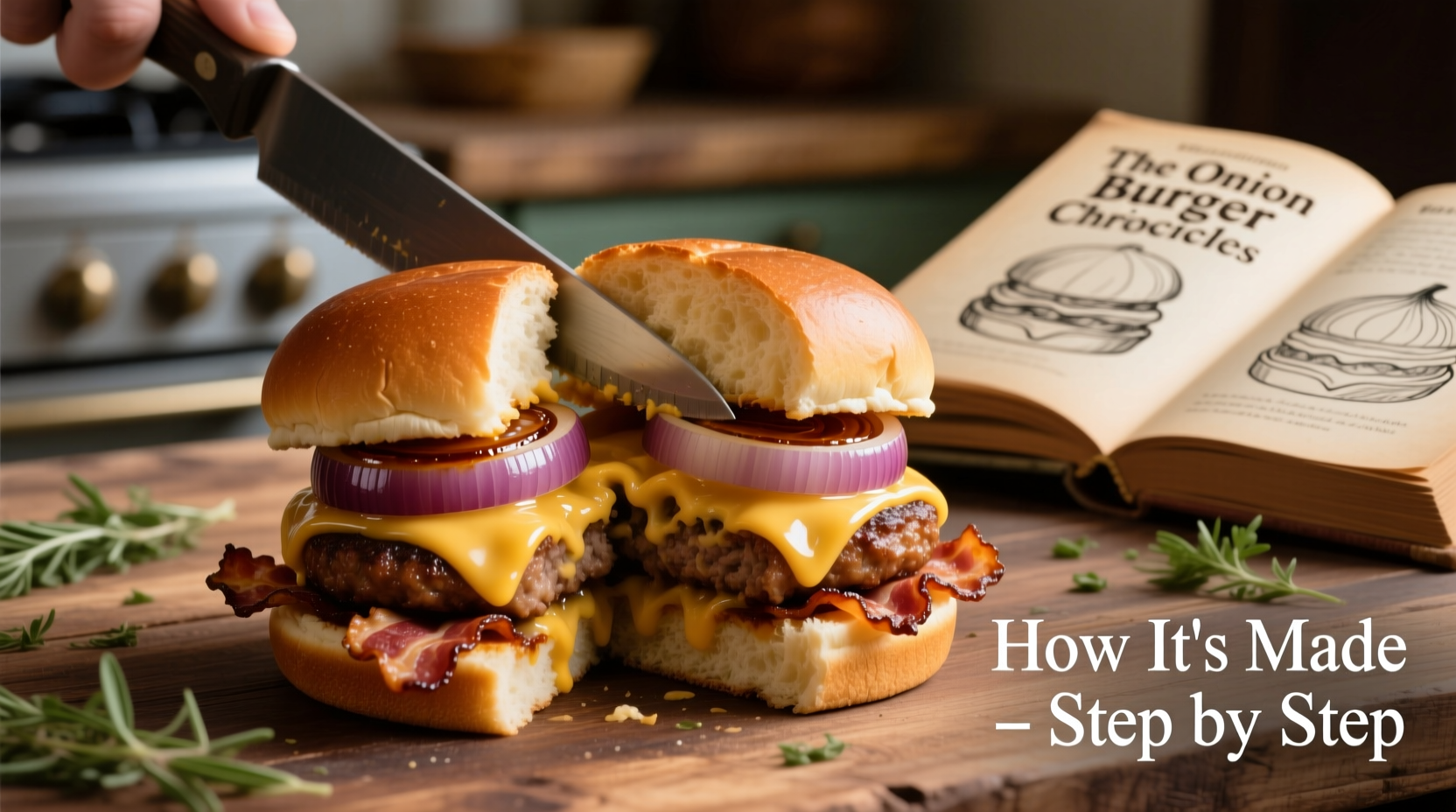
An onion burger is a type of hamburger in which raw or lightly cooked onions are layered directly onto ground beef before being smashed on a hot griddle or skillet, fusing them into a single, flat patty. Unlike traditional burgers where onions sit atop as a topping, here they become structurally and flavorfully integrated into the meat itself. The result is a thin, crispy-edged patty with pockets of softened, slightly sweet allium richness throughout.
The dish traces its roots to early 20th-century America, particularly during periods of economic constraint such as the Great Depression. Meat was expensive; onions were cheap and abundant. Resourceful cooks began stretching small amounts of beef by incorporating grated or finely chopped onions directly into the patties. This technique not only reduced costs but also enhanced moisture retention and flavor complexity. Over time, especially in towns like El Reno, Oklahoma—dubbed the “Onion Burger Capital of the World”—this practical adaptation evolved into a celebrated regional specialty.
Culinary categorization places the onion burger within the broader family of smash burgers, distinguished by high-heat cooking and mechanical compression. Its defining feature—the integration of onions into the patty rather than using them solely as garnish—sets it apart from standard hamburgers and even many gourmet variations.
Key Characteristics
- Flavor Profile: Savory, umami-rich beef balanced with sweet, mildly sharp caramelized onions.
- Texture: Crisp exterior due to Maillard reaction; tender interior with soft onion strands dispersed throughout.
- Color/Form: Thin, wide patty (typically 4–6 inches across), dark golden-brown crust, visible flecks of onion.
- Cooking Method: Griddle or cast-iron skillet at high heat with smashing technique.
- Culinary Function: Standalone main course, often served simply on a bun with minimal toppings to highlight core flavors.
- Shelf Life: Best consumed immediately; not suitable for long storage due to texture degradation.
- Serving Temperature: Hot off the griddle, ideally within minutes of cooking.
Pro Tip: Use yellow or sweet onions (like Vidalia or Walla Walla) for optimal balance of sweetness and structure. Avoid red onions unless you want a sharper bite and potential color bleed.
Practical Usage: How to Make an Authentic Onion Burger
Creating a true onion burger requires understanding two key processes: proper smashing technique and controlled onion incorporation. Follow these steps for consistent, restaurant-quality results at home.
- Choose the Right Beef: Select freshly ground chuck with an 80/20 fat-to-lean ratio. Higher fat ensures juiciness despite thin cooking. Pre-formed frozen patties will not yield the same result.
- Prepare the Onions: Finely chop or grate ¼ cup of onion per burger. Do not pre-cook. Excess moisture should be gently pressed out if using very juicy varieties.
- Preheat the Cooking Surface: Heat a flat-top griddle or heavy cast-iron skillet over medium-high to high heat (375°F–400°F). A drop of water should sizzle and evaporate instantly.
- Form and Place the Patty: Roll ground beef into a loose ball (about 3–4 oz). Place it on the hot surface. Immediately scatter the raw onions evenly over the top.
- Smash Aggressively: Using a stiff spatula or dedicated burger press, apply firm downward pressure to flatten the meat-and-onion mass into a thin disc, roughly ¼ inch thick and 4–5 inches wide. Hold pressure for 10 seconds to ensure contact and initiate searing.
- Cook Undisturbed: Allow the patty to cook without touching for 2–3 minutes. This develops the essential crust via Maillard browning. Resist the urge to peek or press again.
- Flip and Finish: Slide the spatula fully under the patty and flip in one confident motion. Cook for another 60–90 seconds for medium doneness. Add cheese (if desired) during the last 30 seconds.
- Rest and Serve: Transfer to a toasted bun immediately. Let rest 30 seconds before eating to stabilize juices.
This method maximizes surface area for browning while embedding the onions so deeply that they caramelize *in situ*, absorbing meat drippings and contributing their sugars to the developing crust. The outcome is greater depth than achievable by topping a finished burger with sautéed onions.
Why Smashing Works: The Science Behind the Sear
When meat hits a hot surface, proteins denature and amino acids react with reducing sugars to form complex flavor compounds—a process called the Maillard reaction. Thinner patties have more surface-area-per-volume, increasing opportunities for this reaction. By smashing, you create a larger footprint of browning, intensifying savory notes. Additionally, the pressure forces some fat and juices outward, where they fry the embedded onions, accelerating their softening and sweetness development.
“The magic of the onion burger isn’t just in the ingredients—it’s in the physics of compression. You’re not assembling flavors; you’re welding them together.” — Chef Marcus Chen, former executive chef at The Board Knife, Tulsa
Variants & Types
While the foundational concept remains consistent, several regional and stylistic variations exist:
| Variant | Description | Best Used When |
|---|---|---|
| Oklahoma-Style | Uses minimal seasoning (salt only), finely grated onion mixed into the patty before smashing. Often served with mustard and dill pickle slices on a steamed bun. | You want authenticity and historical accuracy. |
| Texas-Smoke Hybrid | Incorporates smoked paprika or chipotle powder into the beef. Onions may be pre-charred over open flame before addition. | Seeking a spicier, smokier profile suited to barbecue pairings. |
| Gourmet Deconstructed | Onions are separately slow-caramelized, then placed between un-smashed thicker patty and bun. Retains distinction between elements. | Prioritizing textural contrast and refined presentation. |
| Vegetarian Adaptation | Uses plant-based grounds or lentils with double the onion content and binding agents (flaxseed, breadcrumbs). Smashed similarly. | Catering to non-meat diets without sacrificing form. |
Each variant serves different culinary goals—from strict regional homage to modern reinterpretation. However, purists argue that only versions involving real-time fusion via smashing qualify as true “onion burgers.”
Comparison with Similar Ingredients/Dishes
The onion burger is frequently confused with other onion-heavy beef preparations. Clarifying distinctions helps refine technique and expectations.
| Dish | How It Differs from Onion Burger | When to Choose It |
|---|---|---|
| Regular Hamburger with Onion Topping | Onions are applied after cooking, either raw, grilled, or sautéed. No integration into patty structure. | You prefer crisp-topped onions or want layered textures. |
| Sliders with Onions | Often include onions but focus on miniaturization. May use canned soup mixtures or pre-cooked onions without smashing. | Feeding crowds with bite-sized portions. |
| French Dip Sandwich | Features sliced roast beef and separately cooked onions, typically au jus. Not a patty-based format. | Desiring a wetter, soup-accompanied experience. |
| Liverwurst or Onion Loaf | Baked mixture of organ meat or ground meat with onions. Set with eggs/breadcrumbs, not pan-seared. | Looking for cold cuts or sandwich spreads. |
Understanding these differences prevents misapplication of techniques. For instance, trying to smash a French dip-style stack would collapse the structure and burn the onions prematurely.
Practical Tips & FAQs
How much onion should I use per burger?
Aim for ¼ cup finely grated onion per 3–4 oz beef portion. Too little won’t impact flavor significantly; too much can weaken structural integrity and cause crumbling during flipping.
Can I season the beef beyond salt?
Traditionally, no—Oklahoma-style emphasizes purity of beef-onion-salt interplay. However, modern adaptations may include black pepper, garlic powder, or Worcestershire sauce. Add dry spices before smashing; liquids risk steaming instead of searing.
Is a griddle necessary?
Ideal, yes. A flat-top provides even heat distribution critical for uniform browning. But a heavy cast-iron skillet or carbon steel pan works well as a substitute. Avoid nonstick surfaces—they cannot achieve sufficient heat for proper Maillard development.
Can I make onion burgers ahead of time?
No. These burgers degrade rapidly upon standing. The crisp edges soften, and trapped steam makes the patty soggy. Always cook to order.
What’s the best bun for an onion burger?
A soft, slightly sweet steamed bun—similar to a Hawaiian roll—is authentic. Toast lightly to prevent disintegration from juices. Brioche works as a richer alternative, but avoid dense artisan breads that overpower delicate textures.
Are there health considerations?
Due to high-fat beef and frying method, onion burgers are calorie-dense. For lighter versions, use leaner beef (90/10) and reduce patty size, though expect less juiciness and browning. Alternatively, increase onion ratio to stretch servings sustainably.
Can I freeze uncooked onion burger patties?
Possible, but not recommended. Freezing alters cell structure, releasing excess moisture upon thawing, which interferes with searing. If freezing, omit onions until cooking, then add fresh when smashing.
Storage Note: Raw beef mixed with onions should never be refrigerated for more than 1–2 hours before cooking due to accelerated bacterial growth from vegetable enzymes. Always prepare components separately and combine immediately before cooking.
Case Study: Revival of the El Reno Style
In 2010, the National Onion Association officially recognized El Reno, Oklahoma, as the birthplace of the onion burger. Local diners like Johnnie’s Grill have served them since 1956, maintaining the original formula: hand-pattied beef, salt, mountains of white onion, smashed thin, served on steamed buns with yellow mustard. Despite national chains overlooking the style, grassroots interest surged after food bloggers documented the town’s annual Onion Burger Festival. Today, chefs across the U.S. reference El Reno methods when developing smash burger menus, proving that regional humility can influence national trends.
Summary & Key Takeaways
The onion burger is not merely a hamburger with onions—it is a distinct preparation defined by the integration of raw onions into a smashed beef patty, creating a unified, caramelized unit with superior flavor and texture. Born from frugality, perfected through technique, it exemplifies how constraints can inspire innovation.
- The defining act is smashing raw onions into the meat on a hot surface, not adding them as toppings.
- Authentic versions originate in Oklahoma and rely on simple ingredients: beef, salt, onion, bun.
- Success depends on high heat, immediate compression, and undisturbed searing to build a flavorful crust.
- Variations exist, but the core principle—fusion via heat and pressure—remains constant.
- It differs fundamentally from other onion-beef dishes by structural integration rather than layering.
- Fresh preparation is essential; do not attempt to prep or reheat.
Ready to try it? Start with one burger to perfect your smash-and-flip rhythm. Once mastered, you’ll see how this humble dish teaches fundamental lessons in heat control, ingredient synergy, and culinary efficiency—all in under five minutes.




 浙公网安备
33010002000092号
浙公网安备
33010002000092号 浙B2-20120091-4
Comments
No comments yet. Why don't you start the discussion?