
Aphrodite stands as one of the most iconic figures in Greek mythology—not only for her unparalleled beauty but for the profound influence she exerted over love, desire, fertility, and even war. Revered across ancient Greece and later absorbed into Roman culture as Venus, Aphrodite was more than a goddess of romance; she embodied the powerful, often unpredictable forces of attraction and human emotion. Her myths reveal complex layers—divine origins, passionate affairs, divine rivalries, and mortal consequences. Understanding what Aphrodite is best known for requires exploring her defining traits, legendary stories, and enduring cultural impact.
Origins and Divine Birth
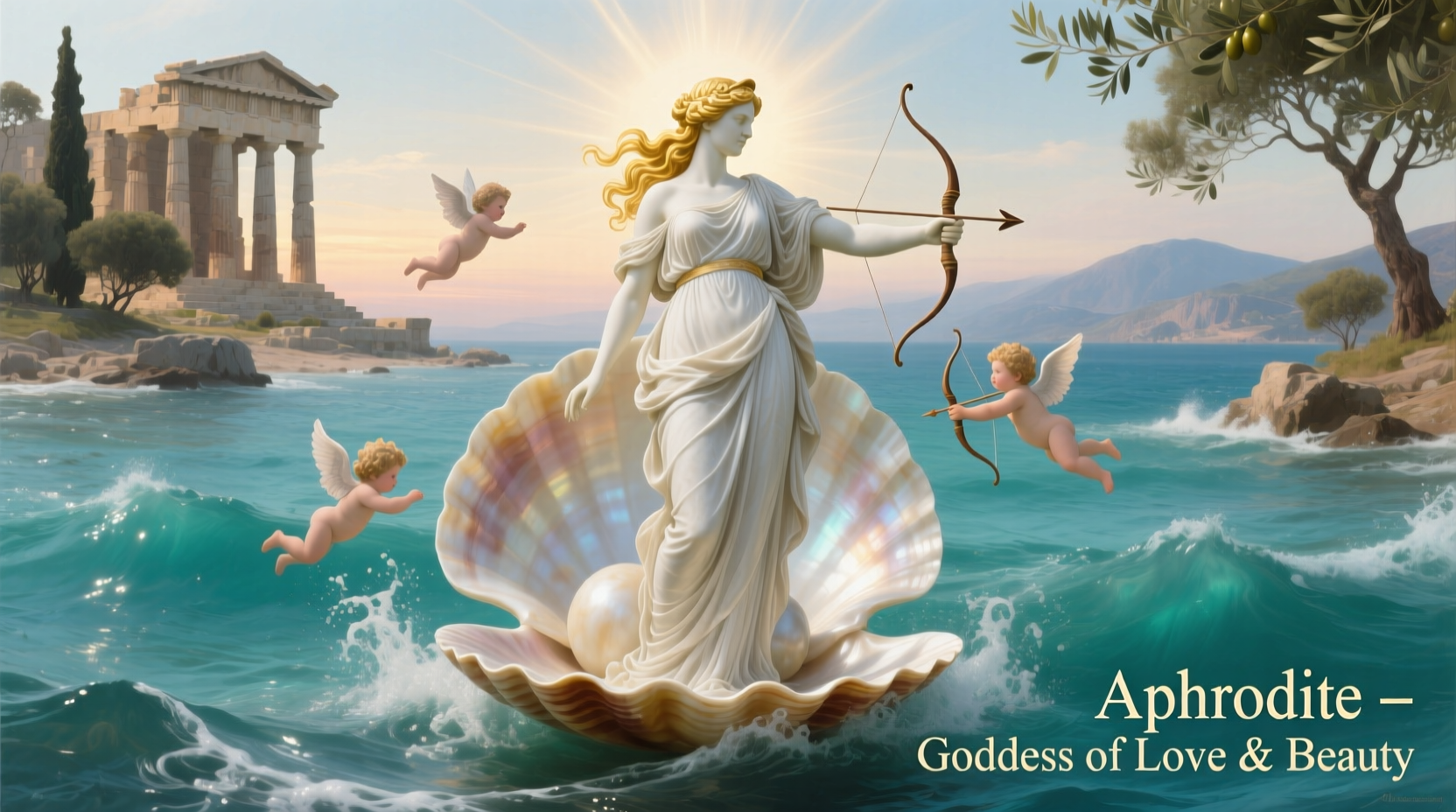
Unlike most Olympian gods born from unions or hierarchies, Aphrodite’s origin is both poetic and symbolic. According to Hesiod’s *Theogony*, she emerged from the sea foam (*aphros* in Greek) near Cyprus after Cronus castrated his father Uranus and cast the severed genitals into the ocean. The foam gathered around them, and from it, Aphrodite rose, fully formed and radiant.
This unusual birth underscores her association with primal forces—creation arising from chaos, beauty from violence. While Homer’s accounts suggest she is the daughter of Zeus and Dione, the sea-born version remains the most enduring and symbolically rich. It emphasizes her connection to natural cycles, fertility, and the uncontrollable surge of desire—elements not tamed by lineage but born from elemental power.
“She sprang from the white foam, and the breath of the west wind bore her to Cyprus.” — Hesiod, *Theogony*
Core Traits That Define Aphrodite
Aphrodite was far more than a passive symbol of beauty. Her character combined allure with agency, charm with manipulation, and compassion with vengeance. These key traits made her one of the most dynamic deities in the pantheon:
- Beauty and Desire: She personified physical attractiveness and erotic love, capable of inspiring instant passion in gods and mortals alike.
- Seductive Power: Armed with a magical girdle (the *cestus*), she could compel affection or lust, even among other immortals.
- Fertility and Procreation: As a protector of childbirth and agriculture in certain cults, she was linked to life-giving forces beyond romantic love.
- Vindictiveness: When slighted—especially in matters of pride or unreciprocated worship—she could be ruthless, as seen in myths involving Hippolytus or Psyche.
- Diplomacy and Influence: Despite being married to Hephaestus, she navigated divine politics through alliances and affairs, particularly with Ares.
Pivotal Myths That Shaped Her Legacy
The myths surrounding Aphrodite reveal how deeply the ancient Greeks understood love as both creative and destructive. Three stories in particular define her mythological significance.
The Judgment of Paris
At the wedding of Peleus and Thetis, the uninvited goddess Eris tossed a golden apple inscribed “To the Fairest,” sparking a dispute between Hera, Athena, and Aphrodite. Zeus appointed Paris, a Trojan prince, to decide. Each goddess offered a bribe: Hera promised power, Athena wisdom in battle, and Aphrodite the love of the most beautiful woman in the world—Helen of Sparta.
Paris chose Aphrodite. His abduction of Helen triggered the Trojan War, illustrating how a single act of desire could reshape history. This myth highlights Aphrodite’s role not just in personal romance, but in geopolitical fate.
Aphrodite and Adonis: Love and Loss
Born from the myrrh tree after his mother Myrrha’s forbidden love for her father, Adonis was raised under Aphrodite’s care. She fell deeply in love with the mortal youth, dividing his time between her and Persephone in the underworld. Tragically, he was killed by a wild boar—sometimes said to be Ares in disguise, jealous of their bond.
This story reflects themes of fleeting beauty and the pain of impermanence. It also established seasonal rituals in which women planted “gardens of Adonis”—fast-growing plants that withered quickly—as symbols of transient love and mourning.
Cupid and Psyche: Mortal Love Tested
In one of the most psychologically rich myths, Psyche, a mortal woman of such beauty that people began worshipping her instead of Aphrodite, incurred the goddess’s wrath. Aphrodite commanded her son Eros (Cupid) to make Psyche fall in love with a monster. Instead, Eros fell for her himself.
After trials set by Aphrodite—including impossible tasks like sorting grains and retrieving beauty from the underworld—Psyche proved her devotion. The gods granted her immortality, and she married Eros. This myth transforms Aphrodite from a vengeful deity into a guardian of true love’s endurance, showing that even the goddess of passion values loyalty and perseverance.
“Aphrodite does not merely inspire love—she tests it.” — Dr. Liana Sakelliou, Classical Mythologist, University of Athens
Worship and Cultural Significance
Aphrodite was worshipped throughout the Greek world, with major cult centers in Cyprus (Paphos), Corinth, and Cythera—locations tied to her mythical birthplace. Her festivals, such as the Aphrodisia, included processions, offerings, and rites celebrating female sexuality and marital harmony.
In Corinth, temple attendants known as *hierodouloi* performed sacred prostitution, though modern scholars debate the extent and nature of this practice. What is clear is that Aphrodite’s worship acknowledged the sacredness of sexual energy, not as sinful, but as a divine force.
Her Roman counterpart, Venus, took on additional roles—Venus Genetrix was honored as the ancestral mother of the Roman people through Aeneas, linking divine love to national identity.
Do’s and Don’ts When Interpreting Aphrodite’s Role
| Do | Don't |
|---|---|
| Recognize her as a complex figure who embodies both creation and destruction. | Reduce her to just a “goddess of love” without acknowledging her political and emotional depth. |
| Consider her myths as reflections of human psychology and societal values. | Assume her actions were always selfish—many served balance or justice in the mythic order. |
| Explore regional variations in her worship to understand local beliefs. | Ignore the differences between Greek Aphrodite and Roman Venus. |
Modern Lessons from Aphrodite’s Myths
The stories of Aphrodite remain relevant because they explore timeless aspects of human experience: the intoxication of attraction, the pain of jealousy, the resilience required in relationships, and the dangers of unchecked desire.
Checklist: Applying Aphrodite’s Wisdom Today
- Value emotional authenticity over superficial charm.
- Respect the power of attraction—but don’t let it override judgment.
- Practice self-love; Aphrodite’s strength came from owning her identity.
- Be mindful of jealousy; it can distort even the purest intentions.
- Honor love as a transformative, sometimes challenging, journey.
Mini Case Study: The Judgment of Paris in Modern Leadership
In a corporate merger negotiation, three executives vie for a leadership role. One emphasizes profit (Hera), another efficiency (Athena), and the third company culture and employee morale (Aphrodite). The decision-maker chooses based on emotional appeal and team cohesion rather than pure metrics. Though controversial, the choice leads to higher retention and innovation.
This mirrors the Judgment of Paris: decisions based on love and human connection can carry long-term value, even if they seem less “rational” in the moment. Aphrodite’s influence reminds us that emotional intelligence is a form of power.
FAQ
Was Aphrodite married? If so, why did she have affairs?
Yes, Aphrodite was married to Hephaestus, the god of blacksmiths, but their union was arranged and lacked passion. Her affair with Ares, god of war, symbolizes the clash and fusion of love and conflict. In myth, divine marriages often reflected cosmic balance rather than personal compatibility.
Is Aphrodite purely a goddess of romantic love?
No. While romantic and sexual love are central, she also governed fertility, naval protection, and even victory in war in certain regions. In Sparta, she was worshipped as Aphrodite Areia (Warlike), showing her martial aspect.
How is Aphrodite different from Venus?
Venus inherited Aphrodite’s traits but evolved in Roman culture to emphasize civic duty and ancestry. Venus Felix brought good fortune; Venus Victrix granted military success. Aphrodite, by contrast, remained more closely tied to personal emotion and natural forces.
Conclusion: Embrace the Complexity of Love
Aphrodite endures because she represents something fundamental: love in all its forms—beautiful, irrational, painful, and redemptive. To understand what Aphrodite is best known for is to recognize that love is not merely an emotion but a force that shapes destinies, ignites wars, and inspires art centuries after her myths were first told.




 浙公网安备
33010002000092号
浙公网安备
33010002000092号 浙B2-20120091-4
Comments
No comments yet. Why don't you start the discussion?