
The term \"frank sausage\" often evokes images of backyard barbecues, ballpark stands, and childhood picnics. Yet despite its ubiquity, the frank—commonly known as a frankfurter or hot dog—remains one of the most misunderstood sausages in modern cuisine. Unlike artisanal charcuterie or regional specialties with well-documented histories, franks are frequently dismissed as processed fast food. But beneath their mass-market image lies a sophisticated blend of meat science, tradition, and culinary engineering. Understanding what a frank sausage truly is—and how it’s made—reveals not only its place in global food culture but also its potential as a versatile ingredient in both casual and elevated cooking.
At its core, a frank sausage is an emulsified cooked sausage made from finely ground meats, typically beef, pork, or a combination, suspended in a gelatinous matrix of fat, water, and seasonings. Its smooth texture, uniform appearance, and consistent flavor distinguish it from coarsely ground sausages like bratwurst or Italian sausage. The production process combines centuries-old sausage-making principles with modern food technology to deliver a shelf-stable, ready-to-eat product that balances convenience with palatability.
Definition & Overview
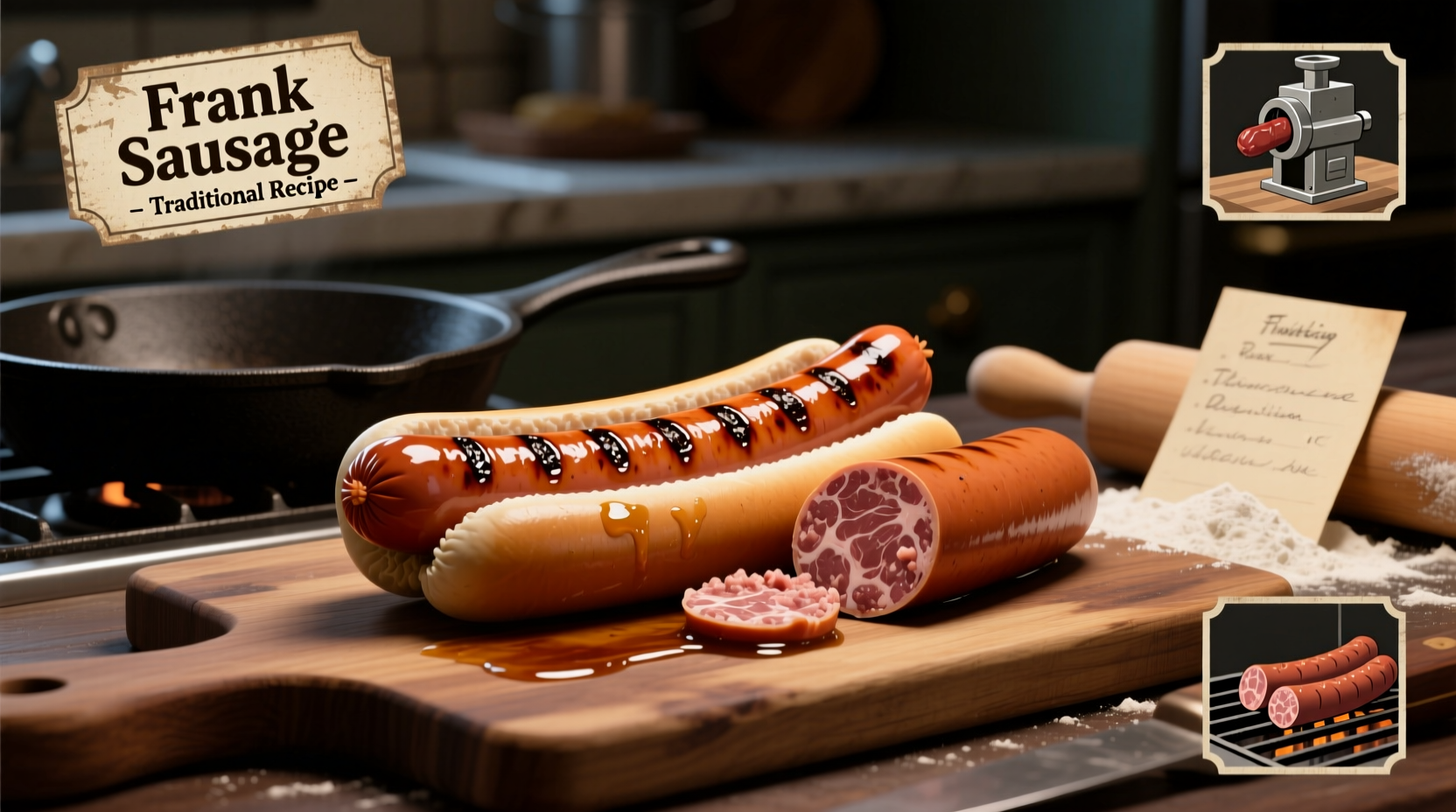
A frank sausage, formally referred to as a frankfurter, originated in Frankfurt, Germany, during the 13th century, though its modern form evolved significantly in the United States during the late 19th and early 20th centuries. The name “hot dog” emerged later, likely as American slang, possibly referencing the dachshund-like shape of the sausage or playful jabs at German immigrants.
Technically classified as a parboiled sausage or cooked cured sausage, the frank is fully cooked during manufacturing and can be eaten straight from the package, though it is most commonly reheated before serving. It belongs to the broader category of emulsified sausages, which includes bologna, knackwurst, and certain types of mortadella. These sausages rely on a stable protein-fat emulsion to achieve their signature smooth, bouncy texture.
The defining characteristics of a frank sausage include:
- Fine, homogenous texture with no visible meat chunks
- Smoked or smoke-flavored finish
- High moisture content (typically 50–60%)
- Casing-bound, either natural or synthetic
- Salted, mildly spiced profile with dominant notes of garlic, coriander, and pepper
In commercial production, franks must meet strict regulatory standards. In the U.S., the USDA defines frankfurters as “cooked and/or smoked sausages consisting of meat or poultry or a mixture thereof, seasoned, and stuffed into casings.” They may contain binders such as nonfat dry milk or soy protein, but high-quality versions minimize fillers and artificial additives.
Key Characteristics
| Attribute | Description |
|---|---|
| Flavor Profile | Savory, slightly salty, with subtle smokiness; seasoned primarily with garlic, white pepper, coriander, and sometimes nutmeg or paprika |
| Aroma | Smoky, meaty, faintly spiced—especially when heated |
| Texture | Smooth, firm, springy; snaps when bitten due to casing integrity |
| Color | Deep pink to reddish-brown exterior; pale gray-pink interior |
| Heat Level | Non-spicy by default; some varieties include chili flakes or cayenne for heat |
| Culinary Function | Ready-to-eat protein; ideal for grilling, simmering, frying, or incorporating into stews and casseroles |
| Shelf Life | Unopened: 1–2 weeks refrigerated; frozen: up to 2 months without quality loss |
How Frank Sausage Is Made: From Meat to Package
The manufacturing of frank sausage is a precise process designed to create a stable, safe, and flavorful product. While small-scale artisanal producers may use traditional methods, most commercial franks are produced using industrial equipment that ensures consistency and efficiency. Here’s a step-by-step breakdown of how franks are made:
- Meat Selection and Trimming: High-grade skeletal meats—usually beef trimmings, pork shoulder, or veal—are selected. Fat (typically pork back fat) is added in controlled amounts (20–30%) to enhance juiciness and aid emulsification.
- Grinding and Chopping: The meat and fat are passed through fine grinders (3mm plates or smaller), then placed in a vacuum chopper (or bowl cutter). Ice or chilled water is added to maintain temperatures below 10°C (50°F), preventing fat smearing and ensuring proper protein extraction.
- Emulsification: As the mixture is chopped under vacuum, myofibrillar proteins (mainly myosin) dissolve and form a sticky gel. This gel traps fat globules uniformly throughout the batter—a critical step for achieving the smooth texture unique to franks.
- Seasoning and Curing: Salt (2–3%), sodium nitrite (for color fixation and microbial safety), sugar, and spices (garlic powder, coriander, white pepper) are blended into the emulsion. Phosphates may be added to improve water retention and binding.
- Stuffing: The emulsion is pumped into casings. Traditionally, sheep casings were used for their thinness and “snap,” but today many brands use cellulose or collagen casings for uniformity and ease of peeling.
- Linking and Smoking: The continuous strand is linked into individual sausages, then moved through a smokehouse. Temperatures rise gradually—from 40°C to 80°C (104°F to 176°F)—cooking the sausage while applying liquid smoke or natural hardwood smoke for flavor.
- Peeling (Optional): For skinless franks, the outer casing is mechanically removed after cooking, leaving a smooth surface.
- Chilling and Packaging: Cooked franks are rapidly cooled in ice baths, then packaged under modified atmosphere to extend shelf life.
This entire process, from raw meat to sealed package, can take less than 24 hours in large facilities. The result is a microbiologically stable, fully cooked sausage that requires only reheating before consumption.
Pro Tip: When preparing franks at home, avoid boiling them in water for extended periods—it leaches flavor and makes the texture mushy. Instead, grill, pan-sear, or steam gently to preserve juiciness and develop a light crust.
Variants & Types
While all frank sausages share a basic structure, numerous variations exist based on ingredients, origin, and preparation method. Choosing the right type depends on intended use and desired quality level.
By Meat Base
- Beef Frankfurters: Made entirely from beef; often kosher-certified. Firmer texture and richer flavor. Ideal for those avoiding pork.
- Pork Franks: Traditional European-style; more aromatic and fatty. Common in German and Austrian cuisine.
- Chicken or Turkey Franks: Lower in fat and calories; milder taste. Popular among health-conscious consumers.
- Vegetarian/Vegan Franks: Made from soy, pea protein, or seitan. Designed to mimic texture and flavor using natural smoke and yeast extracts.
By Processing Style
- Skin-On Franks: Retain their natural or synthetic casing; offer a satisfying “snap” when bitten. Best for grilling.
- Skinless Franks: Peeled after cooking; smoother mouthfeel. Preferred for slicing into soups or casseroles.
- Smoked vs. Smoke-Flavored: True smoked franks pass through real smoke chambers; others use liquid smoke for speed and cost-efficiency.
Regional Specialties
- Chicago Dog: All-beef frank on a poppy seed bun, topped with yellow mustard, onions, sweet pickle relish, tomato slices, pickled sport peppers, celery salt, and a pickle spear—but never ketchup.
- Michigan Hot Dog: Served with a beef-and-tomato-based sauce resembling sloppy joe mix, shredded cheddar, and onions.
- Vienna Sausage: Smaller, thinner franks packed in broth; often canned. Milder than standard franks.
- Red Hots (Upstate New York): Natural-casing franks served in a steamed bun with meat sauce, onions, and mustard.
| Type | Best Used For | Notable Features |
|---|---|---|
| All-Beef Frank | Grilling, classic hot dogs | Kosher-friendly, firm bite, robust flavor |
| Premium Natural Casing | Gourmet presentations, beer pairings | Distinct snap, artisanal appeal |
| Skinless Mass-Market | Slicing into mac and cheese, casseroles | Uniform shape, easy to chop |
| Chicken/Turkey Frank | Health-focused meals, kids’ lunches | Lower fat, milder taste |
Comparison with Similar Ingredients
Frank sausages are often confused with other cured or cooked sausages. While they share similarities, key differences affect usage and flavor outcomes.
| Product | Differences from Frank Sausage |
|---|---|
| Bratwurst | Coarsely ground, uncooked, made fresh; requires full cooking. Contains visible meat pieces and stronger herbal notes (marjoram, nutmeg). |
| Bologna | Same emulsified style, but larger diameter, less smoky, rarely grilled. Often sliced thin for sandwiches. |
| Knackwurst | Shorter, plumper, highly seasoned with garlic. Usually sold in natural casings with pronounced snap. |
| Salami | Raw fermented sausage, air-dried, not cooked. Chewier texture, tangy flavor, served cold. |
| Polony | Common in South Africa and Australia; similar to bologna but often more brightly colored and artificially flavored. |
“The difference between a great hot dog and a mediocre one isn’t just the toppings—it starts with the frank itself. A true emulsified sausage should have balance: enough fat for succulence, enough seasoning for character, and enough structural integrity to hold up to heat without splitting.” — Chef Elena Ruiz, Charcuterie Instructor, Culinary Institute of America
Practical Usage: How to Use Frank Sausage in Cooking
Despite its reputation as a fast-food item, the frank sausage is remarkably adaptable in the kitchen. Beyond the bun, it can enhance a wide range of dishes with minimal effort.
Classic Applications
- Hot Dogs: Grill or pan-fry until lightly browned. Serve on a toasted bun with mustard, onions, sauerkraut, or chili.
- Charcuterie Boards: Slice smoked franks thinly and arrange with cheeses, cornichons, and whole-grain mustard for a retro-American touch.
- Snack Platters: Serve mini franks (pigs in a blanket) wrapped in pastry dough, baked until golden.
Creative Culinary Uses
- Frank Hash: Dice franks and sauté with potatoes, onions, bell peppers, and a splash of Worcestershire sauce. Top with a fried egg.
- Mac and Cheese Upgrade: Add chopped franks to homemade macaroni and cheese for extra protein and smoky depth.
- Asian Fusion Stir-Fry: Slice franks into rounds and stir-fry with cabbage, carrots, gochujang, and ramen noodles.
- Bean and Frank Casserole: Layer sliced franks with baked beans, brown sugar, and mustard in a casserole dish. Bake at 350°F for 30 minutes.
- Pasta Salad Addition: Include diced franks in cold pasta salads with olives, cherry tomatoes, and vinaigrette.
Professional Techniques
In restaurant kitchens, chefs repurpose franks to add umami and texture. Some upscale diners feature “elevated hot dogs” with house-made franks using heritage pork and natural smoking. Others incorporate finely minced franks into stuffings, terrines, or even dumpling fillings for a savory surprise.
Tip: To prevent franks from splitting during cooking, prick them lightly with a fork before heating—or steam them for 5–7 minutes to warm evenly without drying out.
Practical Tips & FAQs
Are franks healthy?
Traditional franks are high in sodium and saturated fat, and many contain preservatives like sodium nitrite. However, lower-sodium, uncured (using celery powder instead of synthetic nitrites), and organic options are increasingly available. Moderation is key, especially for individuals managing blood pressure or heart health.
Can I freeze frank sausages?
Yes. Unopened packages can be frozen for up to two months. Thaw in the refrigerator before use to maintain texture. Avoid refreezing once thawed.
What’s the best way to reheat franks?
For optimal results:
- Grilling: Medium heat, 3–4 minutes per side for char and warmth.
- Pan-Searing: Light oil, medium heat, turning frequently.
- Steaming: Preserves moisture; ideal for delicate skinless types.
- Microwaving: Place on a damp paper towel; heat in 30-second intervals.
Are all franks gluten-free?
Most plain franks are gluten-free, but always check labels. Some brands use fillers or modified starches derived from wheat. Specialty or flavored varieties (e.g., jalapeño-cheddar) may contain gluten-containing additives.
How do I choose a high-quality frank?
Look for:
- Short ingredient list: meat, water, salt, spices, curing agents
- No corn syrup or artificial flavors
- Natural casings (if you prefer snap)
- USDA-inspected label and clear expiration date
Summary & Key Takeaways
The frank sausage is far more than a carnival staple—it is a product of culinary evolution, blending old-world sausage traditions with modern food science. Its smooth texture, smoky aroma, and versatility make it a valuable ingredient beyond the hot dog bun.
Key points to remember:
- Franks are emulsified cooked sausages made from finely ground meat, fat, and seasonings.
- They are fully cooked during production and safe to eat cold, though reheating enhances flavor.
- Varieties include all-beef, pork, chicken, vegetarian, and regionally inspired styles.
- Unlike bratwurst or salami, franks have a uniform texture and require no pre-cooking.
- Use them creatively in hashes, casseroles, pastas, and appetizers—not just on buns.
- Choose high-quality franks with minimal additives for better taste and nutrition.
Next time you're planning a weeknight meal or weekend gathering, consider the humble frank not as a last resort but as a flavorful, convenient protein worth reinventing. With the right handling and imagination, it can elevate everyday cooking with ease and nostalgia.




 浙公网安备
33010002000092号
浙公网安备
33010002000092号 浙B2-20120091-4
Comments
No comments yet. Why don't you start the discussion?