
Ginger Exchange is not a culinary ingredient or spice—it is a digital asset trading platform operating in the cryptocurrency space. Despite the name potentially evoking images of ginger root or food-based barter systems, Ginger Exchange refers to a fintech service designed to facilitate the secure, transparent, and efficient exchange of cryptocurrencies such as Bitcoin, Ethereum, and various altcoins. As digital finance continues to reshape global economic interactions, platforms like Ginger Exchange are becoming critical infrastructure for retail investors, traders, and institutions navigating decentralized markets. Understanding how it functions—its architecture, security protocols, user interface, and regulatory positioning—is essential for anyone considering participation in modern crypto ecosystems.
The rise of blockchain technology has enabled a new class of financial services that operate independently of traditional banking systems. Ginger Exchange emerges within this context as a solution aimed at simplifying access to crypto markets while maintaining robust security and compliance standards. Unlike centralized exchanges that hold users’ funds directly, or fully decentralized protocols with limited customer support, Ginger Exchange positions itself as a hybrid model—balancing ease of use with control and transparency. This article explores the operational mechanics, core features, security frameworks, and practical implications of using Ginger Exchange, offering readers a comprehensive understanding grounded in real-world application.
Definition & Overview
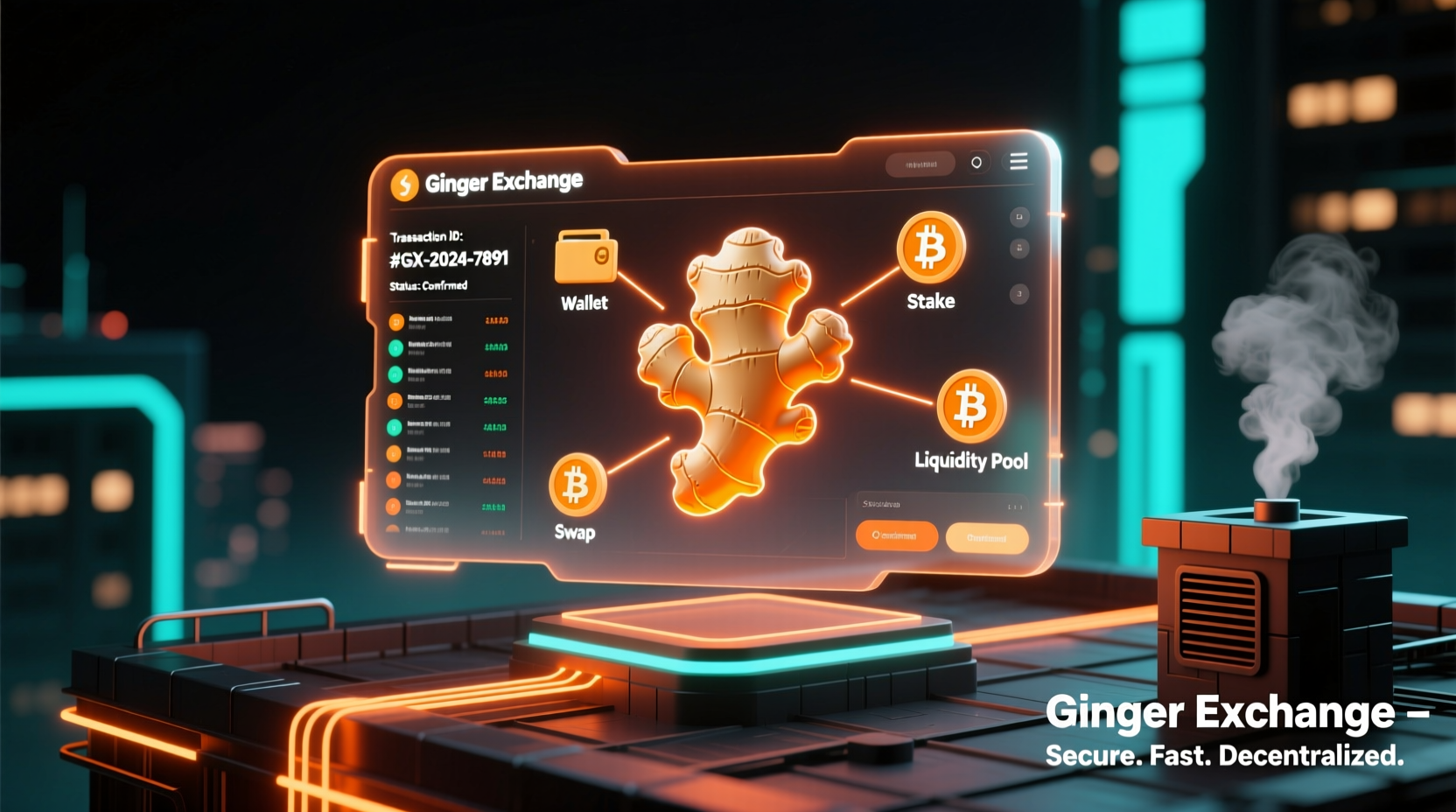
Ginger Exchange is a cryptocurrency exchange platform that enables users to buy, sell, trade, and store digital assets. It operates primarily online through a web-based dashboard and often includes mobile applications for iOS and Android devices. The platform supports multiple cryptocurrencies, fiat on-ramps (such as USD, EUR via bank transfers or cards), and advanced trading tools including limit orders, stop-loss mechanisms, and API integrations for algorithmic trading.
Founded with the goal of making cryptocurrency more accessible to non-technical users without compromising security, Ginger Exchange incorporates elements from both centralized and decentralized finance (CeDeFi) models. It offers custodial wallet services for convenience but also provides options for self-custody integration with external wallets like MetaMask or Ledger. Transactions occur on a backend matching engine that pairs buyers and sellers based on price and volume, similar to traditional stock exchanges but optimized for blockchain settlement times.
The platform typically generates revenue through transaction fees, withdrawal charges, and premium subscription tiers offering reduced rates or enhanced analytics. Importantly, Ginger Exchange does not issue or create cryptocurrencies; rather, it serves as an intermediary marketplace where existing tokens can be exchanged under regulated or audited conditions, depending on jurisdictional compliance.
Key Characteristics
- Asset Support: Native support for major cryptocurrencies (BTC, ETH, USDT, SOL, etc.) and select DeFi tokens.
- Fiat Integration: Direct deposit and withdrawal of government-issued currencies via bank transfer, debit card, or e-wallets.
- Trading Interface: Clean, responsive UI with real-time charts, order books, and depth analysis.
- Security Protocols: Multi-factor authentication (MFA), biometric login, cold storage for 95%+ of user funds, and regular third-party audits.
- Liquidity Model: Aggregated liquidity from partner exchanges and market makers to ensure tight spreads and fast execution.
- Regulatory Compliance: KYC (Know Your Customer) and AML (Anti-Money Laundering) procedures aligned with regional regulations such as FATF guidelines.
- Customer Support: 24/7 live chat, email ticketing, and educational resources including video tutorials and FAQ databases.
- Cross-Platform Access: Full functionality across desktop browsers, iOS, and Android apps.
Pro Tip: Always enable two-factor authentication (2FA) using an authenticator app—not SMS—when registering on Ginger Exchange. This significantly reduces the risk of account takeover due to SIM-swapping attacks.
How Ginger Exchange Works: Step-by-Step Process
The operation of Ginger Exchange follows a structured flow designed to onboard new users safely while enabling experienced traders to execute complex strategies efficiently.
- Account Creation: Users begin by signing up with an email address and creating a strong password. Phone number verification may follow.
- Identity Verification (KYC): To comply with financial regulations, users upload a government-issued ID (passport, driver’s license) and sometimes a proof of address. Approval times vary from minutes to 48 hours.
- Funding the Account: Once verified, users can deposit fiat currency via linked bank accounts or credit/debit cards. Alternatively, they can send cryptocurrency from an external wallet to their unique deposit address provided by Ginger Exchange.
- Navigating the Trading Dashboard: After funding, users access the trading interface where they can view balances, place trades, set alerts, and monitor portfolio performance.
- Placing Orders: Traders choose between market orders (immediate execution at current price) or limit orders (execution only when asset reaches a specified price). Stop-limit orders are available for risk management.
- Executing Trades: When a buyer's bid matches a seller's ask, the trade executes automatically. Settlement occurs almost instantly, with updated balances reflected in the user’s account.
- Withdrawing Assets: Users can withdraw funds to personal wallets or back to bank accounts. Withdrawal requests undergo automated checks and may require manual review for large amounts.
- Transaction History & Reporting: All activity is logged securely. Users can export CSV reports for tax purposes or accounting integration.
This streamlined workflow ensures accessibility for beginners while supporting sophisticated tools desired by active traders. Behind the scenes, Ginger Exchange uses encrypted APIs to interact with blockchain networks, ensuring accurate balance tracking and irreversible confirmations once transactions are broadcasted.
Variants & Types of Accounts
Ginger Exchange offers tiered account structures tailored to different levels of engagement and investment capacity:
| Account Tier | Features | Fees | Verification Level |
|---|---|---|---|
| Basic | Email signup, limited withdrawals ($1,000/day), no margin trading | 0.5% per trade | L1 – Email + Phone |
| Verified | Full fiat deposits/withdrawals, advanced charting, staking access | 0.35% per trade | L2 – ID Upload Required |
| Premium | API access, lower fees, priority support, early feature access | 0.2% per trade (or flat monthly fee) | L3 – Proof of Address + Video Verification |
| Institutional | Dedicated account manager, OTC desk, custom reporting, multi-sig custody | Negotiated (volume-based) | Corporate Documentation + Legal Review |
Each tier increases functionality and trust, aligning with progressive risk tolerance and capital commitment. Institutional clients benefit from segregated accounts and SLA-backed uptime guarantees, crucial for high-frequency trading operations.
Comparison with Similar Platforms
While numerous cryptocurrency exchanges exist, Ginger Exchange distinguishes itself through specific design choices and operational philosophies. Below is a comparison with three prominent counterparts:
| Feature | Ginger Exchange | Binance | Kraken | Uniswap (DEX) |
|---|---|---|---|---|
| Centralization Model | CeDeFi Hybrid | Centralized | Centralized | Decentralized |
| Fiat Support | Yes (USD, EUR, GBP) | Yes (limited regions) | Yes (broad coverage) | No |
| Self-Custody Option | Yes (wallet connect) | No (custodial only) | No (custodial) | Yes (full control) |
| Mobile App Quality | High (intuitive UX) | Moderate (cluttered menus) | Good (functional) | Browser-only (via wallet) |
| Regulatory Oversight | FCA Registered (UK), FINTRAC (Canada) | Under scrutiny in multiple jurisdictions | FinCEN Regulated (US) | None (permissionless) |
| Staking Rewards | Up to 6.5% APY on select coins | Up to 10% on some assets | Up to 7% APY | Variable yield (liquidity pools) |
Unlike purely decentralized exchanges such as Uniswap, Ginger Exchange provides identity verification and dispute resolution—critical for mainstream adoption. Compared to Binance, it maintains stricter compliance, reducing regulatory risk exposure. Against Kraken, it emphasizes user experience and faster onboarding, appealing to less technical audiences.
\"Platforms like Ginger Exchange represent the next evolution in digital finance—not just bridges to crypto, but trusted gateways that merge usability with accountability.\" — Sarah Lin, Fintech Analyst at Digital Asset Insights
Practical Tips & FAQs
Is Ginger Exchange safe?
Yes, Ginger Exchange employs enterprise-grade security measures including end-to-end encryption, 98% cold storage reserves, routine penetration testing, and insurance coverage for hot wallet losses. However, no platform is immune to phishing or social engineering attacks, so users must practice good cyber hygiene.
Can I use Ginger Exchange without KYC?
Limited functionality is available without full verification (e.g., crypto deposits and basic trading), but fiat transactions and higher withdrawal limits require completed KYC.
What are the fees on Ginger Exchange?
Trading fees range from 0.2% to 0.5% depending on account tier and trading volume. Maker orders may receive rebates. Deposit fees are generally waived, though network gas fees apply for cryptocurrency transfers.
Does Ginger Exchange offer staking?
Yes. Users can stake supported cryptocurrencies directly within the platform to earn passive income. Payouts are distributed weekly, and unstaking periods vary by asset (typically 1–7 days).
How do I recover my account if locked out?
Use the “Forgot Password” function combined with 2FA recovery codes. If biometrics were enabled, contact support with verified identification. Never share recovery phrases with anyone claiming to be support staff.
Is there a referral program?
Yes. Users can generate unique referral links and earn a percentage of their invitees’ trading fees (typically 20–30%) for up to six months after sign-up.
Can I automate trades on Ginger Exchange?
Absolutely. The platform offers RESTful APIs and WebSocket feeds for building bots, executing dollar-cost averaging (DCA) strategies, or integrating with third-party tools like TradingView alerts.
Actionable Checklist for New Users:
- ✅ Register using a secure, unique email
- ✅ Set a strong password (12+ characters, mix of types)
- ✅ Enable 2FA via Google Authenticator or Authy
- ✅ Complete KYC promptly to unlock full features
- ✅ Start with small deposits to test withdrawal processes
- ✅ Bookmark official website to avoid phishing scams
- ✅ Store recovery phrase offline in a fireproof container
Security Architecture and Risk Mitigation
Ginger Exchange prioritizes fund protection through layered defenses:
- Cold Storage: Over 95% of user assets are stored offline in geographically dispersed vaults protected by multi-signature protocols requiring 3-of-5 executive approvals for movement.
- Smart Contract Audits: For any integrated DeFi products, independent firms conduct code reviews before deployment.
- DDoS Protection: Cloudflare-powered mitigation handles traffic surges and malicious bot attacks.
- Data Encryption: AES-256 encryption secures all personal data both in transit (TLS 1.3) and at rest.
- Insurance Fund: A reserve pool covers potential losses from exchange breaches, funded by a fraction of transaction fees.
Despite these precautions, users retain responsibility for endpoint security—malware-infected devices or compromised passwords remain common attack vectors. Ginger Exchange cannot reverse transactions once sent to incorrect addresses, emphasizing the need for caution during withdrawals.
Summary & Key Takeaways
Ginger Exchange functions as a modern cryptocurrency trading platform blending accessibility, security, and regulatory compliance. It enables individuals and institutions to enter digital asset markets through intuitive interfaces backed by robust technical infrastructure. Unlike pure-play decentralized exchanges, it offers customer support, fiat integration, and identity verification—features essential for mass-market trust.
Key advantages include hybrid custody options, low-latency trading engines, tiered account models, and strong security practices including cold storage and insurance. While not entirely immune to systemic risks inherent in crypto markets—such as volatility or smart contract failures—the platform mitigates many individual-level threats through education, tooling, and proactive monitoring.
For new users, success begins with proper setup: secure credentials, enabled 2FA, completed verification, and cautious initial transactions. Advanced users benefit from API access, staking programs, and institutional-grade reporting tools. Whether used for long-term investing, active trading, or exploring DeFi opportunities, Ginger Exchange serves as a reliable entry point into the expanding world of digital finance.
Final Thought: Technology evolves rapidly, but financial prudence remains timeless. Use Ginger Exchange as a tool—not a shortcut. Educate yourself continuously, diversify holdings, and never invest more than you can afford to lose.




 浙公网安备
33010002000092号
浙公网安备
33010002000092号 浙B2-20120091-4
Comments
No comments yet. Why don't you start the discussion?