
Green mustard is a vibrant, peppery leafy green that plays a vital role in cuisines across Asia, Africa, and parts of Europe. Often overshadowed by more familiar greens like spinach or kale, green mustard brings a bold, pungent bite and remarkable versatility to the table. Whether you've encountered it in a Sichuan hot pot, a Nigerian stew, or a Korean banchan, understanding this ingredient unlocks deeper flavor in everyday cooking. More than just a garnish or filler, green mustard contributes complexity, texture, and nutritional value to dishes ranging from rustic home meals to refined restaurant fare.
The term “green mustard” can be ambiguous—it may refer to young mustard greens, specific cultivars like Brassica juncea, or even certain preparations of mustard leaves. Unlike yellow or brown mustard seeds used for condiments, green mustard emphasizes the edible foliage of the plant. Its sharpness varies dramatically based on age, variety, and preparation, making it a dynamic ingredient that responds well to technique. For cooks seeking depth beyond mild greens, green mustard offers a compelling alternative with cultural significance and robust culinary functionality.
Definition & Overview
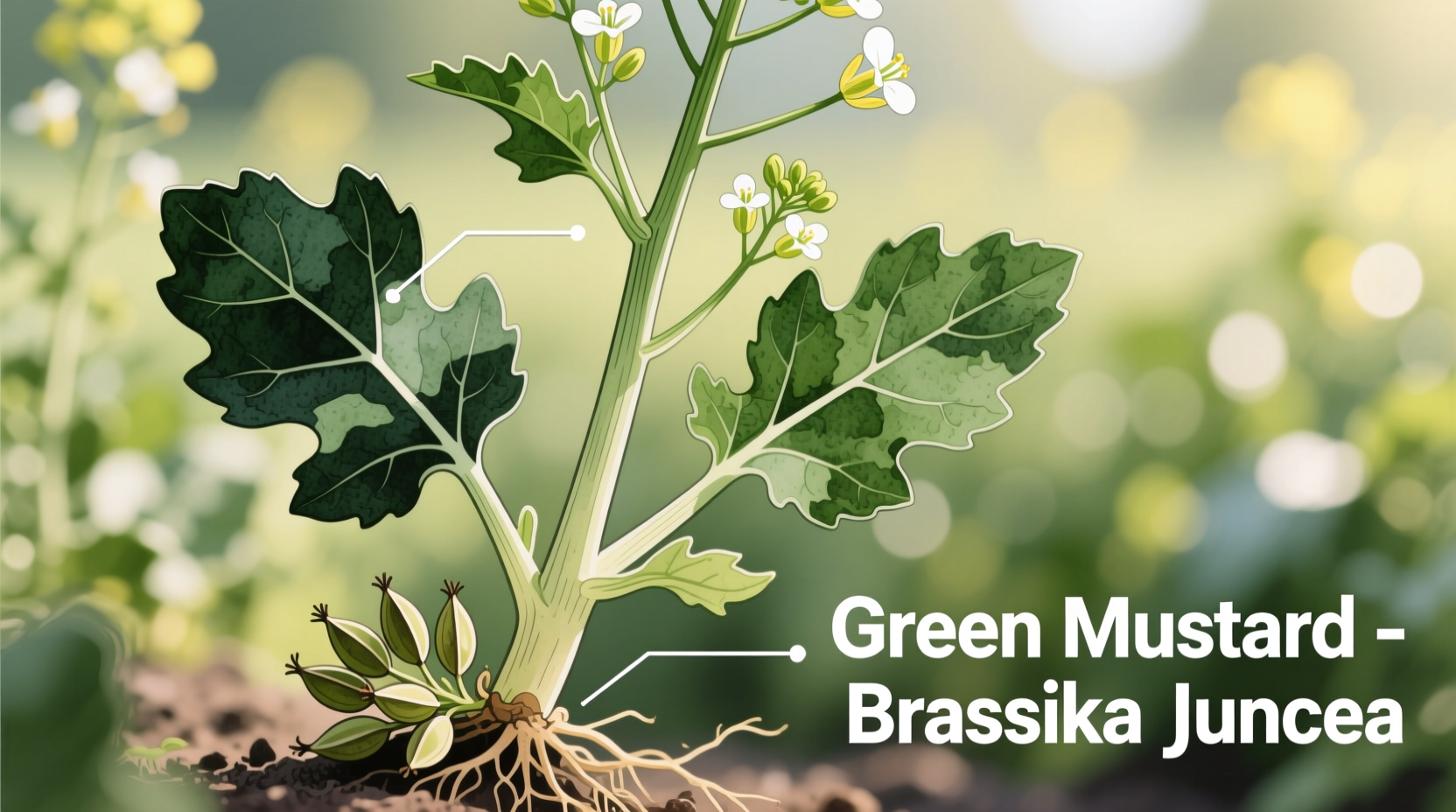
Green mustard refers to the leafy greens harvested from plants in the Brassica juncea species, commonly known as Indian mustard or leaf mustard. This cruciferous vegetable is closely related to broccoli, cabbage, and arugula, all sharing the characteristic pungency derived from glucosinolates—sulfur-containing compounds that break down into sharp, spicy flavors when the plant tissue is damaged through cutting or chewing.
Natively cultivated in regions stretching from India to China, green mustard has become integral to diverse food traditions. In Chinese cuisine, it appears in stir-fries and pickled forms such as suan cai. In West African countries like Nigeria and Ghana, it's stewed with palm oil, onions, and proteins in dishes like ewedu (though sometimes confused with jute leaves). In Korea, blanched and fermented versions appear in side dishes, while in the southern United States, it’s grown alongside collards and turnip greens in \"mixed greens\" pots.
The plant grows rapidly, often reaching harvestable size within 30–45 days. Leaves range from deeply serrated and frilly to broad and flat, depending on the cultivar. While most commonly consumed fresh or lightly cooked, green mustard also undergoes drying, fermenting, and pickling to preserve its use year-round or intensify its flavor.
Key Characteristics
| Attribute | Description |
|---|---|
| Flavor Profile | Peppery, sharp, slightly bitter; younger leaves milder, mature leaves intensely pungent. Raw form resembles arugula but stronger; cooking softens heat. |
| Aroma | Earthy, green, faintly sulfurous when raw; becomes sweeter and vegetal when sautéed or braised. |
| Color & Texture | Bright to deep green; crisp and tender when young, fibrous and sturdy when mature. Veins are prominent and may require trimming. |
| Heat Level | Moderate to high spiciness when raw; diminishes significantly with heat, salt, or acid. |
| Culinary Function | Adds pungency, texture, color, and nutrients. Acts as a base green in stews, a textural element in stir-fries, or a fermented component in condiments. |
| Shelf Life | 3–5 days refrigerated in a sealed container with slight moisture; wilts quickly if not stored properly. Freezes well after blanching. |
Practical Usage: How to Use Green Mustard in Cooking
Green mustard’s potency demands thoughtful handling. The goal is often to balance its natural heat without dulling its character. Whether using it raw in salads or slow-cooked in stews, technique determines the final dish’s success.
Raw Applications
Young, tender shoots of green mustard can be used raw in salads, slaws, or sandwiches. Their peppery kick substitutes well for arugula or watercress but adds more intensity. To moderate sharpness:
- Toss with a sweet vinaigrette containing honey or fruit vinegar.
- Pair with creamy elements like avocado, goat cheese, or yogurt-based dressings.
- Combine with milder greens (butter lettuce, spinach) to dilute heat.
Stir-Frying
One of the most common methods in Chinese and Southeast Asian kitchens. Quick cooking preserves texture while reducing bitterness.
- Wash thoroughly—dirt often clings to crevices in serrated leaves.
- Trim thick stems and chop uniformly.
- Heat oil until shimmering, add minced garlic or ginger, then stir-fry stems first for 30 seconds.
- Add leaves and cook 2–3 minutes until wilted but still bright green.
- Season with soy sauce, a touch of sugar, and sesame oil.
This method works exceptionally well in noodle dishes or served alongside steamed fish or tofu.
Braising & Stewing
In soul food and West African traditions, green mustard is simmered slowly with aromatics and fats to develop deep flavor. The long cooking breaks down tough fibers and mellows pungency.
For a classic Southern-style pot likker:
- Sauté diced onion and smoked turkey neck or ham hock in a heavy pot.
- Add cleaned, chopped green mustard and enough broth or water to cover.
- Simmer covered for 45 minutes to 1 hour, stirring occasionally.
- Finish with apple cider vinegar or lemon juice to brighten flavors.
The resulting broth (\"pot likker\") is nutrient-rich and traditionally sopped up with cornbread.
Pickling & Fermenting
Fermented green mustard is a staple in Sichuan cuisine. Known as jiecai or used in paocai, it develops tangy, umami depth over time.
Quick Pickle Tip: Blanch mustard greens for 1 minute, chill, then submerge in a brine of rice vinegar, sugar, salt, chili flakes, and Sichuan peppercorns. Refrigerate for 24 hours. Use as a condiment or in dumpling fillings.
Blanching for Fillings or Layering
When incorporating into dumplings, spring rolls, or casseroles, blanching first removes excess bitterness and softens texture.
- Boil for 90 seconds, plunge into ice water.
- Squeeze gently to remove moisture.
- Chop finely and mix with pork, tofu, or mushrooms.
Variants & Types
Not all green mustard is the same. Different cultivars and preparations yield distinct textures and flavor profiles, each suited to specific dishes.
| Type | Description | Best Uses |
|---|---|---|
| Red Giant Mustard | Large, crinkly green leaves with purple tints; moderately spicy. | Stir-fries, soups, roasts. |
| Florida Broadleaf | Wide, flat leaves; less serrated, more tender. | Braising, stews, juicing. |
| Osaka Purple Mustard | Ornamental yet edible; purple-green ruffled leaves. | Salads, garnishes, light sautés. |
| Golden Streaks Mustard | Yellow-veined green leaves; mild early, sharpens with maturity. | Succession harvesting for mixed applications. |
| Mustard Spinach (Komatsuna hybrid) | Cross between mustard and Japanese spinach; faster-growing, milder. | Quick sautés, baby leaf salads. |
| Dried Mustard Greens | Dehydrated mature leaves; concentrated flavor. | Reconstitute in soups, stews, or grind into seasoning. |
Choosing the right type depends on your desired outcome. For bold flavor, go with Red Giant. For tenderness and subtlety, Florida Broadleaf or baby Komatsuna hybrids are ideal.
Comparison with Similar Ingredients
Green mustard is frequently mistaken for other leafy greens. Understanding the differences ensures proper substitution and technique.
| Ingredient | Flavor | Texture | Substitution Notes |
|---|---|---|---|
| Arugula | Peppery, nutty, delicate heat | Very tender, thin leaves | Can replace young green mustard in salads, but lacks body for cooking. |
| Kale | Earthy, slightly bitter, less spicy | Thick, tough, curly | Use in place of mustard greens in stews, but won’t deliver the same heat. |
| Collard Greens | Mild, grassy, subtly bitter | Very sturdy, large flat leaves | Good structural substitute, but requires longer cooking; lacks pungency. |
| Tatsoi | Mustardy but sweet, mild | Soft, spoon-shaped leaves | Excellent in stir-fries; less aggressive than green mustard. |
| Bok Choy | Sweet stalks, mild mustard-like leaves | Crisp stalks, tender greens | Not a direct substitute; different structure and flavor balance. |
\"Green mustard isn't just another leafy green—it's a flavor catalyst. When used intentionally, it elevates a dish from bland to memorable with minimal effort.\" — Chef Lin Mei, Shanghai Culinary Institute
Practical Tips & FAQs
How spicy is green mustard?
Spiciness varies by age and cultivar. Young leaves are mildly peppery; mature ones can be sharply hot, especially when raw. Cutting activates enzymes that increase heat, so chop just before use. Cooking, salting, or marinating reduces pungency significantly.
How should I store green mustard?
Wrap loosely in a damp paper towel and place in a perforated plastic bag in the refrigerator crisper drawer. Use within 3–5 days. For longer storage, blanch and freeze for up to 6 months.
Can I substitute green mustard in recipes?
Yes, but consider the flavor and texture trade-offs:
- For raw use: Arugula or watercress (reduce quantity by half).
- For stir-fries: Tatsoi, bok choy, or kale (add a pinch of horseradish or wasabi powder to mimic heat).
- For stews: Collard greens or Swiss chard (add Dijon mustard to broth for pungency).
Is green mustard nutritious?
Extremely. It's rich in vitamins A, C, and K, calcium, folate, and antioxidants. Glucosinolates have been studied for their anti-inflammatory and potential cancer-inhibiting properties. However, those on blood thinners should monitor intake due to high vitamin K content.
Why does my cooked green mustard taste bitter?
Overcooking or using overly mature leaves can intensify bitterness. To prevent this:
- Harvest or purchase young leaves.
- Blanch briefly before final cooking.
- Add a small amount of fat (oil, butter) or sweetness (a pinch of sugar, caramelized onions).
- Finish with acid (vinegar, citrus) to balance flavors.
Can I grow green mustard at home?
Easily. It thrives in cool weather (spring/fall), requires full sun, and grows in most soil types. Sow seeds every 2–3 weeks for continuous harvest. Harvest outer leaves when 6–8 inches tall to encourage regrowth. Tolerant of light frost, which can actually sweeten the leaves.
Pro Tip: If using green mustard in smoothies or juices, pair with apple, pear, cucumber, or ginger to counteract sharpness. Start with a small handful and adjust to taste.
Summary & Key Takeaways
Green mustard is far more than a simple leafy green. It is a dynamic, flavorful ingredient with deep roots in global cuisines. Its defining trait—pungency—can be tamed or highlighted depending on preparation, making it adaptable to both delicate and robust dishes.
- Green mustard comes from Brassica juncea and features peppery, slightly bitter leaves that vary in intensity by age and cultivar.
- It excels in stir-fries, braises, pickles, and raw applications when balanced with fat, sweetness, or acid.
- Multiple varieties exist—from mild Osaka Purple to bold Red Giant—each suited to different culinary roles.
- It differs from kale, collards, and arugula in both heat level and texture; substitutions require adjustments.
- Rich in nutrients and easy to grow, it’s a sustainable and healthful addition to any kitchen.
Mastering green mustard means embracing its assertiveness. Whether you're building layers in a Sichuan pickle jar or simmering a pot of smoky greens, this ingredient rewards attention and technique. Once you understand how to harness its power, green mustard becomes not just an option—but a necessity—for cooks who value depth, tradition, and vitality in their meals.
Next time you see green mustard at the market, don’t pass it by. Try it in a quick garlic stir-fry or ferment a small batch at home. Your palate will thank you.




 浙公网安备
33010002000092号
浙公网安备
33010002000092号 浙B2-20120091-4
Comments
No comments yet. Why don't you start the discussion?