
Magi seasoning is a staple in many kitchens across West Africa, the Caribbean, and diasporic communities worldwide. Known for its deep umami richness and ability to elevate simple dishes into flavorful meals, Magi is more than just a seasoning—it’s a cultural cornerstone. Whether you're simmering soups, grilling meats, or preparing plantains, a pinch of Magi can transform your dish with minimal effort. Despite its widespread use, many home cooks outside these culinary traditions remain unfamiliar with what Magi actually is, how it differs from other seasonings, and how best to incorporate it into their cooking. This guide demystifies Magi seasoning, exploring its composition, flavor impact, proper usage, and practical applications in both traditional and modern cuisine.
Definition & Overview
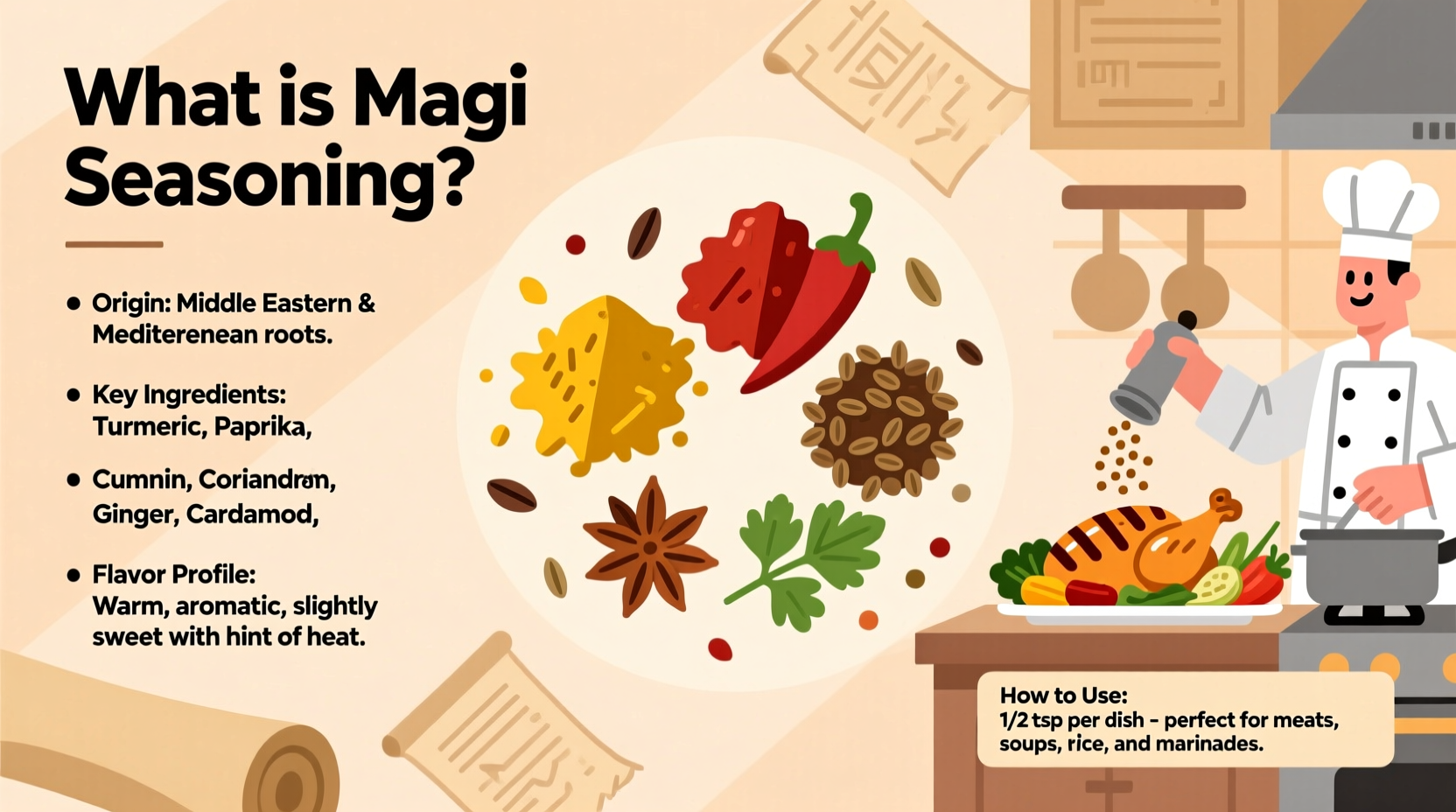
Magi is a brand-name seasoning product originally developed by Maggi, a Swiss company founded in the late 19th century by Julius Maggi. While “Magi” is often used colloquially—particularly in Nigerian, Ghanaian, Cameroonian, and Caribbean contexts—it typically refers to Maggi seasoning cubes or granules, especially the iconic yellow-wrapped bouillon-style cubes. These are not merely salt substitutes but complex flavor enhancers designed to deliver a concentrated burst of savory depth.
The core ingredient in most Magi-style seasonings is monosodium glutamate (MSG), combined with salt, hydrolyzed vegetable protein, sugar, spices, and natural flavorings. The result is a potent umami booster that mimics the taste of long-simmered stocks or fermented ingredients. Though the original Maggi brand originated in Europe, its products have been adapted regionally, leading to variations tailored to African, Asian, and Latin American palates.
In West African cooking, “Magi” has become synonymous with flavor itself. Dishes described as “not tasting right” often lack this seasoning, underscoring its role as a foundational element rather than an optional garnish. Unlike generic salt, Magi contributes a rounded savoriness that enhances meatiness, balances sweetness, and harmonizes disparate ingredients in stews, soups, rice dishes, and sauces.
Key Characteristics
| Characteristic | Description |
|---|---|
| Flavor Profile | Umami-rich, savory, slightly salty with subtle notes of roasted onion, garlic, and herbs. Not spicy unless blended with chili. |
| Aroma | Toasted, meaty, brothy—evokes the scent of chicken or beef stock when dissolved in hot liquid. |
| Form | Most commonly sold as compressed cubes (bouillon), granules, powder, or liquid drops. |
| Color | Yellow-brown cubes; pale beige granules. Imparts a golden hue to liquids. |
| Heat Level | Non-spicy by default. Spicy variants exist (e.g., Maggi Hot & Spicy) but standard versions contain no capsaicin. |
| Culinary Function | Flavor enhancer, umami booster, broth builder, seasoning base. |
| Shelf Life | 2–3 years when stored in a cool, dry place away from moisture. |
Practical Usage: How to Use Magi Seasoning in Cooking
Magi seasoning is prized for its convenience and potency. A single cube or teaspoon of granules can replace hours of stock preparation, making it ideal for busy households and high-volume cooking. Its primary function is to intensify savory flavors without overpowering a dish, acting much like soy sauce or fish sauce in Asian cuisines.
Dissolving Cubes Properly
Never add a Magi cube directly to dry ingredients or cold liquids. To ensure even distribution and prevent bitterness:
- Crush the cube into fine powder using the back of a spoon or mortar and pestle.
- Dissolve it in a small amount of warm water or broth before adding to the pot.
- Stir thoroughly into soups, stews, or sauces during the early stages of cooking.
Pro Tip: For richer flavor integration, sauté crushed Magi granules with onions, garlic, and tomatoes before adding liquids. This technique, common in Nigerian jollof rice and egusi soup, allows the seasoning to caramelize slightly and meld with aromatics.
Recommended Amounts
Overuse leads to excessive saltiness and MSG dominance. Follow these guidelines:
- One standard Magi cube (7g): Season up to 4 cups (1 liter) of soup, stew, or rice.
- Granulated form: ½ to 1 teaspoon per quart/liter, depending on desired intensity.
- Liquid Maggi seasoning: 5–10 drops per cup of liquid—start low and adjust.
Common Culinary Applications
Magi seasoning excels in dishes where depth and complexity are key:
1. Soups and Stews
Add to okra soup, groundnut stew, pepper soup, or bean porridge. Dissolve one crushed cube per large pot to enhance meaty notes, especially in vegetarian versions relying on mushrooms or lentils.
2. Rice and Grains
Essential in jollof rice, coconut rice, and fried rice. Combine with thyme, curry powder, and stock for a layered flavor base. In Caribbean cooking, Magi is often rubbed into rice alongside green seasoning before steaming.
3. Meat and Seafood Marinades
Mix crushed Magi with lime juice, garlic, ginger, and oil for marinating chicken, goat, or fish. The glutamates help tenderize proteins while boosting surface browning during grilling or frying.
4. Vegetable Dishes
Use sparingly in sautéed greens like ugu (fluted pumpkin) or spinach. One-quarter cube per serving adds savoriness without masking freshness.
5. Street Food and Snacks
Sprinkle granulated Magi on boiled corn, roasted plantains, or fried yams. In Trinidad, vendors dust doubles and bake-dough with a light coating for extra punch.
Restaurant Hack: Professional chefs in West African kitchens often pre-mix Magi with dried thyme, curry powder, and garlic powder to create a signature \"seasoning blend.\" Store in an airtight jar for instant use in multiple dishes.
Variants & Types of Magi Seasoning
Maggi produces several regional and functional variants, each suited to specific culinary needs. Understanding these helps tailor your choice to the dish at hand.
| Type | Best For | Distinctive Features |
|---|---|---|
| Maggi Chicken Bouillon Cubes | Poultry dishes, rice, soups | Golden-yellow wrap; poultry-forward aroma; widely available globally. |
| Maggi Beef Bouillon Cubes | Meat stews, pepper soup, sauces | Brown packaging; deeper, roast-like flavor; ideal for red meat applications. |
| Maggi Seafood Seasoning | Fish, shrimp, crab dishes | Contains seaweed extracts and briny notes; complements marine ingredients. |
| Maggi Liquid Seasoning (Ajinomoto-style) | Stir-fries, dressings, finishing | Similar to soy sauce in application; dark brown liquid; less salty per volume. |
| Maggi Green Seasoning (Caribbean) | Marinades, rubs, sauces | Herb-based paste with cilantro, culantro, garlic; fresh, pungent profile. |
| Maggi Vegetarian/Vegan Cubes | Plant-based cooking | No animal derivatives; uses yeast extract instead of meat flavors. |
Regional adaptations also exist. In Nigeria, local manufacturers produce “Magi”-style cubes under different names (e.g., Onga, Square), often formulated with locally sourced spices. These may vary in salt content and MSG concentration but serve the same functional purpose.
Comparison with Similar Ingredients
Magi seasoning is frequently confused with other flavor enhancers. While they share some functional overlap, key differences affect substitution success.
| Ingredient | How It Differs from Magi | Can You Substitute? |
|---|---|---|
| Table Salt | Only provides salinity; lacks umami or aromatic complexity. | No—will make food salty but flat. Use only if supplementing already flavorful base. |
| Soy Sauce | Liquid, fermented, adds color and saltiness; contains natural glutamates but different profile. | Yes, partially—use 1 tbsp soy sauce per cube, reduce added salt. |
| Fish Sauce | Stronger funk, thinner consistency, more pungent aroma. | Yes, in Southeast Asian-inspired dishes; start with ½ tsp per cube. |
| Knorr Bouillon | Similar concept but often less concentrated; varies by flavor line. | Yes—one Knorr cube ≈ one Maggi cube, though flavor may be milder. |
| MSG (Pure Monosodium Glutamate) | Only delivers umami; no salt or spice blend included. | Yes—combine ¼ tsp MSG + ¾ tsp salt + dash of garlic powder to mimic one cube. |
| Miso Paste | Fermented soybean base; thicker, earthier, probiotic-rich. | Yes, in soups—dissolve 1 tsp miso per cup of broth; avoid boiling after addition. |
\"In Senegalese thiéboudienne or Ghanaian waakye, removing Maggi would fundamentally alter the soul of the dish. It's not just seasoning—it's memory, habit, and expectation all fused into one cube.\" — Chef Amara Diouf, Dakar Culinary Institute
Practical Tips & FAQs
Is Magi seasoning safe to consume?
Yes. Despite persistent myths, **MSG is scientifically recognized as safe** by the FDA, WHO, and EFSA. Reputable studies confirm that moderate consumption poses no health risks for the general population. Some individuals report sensitivity (e.g., headaches), but double-blind trials have failed to consistently replicate these effects. If concerned, use reduced-sodium versions or opt for vegan/organic alternatives.
Can I use Magi in vegetarian or vegan cooking?
Yes—but check labels. Traditional Maggi cubes contain animal-derived flavors (chicken, beef). However, Maggi offers certified vegan cubes made with yeast extract and plant proteins. Alternatively, use mushroom bouillon or homemade umami blends featuring dried shiitake, tamari, and nutritional yeast.
How should I store Magi seasoning?
Keep in a **cool, dry, dark place**. Moisture causes cubes to harden and granules to clump. Once opened, transfer loose granules to an airtight container. Avoid storing near the stove or sink.
Does Magi expire?
It doesn’t spoil, but potency diminishes over time. Most cubes retain optimal flavor for **24–36 months**. After that, they still work but may require slightly more quantity. Discard if mold appears (rare, only with water exposure).
What are healthier alternatives?
If reducing sodium or avoiding processed additives:
- Homemade vegetable stock concentrate (reduced by 90%)
- Roasted garlic and onion powder blend
- Low-sodium tamari or coconut aminos
- Dried kombu or kelp flakes in soups
Why does my soup taste bitter when I use Magi?
Bitterness usually results from **adding the cube directly to hot oil** or burning it during sautéing. Always dissolve first in liquid. Overuse can also create a chemical aftertaste—stick to recommended amounts.
Can I use Magi in baking?
Rarely. It has no role in sweet baked goods. However, some savory breads (e.g., cheese rolls, herb focaccia) benefit from a pinch of umami seasoning in the dough. Use sparingly—1/8 tsp per loaf max.
Quick Checklist: Using Magi Like a Pro
- ✔ Crush cubes before use
- ✔ Dissolve in warm liquid first
- ✔ Pair with aromatics (onion, garlic, pepper)
- ✔ Adjust salt elsewhere in recipe
- ✔ Store in sealed container away from humidity
- ✔ Choose variant based on protein (chicken, beef, seafood)
Summary & Key Takeaways
Magi seasoning is far more than a bouillon cube—it’s a powerful culinary tool rooted in global food traditions. Its ability to deliver intense umami with minimal effort makes it indispensable in fast-paced kitchens and slow-simmered stews alike. Understanding its composition, proper usage, and regional variations empowers cooks to harness its potential without overreliance or misuse.
At its best, Magi enhances without dominating, enriching dishes with a savory backbone that ties ingredients together. Whether you're preparing Nigerian egusi, Dominican habichuelas, or a quick weeknight stir-fry, a thoughtful application of Magi can bridge flavor gaps and elevate everyday meals.
Respect its potency. Use it intentionally. And remember: the goal isn't to mask ingredients, but to reveal their fullest expression. With the right balance, Magi seasoning becomes not just a shortcut—but a signature of depth, tradition, and taste.
Try This Tonight: Make a simple tomato-onion sauce for pasta or rice. Sauté chopped onions and tomatoes with garlic, then dissolve ½ crushed Maggi chicken cube into the mix. Simmer 10 minutes, adjust salt, and finish with fresh herbs. Taste the difference—this is umami made accessible.




 浙公网安备
33010002000092号
浙公网安备
33010002000092号 浙B2-20120091-4
Comments
No comments yet. Why don't you start the discussion?