
Celery salt is one of those quietly indispensable seasonings that appears in spice racks across America, often without much fanfare—yet it plays a pivotal role in shaping the savory depth of countless dishes. Among commercial brands, McCormick Celery Salt stands out as the most widely available and trusted version, found in nearly every supermarket and kitchen pantry. But what exactly is it? And more importantly, how should home cooks use it effectively to elevate their food?
Understanding McCormick Celery Salt goes beyond simply recognizing the yellow-labeled jar. It involves knowing its composition, flavor mechanics, culinary function, and how it differs from similar seasonings. Whether you're building a Bloody Mary, seasoning a roast chicken, or crafting a deli-style tuna salad, celery salt contributes a distinct aromatic savoriness that plain salt cannot replicate. This guide unpacks everything you need to know—from ingredient breakdown to professional-level usage strategies—so you can wield this humble spice with confidence and precision.
Definition & Overview
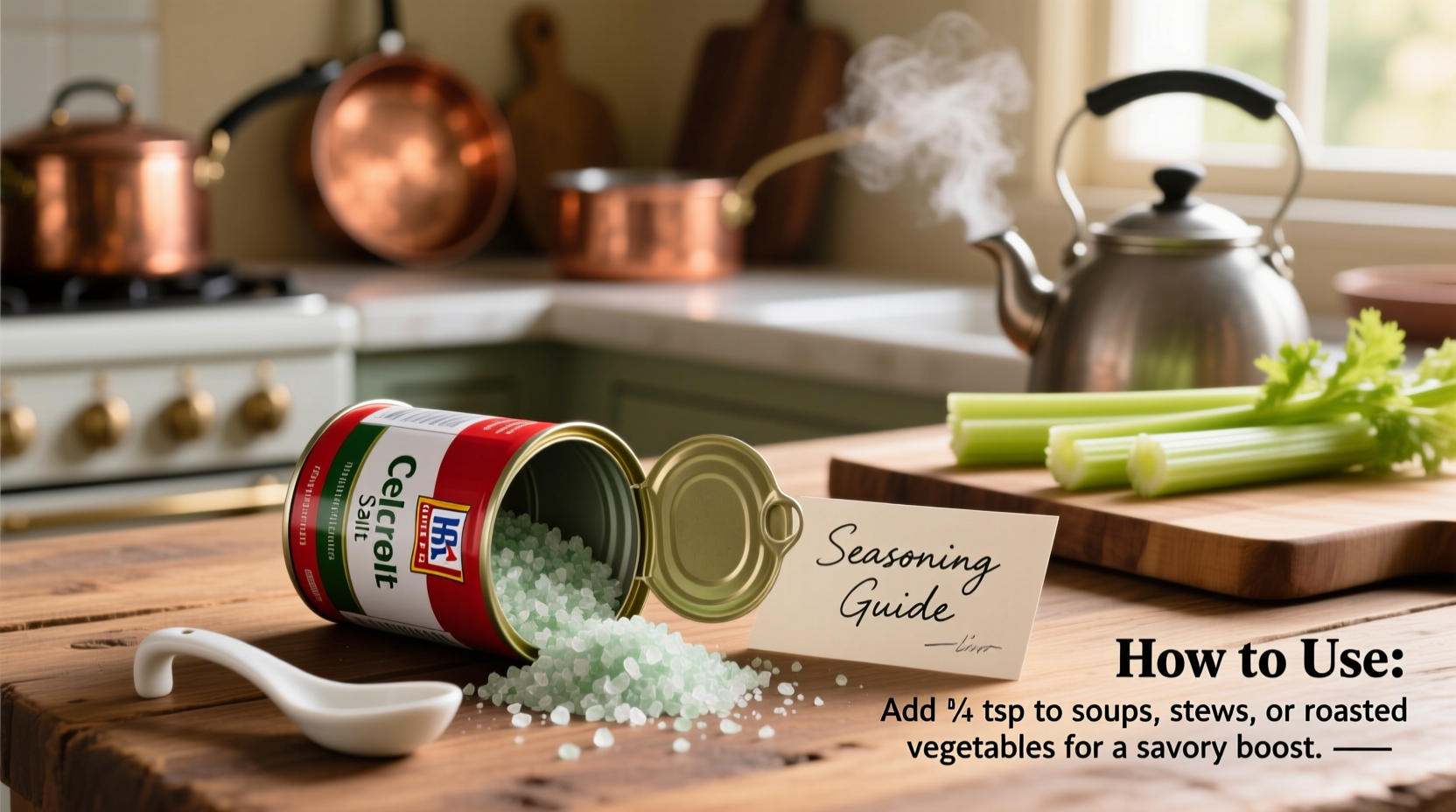
McCormick Celery Salt is a pre-mixed seasoning composed of granulated salt and ground celery seed. Unlike fresh celery, which has a high water content and mild vegetal taste, celery seed is highly concentrated in flavor, delivering a warm, earthy, slightly bitter aroma with subtle hints of parsley and anise. When combined with salt, it creates a dual-purpose seasoning that enhances both salinity and herbal complexity.
The product falls into the category of flavored salts, a broad group that includes garlic salt, onion salt, lemon salt, and others. What sets celery salt apart is its unique ability to mimic the background notes of mirepoix (onion, carrot, celery) without requiring fresh ingredients. This makes it especially valuable in dry rubs, soups, stews, and brines where convenience and shelf stability matter.
Made by the Baltimore-based spice giant McCormick & Company—the world’s largest spice manufacturer—this version is standardized for consistent particle size, solubility, and flavor intensity. It has become the de facto reference point for celery salt in American home cooking, appearing in thousands of recipes published in cookbooks, food blogs, and restaurant menus.
Key Characteristics
| Attribute | Description |
|---|---|
| Flavor Profile | Salty with pronounced earthy, herbaceous notes; faint licorice-like undertone from celery seed; mildly bitter finish. |
| Aroma | Warm, toasted celery seed scent; slightly peppery when crushed between fingers. |
| Color | Pale tan to light gray; not purely white due to natural pigments in ground seeds. |
| Form | Fine granules; free-flowing thanks to anti-caking agents (e.g., calcium silicate). |
| Heat Level | Non-pungent; no capsaicin or spiciness. |
| Culinary Function | Seasoning agent, flavor enhancer, umami booster, aromatic base substitute. |
| Shelf Life | 2–3 years when stored properly; flavor diminishes over time. |
The balance of salt to celery seed in McCormick’s formula is approximately 90% salt to 10% ground celery seed, though exact proportions are proprietary. This ratio ensures that the salt remains functional for seasoning while still delivering a perceptible celery note. The inclusion of an anti-caking agent prevents clumping in humid environments, making it reliable for long-term storage.
Practical Usage: How to Use McCormick Celery Salt in Cooking
Celery salt isn’t just a shortcut—it’s a strategic tool for layering flavor efficiently. Because it delivers two elements at once (salt + celery essence), it streamlines seasoning in ways that benefit both novice and experienced cooks.
Dry Rubs and Marinades
In barbecue and grilling applications, celery salt integrates seamlessly into dry rubs. It pairs exceptionally well with smoked paprika, black pepper, garlic powder, and brown sugar. For example:
- Mix 1 tablespoon McCormick Celery Salt with 2 tbsp smoked paprika, 1 tsp each of garlic powder, onion powder, and black pepper.
- Rub onto pork shoulder before slow-smoking.
- The celery salt enhances the meat’s savoriness while contributing a subtle aromatic lift that cuts through fat.
Because the salt draws out surface moisture, it also helps form a better bark on smoked meats.
Soups, Stews, and Broths
When building flavor foundations for liquid-based dishes, celery salt can partially replace fresh celery. While whole stalks offer texture and volume, they break down during cooking and may require straining. Celery salt provides the core aromatic without the bulk.
Add ½ to 1 teaspoon per quart of soup during the sauté phase (with onions and garlic) or early in simmering. Ideal for chowders, bean soups, lentil stews, and vegetable broths. It works particularly well in clam chowder, where it amplifies the oceanic savoriness without overpowering delicate seafood flavors.
Cold Dishes and Salads
Celery salt shines in chilled preparations where flavor diffusion is slower. In egg salad, tuna salad, chicken salad, or deviled eggs, it adds a clean, sharp celery presence even when no fresh celery is used.
Try this technique:
- Add ¼ teaspoon celery salt to 1 cup mashed hard-boiled eggs.
- Combine with mayonnaise, Dijon mustard, and chopped pickles.
- The result is a brighter, more cohesive flavor than using table salt alone.
Pro Tip: If a recipe calls for both salt and fresh celery, consider reducing the amount of added salt and supplementing with celery salt instead. This preserves sodium control while intensifying the celery character.
Beverages and Cocktail Rims
No discussion of celery salt is complete without mentioning the Bloody Mary. This iconic brunch cocktail relies on celery salt for authenticity. A pinch stirred into the mix enhances the tomato’s umami, while a rim of celery salt on the glass provides textural contrast and immediate aromatic impact.
To rim a glass:
- Moisten the outer edge with lemon juice or Worcestershire sauce.
- Dip into a shallow plate of celery salt.
- Twist gently to adhere evenly.
Some bartenders blend celery salt with smoked paprika or cayenne for a spiced rim. The salt’s fine grain adheres better than coarser spices, making it ideal for this application.
Meat Loaf, Stuffing, and Casseroles
In bind-heavy dishes like meat loaf or stuffing, where herbs can get lost, celery salt ensures the celery flavor comes through clearly. Add ¾ teaspoon per pound of ground meat or per batch of stuffing. It complements sage, thyme, and marjoram beautifully, acting as a bridge between earthy and salty notes.
Variants & Types of Celery Salt
While McCormick’s version dominates the market, several variations exist—both commercial and homemade—that cater to different needs and preferences.
| Type | Description | Best Used For |
|---|---|---|
| Standard (McCormick) | Salt + ground celery seed + anti-caking agent. | General cooking, everyday seasoning. |
| Organic Celery Salt | Same components, certified organic; no synthetic additives. | Health-conscious or clean-label cooking. |
| Low-Sodium Celery Salt | Uses potassium chloride or reduced-salt blend with full celery seed content. | Sodium-restricted diets; retains flavor with less salt. |
| Homemade Celery Salt | Freshly ground celery seeds blended with sea salt or kosher salt at custom ratios. | Gourmet applications, peak flavor intensity. |
| Celery Pepper Blend | Celery salt mixed with cracked black pepper. | Steaks, grilled vegetables, finishing salt. |
For maximum freshness, consider making your own celery salt. Toast 1 tablespoon of whole celery seeds in a dry skillet until fragrant (about 2 minutes), then grind and mix with 9 tablespoons of flaky sea salt. Store in an airtight container. Homemade versions lack anti-caking agents but offer superior aroma and control over texture.
Comparison with Similar Ingredients
Celery salt is frequently confused with other celery-derived products or flavored salts. Understanding the differences prevents substitution errors and improves recipe outcomes.
| Ingredient | How It Differs from McCormick Celery Salt |
|---|---|
| Plain Salt | Lacks celery flavor entirely; only provides salinity. |
| Ground Celery Seed | 100% celery seed, no salt; much stronger, more bitter; use sparingly. |
| Fresh Celery | High water content; milder flavor; adds crunch and volume. |
| Celery Powder | Dehydrated celery flesh (not seed); sweeter, less intense; contains no salt. |
| Garlic Salt / Onion Salt | Same format but different primary flavor; not interchangeable in celery-dependent dishes. |
| Old Bay Seasoning | Contains celery salt as one component among many (paprika, pepper, cloves); more complex and regional in use. |
Crucially, **celery salt is not a substitute for celery seed**, nor vice versa. Substituting one for the other without adjusting salt content will throw off both seasoning balance and flavor intensity.
“In my 20 years developing spice blends for restaurants, I’ve found that celery salt is the single most underappreciated flavor amplifier. It doesn’t shout, but it holds the entire savory profile together.” — Leah Thornton, Culinary Director, SpiceCraft Advisors
Practical Tips & FAQs
Can I use celery salt instead of fresh celery?
Yes, but not in a 1:1 volume swap. Celery salt adds flavor but not texture. Use ¼ to ½ teaspoon celery salt per medium celery stalk called for in a recipe, and adjust based on desired intensity. Best for soups, sauces, and braises where texture isn’t critical.
Is McCormick Celery Salt gluten-free?
Yes. McCormick confirms that their standard celery salt contains no gluten-containing ingredients and is safe for gluten-free diets. Always check the label if you have celiac disease, as formulations can change.
How should I store celery salt?
Keep in a cool, dark place in an airtight container. Avoid humidity and direct sunlight to preserve flavor and prevent caking. Though shelf-stable, the volatile oils in celery seed degrade after about 2–3 years. For best results, write the purchase date on the bottle.
Can I make a substitute if I run out?
If you’re out of celery salt, combine ½ teaspoon kosher salt with ⅛ teaspoon ground celery seed. No celery seed? Finely chop 1 stalk of fresh celery and increase salt slightly. As a last resort, use a pinch of celery seed plus regular salt, or add a dash of Old Bay (which contains celery salt).
Does celery salt raise blood pressure?
Like all salt-based seasonings, it contains sodium and should be consumed in moderation, especially for individuals managing hypertension. Consider low-sodium versions if needed, or boost celery flavor with fresh or dried celery while controlling salt separately.
What dishes absolutely require celery salt?
While few dishes are truly dependent on any one ingredient, these benefit significantly from authentic celery salt:
- Bloody Mary cocktails
- Tuna or chicken salad (especially deli-style)
- Crab cakes and fish chowders
- Chicago-style hot dogs (a defining element)
- Corned beef and pastrami rubs
- Clam dip and seasoned potato salads
Storage Checklist:
- ✔ Store away from stove (heat degrades flavor)
- ✔ Keep lid tightly closed
- ✔ Use within 24 months for peak potency
- ✔ Label homemade blends with date and ratio
Summary & Key Takeaways
McCormick Celery Salt is far more than a simple blend of salt and ground celery seed—it is a foundational seasoning that quietly elevates the savoriness of everyday cooking. Its balanced formulation, wide availability, and culinary versatility make it a staple worth understanding deeply.
At its core, it delivers two functions in one: salinity and aromatic depth. This dual action makes it invaluable in dry rubs, soups, cold salads, and cocktails. Unlike fresh celery, it integrates fully into dishes without adding moisture or bulk. Compared to pure celery seed, it offers controlled potency without excessive bitterness.
To use it effectively, remember:
- It is not interchangeable with celery powder or fresh celery on a volume basis.
- It enhances umami and balances richness in fatty dishes.
- It performs best when added early in cooking or used as a finishing accent.
- Homemade versions offer fresher flavor but shorter shelf life.
Whether you're perfecting a family recipe or experimenting with new flavor combinations, treating celery salt as a deliberate ingredient—not just a default pantry item—will improve your results. Keep a fresh jar on hand, understand its strengths, and use it intentionally. That small tan granule carries more culinary weight than its size suggests.
Now that you know the power of celery salt, try this: Make a classic tuna salad using celery salt instead of table salt and no fresh celery. Taste the difference in depth and aroma. Then compare it side-by-side with your usual version—you might never go back.




 浙公网安备
33010002000092号
浙公网安备
33010002000092号 浙B2-20120091-4
Comments
No comments yet. Why don't you start the discussion?