
Myoga ginger—often mistaken for a true ginger due to its name—is not the root most people associate with the pungent spice used in curries and stir-fries. Instead, myoga (Zingiber mioga) is a flowering plant native to Japan and parts of East Asia, prized for its delicate floral buds and tender young shoots. While less common outside Asian cuisine, it’s a staple in traditional Japanese cooking, where its subtle heat and crisp texture elevate dishes without overpowering them. For home cooks exploring authentic umami-rich preparations or seeking new aromatic ingredients, understanding myoga offers both culinary insight and practical versatility.
In recent years, interest in underutilized edible flowers and aromatic botanicals has brought myoga into the spotlight among chefs focused on seasonal, refined presentations. Unlike common ginger, which delivers sharp warmth and fibrous texture, myoga provides a refreshing, almost minty bite with notes of citrus and pine. Its visual appeal—pink-tinged buds and slender green stems—makes it as much a garnish as an ingredient. Yet dismissing it as merely decorative undersells its functional role in balancing flavors, especially in broths, salads, and grilled fish. This guide explores myoga’s botany, flavor profile, culinary applications, and storage, offering actionable guidance for integrating it into everyday cooking.
Definition & Overview
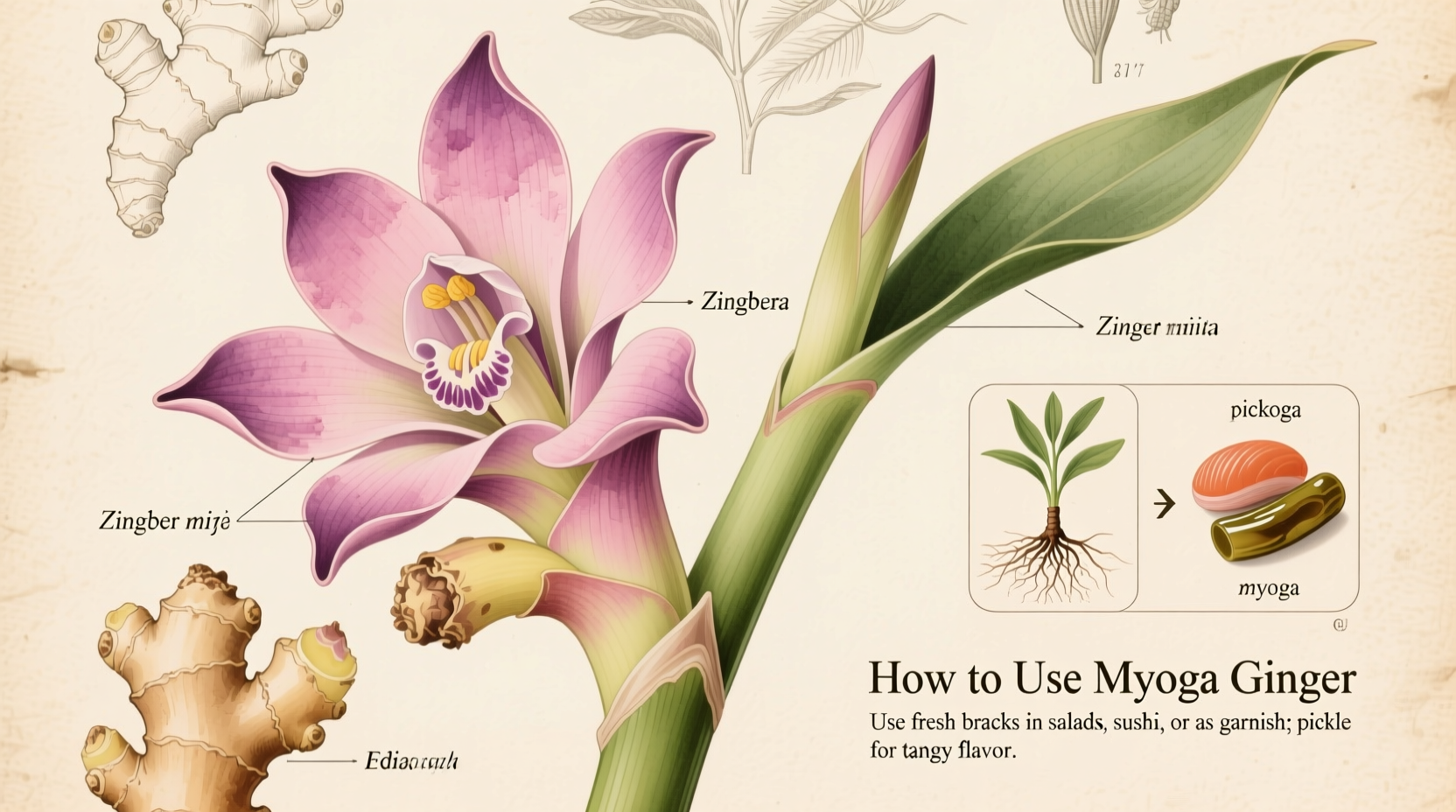
Myoga ginger, scientifically known as Zingiber mioga, belongs to the Zingiberaceae family, which includes true ginger (Zingiber officinale), turmeric, and galangal. Despite the shared family, myoga differs significantly in use and form. The edible portions are primarily the unopened flower buds and young shoots that emerge in late summer through early autumn. These are harvested before they bloom into small yellow flowers, preserving their crunch and aromatic complexity.
Native to Japan, Korea, and parts of China, myoga has been cultivated for centuries in shaded, moist woodland environments. It thrives in partial shade and rich, well-drained soil, often grown beneath forest canopies or in backyard gardens. In Japan, it's known as myōga (茗荷) and appears frequently in kaiseki (traditional multi-course meals), bento boxes, and summer soups. Its seasonality—peaking from July to September—adds to its status as a premium, fleeting ingredient in Japanese gastronomy.
Culinarily, myoga functions more like a herb or vegetable than a spice. It lacks the rhizome-based starch and intense pungency of common ginger, instead contributing brightness and textural contrast. In raw form, it’s often thinly sliced and scattered over dishes just before serving, much like chives or shiso leaves. When cooked lightly, it softens but retains a degree of snap, making it ideal for quick sautés or simmered dishes where subtlety is key.
Key Characteristics
| Attribute | Description |
|---|---|
| Flavor Profile | Mildly spicy with citrusy top notes, hints of pine, and a clean, cooling finish. Less pungent than common ginger. |
| Aroma | Fragrant and floral, reminiscent of fresh herbs with a subtle gingery undertone. |
| Color & Form | Buds: Pale pink to rose at the base, fading to white; cylindrical shape, 1–2 inches long. Shoots: Bright green, slender, and tender. |
| Texture | Crisp and juicy when raw; becomes tender but not mushy when lightly cooked. |
| Heat Level | Low to moderate; delivers a gentle tingle rather than sharp burn. |
| Culinary Function | Aromatic accent, textural enhancer, color contrast, and palate cleanser. |
| Shelf Life (Fresh) | 3–5 days refrigerated in a sealed container with damp paper towel. |
Practical Usage
Myoga’s culinary value lies in restraint. Because its flavor is delicate, overcooking dulls its nuances. The best applications highlight its freshness and structural integrity. Here are several proven ways to use myoga in both traditional and contemporary kitchens:
1. As a Raw Garnish
Thinly slice myoga buds or young shoots into rounds and scatter over finished dishes. This technique is standard in Japanese cuisine:
- Add to miso soup just before serving for aroma and visual contrast.
- Top cold tofu (hiyayakko) alongside grated ginger, bonito flakes, and soy sauce.
- Use in noodle bowls—especially soba or udon—to add brightness against rich broths.
2. In Salads and Vinegared Dishes
Myoga pairs exceptionally well with rice vinegar, sesame oil, and soy. Try slicing it lengthwise or crosswise and marinating briefly in seasoned rice vinegar (with sugar and salt) for a sunomono-style side dish. Combine with cucumber, wakame, or daikon for a refreshing appetizer.
3. With Grilled or Poached Fish
The mild heat and citrus notes cut through the richness of fatty fish like salmon or mackerel. Place thin slices atop grilled fish during the last minute of cooking, or mix into a relish with scallions and soy for a finishing touch.
4. In Egg Dishes
Incorporate finely chopped myoga into tamagoyaki (Japanese rolled omelet) for added fragrance and color. The gentle heat withstands brief frying while contributing complexity beyond plain egg.
5. Fermented or Preserved Forms
In Japan, myoga is sometimes pickled in salt or rice vinegar brines. These preserved versions develop deeper umami and can be stored longer. Use sparingly as a condiment or in bento fillings.
Pro Tip: To maximize yield and texture, separate the outer bud layers from the inner core. The outer layers are firmer and better for slicing; the inner portion is softer and ideal for mincing into dressings or pastes.
Variants & Types
While fresh myoga is the gold standard, availability outside Japan and specialty markets can be limited. Several forms exist, each suited to different culinary needs:
- Fresh Buds and Shoots: The preferred form. Look for firm, tightly closed buds with no signs of wilting or browning. Available seasonally in Japanese or Asian grocery stores.
- Marinated or Vinegared Myoga: Pre-sliced and packed in sweet vinegar brine. Convenient for quick use in salads or as a side. Rinse lightly if too acidic.
- Salt-Pickled Myoga: Less common but found in artisanal Japanese suppliers. Intense flavor; use as a seasoning agent rather than main ingredient.
- Dried or Powdered Myoga: Rare and not widely used. Loses most aromatic qualities; not recommended unless specified in a regional recipe.
When substituting across forms, remember that marinated versions are softer and more acidic. Adjust seasoning accordingly, particularly salt and vinegar levels in the final dish.
Comparison with Similar Ingredients
Myoga is often confused with other members of the ginger family or aromatic herbs. Understanding these distinctions ensures proper usage:
| Ingredient | Difference from Myoga |
|---|---|
| Common Ginger (Zingiber officinale) | Rhizome-based, fibrous, sharply pungent. Used in both sweet and savory contexts. Requires peeling and grating; myoga does not. |
| Galangal | Harder texture, camphorous aroma, dominant in Thai curries. Not interchangeable with myoga due to intensity. |
| Young Lotus Stem | Similar crispness but neutral flavor. Lacks the aromatic complexity of myoga. |
| Chives or Garlic Chives | Herbaceous and onion-like. Can mimic myoga’s textural role but not its citrus-pine nuance. |
| Baby Fennel | Shares anise-like sweetness and crunch. A closer substitute in raw applications, though still distinct in flavor profile. |
\"Myoga isn’t about heat—it’s about lift. It’s the ingredient you reach for when a dish needs clarity, not punch.\" — Hiroshi Tanaka, Tokyo-based kaiseki chef
Practical Tips & FAQs
How do I select high-quality myoga?
Choose buds that are firm, plump, and free of slime or discoloration. The pink base should be vibrant, not faded. Smaller buds tend to be more tender than larger, open ones.
Can I eat the entire bud?
Yes, but texture varies. The outer layers are crisp and flavorful; the inner core may be slightly fibrous. Some chefs remove the very center for fine dining presentations, but home cooks can use it entirely.
Is myoga safe to cook?
It can be lightly cooked, but prolonged heat diminishes its character. Add to soups or stir-fries in the last 1–2 minutes. Avoid boiling or deep-frying.
How should I store fresh myoga?
Wrap in a damp paper towel, place in a sealed container, and refrigerate. Use within 3–5 days. Do not wash until ready to use.
Are there any health benefits?
Traditionally, myoga has been used in herbal medicine for digestive support and anti-inflammatory properties. It contains antioxidants and volatile oils, though scientific research remains limited compared to common ginger.
Can I grow myoga at home?
Yes, in temperate climates with partial shade. Plant rhizomes in spring in rich, moist soil. It spreads slowly and requires minimal maintenance. Harvest buds in late summer. Note: It may not thrive in hot, dry regions without careful irrigation.
What are the best dishes to showcase myoga?
- Miso Soup: Sliced buds add fragrance and texture.
- Hiyayakko: Cold tofu topped with myoga, bonito, and soy.
- Soba Noodles: Fresh garnish for dipping or hot broth.
- White Fish Sashimi: Thin slices between cuts of tai (sea bream).
- Summer Rice Bowls: Mixed with edamame, cucumber, and nori.
Storage Hack: For extended freshness, stand myoga buds upright in a glass with an inch of water (like cut flowers), cover loosely with a plastic bag, and refrigerate. Change water daily.
Summary & Key Takeaways
Myoga ginger is a nuanced, seasonal ingredient that bridges the gap between herb, vegetable, and aromatic accent. Unlike common ginger, it is not a root but a flowering bud, offering a crisp texture and delicate blend of citrus, pine, and mild heat. Native to Japan, it plays a vital role in traditional dishes such as miso soup, hiyayakko, and soba, where its visual and sensory contributions enhance balance and refinement.
Its key strengths lie in freshness and restraint. Best used raw or minimally cooked, myoga elevates dishes through aroma and texture rather than dominance. Whether sourced fresh, marinated, or pickled, it demands thoughtful application—added at the end of cooking, sliced finely, and paired with ingredients that allow its subtlety to shine.
For cooks exploring Japanese cuisine or seeking understated yet impactful ingredients, myoga offers a gateway to more intentional, seasonally aware cooking. Though not a pantry staple, its presence signals attention to detail and respect for ingredient integrity. When available, treat it as a premium garnish—one that transforms simple preparations into something quietly extraordinary.
Next time you prepare a Japanese-inspired meal, seek out myoga at an Asian market or farmers’ market. Even a single bud, thoughtfully placed, can redefine a dish’s character.




 浙公网安备
33010002000092号
浙公网安备
33010002000092号 浙B2-20120091-4
Comments
No comments yet. Why don't you start the discussion?