
Red chili paste is a staple ingredient in kitchens around the world, prized for its ability to deliver deep, complex heat and rich umami flavor with minimal effort. Unlike dried chili flakes or fresh chilies, which require preparation and can vary in potency, red chili paste offers consistency, convenience, and concentrated taste. Whether you're stir-frying vegetables, braising meats, or building layers in a soup, this versatile condiment enhances dishes with both fire and finesse. Understanding what red chili paste is—its origins, forms, and functions—empowers home cooks to use it effectively and creatively.
Definition & Overview
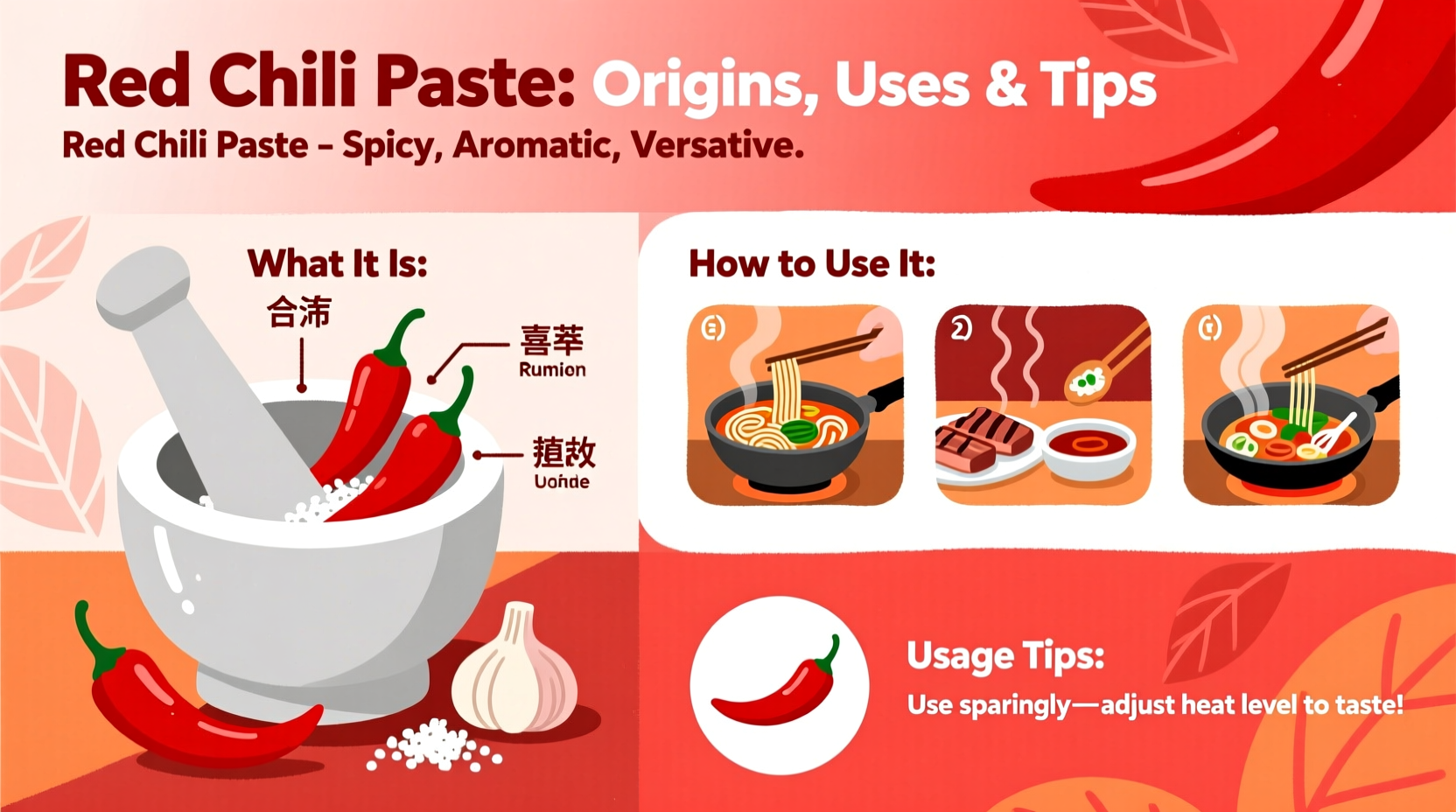
Red chili paste is a thick, semi-liquid seasoning made primarily from ground or mashed red chilies, often combined with salt, vinegar, oil, garlic, and sometimes sweeteners or fermented ingredients. It serves as a foundational element in many global cuisines, including Korean, Chinese, Thai, Indian, Mexican, and Middle Eastern cooking. While recipes vary widely by region and tradition, all red chili pastes share a common purpose: to add heat, color, and savory depth to food.
The paste may be raw or fermented, mild or intensely hot, and used either as a base for sauces or as a finishing touch. Its texture ranges from coarse and pulpy to smooth and silky, depending on processing methods and regional preferences. Unlike single-ingredient spices, red chili paste is inherently layered—offering not just capsaicin-driven heat but also acidity, sweetness, and umami complexity derived from fermentation or added seasonings.
Key Characteristics
| Characteristic | Description |
|---|---|
| Flavor Profile | Spicy, savory, slightly sweet or tangy; may include smoky, fermented, or garlicky notes depending on formulation. |
| Aroma | Pungent and earthy when raw; deeper, more complex when fermented (e.g., gochujang). |
| Color | Bright to deep red, sometimes brick-orange; natural pigments come from mature red chilies. |
| Heat Level | Varies widely—from mild (3,000 SHU) to extremely hot (over 50,000 SHU). Fermented versions often mellow over time. |
| Culinary Function | Base flavoring agent, marinade component, sauce thickener, glaze, or condiment. |
| Shelf Life | Unopened: 1–2 years. Opened: 6 months refrigerated (longer if fermented and high in salt/vinegar). |
Variants & Types
Not all red chili pastes are created equal. Regional traditions have given rise to distinct formulations, each suited to specific culinary applications. Recognizing these differences ensures proper usage and prevents flavor mismatches in recipes.
1. Gochujang (Korean Fermented Chili Paste)
A cornerstone of Korean cuisine, gochujang is made from fermented soybeans, glutinous rice, red chili powder (gochugaru), and salt. It has a deep umami backbone, moderate heat, and subtle sweetness. Commonly used in stews like jjigae, marinades such as those for bulgogi, and dipping sauces.
2. Doubanjiang (Chinese Fermented Broad Bean-Chili Paste)
Hailing from Sichuan province, this reddish-brown paste combines fermented broad beans, soybeans, salt, and chilies. It delivers intense savory depth and numbing heat when paired with Sichuan peppercorns. Essential in mapo tofu and dry-pot dishes.
3. Sriracha (Thai-Vietnamese Style Chili-Garlic Paste)
Though now globally commercialized, authentic sriracha originates from Si Racha, Thailand. Made from red jalapeños, garlic, vinegar, sugar, and salt, it’s smoother and tangier than other pastes. Best used as a condiment or mixed into dressings and dips.
4. Harissa (North African Chili Paste)
Originating in Tunisia, harissa blends roasted red peppers, smoked chilies (like baklouti), garlic, caraway, coriander, olive oil, and lemon juice. It brings warmth, smokiness, and aromatic complexity to tagines, couscous, and grilled meats.
5. Sambal Oelek (Indonesian Fresh Chili Paste)
This minimally processed paste consists mainly of ground red chilies, vinegar, and salt. It lacks fermentation, preserving bright, sharp heat. Ideal for adding clean spice to soups, noodles, and seafood dishes.
6. Indian Chili Pastes (Regional Variants)
In southern India, chili pastes often include tamarind, mustard seeds, curry leaves, and coconut. These are typically freshly ground and used within days. They form the base of chutneys, sambar, and dosa accompaniments.
Pro Tip: Always check labels when buying red chili paste. Some brands add preservatives, artificial colors, or excessive sugar. For authentic results, opt for traditional recipes or make your own using whole ingredients.
Comparison with Similar Ingredients
Red chili paste is frequently confused with other spicy condiments. Understanding the distinctions helps avoid culinary missteps.
| Ingredient | Texture | Flavor Difference | Best Used In |
|---|---|---|---|
| Chili Flakes (Crushed Red Pepper) | Dry, granular | Less complex; only provides heat and slight bitterness | Pizza, pasta, sprinkled on finished dishes |
| Chili Powder (e.g., Cayenne, Ancho) | Fine powder | Single-note heat or smokiness; no moisture or body | Dry rubs, spice blends, seasoning blends |
| Hot Sauce (e.g., Tabasco, Frank's) | Thin, liquid | Acid-forward, diluted heat; often vinegary | Drizzled on tacos, wings, sandwiches |
| Chili Oil | Oily suspension of chili fragments | Mild heat infusion; adds richness and aroma | Noodle toppings, dumpling dips, finishing oil |
| Red Chili Paste | Thick, cohesive paste | Full-bodied, multi-layered flavor with heat, salt, and umami | Sauté bases, marinades, braises, glazes |
\"A good red chili paste isn’t just about heat—it’s about balance. The best ones marry spice with fermentation, sweetness, and acidity so that they enhance, rather than overwhelm, a dish.\" — Chef Mei Ling, Culinary Instructor at Asia Pacific Cooking Institute
Practical Usage: How to Use Red Chili Paste in Cooking
Red chili paste excels in applications where depth and integration matter. Because it contains moisture and fat-soluble compounds, it integrates seamlessly into cooked dishes, releasing flavor gradually during heating.
1. As a Flavor Base (Sofrito-Style)
Add 1–2 tablespoons of red chili paste to hot oil at the beginning of cooking, along with aromatics like garlic, ginger, or onions. Cook gently for 1–2 minutes to bloom the flavors and deepen the color. This technique works exceptionally well in curries, stir-fries, and stews.
Example: In a Korean-inspired beef stew, sauté gochujang with minced garlic and ginger before adding broth and meat. The paste emulsifies into the liquid, creating a rich, glossy sauce.
2. Marinades and Glazes
Mix red chili paste with soy sauce, honey, citrus juice, or yogurt to create tenderizing and flavor-building marinades. Its viscosity allows it to cling to proteins, ensuring even coverage.
Recipe Ratio: Combine 3 parts soy sauce, 2 parts honey, 1 part rice vinegar, and 1 part gochujang for a balanced bulgogi-style marinade. Marinate chicken or beef for 2–12 hours before grilling.
3. Stir-Fry Sauces
Stir 1–2 teaspoons of sambal oelek or doubanjiang into a hot wok near the end of cooking. Toss with vegetables and protein for instant heat and gloss. Add a splash of water or stock to thin if needed.
4. Soup and Stew Enhancer
Stir a spoonful into simmering broths, lentil soups, or bean stews. Harissa elevates tomato-based soups; gochujang adds complexity to ramen. Start with ½ teaspoon and adjust to taste.
5. Dips and Dressings
Whisk sriracha or harissa into mayonnaise, yogurt, or tahini for quick, flavorful condiments. Try mixing 1 tablespoon harissa with ¼ cup Greek yogurt and a squeeze of lemon for a Mediterranean dip.
6. Finishing Touch
Use sparingly as a garnish. A small dollop of sambal on steamed fish or a swirl of gochujang in noodle bowls adds visual appeal and a burst of flavor.
Actionable Tip: When substituting one type of red chili paste for another, consider both heat level and flavor profile. Replace gochujang with a mix of miso + cayenne for similar umami-spice balance. Use harissa instead of chipotle in adobo for smoky depth with Mediterranean flair.
Storage and Shelf Life Guidelines
Due to its salt, acid, and sometimes fermentation content, red chili paste generally keeps well—but proper storage matters.
- Unopened: Store in a cool, dark pantry for up to 2 years. Avoid temperature fluctuations.
- Opened: Refrigerate immediately. Most pastes last 6–12 months refrigerated. Discard if mold appears, smell turns rancid, or color darkens significantly.
- Homemade Versions: Last 1–3 weeks in the fridge due to lack of preservatives. Freeze in ice cube trays for longer storage (up to 6 months).
- Cross-Contamination: Always use clean utensils when scooping to prevent bacterial growth.
Substitutions and Alternatives
If you don’t have a specific red chili paste on hand, several alternatives can approximate its function—though none replicate it exactly.
| If You Need… | Substitute With | Adjustment Notes |
|---|---|---|
| Gochujang | Miso + red pepper flakes + a touch of sugar | Mix 1 tbsp white miso, 1 tsp paprika, ½ tsp sugar, 1 tsp water |
| Doubanjiang | Miso + crushed tomatoes + smoked paprika | Use half the amount; reduce added salt elsewhere |
| Harissa | Chipotle in adobo + cumin + olive oil | Blend 1 chipotle pepper with ½ tsp cumin and 1 tsp oil |
| Sambal Oelek | Fresh blended red chilies + pinch of salt + vinegar | Use same volume; strain seeds for milder version |
| Sriracha | Tomato paste + garlic + vinegar + sugar + cayenne | Balance sweetness and acidity carefully |
Practical Tips & FAQs
How spicy is red chili paste?
Spiciness varies dramatically. Sambal oelek and sriracha range from medium to hot (10,000–30,000 Scoville units), while some artisanal harissas or fermented doubanjiang can exceed 50,000 SHU. Always taste a small amount first, especially when using an unfamiliar brand.
Can I make my own red chili paste?
Yes—and doing so gives full control over ingredients and heat. Roast red chilies, blend with garlic, salt, vinegar, and optional spices (cumin, coriander, fennel), then simmer briefly to meld flavors. Store in sterilized jars.
Is red chili paste vegan and gluten-free?
Most commercial varieties are vegan, but always check for fish sauce, shrimp paste, or animal-derived additives. Regarding gluten, traditional gochujang and doubanjiang contain wheat or soy, so look for certified gluten-free versions if necessary.
Why does my chili paste separate?
Oil separation is normal, especially in natural or homemade versions. Simply stir back together before use. This indicates minimal emulsifiers and preservatives.
Which dishes benefit most from red chili paste?
It shines in:
- Korean bibimbap and tteokbokki
- Sichuan mapo tofu
- Thai curries and noodle soups
- Tunisian lamb tagines
- Indian dal and chutneys
- Mexican moles (when using ancho-based pastes)
Can red chili paste go bad?
Yes, though slowly. Signs of spoilage include mold, off-odors (rancid or sour beyond normal fermentation), or significant texture changes (slimy or excessively dry). Fermented pastes darken naturally over time but should remain safe if stored properly.
Mini Case Study: Elevating Weeknight Stir-Fry with Gochujang
A 2023 survey of 500 home cooks found that 78% reported improved meal satisfaction after incorporating red chili paste into regular rotation. One participant, Sarah K., shared her transformation of a basic vegetable stir-fry: “I used to rely on soy sauce and red pepper flakes. Now I start with 1 tablespoon of gochujang fried in sesame oil. The difference is night and day—richer, more rounded, and restaurant-quality with zero extra effort.”
Her method: Heat oil, add gochujang and grated ginger, stir 30 seconds, then add broccoli, bell peppers, and tofu. Finish with a splash of rice vinegar and toasted sesame seeds. Total cook time: 12 minutes.
Summary & Key Takeaways
Red chili paste is far more than a source of heat—it’s a multidimensional ingredient capable of transforming simple meals into deeply satisfying experiences. From the fermented complexity of gochujang to the bright punch of sambal oelek, each variety brings unique qualities to the table. Knowing how to select, store, and apply them correctly unlocks new dimensions in everyday cooking.
- Red chili paste adds heat, color, and umami in one convenient form.
- Different types—gochujang, doubanjiang, harissa, sambal—serve distinct culinary roles.
- Use it early in cooking to build flavor bases or late as a finishing accent.
- Store opened containers in the refrigerator to preserve freshness.
- Substitutions are possible but require attention to flavor balance.
- Homemade versions offer customization and cleaner ingredient profiles.
Next time you reach for a bottle of hot sauce or a jar of chili flakes, consider upgrading to a proper red chili paste. A small spoonful can elevate soups, proteins, grains, and vegetables with professional-level depth—proving that sometimes, the simplest additions make the boldest impact.




 浙公网安备
33010002000092号
浙公网安备
33010002000092号 浙B2-20120091-4
Comments
No comments yet. Why don't you start the discussion?