
Romanesco cauliflower has become a striking presence in farmers’ markets and gourmet grocery aisles, captivating home cooks and chefs alike with its mesmerizing geometric form. Often mistaken for a hybrid of broccoli and cauliflower or an engineered vegetable, Romanesco is, in fact, a distinct cultivar within the Brassica oleracea species—same family as broccoli, kale, cabbage, and standard cauliflower. Despite its name, it is not technically a true cauliflower, though it shares enough characteristics to be grouped with it culinarily. The real intrigue lies not just in its fractal beauty but in its nuanced differences from conventional cauliflower in taste, texture, nutrition, and cooking behavior. Understanding these distinctions empowers cooks to make informed choices when selecting vegetables for texture contrast, visual presentation, or subtle flavor enhancement.
Definition & Overview
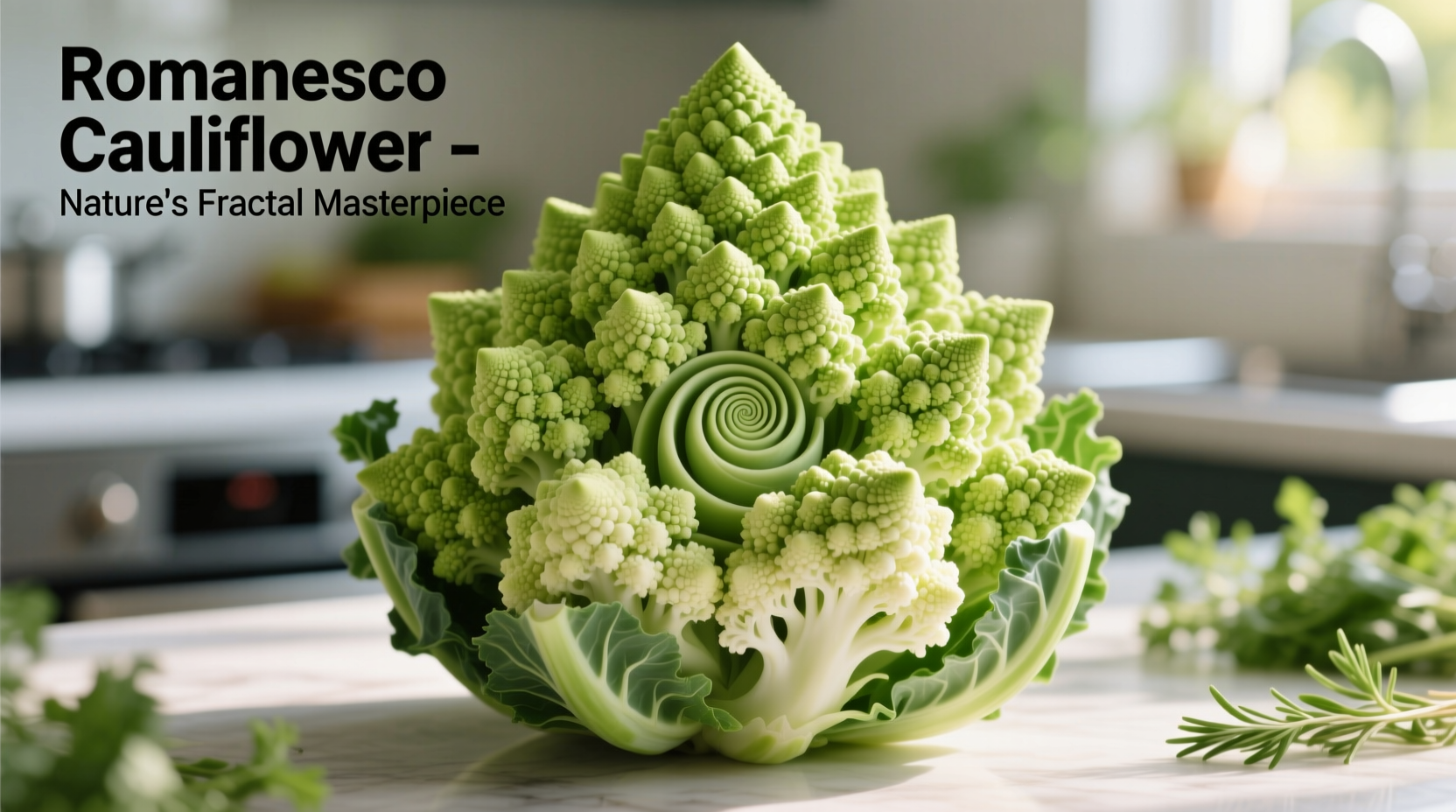
Romanesco (Brassica oleracea var. botrytis), often labeled as Romanesco broccoli or Roman cauliflower, is a naturally occurring cultivar first documented in 16th-century Italy. Its name derives from Rome, where it was traditionally cultivated in regional kitchen gardens. Unlike genetically modified produce, Romanesco is the result of selective breeding over centuries, emphasizing its unique growth pattern and palatability.
The most defining trait of Romanesco is its logarithmic spiral structure: each floret is a near-identical replica of the whole head, forming a natural fractal—a phenomenon rare in edible plants. This self-similarity follows the Fibonacci sequence, making it a favorite subject in mathematical botany as well as culinary arts. While visually dramatic, this structure also affects how the vegetable cooks and breaks apart.
Culinarily, Romanesco behaves more like cauliflower than broccoli, though it possesses a brighter, slightly sweeter, and nuttier flavor profile. It belongs to the Italica group of Brassica oleracea, which includes broccoli and broccolini, yet its growth habit and harvesting method align more closely with cauliflower. It is typically in season from late summer through early winter, peaking in autumn.
Key Characteristics
| Attribute | Romanesco | Regular Cauliflower |
|---|---|---|
| Color | Vivid lime green to chartreuse | Off-white, occasionally purple, orange, or green variants |
| Texture (Raw) | Firm, crisp, with a slight crunch; less fibrous | Denser, more compact; can be slightly spongy |
| Flavor Profile | Delicate, nutty, mildly sweet with herbal notes | Earthy, mild, slightly sulfurous when overcooked |
| Aroma | Fresh, grassy, faintly vegetal | Neutral when raw; develops stronger sulfur notes when cooked |
| Structure | Fractal spirals, conical florets | Amorphous curds, densely packed |
| Cooking Response | Holds shape well; resists mushiness | Can break down quickly; prone to waterlogging |
| Shelf Life (Refrigerated) | 5–7 days in crisper drawer, unwashed | 7–10 days if stored properly in paper wrap |
| Nutritional Edge | Slightly higher in vitamin C and carotenoids | Comparable fiber; lower phytonutrient diversity |
Practical Usage
Romanesco’s firm texture and clean flavor make it exceptionally versatile across cooking methods. It responds well to roasting, steaming, sautéing, blanching, and even eating raw. Because of its structural integrity, it holds up better than cauliflower in high-heat applications and retains a pleasant bite even after prolonged cooking.
Roasting
Toss trimmed Romanesco florets with olive oil, sea salt, and freshly cracked black pepper. Roast at 425°F (220°C) for 20–25 minutes, turning once, until edges caramelize and centers remain tender-crisp. The high heat enhances its natural sweetness and brings out subtle nutty undertones. For added depth, finish with lemon zest, toasted pine nuts, or grated Parmesan.
Steaming and Blanching
Steam for 6–8 minutes until fork-tender but not soft. Overcooking dulls both color and flavor. Use blanched Romanesco in grain bowls, pasta salads, or cold antipasti platters. Its vibrant hue remains intact longer than white cauliflower, making it ideal for dishes where visual appeal matters.
Sautéing and Stir-Frying
Thinly slice or break into small florets. Sauté in garlic-infused oil over medium-high heat for 5–7 minutes. Add a splash of vegetable stock or white wine to deglaze and create a light sauce. Pairs beautifully with chili flakes, anchovies, capers, or fresh herbs like parsley and basil.
Raw Applications
Cut into small spears or bite-sized pieces for crudités. Its crispness and mild flavor make it excellent with hummus, tzatziki, or herb-forward dips. The fractal geometry also makes it a standout on charcuterie boards or vegetarian platters.
Pro Tip: When cutting Romanesco, use a sharp chef’s knife to slice between the natural fractal divisions. This preserves the intricate patterns and creates uniform pieces for even cooking. Avoid tearing, which can crush delicate florets.
Professional Kitchen Uses
In fine dining, Romanesco is prized for its aesthetic value. Chefs often use it as a garnish or centerpiece in composed vegetable dishes. Puréed Romanesco (blended with warm cream, butter, and a touch of mace) creates a luminous green sauce that contrasts elegantly with seared fish or roasted poultry. Some modernist kitchens dehydrate thin slices into crisps for textural garnishes.
Pairing Suggestions
- Dairy: Parmigiano-Reggiano, Pecorino, ricotta salata, crème fraîche
- Fats: Extra virgin olive oil, browned butter, toasted nuts (pine nuts, almonds)
- Acids: Lemon juice, verjus, white wine vinegar
- Herbs: Parsley, chives, tarragon, thyme
- Spices: Nutmeg, white pepper, fennel seed, smoked paprika
- Proteins: Grilled chicken, pan-seared scallops, poached eggs, lentils
Variants & Types
While true Romanesco refers specifically to the fractal-headed green variety, several related cultivars and color variants exist:
Standard Green Romanesco
The most common type, featuring bright chartreuse heads with tightly wound spirals. Offers the full sensory experience—visual drama, crisp texture, and nuanced flavor.
Purple Romanesco
A rare variant exhibiting violet pigmentation due to anthocyanin content. Cooks similarly but may bleed color when boiled. Best used in raw preparations or quick sautés to preserve hue.
Miniature or “Baby” Romanesco
Harvested early for tender texture and petite size. Ideal for pickling, stuffing, or single-serving roasting. More expensive but valued for presentation.
Hybrid Brassicas
Some seed companies market crosses such as “Romanesco x Broccoli” or “Romanesco Sprouting.” These are not true Romanesco but may inherit partial fractal traits. Always check botanical labels: true Romanesco should be listed as Brassica oleracea var. botrytis.
Comparison Table: True vs. Hybrid Variants
| Type | Fractal Pattern | Flavor | Best Use |
|---|---|---|---|
| True Romanesco | Distinct, mathematical spirals | Nutty, sweet, refined | All cooking methods |
| Purple Romanesco | Visible but softer definition | Slightly earthier | Raw, pickled, sautéed |
| Baby Romanesco | Perfect miniatures | More delicate, less fibrous | Starter courses, garnish |
| Broccoflower (Romanesco hybrid) | Irregular, partial spirals | Milder, closer to broccoli | General substitution |
Comparison with Similar Ingredients
Romanesco is frequently confused with other brassicas, especially cauliflower and broccoli. While they share a genetic lineage, key differences affect their performance in the kitchen.
Romanesco vs. Regular Cauliflower
- Appearance: Romanesco’s lime-green, fractal structure contrasts sharply with the ivory, cloud-like curds of white cauliflower.
- Flavor: Romanesco tastes cleaner and slightly sweeter; cauliflower can develop bitter or sulfurous notes when overcooked.
- Texture: Romanesco is more tender-crisp and less dense, breaking apart more cleanly when chewed.
- Nutrition: Both are low-calorie, high-fiber vegetables, but Romanesco contains higher levels of vitamin C and antioxidant compounds due to its chlorophyll-rich color.
- Cooking Time: Romanesco typically requires 2–3 minutes less cooking time than cauliflower for equivalent doneness.
Romanesco vs. Broccoli
- Growth Habit: Broccoli features a central stalk with flowering heads; Romanesco lacks a dominant stem and grows as a unified fractal head.
- Color: Broccoli ranges from dark green to purple-green; Romanesco is uniformly bright chartreuse.
- Bitterness: Broccoli has a more pronounced bitterness, especially in the stems; Romanesco is milder and more approachable raw.
- Usage: Broccoli is often chopped coarsely; Romanesco’s symmetry allows for precise cuts that enhance plated dishes.
“Romanesco is the jewel of the fall brassica season—not just for its looks, but for its ability to elevate simple dishes with minimal effort. One roasted head transforms a weeknight plate into something memorable.” — Chef Elena Marquez, Seasonal Table Restaurant
Practical Tips & FAQs
How do I select the best Romanesco?
Look for heads with tight, firm spirals and a vibrant green hue. Avoid any with yellowing, soft spots, or separation between florets. The stem should feel solid, not spongy.
Can I substitute Romanesco for cauliflower in recipes?
Yes, in nearly all cases. Use a 1:1 volume ratio. Adjust cooking time downward by 10–15% to prevent overcooking. Its brighter flavor may reduce the need for added acidity or seasoning.
Is Romanesco genetically modified?
No. Romanesco is a product of traditional selective breeding. Its fractal pattern is a natural expression of plant genetics, not laboratory engineering.
How should I store Romanesco?
Wrap loosely in a paper towel and place in a perforated plastic bag in the refrigerator’s crisper drawer. Use within 5–7 days. Do not wash before storage, as moisture accelerates spoilage.
Can I freeze Romanesco?
Yes, but only after blanching. Cut into uniform florets, blanch in boiling water for 2 minutes, then plunge into ice water. Drain thoroughly and freeze in airtight containers for up to 10 months. Best used in soups, stews, or purées after thawing.
Why does my Romanesco taste bitter?
Bitterness usually results from overcooking or using older specimens. Harvest timing and soil conditions also affect flavor. To counteract bitterness, pair with fat (olive oil, butter) and acid (lemon juice).
Is Romanesco more nutritious than cauliflower?
Slightly. It contains about 20% more vitamin C and higher concentrations of carotenoids and flavonoids due to its green pigmentation. Both are excellent sources of fiber and glucosinolates, compounds linked to cancer prevention.
Storage Checklist:
- Inspect for firmness and color
- Store unwashed in breathable container
- Keep away from ethylene-producing fruits (apples, bananas)
- Use within one week for peak quality
- Blanch before freezing
Summary & Key Takeaways
Romanesco cauliflower—though not a true cauliflower—is a remarkable vegetable that bridges the gap between science, art, and gastronomy. Its defining fractal geometry is more than ornamental; it influences texture, cooking behavior, and culinary versatility. Compared to regular cauliflower, Romanesco offers a brighter color, crisper texture, and more refined flavor, making it ideal for dishes where appearance and subtlety matter.
It can be substituted directly in most recipes but benefits from slightly shorter cooking times. Whether roasted, sautéed, or served raw, it adds visual drama and a delicate nuttiness that elevates everyday meals. Nutritionally, it holds a slight edge over white cauliflower, particularly in antioxidant content.
For home cooks, embracing Romanesco means expanding beyond the ordinary without sacrificing ease. It requires no special techniques—just attention to its unique structure and flavor sensitivity. Once you’ve experienced its clean snap and elegant form, returning to standard cauliflower may feel like settling for the mundane.
Call to Action: Next time you visit the market, seek out Romanesco. Try roasting it simply with olive oil and salt, then finish with lemon and Parmesan. Notice how the fractal florets crisp at the edges while staying tender within. Share your creation with someone who thinks vegetables can’t be extraordinary.




 浙公网安备
33010002000092号
浙公网安备
33010002000092号 浙B2-20120091-4
Comments
No comments yet. Why don't you start the discussion?