
Saffron is not just a spice—it’s a story woven through millennia of human civilization, agriculture, and gastronomy. When home cooks or chefs reach for saffron, they’re not only adding color and aroma to a dish; they’re invoking a legacy of trade routes, royal banquets, and meticulous hand labor. Yet despite its fame, many remain uncertain about what saffron actually is, where it comes from, and how to use it properly. Misconceptions abound: some confuse it with turmeric, others assume it’s merely a coloring agent, and many avoid it due to its high cost. This article clarifies the true nature of saffron—its botanical origin, sensory characteristics, culinary function, and practical applications—so you can use it confidently and knowledgeably in your kitchen.
Definition & Overview
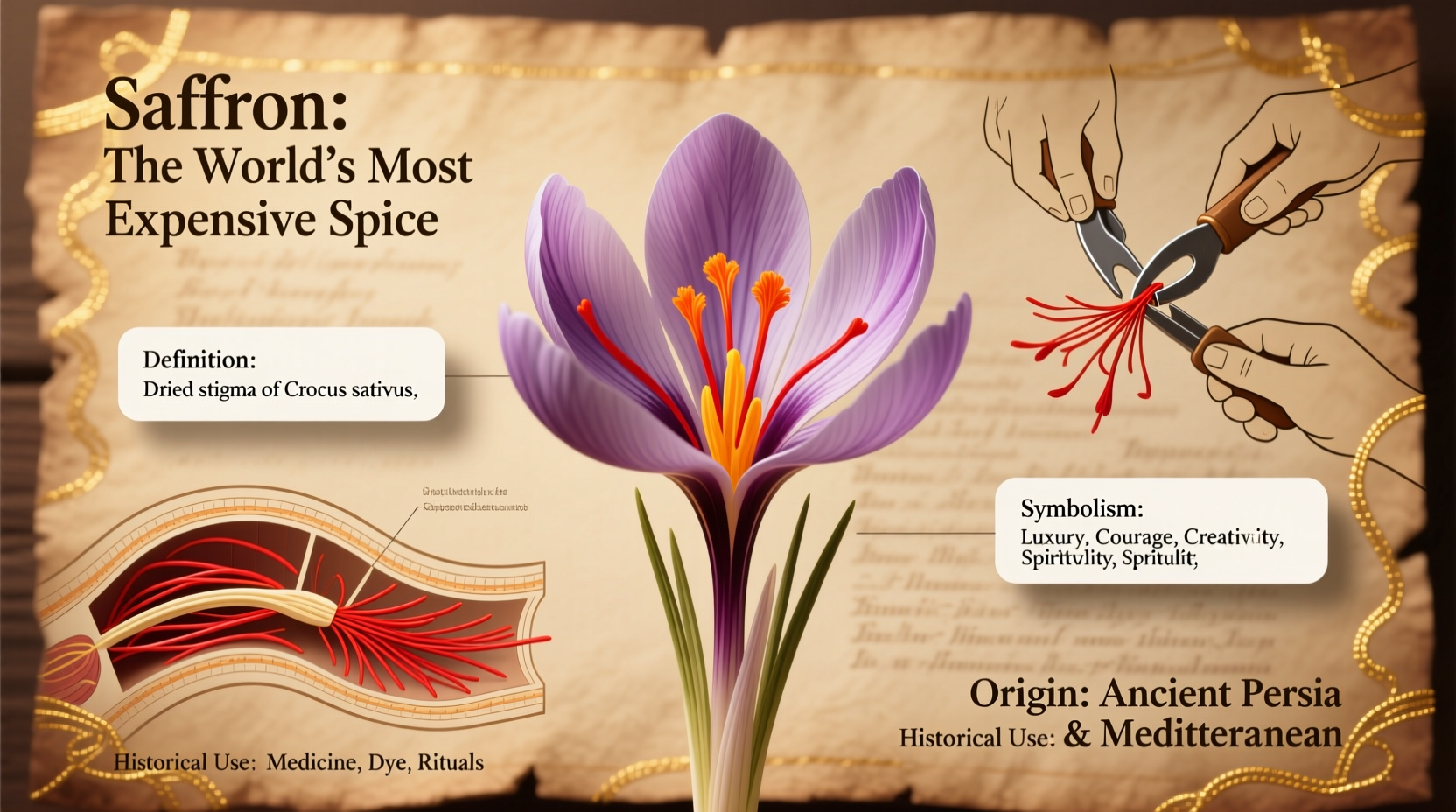
Saffron is the dried stigma of the Crocus sativus flower, a sterile species of crocus cultivated exclusively for its aromatic and pigmented threads. Unlike most spices derived from seeds, bark, or roots, saffron comes from the delicate female reproductive parts of a purple autumn-blooming crocus. Each flower produces only three thread-like stigmas, which must be hand-picked at dawn when the blooms are still closed to preserve potency. The harvesting window is narrow—often just one to two weeks per year—and the labor intensity is immense: it takes approximately 150,000 flowers to yield one kilogram (about 2.2 pounds) of dried saffron.
Native to Southwest Asia, likely originating in Greece or Iran, saffron has been used for over 3,500 years in cooking, medicine, dyeing, and religious rituals. Today, Iran dominates global production, accounting for over 90% of supply, followed by smaller quantities from Spain, India (particularly Pampore in Jammu & Kashmir), and Greece. Its Latin name, *Crocus sativus*, reflects its cultivated status—\"sativus\" meaning \"cultivated\"—and distinguishes it from wild crocus species that lack culinary value.
In culinary terms, saffron serves three primary functions: it imparts a vivid golden-yellow hue, contributes a complex floral-honeyed aroma, and adds a subtle earthy bitterness that balances richness in dishes. It is essential in iconic recipes such as Spanish paella, Persian tahdig, Indian biryanis, Italian risotto alla milanese, and French bouillabaisse. Due to its potency, only small amounts are needed—typically measured in strands or milligrams rather than teaspoons.
Key Characteristics
Saffron’s unique identity lies in its combination of visual, aromatic, and functional traits. Below is a breakdown of its defining characteristics:
| Characteristic | Description |
|---|---|
| Botanical Source | Stigmas of Crocus sativus, a triploid sterile crocus |
| Appearance | Deep red to maroon threads, often with a slight orange tip; slender and brittle |
| Aroma | Floral, honeyed, slightly earthy; reminiscent of hay or fresh-cut grass with a sweet undertone |
| Taste | Mildly bitter, warm, and perfumed; not pungent or spicy-hot |
| Color Release | Imparts intense golden-yellow to deep amber hues in liquids; one of the most potent natural dyes |
| Heat Level | Non-spicy; does not contribute heat or capsaicin-like sensation |
| Culinary Function | Flavor enhancer, coloring agent, aromatic base |
| Shelf Life | Up to 2 years when stored properly; degrades with exposure to light, heat, and moisture |
The active compounds responsible for saffron’s properties include crocin (a carotenoid pigment responsible for color), picrocrocin (which gives the bitter taste), and safranal (the volatile oil behind its distinctive aroma). These components degrade over time, especially if exposed to air or sunlight, making proper storage critical for preserving quality.
Practical Usage: How to Use Saffron in Cooking
Using saffron effectively requires understanding its solubility and activation. Because its key compounds are water-soluble, saffron must be hydrated to release full flavor and color. Simply tossing dry threads into a rice pot will result in uneven distribution and wasted potential.
To maximize impact, follow this professional method:
- Measure the required amount—typically 10–20 threads for four servings.
- Crush the threads gently using a mortar and pestle or the back of a spoon.
- Place the crushed saffron in a small bowl and add 2–3 tablespoons of warm (not boiling) liquid—water, milk, stock, or even alcohol like white wine or vermouth.
- Let steep for 10–20 minutes. The liquid will turn deep golden-orange, indicating extraction.
- Add both the threads and the infused liquid to your dish during cooking.
Pro Tip: For richer integration in creamy dishes like risotto or custards, infuse saffron in warm milk instead of water. In savory rice dishes, steep it in warm broth to align with the recipe’s flavor profile.
Saffron works best in slow-cooked, moist preparations where its essence can disperse evenly. Examples include:
- Rice Dishes: Biryani, Persian jeweled rice (morasa polo), Spanish paella
- Soups & Stews: Bouillabaisse, Iranian abgoosht, Swedish saffron buns (lussekatter) in sweet contexts
- Dairy-Based Preparations: Ice creams, custards, saffron-infused whipped cream
- Baked Goods: Holiday breads, wedding cakes in Middle Eastern and South Asian traditions
Because of its high cost, precision matters. Overuse can make a dish overly bitter or medicinal in aroma. A general guideline is no more than 0.1 grams (about 20–25 threads) per serving. In fine dining kitchens, chefs often weigh saffron on digital scales to ensure consistency across batches.
Variants & Types of Saffron
Not all saffron is equal. Quality varies significantly based on origin, processing, and grading standards. The most recognized classification system divides saffron into several grades, primarily determined by color strength (measured in crocin units), aroma intensity, and physical integrity of the threads.
Main Commercial Grades
| Type | Origin | Description | Best For |
|---|---|---|---|
| Sargol | Iran | “Topmost” grade; consists only of deep red stigma tips, highest in crocin content | Premium dishes requiring strong color and clean flavor |
| Mongra | India (Kashmir) | Dark red, slightly curled threads; floral aroma with woody depth | Delicate biryanis and desserts where nuanced fragrance is key |
| Mancha | Spain | Protected Designation of Origin (PDO) saffron from La Mancha; may include some yellow styles but strictly regulated | Traditional Spanish cuisine like paella |
| Pound | Mixed sources | Lower grade containing entire stigmas including yellow style (stem portion); less potent | Bulk cooking where cost is a concern; not ideal for fine cuisine |
Another variant is powdered saffron, which offers convenience but carries risks of adulteration. Pure saffron powder should be deep red—not bright orange—and dissolve cleanly in liquid without leaving residue. Adulterated versions often contain turmeric, beetroot, or synthetic dyes. For authenticity, whole threads are always preferred.
Comparison with Similar Ingredients
Saffron is frequently mistaken for other yellow-colored spices, particularly turmeric. While both impart golden hues, they differ fundamentally in origin, flavor, and application.
| Feature | Saffron | Turmeric |
|---|---|---|
| Source | Flower stigma (Crocus sativus) | Root rhizome (Curcuma longa) |
| Flavor Profile | Floral, honeyed, mildly bitter | Earthy, peppery, slightly bitter |
| Aroma | Perfumed, hay-like | Warm, rooty, slightly metallic |
| Color Strength | Very strong; a few threads color an entire dish | Moderate; requires larger quantities |
| Cost | Extremely high (~$5,000–$15,000 per kg) | Low (~$10–$20 per kg) |
| Substitution? | Can mimic color with turmeric + safflower, but not flavor | Cannot replicate saffron’s aroma or complexity |
“Saffron isn’t replaceable. You can imitate its color, but never its soul. It brings a luminous warmth that changes how we perceive a dish—not just visually, but emotionally.” — Chef Massoud Ziaee, Persian cuisine specialist
Another common confusion is between saffron and safflower (*Carthamus tinctorius*), sometimes labeled “Mexican saffron” or “poor man’s saffron.” Safflower mimics saffron’s color well but lacks its aromatic complexity and contributes no distinctive flavor. It is best viewed as a coloring agent only.
Practical Tips & FAQs
How much saffron should I use?
For four servings, 10–20 threads (approx. 0.05–0.1g) is sufficient. Start with fewer strands and adjust upward in future attempts based on preference.
How do I store saffron?
Keep saffron in an airtight container, away from light, heat, and moisture. A dark glass jar in a cool cupboard is ideal. Avoid refrigeration unless in very humid climates, as condensation can degrade threads.
Is saffron worth the price?
Yes, when used correctly. Given that a single gram can season dozens of meals, high-quality saffron costs pennies per serving. The difference in aroma and elegance it brings to a dish justifies the investment for special occasions and signature recipes.
Can I substitute saffron?
There is no true flavor substitute. For color only, a pinch of turmeric or safflower may work in soups or stews, but expect a completely different taste profile. Annatto (achiote) offers yellow-orange color with mild earthiness but no floral notes.
How can I test saffron purity?
Place a few threads in warm water. Genuine saffron releases color slowly over 10–15 minutes, turning the liquid golden-yellow. If the water turns instantly bright orange or red, it’s likely dyed or adulterated. Real saffron threads remain intact and red after infusion.
Does saffron have health benefits?
Traditionally used in herbal medicine, saffron contains antioxidants and has been studied for mood-supporting properties (e.g., mild antidepressant effects). However, culinary doses are too low for therapeutic impact. Do not consume large quantities—more than 5 grams may be toxic.
Why is saffron so expensive?
Its cost stems from extreme labor requirements: each stigma must be harvested by hand during a brief flowering season. Mechanization is nearly impossible due to the fragility of the flowers. Additionally, climate vulnerability, political instability in producing regions, and rising global demand contribute to price volatility.
Storage Checklist:
- ✔ Store in a sealed container
- ✔ Keep in a dark place (not clear jars)
- ✔ Label with purchase date
- ✔ Use within 18–24 months for peak quality
Summary & Key Takeaways
Saffron is the dried stigma of the Crocus sativus flower, renowned as the world’s most expensive spice due to its labor-intensive harvest and unparalleled sensory contributions. It is not merely a coloring agent but a multifaceted ingredient that enhances dishes with golden hue, floral aroma, and subtle bitterness. Understanding its proper usage—especially hydration before cooking—is essential for unlocking its full potential.
Quality varies widely by type and origin. Sargol (Iran), Mongra (India), and Mancha (Spain) represent premium grades suitable for fine cuisine, while lower grades containing yellow styles offer economy at the expense of potency. Whole threads are preferable to powders to avoid adulteration.
Though often confused with turmeric or safflower, saffron is botanically and sensorially distinct. No substitute replicates its full character, though turmeric can mimic color in a pinch. When stored correctly—in darkness, dryness, and airtight conditions—saffron retains quality for up to two years.
Ultimately, saffron is more than a spice: it is a symbol of patience, craftsmanship, and culinary refinement. By treating it with respect and understanding its nuances, home cooks and professionals alike can elevate everyday meals into memorable experiences.
Ready to experiment? Try infusing 15 saffron threads in warm chicken broth and adding it to your next batch of rice. Notice how the grains transform in color and aroma—this is saffron’s quiet magic at work.




 浙公网安备
33010002000092号
浙公网安备
33010002000092号 浙B2-20120091-4
Comments
No comments yet. Why don't you start the discussion?