
Fried chicken is a beloved comfort food, prized for its golden, crunchy crust and juicy interior. But when it comes to leftovers, most people face the same problem: how to reheat it without turning it into a soggy, rubbery disappointment. The microwave might be quick, but it destroys crispiness. The oven can work, but only if done correctly. Finding the right method isn’t just about convenience—it’s about preserving the texture and flavor that made the original meal special.
The truth is, not all reheating methods are created equal. Some strip away the crunch, others dry out the meat, and many fail to heat the chicken evenly. With a few smart techniques, however, you can revive leftover fried chicken so well that it tastes nearly as good as fresh out of the fryer. This guide breaks down the most effective approaches, backed by food science and tested by home cooks and professionals alike.
Why Crispiness Fails During Reheating
The key to great fried chicken lies in its texture—the contrast between a shatteringly crisp exterior and tender, moist meat inside. When stored and reheated improperly, moisture migrates from the meat into the breading, softening the crust. Additionally, rapid temperature changes or excessive steam can accelerate sogginess.
Moisture is the enemy of crispiness. Any reheating method that traps steam—like microwaving in a sealed container—will break down the crust. On the other hand, dry, consistent heat helps re-evaporate surface moisture and re-crisp the coating without overcooking the meat.
The Top 3 Methods for Crispy, Even Results
Not every kitchen has an air fryer, and ovens vary in performance. Below are the three most reliable methods, ranked by effectiveness, ease, and consistency.
1. Air Fryer (Best Overall)
The air fryer has revolutionized leftover revival. By circulating hot air rapidly around the food, it mimics deep frying with minimal oil. For fried chicken, this means fast, even reheating with exceptional crisp retention.
- Preheat the air fryer to 375°F (190°C).
- Arrange chicken pieces in a single layer, ensuring space between them.
- Heat for 8–10 minutes, flipping halfway through.
- Check internal temperature—it should reach 165°F (74°C).
The result is a crackling crust and juicy interior. Because airflow is crucial, avoid overcrowding the basket. This method works especially well for smaller pieces like wings and tenders, but larger thighs and breasts also benefit.
2. Oven Method (Best for Large Batches)
If you're reheating multiple servings or don't own an air fryer, the conventional oven is your next best option. It provides steady, dry heat that restores crispiness when used correctly.
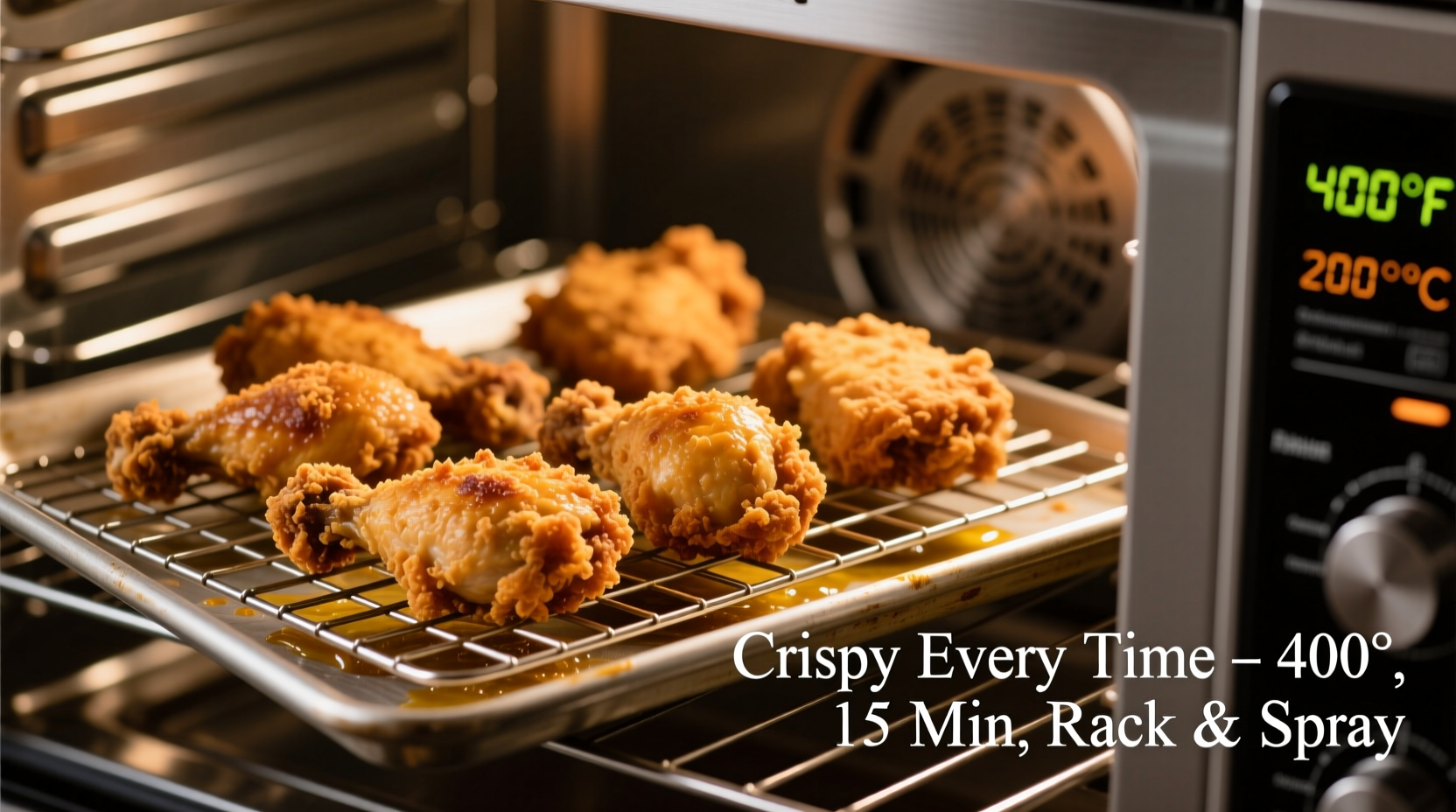
- Preheat oven to 400°F (200°C).
- Place a wire rack on a baking sheet and arrange chicken on top.
- Heat for 15–20 minutes, flipping once halfway.
- Use a thermometer to verify doneness.
Elevating the chicken on a wire rack allows hot air to circulate underneath, preventing the bottom from steaming. This step is critical—placing chicken directly on a pan leads to uneven browning and a softer base.
3. Skillet Reheating (Fast & Effective for Singles)
For one or two pieces, a skillet offers excellent control. A light sear brings back crispness while gently warming the meat.
- Heat a skillet over medium heat with a thin layer of neutral oil.
- Add chicken, skin-side down, and cover with a splatter guard or lid.
- Cook 5 minutes per side, adjusting heat to avoid burning.
The lid traps just enough heat to warm the interior without drying it out, while the oil revives the crust. This method requires attention but delivers restaurant-quality results in under 12 minutes.
Do’s and Don’ts: How to Avoid Common Mistakes
| Action | Do | Don’t |
|---|---|---|
| Storage | Store in shallow containers; cool quickly before refrigerating | Leave chicken out longer than 2 hours or pile in deep containers |
| Reheating Surface | Use a wire rack or open tray for airflow | Place directly on foil or plate |
| Heating Speed | Reheat slowly and evenly | Rush with high heat or microwave uncovered |
| Microwave Use | Only as last resort—with damp paper towel and short bursts | Heat whole pieces on full power for more than 1 minute |
Expert Insight: What Chefs Recommend
Professional kitchens deal with reheating challenges daily, especially during catering or prep-heavy services. Their techniques prioritize texture preservation and food safety.
“Reheating fried chicken successfully is all about moisture control. You want to drive off excess humidity without desiccating the meat. The air fryer gets closest to the original fry experience.” — Chef Marcus Lin, Southern Comfort Kitchen
“I always reheat on a rack, never flat. And I check temp with a probe—no guessing. That’s how you keep the crust intact and the meat perfect.” — Lila Tran, Food Safety Consultant and Former Line Cook
Real Example: From Soggy Takeout to Crispy Comeback
Jamie ordered extra fried chicken from her favorite local spot on Friday night. By Sunday morning, she dreaded the idea of another limp, microwave-warmed piece. Instead, she tried the oven method: preheating to 400°F, placing the drumsticks and breast on a wire rack over a baking sheet, and heating for 18 minutes with one flip.
The result surprised her. The skin crackled when she bit into it, and the meat was warm and juicy—not dried out. “I didn’t believe reheated chicken could taste that good,” she said. “Now I save leftovers on purpose.”
Step-by-Step Checklist for Perfect Reheated Fried Chicken
Your Reheating Game Plan:
- ✅ Remove chicken from fridge 10–15 minutes before reheating
- ✅ Choose your method: air fryer (best), oven (batch-friendly), or skillet (quick)
- ✅ Preheat appliance to correct temperature
- ✅ Arrange chicken in single layer with space between pieces
- ✅ Use a wire rack whenever possible
- ✅ Flip halfway through cooking
- ✅ Check internal temperature reaches 165°F (74°C)
- ✅ Serve immediately—crispiness fades fast after removal from heat
Frequently Asked Questions
Can I reheat fried chicken in the microwave?
You can, but it's not recommended for quality. Microwaves create steam, which softens the breading. If you must use a microwave, place the chicken on a paper towel, cover with another damp towel, and heat in 30-second bursts at 50% power. Finish in a toaster oven or skillet if possible to restore crisp.
How long does leftover fried chicken last in the fridge?
Properly stored in an airtight container, fried chicken stays safe to eat for 3–4 days. Beyond that, risk of spoilage increases, and texture degrades significantly. For longer storage, freeze within 2 days.
Can I reheat frozen fried chicken?
Yes. Add 3–5 minutes to cook time when using the oven or air fryer. Do not thaw at room temperature—move directly from freezer to reheating appliance to prevent bacterial growth. Expect slightly less crispness than with refrigerated chicken.
Final Thoughts: Make Leftovers Feel Like a Treat
Leftover fried chicken doesn’t have to mean compromise. With the right technique, it can be just as satisfying as the first bite. Whether you rely on an air fryer for speed, an oven for volume, or a skillet for precision, the principles remain the same: dry heat, proper airflow, and gentle handling.
The best part? These methods apply beyond fried chicken. They work equally well for fish, mozzarella sticks, or any breaded, fried food worth saving. Once you master the art of reheating, you’ll never settle for soggy leftovers again.




 浙公网安备
33010002000092号
浙公网安备
33010002000092号 浙B2-20120091-4
Comments
No comments yet. Why don't you start the discussion?