
Tom Ka soup stands as one of Thailand’s most aromatic and balanced culinary expressions—a harmonious blend of creamy richness, herbal brightness, and subtle heat. Unlike the fiery sharpness of Tom Yum, Tom Ka offers a more rounded, soothing experience, anchored by coconut milk and infused with galangal, lemongrass, and kaffir lime leaves. For those exploring Southeast Asian cuisine, understanding Tom Ka is essential not only for its distinctive taste but also for its role in showcasing the Thai philosophy of balancing flavors: sour, sweet, salty, spicy, and umami. This soup is more than a starter; it’s a study in equilibrium, texture, and regional authenticity that continues to captivate palates worldwide.
Definition & Overview
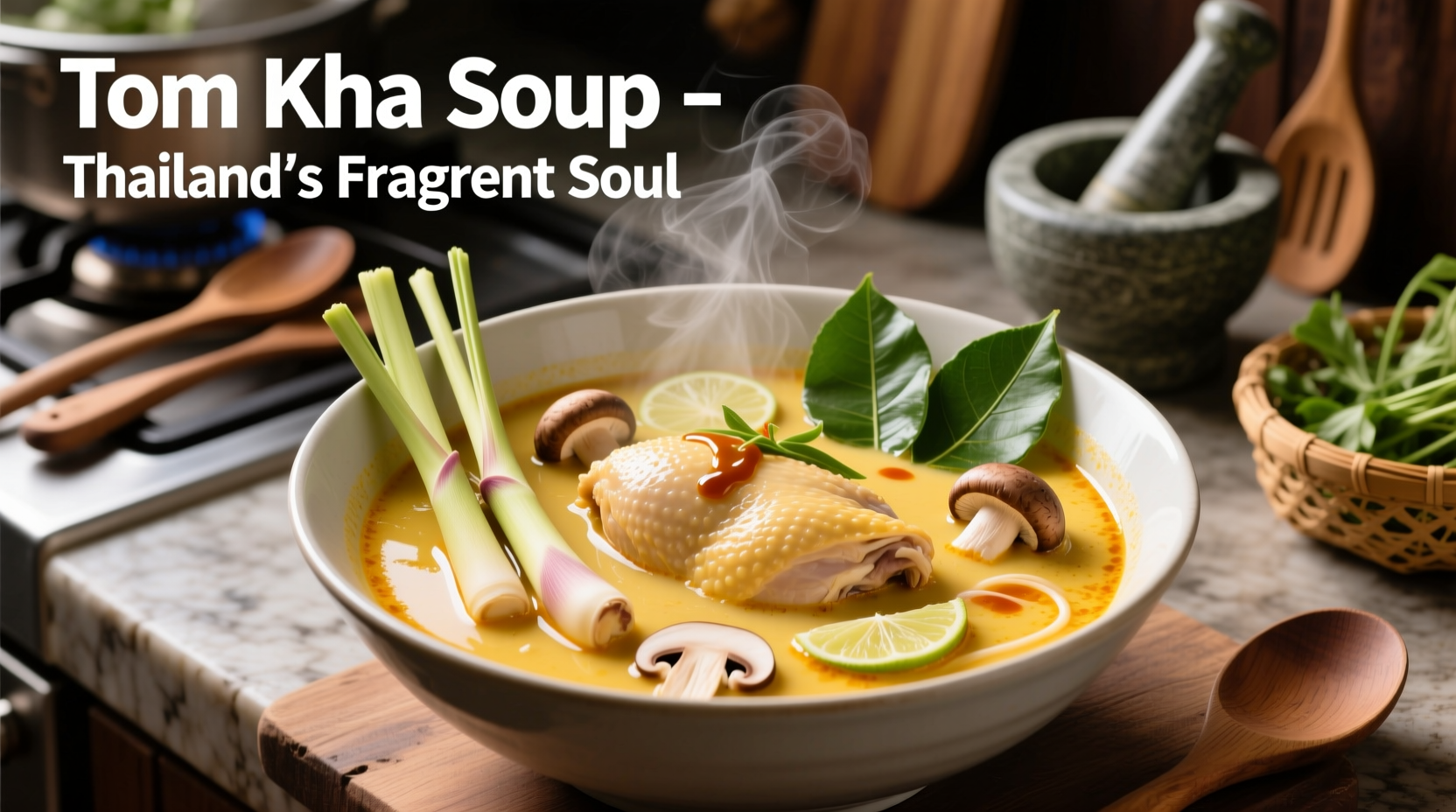
Tom Ka (ต้มข่า) is a traditional Thai coconut soup named for its core ingredient: ka, meaning galangal. The word “tom” refers to a boiled or simmered dish, placing this soup within a broader category of Thai broths. Originating in central Thailand, Tom Ka is often served as an appetizer but can stand as a light main course when paired with jasmine rice. Its defining feature is the use of fresh galangal, which imparts a piney, citrusy warmth distinct from ginger, combined with coconut milk that softens the acidity and spice.
The soup typically features a protein—most commonly chicken (Tom Ka Gai), shrimp (Tom Ka Kung), or mushrooms in vegetarian versions—simmered in a broth built on a trinity of aromatics: lemongrass, galangal, and kaffir lime leaves. Lime juice adds sourness, fish sauce contributes saltiness, and bird’s eye chilies bring controlled heat. The result is a fragrant, silky soup that feels both nourishing and invigorating.
While often compared to Tom Yum, Tom Ka is fundamentally different in structure and intent. Where Tom Yum is clear, tart, and aggressively aromatic, Tom Ka embraces creaminess and depth, using coconut milk not as a thickener but as a flavor modulator that rounds the edges of acidity and spice.
Key Characteristics
| Characteristic | Description |
|---|---|
| Flavor Profile | Balanced sour, salty, slightly sweet, with herbal complexity and mild heat. Less aggressive than Tom Yum. |
| Aroma | Pronounced citrus from lemongrass and kaffir lime, earthy-pine notes from galangal, faintly floral coconut. |
| Color & Texture | Opaque ivory or pale yellow due to coconut milk; smooth, creamy mouthfeel without heaviness. |
| Heat Level | Mild to medium, depending on chili quantity. Heat is layered, not upfront. |
| Culinary Function | Appetizer, comfort food, or light entrée. Served hot, often before a meal to stimulate digestion. |
| Shelf Life | 3–4 days refrigerated. Coconut milk may separate upon reheating; stir gently to recombine. |
Practical Usage: How to Use Tom Ka in Cooking
Tom Ka is accessible to home cooks with basic knife skills and access to Southeast Asian ingredients, many of which are now widely available in well-stocked supermarkets or Asian grocery stores. The technique relies on infusion rather than reduction—aromatics are bruised and simmered to extract oils, then strained or left in depending on preference.
Step-by-Step Home Preparation (Tom Ka Gai)
- Prepare aromatics: Cut 2 stalks of lemongrass into 2-inch lengths and lightly crush with the side of a knife. Slice 3–4 thin rounds of galangal (about 1/8 inch thick). Tear 4–5 kaffir lime leaves, removing the center stem.
- Infuse the broth: In a pot, combine 4 cups of water or light chicken stock with lemongrass, galangal, and kaffir lime leaves. Simmer for 10–15 minutes to extract flavor.
- Add coconut milk: Stir in 1 can (400 ml) of full-fat coconut milk. Bring to a gentle simmer—do not boil vigorously, as this may cause separation.
- Add protein: Add 1 cup of sliced chicken breast or thigh. Simmer until cooked through, about 8–10 minutes.
- Season: Add 2 tablespoons of freshly squeezed lime juice, 1–2 teaspoons of fish sauce, and 1–2 sliced bird’s eye chilies (adjust to taste).
- Finish: Turn off heat. Stir in a handful of sliced mushrooms (straw or oyster work well) and fresh cilantro. Serve immediately.
Pro Tip: Always add lime juice and fish sauce off the heat to preserve their bright, volatile top notes. Boiling these ingredients dulls their complexity. Taste and adjust seasoning just before serving—balance is key.
In professional kitchens, chefs often double-infuse the broth by first simmering aromatics in water, straining, then adding coconut milk. This intensifies flavor without clouding the base. Some upscale Thai restaurants finish the soup with a drizzle of roasted coconut oil or a shard of crispy shallot for textural contrast.
Pairing Suggestions
- Jasmine rice: Neutral base that absorbs the broth.
- Thai basil or sawtooth coriander: Adds peppery freshness if available.
- Side of papaya salad (Som Tum): Complements with crunch and additional sour-spicy notes.
- Grilled meats or satay: Provides protein contrast when Tom Ka is served as a starter.
Variants & Types
Tom Ka varies across regions and proteins, each altering the soup’s character while maintaining its aromatic foundation.
| Variation | Protein Used | Distinguishing Features |
|---|---|---|
| Tom Ka Gai | Chicken | Most common version; mild, approachable, family-friendly. Often includes straw mushrooms. |
| Tom Ka Kung | Shrimp | Sweeter, brinier profile. Shrimp shells may be used to enrich the broth. Often spicier. |
| Tom Ka Hed | Mushrooms (mixed varieties) | Vegan adaptation. Uses dried porcini or shiitake for umami depth. Must rely on aromatics for savoriness. |
| Tom Ka Moo | Pork (usually shoulder or belly) | Richer, fattier broth. Common in northern Thailand. May include pickled mustard greens. |
| Tom Ka Pla | Fish (often white fish fillets) | Less common; delicate flavor. Fish is added last to prevent overcooking. May include tamarind for extra sourness. |
Regional variations also exist. In southern Thailand, where Muslim influences are strong, Tom Ka may include turmeric or curry paste, giving it a golden hue and deeper spice profile. Northern versions sometimes omit coconut milk entirely during initial cooking, adding it only at the end to control richness.
Comparison with Similar Ingredients
Tom Ka is frequently confused with other Thai soups, particularly Tom Yum. While they share foundational herbs, their composition and intent differ significantly.
| Feature | Tom Ka Soup | Tom Yum Soup |
|---|---|---|
| Base | Coconut milk + water/stock | Clear water or stock |
| Texture | Creamy, smooth | Thin, translucent |
| Sourness Source | Lime juice | Lime juice + sometimes tamarind |
| Heat Level | Moderate, tempered by coconut | High, unmodulated |
| Galangal Intensity | Present but softened | Bold, upfront, pungent |
| Best For | Cold weather, sensitive palates, creamy cravings | Stimulating appetite, hot climates, bold flavors |
Another point of confusion is between galangal and ginger. Though both are rhizomes, galangal (used in Tom Ka) has a sharper, more resinous flavor with hints of pine and lemon, whereas ginger is warmer and sweeter. Substituting one for the other alters the soup’s authenticity. Fresh galangal is ideal, but frozen or powdered forms (in moderation) can work in a pinch.
Practical Tips & FAQs
Can I make Tom Ka soup vegan?
Yes. Use mushrooms or tofu as the protein, replace fish sauce with soy sauce or tamari (or vegan fish sauce), and ensure the coconut milk contains no dairy derivatives. For umami depth, add a splash of mushroom soy sauce or a small piece of kombu during infusion.
How do I store and reheat leftovers?
Store in an airtight container for up to 4 days. Reheat gently over low heat, stirring constantly. Coconut milk may separate—whisk in a teaspoon of water or fresh coconut milk to restore emulsion. Avoid microwaving at high power.
What if I can’t find fresh galangal?
Frozen galangal is widely available in Asian markets and retains flavor well. Dried powdered galangal can substitute at 1/2 teaspoon per tablespoon of fresh, but lacks vibrancy. As a last resort, a small amount of ginger plus a drop of lemon zest may mimic the profile, though the result won’t be authentic.
Is Tom Ka soup healthy?
It can be. Coconut milk provides healthy medium-chain triglycerides (MCTs), while the herbs offer anti-inflammatory benefits—galangal and lemongrass have been studied for digestive and antimicrobial properties. To reduce fat, use light coconut milk, but note that full-fat versions provide better mouthfeel and nutrient absorption of fat-soluble compounds.
Can I freeze Tom Ka soup?
Yes, but with caveats. Freeze without garnishes or delicate ingredients like cilantro. Thaw overnight in the refrigerator and reheat slowly. Texture may become slightly grainy due to coconut milk separation, but stirring vigorously or blending briefly can help.
Why does my Tom Ka taste flat?
Most likely, the balance is off. Taste sequentially: first for salt (add fish sauce drop by drop), then sour (lime juice), then heat (chili). If it’s bland, the aromatics may not have been infused long enough. Bruise lemongrass well and simmer at least 10 minutes before adding coconut milk.
Expert Insight: \"The soul of Tom Ka lies in the trinity—lemongrass, galangal, kaffir lime. These aren’t background notes; they’re the melody. Many Western cooks underuse them. Don’t be shy: two stalks of lemongrass? Use three. Four slices of galangal? Go for six. The coconut milk will tame any excess.\" — Chef Niran Niyom, Bangkok-based culinary instructor and author of *Essence of Thai*.
Summary & Key Takeaways
Tom Ka soup is a masterclass in Thai culinary balance—creamy yet bright, aromatic yet soothing. Its identity rests on the interplay of coconut milk and a potent trio of herbs: lemongrass, galangal, and kaffir lime leaves. Unlike its bolder cousin Tom Yum, Tom Ka tempers heat and acidity with richness, making it more versatile across seasons and palates.
At home, success depends on proper infusion of aromatics, careful seasoning, and gentle handling of coconut milk. Variations like Tom Ka Gai, Kung, or Hed allow adaptation to dietary needs without sacrificing authenticity. Understanding the differences between galangal and ginger, or Tom Ka and Tom Yum, ensures accurate replication and appreciation of the dish’s nuances.
Whether enjoyed in a Bangkok street-side stall or recreated in a suburban kitchen, Tom Ka remains a testament to Thailand’s ability to marry comfort with complexity—one fragrant spoonful at a time.
Explore the layers of Tom Ka soup in your next meal. With fresh ingredients and mindful balance, you’re not just cooking—you’re practicing the art of Thai harmony.




 浙公网安备
33010002000092号
浙公网安备
33010002000092号 浙B2-20120091-4
Comments
No comments yet. Why don't you start the discussion?