
Tomato puree is a kitchen staple that often appears in recipes without much explanation—yet understanding its role can transform the depth and richness of your cooking. Unlike fresh tomatoes or heavy pastes, tomato puree occupies a unique middle ground: concentrated enough to add body and flavor, yet fluid enough to integrate seamlessly into sauces, soups, and braises. For home cooks navigating grocery store shelves lined with tomato products, knowing exactly what tomato puree is—and how to use it properly—can eliminate confusion and elevate everyday meals. This guide breaks down its composition, culinary function, variations, and best practices for use across cuisines.
Definition & Overview
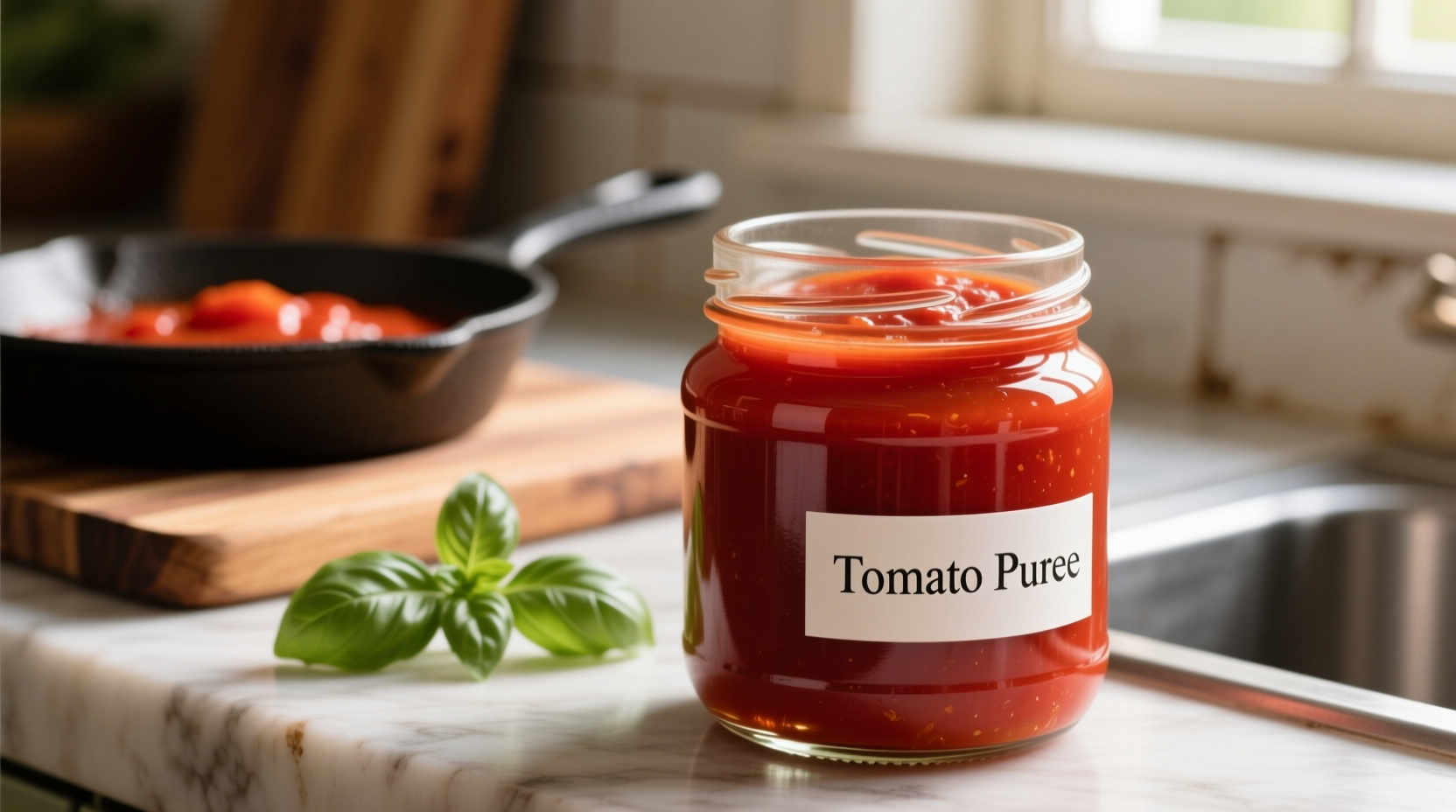
Tomato puree is a smooth, cooked liquid made by simmering ripe tomatoes until soft, then straining out the skins and seeds before blending into a uniform consistency. It is not raw; commercial versions are typically heat-treated for preservation and flavor development. The result is a thin but richly flavored tomato product with a deep red hue and a balanced sweet-acidic profile. In culinary terms, it functions as a foundational ingredient rather than a finishing sauce, designed to meld into dishes during cooking rather than stand alone on the plate.
The production process begins with selecting ripe, flavorful tomatoes—often varieties like Roma or San Marzano due to their lower water content and higher flesh-to-juice ratio. These are washed, halved, and gently cooked to break down cell structure. After cooking, they pass through a sieve or industrial strainer to remove fibrous material, leaving behind a silky, pourable liquid. Some manufacturers may further reduce this liquid slightly to intensify flavor, though true tomato puree remains significantly thinner than tomato paste.
In global cuisine, tomato puree plays an essential role in Mediterranean, Middle Eastern, Indian, Latin American, and African cooking. It forms the base of Moroccan tagines, enriches Indian curries, thickens Italian ragùs, and seasons West African stews. Its versatility stems from its ability to contribute both moisture and umami-rich tomato essence without diluting a dish’s overall texture.
Key Characteristics
- Flavor: Bright, tangy, and mildly sweet with a clean tomato taste; less intense than paste, more concentrated than crushed tomatoes.
- Texture: Smooth and pourable, similar to heavy cream or thin gravy; no visible chunks or seeds.
- Color: Deep ruby-red when fresh; may darken slightly with prolonged storage.
- Culinary Function: Acts as a flavor base, color enhancer, and thickening agent when reduced during cooking.
- Shelf Life (unopened): 12–18 months in cans or aseptic cartons; store in a cool, dark pantry.
- Shelf Life (opened): Up to 5 days in the refrigerator if transferred to a sealed container; can be frozen for up to 6 months.
- Sodium Content: Varies by brand; check labels for added salt, especially in canned versions.
Tip: Always stir tomato puree into hot liquids gradually to prevent scorching. Adding it too quickly to a dry pan can cause it to burn and develop bitter notes.
Practical Usage: How to Use Tomato Puree in Cooking
Tomato puree excels in applications where a smooth, even tomato presence is desired without altering the texture of the final dish. Because it contains less water than crushed tomatoes or fresh tomatoes, it integrates easily into long-simmered preparations while contributing depth and acidity.
1. As a Sauce Base
Start most tomato-based sauces with sautéed aromatics—onion, garlic, carrot, celery—then add ½ to 1 cup of tomato puree per quart of liquid. Simmer for 20–30 minutes to mellow acidity and allow flavors to meld. This method works exceptionally well for pasta sauces, pizza sauces, and shakshuka.
Example: To make a quick marinara, sweat diced onions in olive oil until translucent, add minced garlic, then stir in 1 cup tomato puree. Dilute with ½ cup water or broth, season with dried oregano and basil, and simmer for 25 minutes. Finish with fresh parsley and a splash of balsamic vinegar.
2. In Soups and Stews
Add ¼ to ½ cup of tomato puree per pot of soup to enhance body and brightness. It dissolves completely into broths and legume dishes, improving mouthfeel without grittiness. Particularly effective in lentil soup, minestrone, gumbo, and chili.
Pro Tip: For richer flavor, cook the puree in the pot for 3–5 minutes after adding it to the aromatics before introducing liquids. This step, known as “blooming,” deepens its flavor through Maillard reactions.
3. Braising Liquid Enhancer
When braising meats like short ribs, chicken thighs, or lamb shanks, mix tomato puree with stock, wine, or water to create a flavorful braising medium. Use about ⅓ cup per quart of liquid. The acid helps tenderize connective tissue, while the sugars caramelize slightly during searing, building complex layers.
4. Curry and Spice Paste Integration
In Indian and Southeast Asian curries, tomato puree balances spicy, earthy spices. Stir in 2–4 tablespoons toward the end of sautéing onions and spices. Let it cook for 3–4 minutes before adding coconut milk or cream. Prevents splitting and ensures emulsification.
5. Homemade Ketchup or BBQ Sauce
Use tomato puree as a starting point for condiments. Combine 1 cup puree with vinegar, brown sugar, mustard, garlic powder, and smoked paprika. Simmer until thickened to desired consistency—about 30–40 minutes. Store in sterilized jars for up to 3 weeks refrigerated.
6. Vegetable Dips and Spreads
Mix cooled tomato puree with Greek yogurt, roasted red peppers, lemon juice, and herbs for a vibrant dip. Season with cumin and black pepper for a Middle Eastern twist.
\"Tomato puree is one of the most underrated ingredients in professional kitchens. It adds body without weight, color without chunkiness, and acidity without sharpness.\" — Chef Elena Martinez, Executive Chef at Terra Bistro
Variants & Types
Not all tomato purees are created equal. Several variants exist depending on processing methods, regional standards, and intended use.
| Type | Description | Best Used For |
|---|---|---|
| Plain Tomato Puree | Unseasoned, single-ingredient puree made from cooked and strained tomatoes. | General-purpose cooking, homemade sauces, soups. |
| Double-Strength Tomato Puree | Further reduced to double the concentration; darker and more viscous. | Commercial kitchens, high-volume batches needing intense flavor. |
| Organic Tomato Puree | Made from organically grown tomatoes, often in BPA-free packaging. | Health-conscious consumers, clean-label recipes. |
| Fire-Roasted Tomato Puree | Tomatoes charred over open flame before pureeing; imparts smoky depth. | Salsas, chili, Tex-Mex dishes, grilled vegetable glazes. |
| Concentrated Tomato Purée (EU Standard) | In Europe, \"concentrated purée\" refers to a product reconstituted from tomato paste; check label for water content. | European-style sauces, compliance with recipe specifications. |
When choosing a type, consider whether you want added complexity (e.g., smoke from fire-roasting) or maximum control over seasoning (plain, unsalted versions). Many chefs prefer unseasoned puree to maintain full command over salt and spice levels in their dishes.
Comparison with Similar Ingredients
Tomato puree is frequently confused with other tomato products. Understanding the differences ensures proper substitution and optimal results.
| Product | Texture | Flavor Intensity | Water Content | Primary Use |
|---|---|---|---|---|
| Tomato Puree | Pourable, smooth | Moderate | Medium-high | Base for sauces, soups, stews |
| Tomato Paste | Thick, paste-like | Very high | Low | Flavor booster, color enhancer |
| Crushed Tomatoes | Chunky, pulpy | Low to moderate | High | Pasta sauces, rustic dishes |
| Tomato Sauce | Thin, seasoned | Mild, pre-seasoned | Very high | Ready-to-use, convenience meals |
| Fresh Tomatoes (blended) | Watery, fibrous | Low (unless reduced) | Very high | Fresh salsas, cold soups |
- Tomato Puree vs. Tomato Paste: Paste is highly concentrated and used in small amounts (1–2 tsp) to deepen flavor. Puree is used in larger volumes (¼ to 1 cup) as a structural component.
- Tomato Puree vs. Crushed Tomatoes: Crushed tomatoes retain texture and require longer simmering to break down. Puree integrates instantly and produces a smoother finish.
- Tomato Puree vs. Tomato Sauce: Canned tomato sauce often includes herbs, salt, and sometimes sugar. Puree is neutral, allowing full customization.
Substitution Guide: In a pinch, substitute 2 tablespoons tomato paste + ½ cup water for 1 cup tomato puree. Conversely, simmer plain tomato puree by half to mimic paste intensity.
Practical Tips & FAQs
How much tomato puree should I use per serving?
A general rule is ¼ to ⅓ cup of tomato puree per main-dish serving (about 4 servings per quart of stew or sauce). Adjust based on desired tomato prominence and recipe balance.
Can I make tomato puree at home?
Yes. Core and halve 2 lbs of Roma tomatoes, roast at 375°F (190°C) for 40 minutes, then blend in a food processor. Push through a fine-mesh sieve to remove skins and seeds. Freeze extras in ice cube trays for portioned use.
Is tomato puree healthy?
Naturally low in fat and calories, tomato puree is rich in lycopene—a powerful antioxidant linked to heart health and cancer prevention. Lycopene absorption increases when consumed with fat (e.g., olive oil), making it ideal for sauté-based dishes.
Why does my sauce taste bitter after using tomato puree?
Bitterness usually results from burning the puree during sautéing. Always add it after aromatics are softened and deglaze the pan with liquid immediately. If bitterness occurs, stir in ½ tsp sugar or grated carrot to balance acidity.
Can I freeze tomato puree?
Absolutely. Pour into freezer-safe containers, leaving ½ inch headspace, or freeze in ¼-cup portions using silicone trays. Thaw overnight in the fridge or warm gently in a saucepan.
Does tomato puree contain preservatives?
Most shelf-stable versions are preserved through heat sterilization (like canning) and do not require additives. However, some brands include citric acid for pH stability or calcium chloride to maintain texture. Read labels if avoiding additives.
What dishes rely heavily on tomato puree?
- Chili con carne
- Ratatouille
- Tomato bisque
- Chicken tikka masala
- Arrabbiata sauce
- Baked ziti
- Tamatar chaat (Indian street food)
Summary & Key Takeaways
Tomato puree is a versatile, underappreciated ingredient that bridges the gap between fresh tomatoes and concentrated pastes. It offers a smooth texture, balanced acidity, and rich color, making it ideal for building flavor foundations in soups, sauces, stews, and curries. Unlike crushed tomatoes, it requires no additional straining or long reduction; unlike paste, it contributes volume and hydration along with taste.
Understanding its characteristics allows cooks to use it intentionally: blooming it with aromatics for depth, substituting wisely when unavailable, and storing properly for future use. Choosing the right variant—plain, fire-roasted, organic—depends on the desired outcome and dietary preferences. Most importantly, recognizing how it differs from similar products prevents common mistakes and leads to more consistent, professional-quality results.
Mastering tomato puree usage isn’t about following rigid rules—it’s about leveraging its unique properties to enhance flavor, texture, and efficiency in daily cooking. Whether you're preparing a weeknight curry or Sunday gravy, keeping a can or frozen batch on hand ensures you’re always ready to build something delicious from the ground up.
Final Tip: Keep a stash of tomato puree in your pantry and freeze leftover portions immediately after opening. Label with date and quantity for easy retrieval. Your future self will thank you when a recipe calls for just a half-cup.




 浙公网安备
33010002000092号
浙公网安备
33010002000092号 浙B2-20120091-4
Comments
No comments yet. Why don't you start the discussion?