
Za'atar is more than a spice—it's a cultural emblem of the Eastern Mediterranean, a fragrant bridge between ancient tradition and modern cuisine. Revered across Lebanon, Syria, Jordan, Palestine, and Israel, this aromatic blend brings earthy warmth, citrus brightness, and herbal depth to everything from flatbreads to roasted vegetables. For home cooks seeking bold yet balanced flavors, za'atar offers instant complexity with minimal effort. Understanding its components, regional differences, and culinary applications transforms it from a pantry curiosity into a foundational ingredient.
Definition & Overview
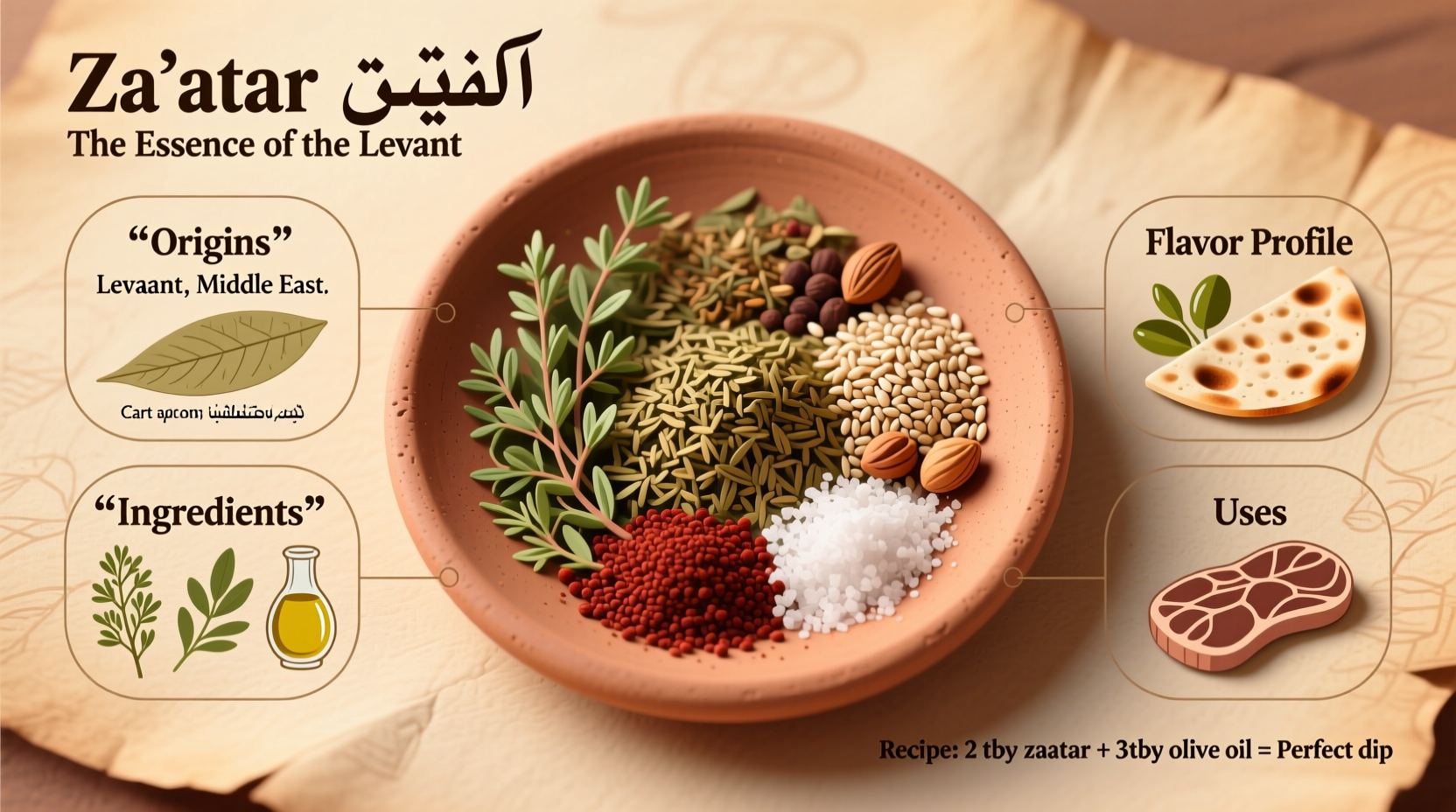
Za'atar refers both to a wild herb—Origanum syriacum, also known as biblical hyssop or Lebanese oregano—and to the spice mixture named after it. The blend typically combines dried herbs, toasted sesame seeds, sumac, salt, and sometimes additional spices like cumin or coriander. While recipes vary by region and family, the core identity of za'atar lies in its synergy of tartness (from sumac), nuttiness (from sesame), and herbal resonance (from thyme, oregano, or marjoram).
The word “za’atar” appears in historical texts dating back to medieval Arab physicians, who praised its medicinal properties. Today, it remains a daily staple in many Middle Eastern households, commonly mixed with olive oil and spread on warm bread for breakfast. Its popularity has surged globally, appearing in gourmet kitchens, health food stores, and fusion dishes—from za’atar hummus to spiced popcorn.
Key Characteristics
Za'atar’s sensory profile is layered and harmonious, balancing acidity, aroma, and texture. Below is a breakdown of its defining qualities:
| Characteristic | Description |
|---|---|
| Flavor Profile | Earthy, tangy, slightly floral; dominated by herbal notes (thyme/oregano), citrus-punch from sumac, and a subtle nutty richness from sesame seeds. |
| Aroma | Fragrant and herbaceous, with top notes of pine-like thyme and a faint lemony sharpness from sumac. |
| Color & Form | Olive-green to brownish powder with visible specks of sesame seeds and coarsely ground herbs. |
| Heat Level | Non-spicy; no chili heat. Warmth comes from herbal intensity, not capsaicin. |
| Culinary Function | Seasoning agent, condiment base, rub for proteins, flavor enhancer for oils and dips. |
| Shelf Life | 6–12 months when stored in an airtight container away from light and moisture. Degrades faster if exposed to humidity. |
Practical Usage: How to Use Za'atar in Cooking
Za'atar shines in simplicity. A small amount imparts deep flavor without overwhelming a dish. Its versatility spans breakfast, lunch, dinner, and even snacks. Here are practical ways to incorporate za'atar into everyday cooking:
1. Za'atar-Olive Oil Dip (Dukkah-Style)
Mix 2 tablespoons of za'atar with ¼ cup extra-virgin olive oil. Serve alongside warm pita, labneh, or fresh vegetables. This is a traditional Levantine breakfast spread, often eaten with khubz (Arabic flatbread). For added texture, sprinkle with extra sesame seeds or crushed walnuts.
2. Seasoning for Roasted Vegetables
Toss root vegetables (carrots, potatoes, beets) or cruciferous types (cauliflower, broccoli) with olive oil, salt, and 1–2 teaspoons of za'atar before roasting at 400°F (200°C). The sumac prevents browning while enhancing natural sweetness, and the herbs infuse the surface with aromatic complexity.
3. Rub for Meats and Fish
Create a dry rub by combining za'atar with sea salt and black pepper. Apply generously to chicken thighs, lamb chops, or white fish fillets before grilling or pan-searing. The blend forms a flavorful crust that seals in juices. For poultry, pair with lemon juice to amplify the citrus notes.
4. Flavor Boost for Grains and Legumes
Stir 1 teaspoon of za'atar into cooked quinoa, bulgur, or lentils. It elevates simple grain bowls and complements chickpeas in salads. Try mixing it into tabbouleh for an intensified herbal character.
5. Infused Za'atar Oil
Heat ½ cup olive oil gently with 3 tablespoons of za'atar over low heat for 5 minutes. Strain and store in a sealed bottle. Use as a finishing oil for soups, hummus, grilled meats, or drizzled over avocado toast. Shelf-stable for up to two weeks refrigerated.
6. Baked Goods and Flatbreads
Incorporate za'atar directly into doughs or sprinkle on top before baking. Manakeesh bi za'atar—a popular street food in Beirut—is made by spreading za'atar paste over flattened dough and baking until crisp. At home, brush naan or focaccia with olive oil and dust heavily with za'atar before baking.
Pro Tip: To maximize aroma, lightly toast za'atar in a dry skillet for 30–60 seconds before use. This releases essential oils and intensifies flavor, especially effective when using the spice in dry rubs or grain dishes.
Variants & Types of Za'atar
No single \"authentic\" za'atar recipe exists—its composition reflects geography, climate, and household tradition. Three primary variants dominate regional usage:
- Lebanese Za'atar: Features a high proportion of sumac, giving it a bright red hue and pronounced tartness. Often includes dried thyme and marjoram, with generous sesame seeds.
- Syrian Za'atar: Typically darker and less acidic, with more oregano and minimal or no sumac. Sometimes includes a touch of cumin for warmth.
- Palestinian/Jordanian Za'atar: Balances thyme, sumac, and sesame equally. Known for using wild-harvested Origanum syriacum, which imparts a more medicinal, camphorous note prized by connoisseurs.
Commercial blends may include fillers like wheat flour or additional spices such as coriander or fennel seed. Artisanal versions prioritize whole ingredients and balanced ratios. When purchasing, check labels: authentic za'atar should list only herbs, sumac, sesame, and salt.
There are also specialty forms:
- Dried Herb-Only Za'atar: Contains just the ground leaves (thyme, oregano, etc.), used when sumac’s acidity isn’t desired.
- Pre-Mixed Za'atar Paste: Sold in jars, already blended with oil. Convenient but shorter shelf life; best refrigerated.
- Smoked Za'atar: A modern twist where smoked salt or liquid smoke is added for a barbecue-like depth.
Comparison with Similar Ingredients
Za'atar is frequently confused with other herb-based or Middle Eastern seasonings. Understanding distinctions ensures proper usage.
| Ingredient | How It Differs from Za'atar |
|---|---|
| Herbes de Provence | A French blend of lavender, thyme, rosemary, and savory. Lacks sumac and sesame; more floral and pine-forward. Not interchangeable due to absence of tartness and nuttiness. |
| Sumac Alone | Only provides the sour element of za'atar. Using sumac alone misses the herbal and textural components. Can substitute *part* of za'atar when acidity is needed. |
| Dukkah | An Egyptian nut-and-seed blend with hazelnuts, sesame, coriander, and cumin. Crunchier texture, no sumac or dominant herb. Used similarly as a dipper but lacks za'atar’s tang. |
| Advieh (Iranian Spice Mix) | Sweeter and warmer, often containing cinnamon, cardamom, and rose petals. Used in rice and stews. No herbal or acidic component like za'atar. |
| Thyme (Single Herb) | Offers only one dimension of za'atar. Can stand in if combined with lemon zest (for sumac) and toasted sesame seeds. |
\"Za'atar is the soul of Levantine home cooking. It’s not just seasoning—it’s memory, ritual, and comfort.\" — Anisa Soubra, Lebanese culinary historian
Practical Tips & FAQs
Can I make my own za'atar at home?
Yes—and doing so yields superior flavor. Combine:
- ¼ cup dried thyme (or a mix of thyme and oregano)
- 2 tablespoons sumac
- 2 tablespoons toasted sesame seeds
- 1 teaspoon sea salt
- (Optional) ½ teaspoon ground cumin or marjoram
Mix thoroughly and store in an airtight jar. Toasting the sesame seeds beforehand enhances nuttiness.
Is za'atar spicy or hot?
No. Despite its bold flavor, za'atar contains no chili peppers. The sensation of \"warmth\" comes from herbal intensity and sesame richness, not heat.
Is za'atar gluten-free?
Naturally yes—but some commercial blends add flour as a filler to reduce cost. Always verify the label if gluten sensitivity is a concern.
What are common substitutions?
If za'atar is unavailable:
- Mix 1 tsp dried thyme + ½ tsp sumac + ½ tsp toasted sesame seeds + pinch of salt.
- Use herbes de Provence + lemon zest + sesame seeds (avoid if lavender is prominent).
- In a pinch, omit entirely and finish with lemon juice and oregano—though this won't replicate the full profile.
How should I store za'atar?
Keep in a cool, dark place in an airtight glass jar. Avoid exposure to steam, sunlight, or temperature fluctuations. Properly stored, it retains potency for up to a year. Replace when the aroma fades or color dulls.
Is za'atar healthy?
Traditional za'atar has several beneficial components:
- Sumac: Rich in antioxidants and vitamin C; studied for anti-inflammatory effects.
- Thyme: Contains thymol, a natural antiseptic with antimicrobial properties.
- Sesame Seeds: Source of healthy fats, calcium, and magnesium.
While not a cure-all, incorporating za'atar into plant-forward meals supports a nutrient-dense diet.
What dishes pair best with za'atar?
Top recommendations include:
- Lemon-roasted chicken
- Grilled halloumi with tomatoes
- Labneh-stuffed cherry peppers
- Roasted cauliflower tacos
- Olive oil cake with yogurt glaze (sprinkled on top)
Can I use za'atar in sweet dishes?
Rarely, but creatively—yes. Modern chefs have experimented with za'atar in shortbread, olive oil cakes, and fruit salads (e.g., watermelon with feta and a dusting of za'atar). The key is restraint: use ⅛ to ¼ teaspoon to avoid overpowering sweetness.
Storage Checklist:
✔ Store in opaque glass jar
✔ Keep away from stove or dishwasher
✔ Label with purchase/make date
✔ Refresh every 9–12 months for peak flavor
Summary & Key Takeaways
Za'atar is a multifaceted spice blend rooted in Levantine tradition, combining dried herbs, sumac, sesame seeds, and salt into a uniquely balanced seasoning. Its flavor is earthy, tangy, and subtly nutty—distinct from similar herb mixes like herbes de Provence or dukkah. Far from a niche ingredient, za'atar integrates seamlessly into modern cooking: as a rub, dip, garnish, or infusion.
Key points to remember:
- Za'atar varies by region—Lebanese versions are tangier, Syrian ones earthier.
- It contains no heat; its boldness comes from herbal and sour elements.
- Homemade blends outperform most store-bought versions in freshness and balance.
- Always check labels for fillers like flour in commercial products.
- Pair with olive oil, lemon, grains, vegetables, and proteins for maximum impact.
- Store properly to preserve volatile oils and extend shelf life.
More than a spice, za'atar connects eaters to centuries of agricultural heritage and communal dining. Whether sprinkled on avocado toast or rubbed onto lamb, it delivers immediate depth and cultural resonance. For anyone exploring global flavors, mastering za'atar is a small step with expansive rewards.
Try This Tonight: Slice a ripe avocado in half, remove the pit, drizzle generously with olive oil, and cover the surface with za'atar. Add flaky salt and cracked pepper. Eat with a spoon or scoop with pita chips—a two-minute dish that tastes deeply intentional.




 浙公网安备
33010002000092号
浙公网安备
33010002000092号 浙B2-20120091-4
Comments
No comments yet. Why don't you start the discussion?