
For many professionals, wearing perfume is more than a personal choice—it’s part of their daily presence. A well-chosen scent can boost confidence, leave a memorable impression in meetings, and even influence mood during long work hours. Yet few things are more frustrating than applying your favorite fragrance in the morning only to realize by mid-afternoon that it has completely faded. The truth is, not all perfumes behave the same way on every skin type or environment, and longevity isn’t just about brand prestige. With the right knowledge and habits, you can significantly extend how long your perfume lasts—ensuring you stay subtly scented from your first meeting to your final email.
The Science Behind Scent Longevity
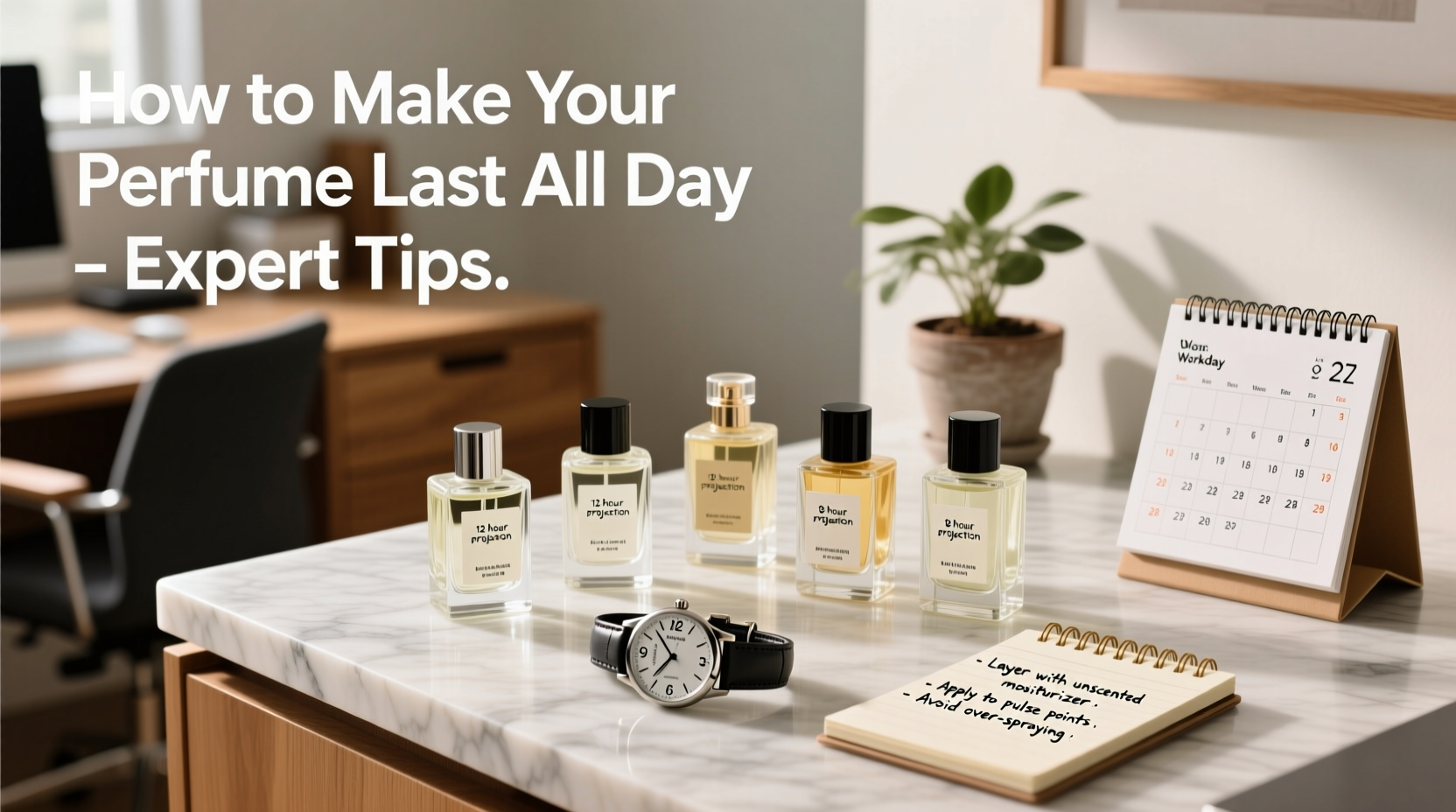
Perfume longevity depends on a combination of chemical composition, concentration, and interaction with your body chemistry. Fragrances are typically categorized by their concentration of aromatic compounds:
- Eau de Cologne (EDC): 2–5% oil concentration – lasts 2–3 hours
- Eau de Toilette (EDT): 5–10% – lasts 3–5 hours
- Eau de Parfum (EDP): 10–15% – lasts 5–8 hours
- Parfum/Extrait: 15–30% – lasts 6–12+ hours
The higher the concentration of essential oils, the longer the scent will linger on your skin. However, concentration alone doesn’t guarantee all-day wear. Factors like humidity, body temperature, and skincare routines also play crucial roles. For instance, dry skin evaporates fragrance faster than hydrated skin because oils help anchor scent molecules. Similarly, synthetic musks and base notes like amber, sandalwood, or vanilla tend to persist longer than volatile top notes such as citrus or green tea.
“Fragrance longevity begins at the formulation level, but its real-world performance hinges on how you apply and care for it.” — Dr. Lena Moretti, Cosmetic Chemist & Perfume Formulation Specialist
How Skin Type Affects Perfume Duration
Your skin isn’t neutral ground for perfume—it actively interacts with fragrance compounds. Understanding your skin type helps explain why a scent might fade quickly on you but last all day on someone else.
| Skin Type | Effect on Perfume | Tips for Better Longevity |
|---|---|---|
| Dry | Absorbs scent quickly; lacks natural oils to hold fragrance | Moisturize before applying; use unscented lotion or petroleum jelly on pulse points |
| Oily | Holds scent longer due to natural sebum acting as a fixative | Apply lightly; over-application may become overwhelming |
| Normal/Combination | Moderate staying power | Balanced hydration supports consistent performance |
| Sensitive | May react poorly to alcohol-heavy formulas | Opt for oil-based or alcohol-free perfumes; patch test first |
If you have dry skin, consider using a fragrance layering strategy. Start with an unscented body cream or a matching scented moisturizer from the same fragrance line. This creates a “scent base” that slows evaporation and deepens projection.
Strategic Application Techniques for All-Day Wear
Where and how you apply perfume dramatically affects its lifespan. Most people spray once on the wrist and call it a day, but optimal distribution ensures sustained release throughout the day.
Best Pulse Points for Long-Lasting Scent
- Wrists: Warm and vascular, but prone to friction from typing and handwashing
- Neck (below ears and sides): Close to blood flow; less exposed to abrasion
- Behind knees: Heat rises, carrying scent upward; protected from rubbing
- Chest (just below collarbone): Warm area with good airflow; subtle diffusion
- Inside elbows: Sheltered spot that retains heat and minimizes contact
Avoid rubbing wrists together after spraying—a common habit that breaks down delicate top notes and accelerates evaporation.
Layering for Extended Performance
Fragrance layering involves using multiple products from the same scent family—like body wash, lotion, and perfume—to build a deeper, longer-lasting olfactory profile. This method works especially well with EDPs and parfums, where consistency across layers enhances sillage (the trail of scent left behind).
- Start with a matching shower gel or soap in the morning.
- Apply a generous layer of unscented or coordinating body lotion while skin is still damp.
- Spray perfume directly onto pulse points—never into the air to “walk through.”
- Reapply lightly to hair or clothing if needed later in the day.
Environmental and Lifestyle Factors That Impact Longevity
Your office environment, clothing choices, and daily routine can either support or sabotage your fragrance’s staying power.
In climate-controlled offices, air conditioning tends to suppress scent projection. Conversely, overheated rooms increase perspiration, which can distort fragrance or cause it to dissipate unevenly. If you commute via public transit or walk in polluted areas, airborne particles can degrade volatile top notes before they fully develop.
Clothing material matters too. Natural fibers like cotton and wool absorb and retain fragrance better than synthetic fabrics such as polyester, which may repel or trap odors inconsistently.
Workday Habits That Shorten Scent Life
- Washing hands frequently (removes scent from wrists)
- Using heavily scented hand sanitizers (competes with perfume)
- Sitting under strong HVAC vents (disrupts scent halo)
- Carrying leather bags or wearing leather jackets (absorbs fragrance)
To counteract these factors, consider targeted reapplication strategies. Keep a travel-sized rollerball or mini spray in your desk drawer for a midday refresh. Focus on less-exposed areas like behind the knees or the nape of the neck to avoid overuse.
“I keep a small atomizer filled with my signature scent in my tote. A quick spritz after lunch keeps me feeling polished without overpowering colleagues.” — Sarah Tran, Marketing Executive, Toronto
Choosing the Right Fragrance for Workday Wear
Not all perfumes are designed for endurance. When selecting a fragrance for professional settings, prioritize compositions with strong base notes and moderate sillage.
Fragrance Families Known for Longevity
- Oriental: Rich, warm blends with vanilla, spices, and resins (e.g., Shalimar by Guerlain)
- Woody: Cedar, sandalwood, vetiver—earthy and resilient (e.g., Terre d’Hermès)
- Amber: Deep, slightly sweet, often with labdanum or benzoin (e.g., Tom Ford Black Orchid)
- Chypre: Classic structure with bergamot top, oakmoss base (e.g., Chanel Cristalle)
Light florals or fresh citrus scents may be refreshing but often fade within hours. Reserve them for weekends or short outings unless layered effectively.
Storage and Maintenance: Preserving Your Perfume’s Potency
Even the best-applied perfume won’t last if the bottle itself is compromised. Exposure to light, heat, and oxygen degrades fragrance compounds over time.
Store perfumes in a cool, dark place—ideally a drawer or cabinet away from windows and bathrooms. Avoid leaving bottles in cars or near radiators. Once opened, most perfumes remain stable for 1–3 years, though parfums can last up to five years when stored properly.
Keep the cap tightly sealed to minimize oxidation. Sprayer nozzles can clog or leak if left exposed, so wipe them gently after use.
Do’s and Don’ts of Perfume Storage
| Do’s | Don’ts |
|---|---|
| Store in original box to block light | Leave bottle in direct sunlight |
| Keep in a bedroom drawer or closet | Store in humid bathroom cabinets |
| Use within 3 years of opening | Shake the bottle vigorously |
| Rotate seasonal scents to preserve freshness | Transfer to decorative decanters without UV protection |
Step-by-Step Guide: Maximizing Scent Through the Workday
Follow this practical timeline to ensure your fragrance stays present and appropriate from morning to evening:
- 7:00 AM – Shower and Moisturize: Use a neutral or matching body wash. Pat skin dry and apply unscented lotion to pulse points.
- 7:15 AM – Apply Perfume: Spray EDP or parfum on neck, chest, and behind knees. Let dry naturally—do not rub.
- 8:30 AM – Arrive at Work: Avoid reapplying unless necessary. Let the scent settle into its heart phase.
- 12:30 PM – Midday Refresh (Optional): Mist lightly on hair or clothing. Avoid wrists if you’ve been washing hands.
- 3:00 PM – Check Subtlety: Ask a trusted colleague if they notice your scent. It should be detectable only when close.
- 6:00 PM – End of Day: If attending evening events, reapply minimally to maintain elegance without fatigue.
This approach balances longevity with professionalism, ensuring you remain confidently scented without overwhelming shared spaces.
Frequently Asked Questions
Why does my perfume disappear after two hours?
This could be due to low concentration (e.g., EDT instead of EDP), dry skin, frequent handwashing, or environmental factors like air conditioning. Try switching to a higher-concentration fragrance and moisturizing before application.
Can I make a light fragrance last longer?
Yes. Layer with a matching body lotion, apply to clothes or hair, and reapply strategically. However, lighter scents naturally evolve faster and may never match the staying power of oriental or woody fragrances.
Is it okay to wear strong perfume to the office?
Proceed with caution. In shared workspaces, strong sillage can trigger headaches or allergies. Opt for moderate projection and apply sparingly. When in doubt, choose linear scents that don’t bloom aggressively.
Final Thoughts: Make Your Scent Work as Hard as You Do
A lasting fragrance isn’t just about luxury—it’s about intentionality. By understanding your skin, choosing wisely, and applying strategically, you can maintain a refined olfactory presence throughout your busiest days. The goal isn’t to announce your arrival with a cloud of scent, but to leave a quiet, confident impression that endures. Whether you're presenting to clients, collaborating in meetings, or wrapping up late tasks, your perfume should complement your professionalism, not compete with it.




 浙公网安备
33010002000092号
浙公网安备
33010002000092号 浙B2-20120091-4
Comments
No comments yet. Why don't you start the discussion?