
Savory spices are the quiet architects of flavor in global cuisines—working behind the scenes to deepen taste, enrich aroma, and lend complexity to dishes without dominating with heat or sweetness. Unlike sweet or pungent spices, savory ones don’t announce themselves with intensity; instead, they build foundation, balance, and body. Understanding what makes a spice “savory” is essential for any cook aiming to create layered, satisfying meals. It’s not just about saltiness or earthiness—it’s about how certain compounds interact with our taste receptors to evoke richness, meatiness, and umami. This article explores the science, sensory profile, and culinary applications of savory spices, offering practical guidance on selecting, combining, and using them effectively in both home and professional kitchens.
Definition & Overview: What Is a Savory Spice?
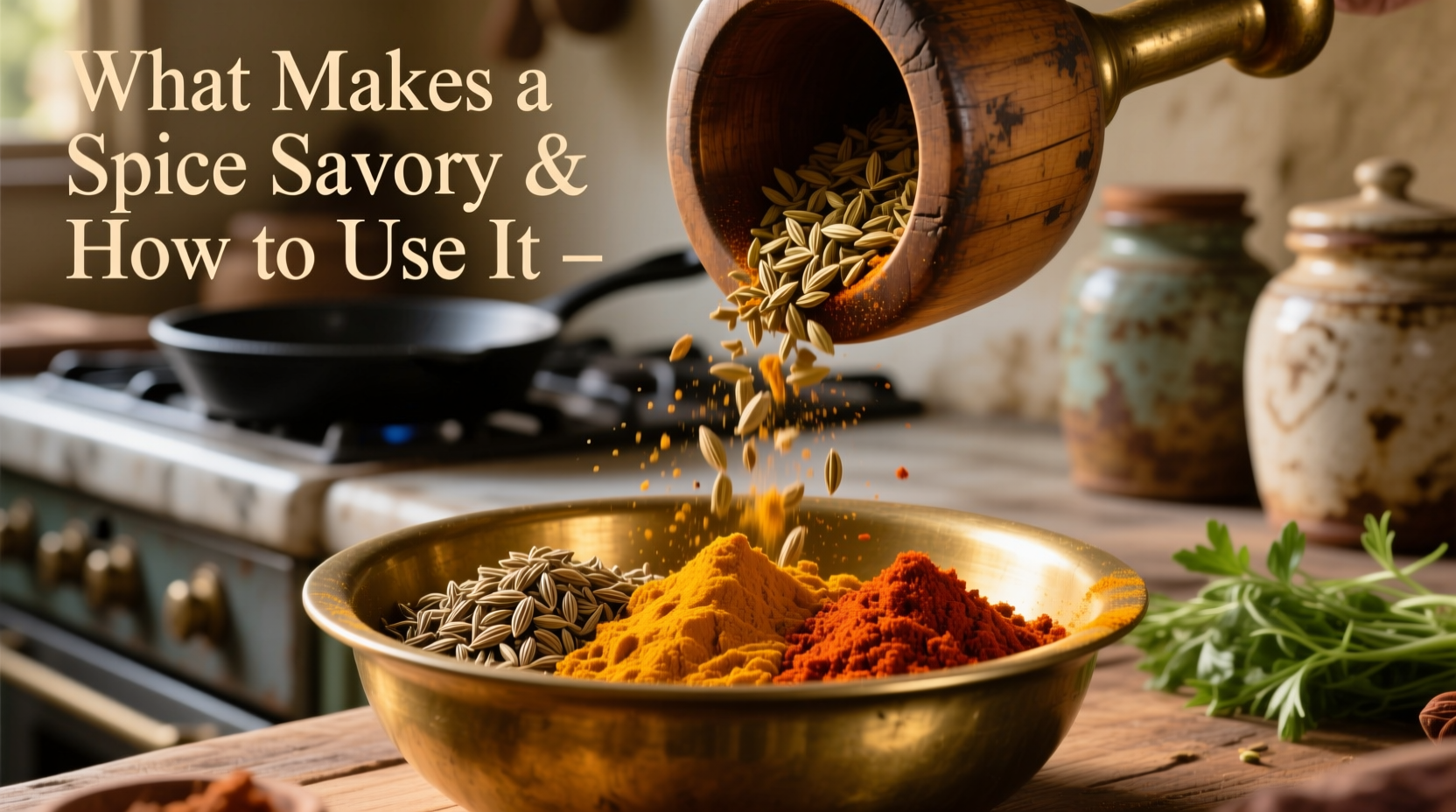
A savory spice is one that contributes depth, warmth, and umami rather than sweetness, sharp acidity, or pronounced heat. These spices often originate from seeds, bark, roots, or dried herbs known for their grounding, earthy qualities. While \"savory\" can describe an overall flavor profile, in the context of spices, it refers specifically to those that enhance the fifth taste—umami—and support the development of complex, long-lasting flavors in food.
Savory spices are typically low in volatile oils that produce bright aromas (like citrusy coriander or floral cardamom) and higher in compounds such as pyrazines, sulfur-containing molecules, and Maillard reaction byproducts, which form during drying or roasting. Many are staples in spice blends like herbes de Provence, garam masala, and Chinese five-spice, where their role is structural rather than showy.
Common examples include cumin, fenugreek, smoked paprika, turmeric, mustard seed, and ajwain. While some have subtle bitterness or mild heat, their primary function is to ground a dish, much like bass notes in music. They’re found across cultures—from Mediterranean oregano to Japanese shiso, Ethiopian mitmita to Mexican epazote—each contributing regional nuance while fulfilling a universal need for depth.
Key Characteristics of Savory Spices
What sets savory spices apart isn’t just taste—it’s a combination of chemical composition, sensory impact, and functional behavior in cooking. Below is a breakdown of defining traits:
| Characteristic | Description |
|---|---|
| Flavor Profile | Earthy, nutty, roasted, slightly bitter, meaty, or brothy; rarely sweet or fruity. |
| Aroma | Deep, warm, sometimes musty or smoky; develops fully when heated in oil or dry-roasted. |
| Color/Form | Often brown, tan, amber, or deep red; available whole, cracked, or ground. |
| Heat Level | Generally low to moderate; capsaicin-free unless blended with chilies. |
| Culinary Function | Bases for curries, stews, rubs; builds background flavor, enhances protein-rich dishes. |
| Shelf Life | Ground: 6–12 months; whole: up to 3 years if stored properly. |
| Umami Contribution | High in glutamates or synergistic compounds that amplify savory perception. |
The most effective savory spices engage multiple senses simultaneously. For instance, cumin delivers a toasted aroma when bloomed in oil, a gritty texture when used whole, and a lingering warmth on the palate—all contributing to its reputation as a foundational savory agent.
Practical Usage: How to Use Savory Spices in Cooking
Using savory spices effectively requires understanding timing, technique, and synergy. Their power lies not in isolation but in integration—with fats, proteins, other spices, and cooking methods.
Bloom in Fat for Maximum Depth
One of the most important techniques is blooming (or tempering): heating whole or ground spices briefly in oil or ghee. This process dissolves fat-soluble flavor compounds and mellows raw bitterness. For example, heating cumin seeds in oil until they crackle releases aromatic terpenes and creates a base for dals, rice, or sauces.
“Bloomed spices aren’t just flavored oil—they’re flavor carriers. The lipid medium distributes compounds evenly throughout a dish, ensuring every bite benefits from the spice’s full profile.” — Chef Anika Patel, Culinary Instructor at The Institute of Global Flavors
Dry-Roast Whole Spices Before Grinding
Dry-roasting intensifies savory notes through controlled Maillard reactions. Toast cumin, coriander, or fenugreek seeds over medium heat for 2–3 minutes until fragrant. Cool before grinding to preserve volatile oils. This method transforms bland powders into rich, resonant seasonings.
Layer in Stages for Complexity
Add savory spices at different points in cooking:
- Early stage: Whole spices in hot oil to infuse the cooking medium.
- Middle stage: Ground versions added with aromatics (onion, garlic, ginger).
- Late stage: A final dusting of smoked paprika or sumac for brightness.
Pair with Umami-Rich Ingredients
Savory spices amplify umami when combined with naturally glutamate-rich foods:
- Cumin + lentils
- Turmeric + mushrooms
- Fenugreek + tomatoes
- Mustard seed + aged cheese
Pro Tip: To rescue a flat-tasting stew or soup, bloom ½ tsp cumin and ¼ tsp fenugreek in a spoon of oil, then stir into the pot. This adds instant depth without overpowering.
Use in Marinades and Dry Rubs
Savory spices excel in meat, poultry, tofu, and vegetable rubs. Combine ground coriander, smoked paprika, black pepper, and a pinch of clove for a universal roast seasoning. The spices adhere well and form a crust that locks in moisture while developing complex browning.
Balance Bitterness with Fat or Sweetness
Some savory spices—like fenugreek or ajwain—can turn bitter if overused. Counteract this by pairing with fat (olive oil, yogurt) or natural sweetness (caramelized onions, roasted carrots). For instance, a traditional Indian sambar uses tamarind (sour), jaggery (sweet), and fenugreek (bitter) in precise balance.
Variants & Types of Savory Spices
Savory spices come in various forms, each suited to specific applications. Choosing the right form affects potency, dispersion, and shelf life.
| Type | Examples | Best Uses | Notes |
|---|---|---|---|
| Whole Seeds | Cumin, mustard, fennel, ajwain | Tempering, pickling, slow-cooked dishes | Longest shelf life; release flavor gradually |
| Ground Powder | Turmeric, paprika, curry powder | Sauces, marinades, quick sautés | More immediate flavor; loses potency faster |
| Smoked Variants | Smoked paprika, chipotle powder | Grilling, barbecue, bean dishes | Adds charred, campfire-like depth |
| Dried Herbs | Oregano, thyme, marjoram, sage | Rubs, soups, stuffing, tomato sauces | Herbal earthiness; rehydrate during cooking |
| Fermented/Processed | Fermented black garlic, shrimp paste, miso | Asian pastes, dipping sauces, umami bombs | Intensely savory; use sparingly |
For maximum control, buy whole spices and grind as needed. A dedicated coffee grinder ensures fine, consistent powder without cross-contamination.
Comparison with Similar Ingredients
Savory spices are often confused with salty, umami condiments, or bitter herbs. Understanding distinctions prevents misuse and improves recipe outcomes.
| Savory Spice | Commonly Confused With | Key Difference |
|---|---|---|
| Cumin | Caraway | Cumin is warmer, earthier; caraway has a sharper, anise-like note |
| Fenugreek | Fennel Seed | Fenugreek is nutty and slightly bitter; fennel is sweet and licorice-forward |
| Smoked Paprika | Chili Powder | Smoked paprika emphasizes smoke and color; chili powder focuses on heat |
| Turmeric | Saffron | Turmeric offers earthiness and yellow hue; saffron brings floral notes and golden luxury |
| Mustard Seed | Poppy Seed | Mustard seeds pop and release pungency; poppy seeds add crunch and mild nuttiness |
Another frequent confusion: savory vs. umami. While all umami ingredients are savory, not all savory spices are high in glutamates. True umami boosters—like dried shiitake, kombu, or fermented soy—directly stimulate glutamate receptors. Savory spices often enhance umami indirectly by rounding out flavor profiles and reducing perceived harshness.
Practical Tips & FAQs
How do I know if my savory spices are still potent?
Check aroma and color. Fresh ground cumin should smell warm and nutty, not dusty or flat. If a spice lacks scent or appears faded, it has likely oxidized and lost flavor. Perform a “toast test”: heat ½ tsp in a dry pan for 30 seconds. If no fragrance emerges, replace it.
Can I substitute one savory spice for another?
Yes, but cautiously. Substitutions depend on the dominant note:
- Replace cumin with coriander + pinch of smoked paprika
- Swap fenugreek leaves (kasuri methi) with dried sage (use half)
- Use regular paprika if smoked is unavailable—but add a drop of liquid smoke
Are savory spices healthy?
Many offer documented benefits:
- Cumin: Aids digestion, contains iron
- Turmeric: Anti-inflammatory due to curcumin
- Fenugreek: May help regulate blood sugar
- Mustard seed: Rich in selenium and omega-3s
Do savory spices work in vegetarian and vegan cooking?
Essential. Without animal proteins, plant-based dishes rely on savory spices to mimic meaty depth. Use smoked paprika in vegan “bacon,” turmeric in golden milk, or toasted cumin in lentil burgers. They provide the backbone that prevents vegetarian food from tasting bland or one-dimensional.
What’s the best way to store savory spices?
Keep in airtight glass jars, away from light, heat, and moisture. Store in a dark cupboard, not above the stove. Whole spices last significantly longer—up to three years—while ground versions degrade within a year. Label jars with purchase dates.
Storage Checklist:
- Use opaque or amber jars for light-sensitive spices (e.g., paprika)
- Buy small quantities of ground spices
- Freeze whole spices for long-term storage (up to 4 years)
- Never store near dishwasher, oven, or sink
How much should I use?
Start conservatively. A general guideline:
- Whole seeds: ½–1 tsp per serving
- Ground spices: ¼–½ tsp per serving
- Strong spices (fenugreek, asafoetida): pinch to ⅛ tsp
Summary & Key Takeaways
Savory spices are indispensable tools for building depth, complexity, and satisfaction in cooking. They are defined not by a single trait but by a constellation of characteristics: earthy flavor, warm aroma, umami enhancement, and compatibility with slow, layered preparation methods. From cumin to smoked paprika, these ingredients transform simple ingredients into memorable meals.
The key to mastering savory spices lies in technique: blooming in fat, dry-roasting, layering during cooking, and balancing with complementary flavors. Their versatility spans cuisines and diets, making them equally vital in a Moroccan tagine, an Italian ragù, or a vegan mushroom stew.
Understanding the differences between types—whole vs. ground, fresh vs. stale, smoked vs. sweet—empowers cooks to make informed choices. Proper storage extends potency, while mindful substitutions maintain integrity when favorites are unavailable.
In a world increasingly drawn to bold heat or sugary indulgence, savory spices remind us of the power of subtlety. They don’t shout—they resonate. And when used with intention, they elevate everyday cooking into something profoundly nourishing.
Next time you reach for salt, consider adding a savory spice instead. A pinch of toasted cumin, a dusting of smoked paprika, or a crumble of dried oregano can deepen flavor without increasing sodium. Start small, observe the transformation, and let your palate guide you toward richer, more balanced meals.




 浙公网安备
33010002000092号
浙公网安备
33010002000092号 浙B2-20120091-4
Comments
No comments yet. Why don't you start the discussion?