
Books accumulate over time—gifts from friends, outdated textbooks, novels read once and never again. While some become cherished keepsakes, many sit forgotten on shelves, gathering dust. Rather than letting them languish or tossing them into landfill, there are meaningful ways to give old books a second life. Whether through donation, resale, or creative reuse, each option offers environmental, social, and sometimes financial benefits. This guide explores how to decide what to do with your surplus books, offering practical strategies, real-world insights, and inspiration for transforming your literary leftovers.
Assess Your Book Collection
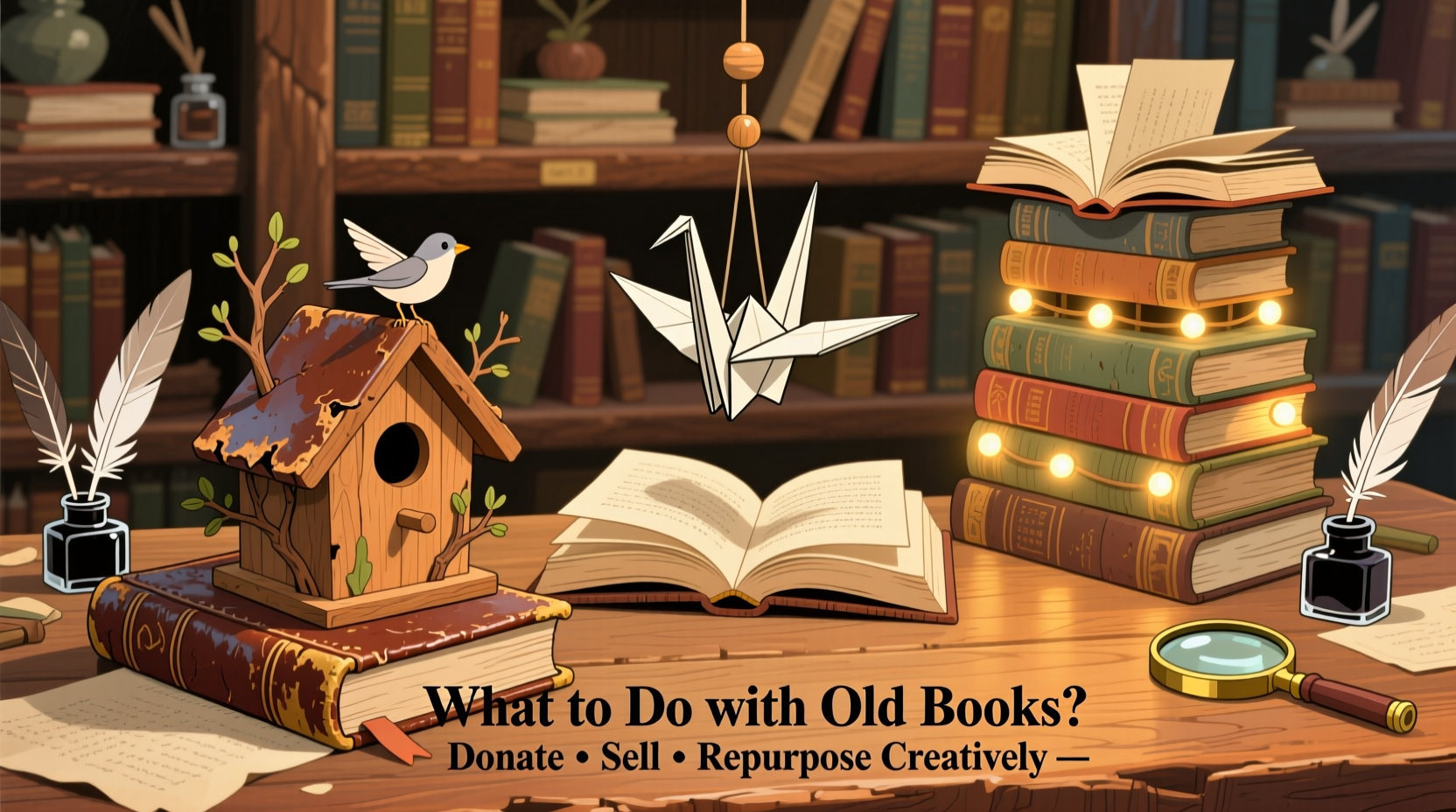
Before deciding what to do with old books, evaluate their condition, value, and relevance. Not all books are suitable for every path. A water-damaged novel might not be resalable but could inspire art. An outdated textbook may no longer serve students but could educate in a different context. Begin by sorting your books into categories:
- Excellent condition: Clean, intact covers, no writing or damage—ideal for donation or sale.
- Fair condition: Minor wear, underlining, or dog-eared pages—suitable for donation or repurposing.
- Poor condition: Mold, torn pages, strong odors—best for recycling or artistic projects.
- Rare or collectible: First editions, signed copies, out-of-print titles—potentially valuable for resale.
Donate Books to Make an Impact
Donating books supports education, literacy, and community access to knowledge. Libraries, schools, shelters, and nonprofit organizations often welcome book donations, especially when they align with their audience’s needs.
Consider these recipients:
- Public libraries: Many accept gently used books for their annual sales or reading programs.
- Schools and daycares: Children’s books, educational texts, and picture books are always in demand.
- Literacy nonprofits: Organizations like Room to Read or Books for Africa ship donated books to underserved communities worldwide.
- Hospitals and nursing homes: Large-print editions and comforting reads can improve patient well-being.
- Prisons and rehabilitation centers: Inmates often rely on donated reading material for education and mental engagement.
“Access to books can change a person’s life trajectory. Every donated book is a chance for someone to learn, escape, or grow.” — Dr. Lena Torres, Director of Community Literacy Initiatives
When donating, ensure books are clean, readable, and appropriate for the recipient. Avoid sending outdated medical or legal texts, heavily annotated volumes, or materials with offensive content.
Donation Checklist
- Call ahead to confirm donation policies
- Clean and sort books by category (children’s, fiction, nonfiction)
- Include popular genres: self-help, classics, cookbooks
- Donate in dry, sealed containers to prevent damage
- Drop off moldy, wet, or insect-infested books
- Assume all charities accept encyclopedias or old textbooks
- Leave donations outside without permission
Sell Old Books for Extra Income
If your books are in good condition or have collector’s appeal, selling them can turn clutter into cash. The key is knowing where and how to sell based on the type and value of the book.
Popular selling platforms include:
- Amazon Marketplace: Best for ISBN-tracked books; requires inventory management.
- eBay: Ideal for rare, vintage, or collectible editions.
- ThriftBooks, BetterWorldBooks: Buy bulk used books; convenient but lower payouts.
- Local bookstores: Some independent shops buy used books, especially academic or niche titles.
- Flea markets or pop-up fairs: Great for vintage paperbacks, art books, or themed collections.
To maximize returns, research comparable listings, take clear photos, and write accurate descriptions noting any flaws or unique features (e.g., “inscribed by author,” “1952 first edition”).
| Book Type | Best Selling Platform | Avg. Return Potential |
|---|---|---|
| Modern bestsellers (hardcover) | Amazon, eBay | Moderate ($5–$15) |
| College textbooks | Campus buyback, Chegg, Amazon | Low to moderate (varies by edition) |
| First editions / Signed copies | eBay, specialty dealers | High ($50–$500+) |
| Vintage children’s books | eBay, Etsy | Low to high (depends on rarity) |
| Mass-market paperbacks | Thrift stores, local sales | Low (often sold in bulk) |
Repurpose Books Creatively
For books beyond repair or lacking resale value, creative repurposing breathes new life into the pages. Artistic transformation turns waste into decor, gifts, or functional items—perfect for crafters, DIY enthusiasts, or anyone seeking sustainable solutions.
Here are five innovative ideas:
- Book folding art: Fold pages into geometric patterns or silhouettes (hearts, trees, words). Requires only a ruler and patience.
- Altered books: Turn old hardcovers into journals, scrapbooks, or mixed-media art by painting, collaging, or embedding objects.
- Functional furniture: Stack and glue sturdy hardcovers to create side tables, stools, or magazine holders.
- Wall decor: Frame open pages with meaningful quotes or illustrations as minimalist wall art.
- Gift enhancements: Use pages to wrap small gifts, line drawers, or craft paper flowers for bouquets.
One Brooklyn-based artist, Mira Chen, transformed 200 discarded library books into a ceiling installation for a community center. “The textures and faded ink told silent stories,” she said. “I wanted people to see beauty in what others had thrown away.” Her project sparked a local book-art workshop series, proving that creativity can amplify impact.
Step-by-Step: Create a Book Page Wreath
- Gather 20–30 pages from softcover books (preferably with uniform size).
- Roll each page tightly from corner to spine, securing the end with glue.
- Arrange rolls in a circular foam wreath base, overlapping slightly.
- Hot-glue each roll in place, working outward in layers.
- Add a ribbon hanger and optional embellishments (dried flowers, beads).
- Display indoors to prevent fading.
Make the Right Choice: A Decision Framework
Choosing between donating, selling, or repurposing depends on several factors. Use this step-by-step evaluation to guide your decisions:
1. Evaluate Condition and Content
Is the book readable? Does it contain outdated or harmful information? Fiction and timeless nonfiction (biographies, philosophy) age better than technical manuals.
2. Determine Market Demand
Search online to see if identical copies are selling. High demand = good candidate for resale. Low demand = consider donation or reuse.
3. Consider Emotional Value
Some books hold sentimental worth—annotated diaries, gifts from loved ones. These may be kept, gifted, or repurposed meaningfully rather than discarded.
4. Assess Time and Effort
Selling takes effort: listing, packaging, shipping. If convenience matters, donation or bulk recycling may be preferable.
5. Align with Personal Values
Do you prioritize sustainability? Repurposing wins. Want to support education? Donate. Need extra cash? Focus on high-value sales.
“Every book has a next chapter. Our job isn’t to throw it away, but to find its next reader—or its next purpose.” — Julian Reed, Sustainable Living Advocate
FAQ: Common Questions About Old Books
Can I recycle old books?
Yes, but standard curbside recycling often excludes books due to mixed materials (glue, covers). Check with local recyclers or use specialized services like Waste Management’s book recycling programs. Paperback books are easier to process than hardcovers, which require cover removal.
What should I do with damaged books?
If too damaged for donation or sale, consider repurposing pages for crafts, using covers as coasters, or composting paper-only sections (remove bindings). Avoid composting glossy or colored pages, which may contain toxic inks.
Are encyclopedias worth anything?
Most pre-internet sets have little monetary value due to outdated information. However, vintage sets (e.g., 1920s Britannica) may interest collectors. Otherwise, donate to art schools for collage material or repurpose pages into notebooks.
Conclusion: Give Old Books New Purpose
Old books don’t need to end up in landfills. Each copy carries potential—to educate a child, earn a few dollars, or become a piece of art. By thoughtfully choosing to donate, sell, or repurpose, you extend the life of literature while supporting sustainability and community well-being. Start small: sort one shelf, research one charity, try one craft. Over time, these actions reduce waste and enrich lives in unexpected ways. The story doesn’t end when you finish reading—it continues with what you choose to do next.




 浙公网安备
33010002000092号
浙公网安备
33010002000092号 浙B2-20120091-4
Comments
No comments yet. Why don't you start the discussion?