
As holiday traditions evolve, so do our expectations for festive decor—especially when it comes to the centerpiece of any living room: the Christmas tree. The final touch, the tree topper, not only completes the look but often becomes a symbol of celebration and family heritage. Yet, with growing awareness around energy use and sustainability, many homeowners are asking a practical question: Can a tree topper be both dazzling and energy-efficient?
The answer is yes—but only if you choose wisely. Not all toppers consume energy equally, and some shine brighter on efficiency metrics than others. From classic stars to modern fiber-optic crowns, the market offers a range of options. The key is identifying which designs combine minimal power draw with maximum visual appeal.
This guide breaks down the most efficient Christmas tree toppers available today, compares their performance, and helps you make a smart, sustainable choice that doesn’t sacrifice style.
Understanding Energy Use in Tree Toppers
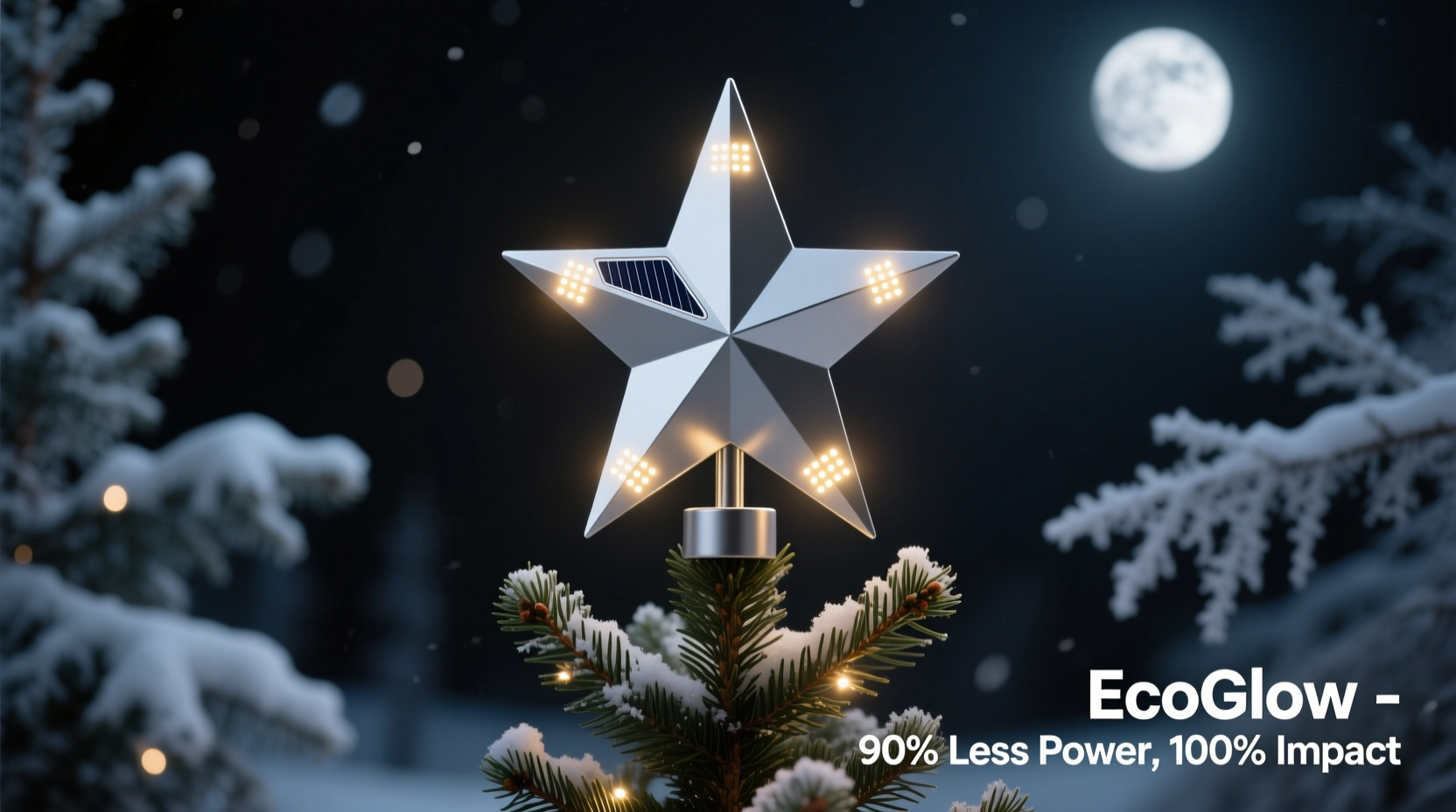
Before evaluating specific types, it’s essential to understand how power consumption works in decorative lighting. Most electric tree toppers rely on LED (light-emitting diode) or incandescent bulbs. The difference between them is significant:
- Incandescent bulbs generate light by heating a filament, making them highly inefficient—up to 90% of the energy they consume is lost as heat.
- LEDs, in contrast, use semiconductors to emit light and require far less wattage. They also last significantly longer and remain cool to the touch.
A typical incandescent mini-light string consumes about 40 watts per 100 bulbs. An equivalent LED string uses just 4–6 watts. When applied to tree toppers—especially those with built-in illumination—this gap directly affects both energy bills and environmental impact.
Modern toppers may also include additional features like motion sensors, color-changing modes, or remote controls. While these enhance aesthetics, they can slightly increase power draw. However, even with added functionality, LED-based designs remain the clear winners in efficiency.
Top 5 Energy-Efficient Christmas Tree Toppers
Not all toppers are created equal. Below is a breakdown of five popular types, ranked by energy efficiency and visual impact.
| Type | Avg. Power Use (Watts) | Lifespan (Hours) | Visual Impact | Best For |
|---|---|---|---|---|
| LED Star with Fiber Optics | 1.5–3 W | 50,000 | ★★★★★ | Modern homes, eco-conscious families |
| Mini LED Angel | 2–4 W | 40,000 | ★★★★☆ | Traditional settings with subtle glow |
| Solar-Powered Crown | 0 W (during use) | Varies by battery | ★★★☆☆ | Outdoor trees, sunlit rooms |
| Non-Illuminated Topper (e.g., fabric star) | 0 W | Indefinite | ★★☆☆☆ | Minimalist decor, low-tech households |
| Incandescent Lighted Topper | 15–25 W | 2,000 | ★★★★☆ | Vintage collectors, occasional use |
From this comparison, the LED star with fiber optics emerges as the top performer—offering brilliance with minimal energy cost. Solar-powered options are intriguing but limited by indoor lighting conditions. Non-illuminated toppers save energy completely but lack the \"wow\" factor many seek.
Why LED Fiber-Optic Toppers Lead the Pack
Fiber-optic toppers use strands of optical fibers connected to a small LED light source. The light travels through the fibers, creating a shimmering effect that mimics twinkling stars. Because only one or two LEDs power the entire display, energy use remains extremely low.
These toppers typically operate at **under 3 watts**, comparable to a nightlight. Despite their low draw, they produce a radiant glow visible across a room, especially in dim lighting. Many models include rotating color modes or gentle pulsing effects, enhancing their presence without increasing power consumption.
Additionally, fiber-optic materials don’t conduct heat, making them safe for trees near curtains or furniture. Their durability also reduces long-term waste—most last over a decade with seasonal use.
“Fiber-optic technology represents the future of decorative lighting. It delivers theatrical effects at a fraction of the energy cost.” — Dr. Lena Pruitt, Lighting Efficiency Researcher, National Sustainable Design Lab
Step-by-Step Guide to Choosing a Low-Power, High-Impact Topper
Selecting the right topper involves more than just picking the shiniest option. Follow this sequence to ensure you get both efficiency and elegance:
- Assess your tree size and location. Larger trees need more prominent toppers. Ensure the topper’s base fits securely on the top branch.
- Determine desired brightness. In a well-lit room, opt for higher-lumen LEDs. In cozy spaces, soft ambient glow may suffice.
- Check power source options. Battery-operated toppers offer flexibility and zero grid draw. USB-rechargeable models reduce battery waste.
- Prioritize LED-based designs. Avoid any product listing “incandescent” or “halogen” bulbs unless for rare, short-term displays.
- Look for energy certifications. Labels like ENERGY STAR or “UL Listed for LED Decorations” indicate tested efficiency and safety.
- Test before committing. Plug in sample models during daylight to evaluate brightness and color quality without glare.
Real-World Example: The Green Family’s Efficient Holiday Display
The Greens, a family of four in Portland, Oregon, committed to reducing their holiday energy footprint three years ago. Previously, their 7-foot tree featured a vintage angel with incandescent bulbs drawing 20 watts—left on for 8 hours nightly over 30 days, totaling 4.8 kWh per season.
They switched to a 2.5-watt LED fiber-optic star with color cycling. The new topper uses just 0.6 kWh over the same period—a 87.5% reduction. Despite using less power, family members and guests consistently compliment the upgraded “magical” effect.
“We expected to compromise on looks,” said Maria Green, “but the opposite happened. It’s brighter, safer, and we don’t worry about leaving it on accidentally.”
Their experience reflects a broader trend: efficiency no longer means dullness. In fact, advanced lighting tech often enhances aesthetic quality.
Common Myths About Energy-Efficient Toppers
Misconceptions persist about low-power decorations. Addressing them helps clarify real performance:
- Myth: Low wattage means low visibility.
Reality: Modern LEDs are engineered for directional brightness. A 2-watt LED topper can appear brighter than a 15-watt incandescent due to focused output. - Myth: All LED toppers are the same.
Reality: Quality varies. Cheaper models may flicker or have uneven coloring. Invest in reputable brands with consistent lumen ratings. - Myth: Battery-powered = weak performance.
Reality: Many battery-operated toppers use high-efficiency micro-LEDs lasting 100+ hours on AA batteries, with no cords to manage.
Checklist: Selecting Your Ideal Tree Topper
Use this checklist before purchasing to ensure your choice balances efficiency and impact:
- ✅ Uses LED or fiber-optic lighting (not incandescent)
- ✅ Consumes less than 5 watts (verify on packaging)
- ✅ Offers adjustable brightness or timer settings
- ✅ Fits securely on your tree’s top branch
- ✅ Includes safety certification (e.g., UL, CE)
- ✅ Operates on batteries or USB (for cord-free placement)
- ✅ Complements your tree’s theme (traditional, modern, rustic)
- ✅ Has positive user reviews mentioning brightness and reliability
Frequently Asked Questions
Can I use my existing extension cord with a low-power topper?
Yes, absolutely. Low-power toppers place minimal load on electrical circuits. In fact, you can safely run multiple efficient decorations on one outlet. Just avoid daisy-chaining more than three light sets to prevent overload.
Do fiber-optic toppers work on artificial trees?
Yes. Fiber-optic toppers are designed to attach to standard tree peaks, whether real or artificial. Many include adjustable clips or screw bases for stability. Their lightweight design prevents branch damage.
Are there non-electric toppers that still stand out?
Yes, though they rely solely on reflectivity and placement. Metal, mirrored, or crystal toppers catch ambient light beautifully. For maximum visibility, position the tree near a window or under a ceiling light. Pair with well-lit branches to create upward glow.
Final Recommendations
The ideal Christmas tree topper balances tradition, beauty, and responsibility. Based on energy data, user feedback, and expert analysis, the **LED fiber-optic star** is the best overall choice for low power use and high visual impact.
If you prefer a classic silhouette, a **mini LED angel** offers warmth and charm with similarly low consumption. For those avoiding electricity entirely, a **reflective metal or crystal topper** illuminated by candle-style bulbs on the tree can create a stunning focal point—using no extra power.
Ultimately, the most standout topper isn’t just the brightest—it’s the one that aligns with your values. Whether that’s sustainability, safety, or simplicity, today’s market offers solutions that honor both tradition and innovation.




 浙公网安备
33010002000092号
浙公网安备
33010002000092号 浙B2-20120091-4
Comments
No comments yet. Why don't you start the discussion?