
Travel tests the limits of every item you pack. From airport conveyor belts to cobblestone streets, your gear faces constant impact, friction, and environmental stress. Two items often judged by their toughness are wheeled luggage and hard shell phone cases. While they serve vastly different purposes, both are expected to protect valuable contents under pressure. But when it comes to actual durability during travel, how do they compare? Is a rugged wheeled suitcase inherently tougher than a polycarbonate phone case designed to survive drops? The answer isn’t as simple as material thickness—it’s about function, design, and context.
The Nature of Durability in Travel Gear
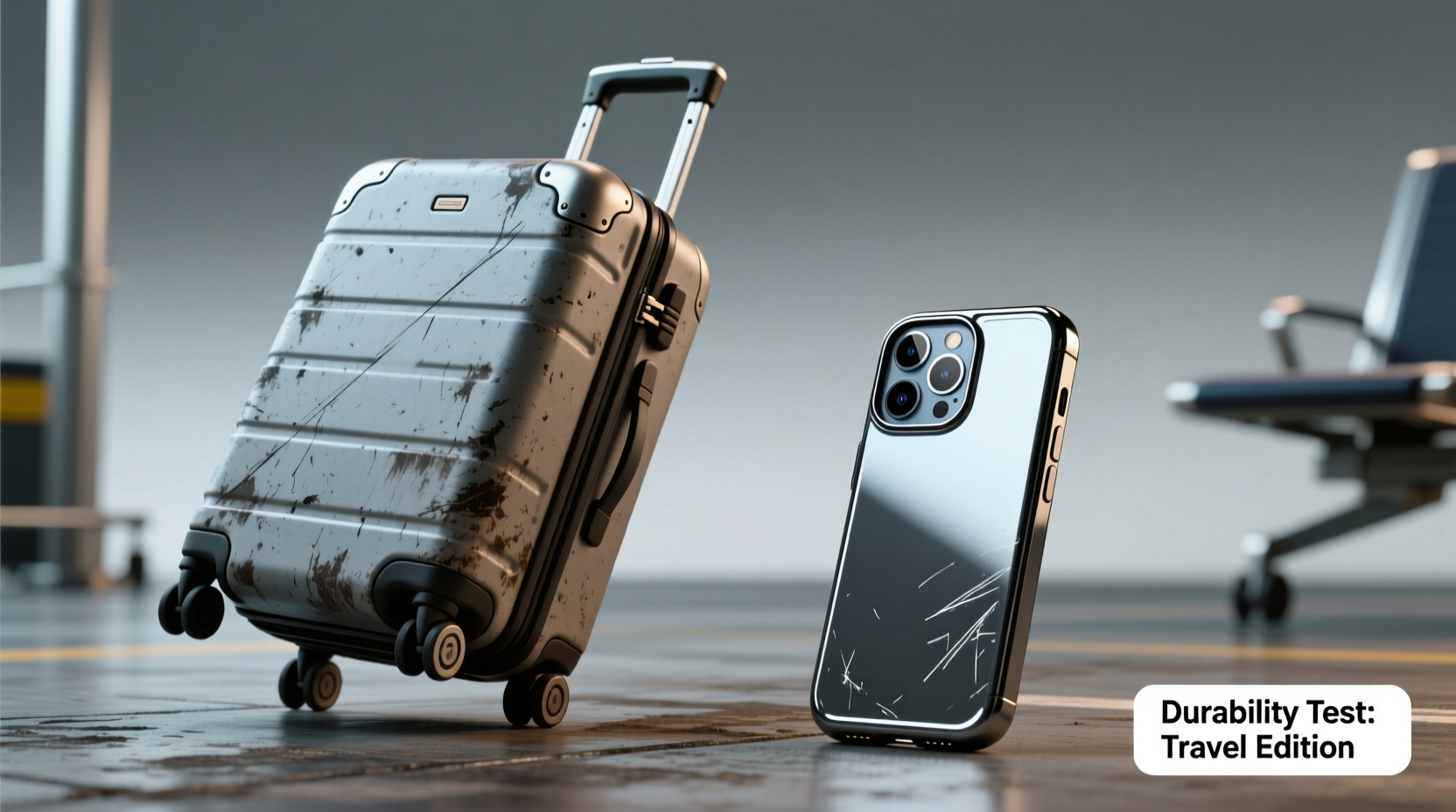
Durability isn’t just about surviving a fall or resisting scratches. It encompasses structural integrity over time, resistance to repeated stress, and performance under variable conditions—heat, moisture, compression, and impact. A wheeled bag must endure thousands of wheel rotations, zipper cycles, and stacking pressure. A phone case must absorb shock from sudden drops while remaining lightweight and functional. Their durability goals differ fundamentally.
A hard shell phone case typically uses rigid thermoplastics like polycarbonate or TPU (thermoplastic polyurethane), engineered to disperse kinetic energy during impacts. Wheeled bags, especially those with hard shells, often use similar materials but on a much larger scale, reinforced with aluminum frames, corner guards, and multi-stage telescopic handles. Yet scaling up doesn’t always mean greater resilience. Larger surfaces are more prone to cracking under concentrated force, and moving parts introduce weak points.
“Durability in travel products isn’t just about the material—it’s about how well the design anticipates real-world abuse.” — Marcus Lin, Industrial Designer at TrekForm Luggage
Comparing Build and Stress Points
Let’s examine the core components of each item and how they contribute to long-term reliability.
Wheeled Bags: Strengths and Vulnerabilities
- Wheels: Often the first point of failure. Low-quality spinner wheels crack or seize after rough pavement or being dragged over curbs.
- Zippers: Heavy-duty YKK zippers last longer, but constant opening/closing and overpacking strain stitching and slider mechanisms.
- Handles: Telescopic handles can bend or jam; fixed top handles fray over time.
- Corners: Reinforced corners on premium models prevent cracking when dropped or stacked.
- Shell Material: Polycarbonate shells flex on impact, reducing fracture risk. ABS plastic is stiffer but more brittle.
Hard Shell Phone Cases: Precision Protection
- Drop Resistance: Most meet MIL-STD-810G standards, surviving 6-foot drops onto concrete.
- Button Covers: Rubberized or raised buttons maintain responsiveness without compromising seal integrity.
- Screen & Camera Rims: Elevated edges protect glass surfaces when placed face-down.
- Material Fatigue: Repeated flexing (e.g., removing the case) can cause micro-cracks over time.
- Fits: Precision molding ensures snug fit, preventing internal movement that could damage the phone.
Durability Showdown: Real-World Performance
To assess true durability, consider how these items perform across common travel scenarios.
| Scenario | Wheeled Bag Performance | Hard Shell Phone Case Performance |
|---|---|---|
| Drop from 4 feet | May crack shell or break wheels; depends on landing angle | Designed for this; minimal damage if properly rated |
| Exposure to rain | Water-resistant fabrics help; zippers may leak if not sealed | Sealed edges prevent moisture ingress; fully protective |
| Overhead bin loading | Subject to crushing from heavier bags; frame integrity critical | No effect unless phone is removed and mishandled |
| Daily abrasion (sidewalks, stairs) | Wheels wear down; base scratches accumulate | Slight scuffing; surface resists minor scrapes |
| Lifetime under frequent use | 2–5 years depending on brand and care | 3+ years with no functional degradation |
The data shows a clear pattern: hard shell phone cases are engineered for consistent, repeatable protection under predictable stress. Wheeled bags face unpredictable, high-magnitude forces that vary by airline handling, terrain, and user behavior. This makes their durability harder to guarantee—even high-end brands see higher return rates for wheel or handle defects than phone case manufacturers do for cracked units.
Mini Case Study: Sarah’s European Trip
Sarah flew from Chicago to Rome with a carry-on hard-shell roller and an everyday hard shell phone case. During transit, her bag was dropped sideways off a baggage cart. The corner cracked, and one wheel became misaligned. She managed to roll it through three cities, but by week two, the handle stuck intermittently. Her phone, however, survived multiple drops—once from her hand on a train platform, another time slipping from her jacket pocket into a cobblestone alley. Both devices were protected, but only the phone case emerged unscathed. The bag required temporary tape repairs before her return flight.
This reflects a broader trend: phone cases succeed because they’re simpler, standardized, and built for singular threats. Luggage must multitask—and that complexity increases failure points.
Choosing Based on Longevity: What Lasts Longer?
If durability means “resisting damage over time,” the hard shell phone case wins decisively. It has fewer mechanical parts, operates under controlled tolerances, and benefits from rigorous industry testing standards. Most reputable brands offer 3–5 year lifespans with no decline in protective ability.
Wheeled bags, even premium ones, degrade faster due to cumulative wear. Wheels lose traction, zippers snag, and fabric fades or tears. Even polycarbonate shells develop hairline fractures after repeated impacts. That said, a well-maintained suitcase from brands like Samsonite, Rimowa, or Away can last five years or more with careful use.
Step-by-Step Guide to Maximizing Durability
- Inspect Before Travel: Check wheels, zippers, and seams for early signs of wear.
- Pack Smart: Avoid overloading—excess weight strains wheels and handles.
- Elevate Your Phone: Use screen protectors and avoid placing phones face-down on rough surfaces.
- Clean After Trips: Wipe down luggage exteriors and remove debris from wheel axles.
- Store Properly: Keep bags upright in dry areas; store phone cases away from direct sunlight to prevent yellowing.
FAQ: Common Questions About Travel Durability
Can a hard shell suitcase survive checked baggage handling?
Yes, but with caveats. High-quality polycarbonate shells flex under pressure, making them more resilient than ABS. However, rough handlers may still crack corners or break wheels. Using a protective cover adds cushioning and scratch resistance.
Do phone cases lose protection over time?
High-quality cases retain structural integrity for years. However, cheaper TPU cases may yellow or become brittle due to UV exposure and skin oils. Polycarbonate models resist aging better.
Is a soft-shell bag more durable than a hard-shell one?
It depends. Soft shells made from ballistic nylon or Cordura resist punctures and abrasions better. They also absorb shocks more evenly. But they offer less crush protection and can sag when overloaded. Hard shells win in impact and water resistance but are more prone to cracking.
Final Verdict: Which Is More Durable?
When measured by consistency, longevity, and real-world survival rates, the hard shell phone case is objectively more durable than a wheeled bag. Its compact design, lack of moving parts, and precision engineering allow it to deliver reliable protection trip after trip. Wheeled bags, while robust in theory, face too many variables—handling, terrain, weight distribution—that compromise long-term resilience.
This doesn’t diminish the value of a good suitcase. For travelers, both items serve essential roles. But if the question is purely about which product maintains its integrity longer under travel stress, the phone case takes the lead. It’s a testament to how focused engineering often outperforms scaled-up solutions.




 浙公网安备
33010002000092号
浙公网安备
33010002000092号 浙B2-20120091-4
Comments
No comments yet. Why don't you start the discussion?