
Planting onion sets in the fall is a strategic move that allows gardeners to get a head start on the growing season and harvest fresh, sweet onions earlier the following year. Unlike spring-planted bulbs, fall-planted onion sets undergo a period of dormancy followed by vernalization—exposure to cold temperatures—that primes them for vigorous growth as soon as soil conditions improve. This method is especially effective in regions with mild winters or early springs, but it can be adapted across a wide range of climates with proper timing and selection. Knowing precisely when to plant onion sets in the fall separates successful harvests from crop failures. Too early, and the young plants may bolt or succumb to disease; too late, and they won’t establish sufficient root systems before winter freezes set in.
The key lies in aligning planting time with local frost dates, soil temperature, and the specific variety of onion being grown. With rising interest in home gardening and seasonal food production, more growers are turning to fall planting not only for onions but also for garlic, shallots, and other alliums. However, onion sets—small, immature onion bulbs harvested the previous season and dried for replanting—require particular attention due to their sensitivity to day length and temperature fluctuations. This guide provides a comprehensive breakdown of optimal fall planting windows, regional considerations, best practices for soil preparation, and common pitfalls to avoid.
Definition & Overview
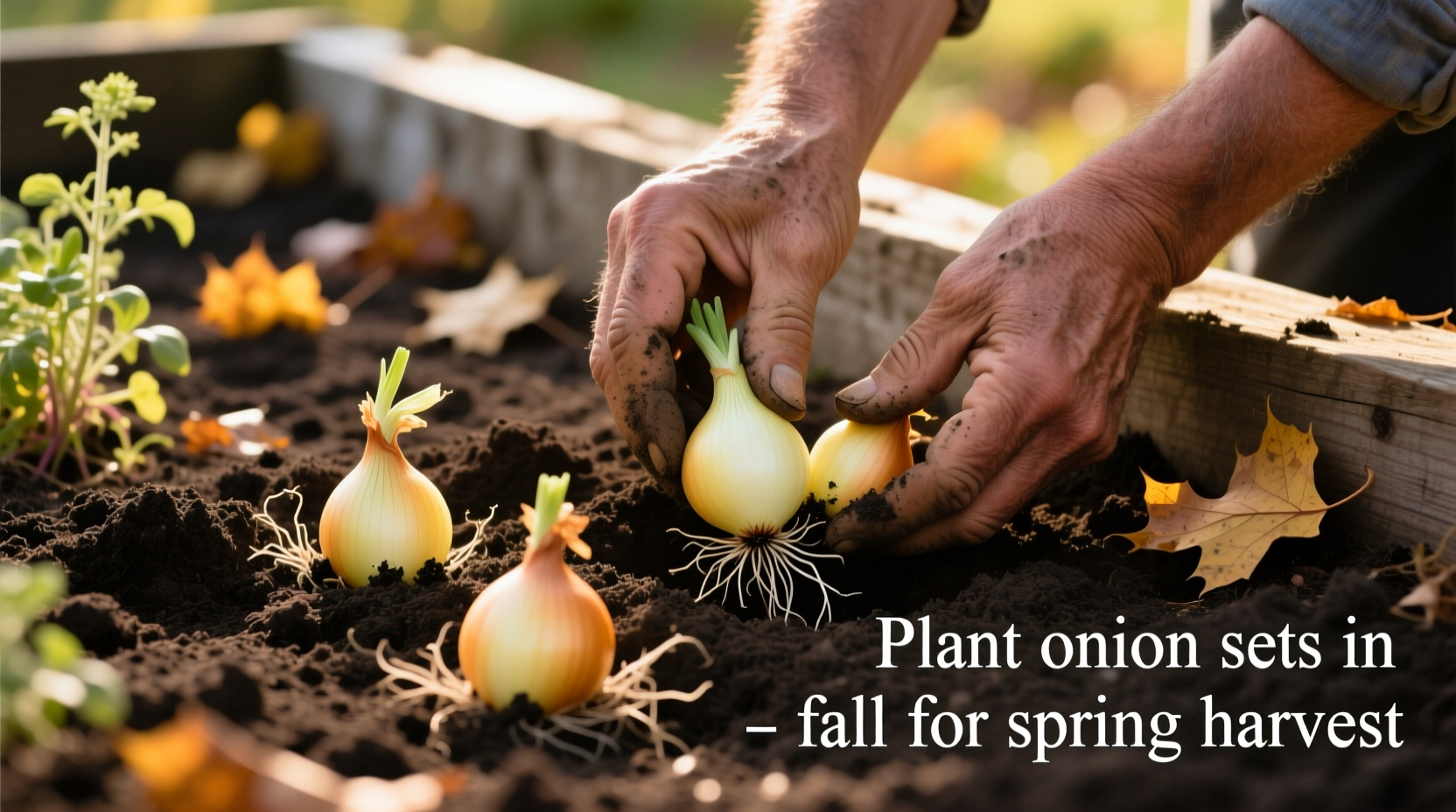
An onion set is a small, partially matured onion bulb, typically about the size of a marble, produced by sowing onion seeds densely the prior year. These seedlings are allowed to grow just enough to form a small bulb before being harvested, cured (dried), and stored for future planting. When planted in the ground, the set resumes growth, channeling energy into forming a full-sized bulb the following season.
Onion sets are favored by many home gardeners because they are easier and faster to establish than seeds, and they offer more reliability than transplants in cool or unpredictable spring weather. They are commonly available in red, yellow, and white varieties, each suited to different culinary uses and storage capabilities. While most people associate onion planting with spring, fall planting has gained popularity among experienced growers who seek earlier harvests and larger yields.
Fall planting takes advantage of natural winter chilling to initiate proper bulb formation in long-day and intermediate-day onion varieties. The practice mimics nature’s cycle: the plant establishes roots in autumn, goes dormant during winter, then surges into active leaf and bulb development in early spring. This results in onions ready for harvest four to six weeks earlier than those planted in spring.
Key Characteristics of Onion Sets
- Size: Typically ½ inch to 1 inch in diameter—large enough to survive winter but small enough to resist bolting.
- Color Variants: Yellow (most common, excellent storage), red (mild flavor, good for salads), white (crisp, short shelf life).
- Flavor Profile: Ranges from pungent and sharp (yellow) to sweet and delicate (white and some reds).
- Culinary Function: Base ingredient in countless savory dishes; adds depth, aroma, and structure.
- Shelf Life (pre-planting): Up to 6–8 months if stored in cool, dry, dark conditions (32–40°F / 0–4°C, low humidity).
- Vulnerability: Prone to rot if exposed to excessive moisture; susceptible to premature sprouting if stored too warm.
- Growth Habit: Biennial plants grown as annuals; require vernalization for proper bulb initiation in some types.
Expert Tip: Avoid using kitchen-store onions for planting—they are often treated to inhibit sprouting and may carry diseases unsuitable for gardens.
Optimal Timing for Fall Planting
The ideal time to plant onion sets in the fall depends primarily on your USDA hardiness zone and average first frost date. The goal is to allow enough time for root development—about 2 to 4 weeks—before the ground freezes, while preventing top growth that could be damaged by early frosts or trigger bolting later.
Zonal Guidelines for Planting Dates
| Hardiness Zone | First Frost Date | Recommended Planting Window | Notes |
|---|---|---|---|
| Zone 3–4 | Mid-August to early September | 4–6 weeks before frost | Use heavy mulch; choose cold-hardy varieties like ‘Candy’ or ‘Redwing’. |
| Zone 5–6 | Late September to mid-October | Early to mid-October | Ideal window for most gardeners; minimal winter protection needed. |
| Zone 7–8 | November to early December | November | Can plant slightly later; ensure well-drained soil to prevent rot. |
| Zone 9–10 | Rare or no frost | December to early January | Treat as “early spring” planting; cooler microclimates preferred. |
In zones 3 to 6, aim to plant onion sets approximately **four to six weeks before the average first hard frost** (28°F / -2°C). This gives the bulbs time to send down roots without pushing up significant green growth. In warmer zones (7–10), where freezing temperatures are rare or absent, planting can occur later—typically November through December—as long as soil remains workable.
A useful rule of thumb: plant onion sets around the same time you would plant spring-flowering bulbs like tulips or daffodils. This synchronizes with natural soil cooling patterns and ensures timely establishment.
Soil Preparation and Planting Technique
Success begins with proper bed preparation. Onion sets demand well-drained, loose soil rich in organic matter. Poor drainage leads to rot during wet winter months, particularly in clay-heavy soils.
- Choose a Sunny Location: Onions need at least 6–8 hours of direct sunlight daily.
- Amend the Soil: Work in 2–3 inches of compost or aged manure. Avoid high-nitrogen fertilizers, which encourage leafy growth over bulb development.
- Adjust pH: Ideal range is 6.0 to 6.8. Test soil and amend with lime if too acidic.
- Create Raised Beds (if needed): In areas prone to winter saturation, elevate planting beds by 4–6 inches to improve drainage.
To plant:
- Space sets 4–6 inches apart in rows 12–18 inches apart.
- Set bulbs pointy-end-up, about 1 inch deep.
- Press gently into soil; do not bury deeply.
- Water lightly after planting—only if soil is dry. Overwatering invites fungal issues.
After planting, apply a thin layer (1–2 inches) of straw, shredded leaves, or pine needles as mulch. This insulates the soil, moderates temperature swings, and suppresses weeds come spring. Do not use thick mulch—it can trap moisture and promote mold.
Variants & Types of Onion Sets for Fall Planting
Not all onion sets are suitable for fall planting. The critical factor is day-length response, which determines when the plant initiates bulb formation.
Day-Length Categories
| Type | Day Length Required | Best Zones for Fall Planting | Examples |
|---|---|---|---|
| Long-Day Onions | 14–16 hours of daylight | Zone 3–6 | ‘Yellow Globe’, ‘Sweet Sandwich’, ‘Copra’ |
| Intermediate-Day Onions | 12–14 hours of daylight | Zone 5–7 | ‘Candy’, ‘Red Candy Apple’, ‘Super Star’ |
| Short-Day Onions | 10–12 hours of daylight | Zone 7–10 | ‘Texas Grano’, ‘Red Burgundy’, ‘White Granex’ |
For fall planting, match the onion type to your region’s photoperiod. Long-day varieties perform best in northern latitudes, where summer days are longest. Short-day types thrive in the South, where spring days lengthen more slowly. Intermediate-day onions bridge the gap and are increasingly popular for fall planting across central U.S. regions.
Additionally, consider whether the variety is labeled as “bolt-resistant.” Some modern cultivars have been bred to withstand winter chilling without prematurely flowering—a common problem when cold exposure is too intense or prolonged.
Comparison with Similar Alliums
Onion sets are often confused with garlic cloves, shallot divisions, and onion seeds. While all are alliums and share similar cultural requirements, their planting strategies differ.
| Item | Planting Time (Fall) | Depth | Spacing | Harvest Time |
|---|---|---|---|---|
| Onion Sets | 4–6 weeks before frost | 1 inch | 4–6 inches | May–July |
| Garlic Cloves | 2–4 weeks before frost | 2–3 inches | 6 inches | July–August |
| Shallots | Same as garlic | 2 inches | 6–8 inches | June–July |
| Onion Seeds (direct-sown) | Rarely in fall (except mild zones) | ¼ inch | Thin to 4–6 inches | July–August |
Unlike garlic, which requires deeper planting and longer cold exposure, onion sets are more sensitive to depth and moisture. Planting them too deep increases rot risk; planting too shallow exposes them to freeze-thaw cycles that heave bulbs out of the soil.
Practical Tips & FAQs
When should I stop watering after planting?
Once sets are in the ground, only water if the soil is extremely dry. After that, rely on natural rainfall. Excessive moisture in fall promotes fungal diseases like botrytis. Resume watering in early spring when active growth resumes.
Should I fertilize in the fall?
No. Fertilizing at planting encourages tender top growth that won’t survive winter. Instead, apply a balanced fertilizer (such as 10-10-10) in early spring when green shoots emerge.
What if my onion sets sprout in fall?
Minor top growth is normal and usually survives winter. If extensive foliage appears, trim it back lightly to reduce wind resistance and desiccation. Mulching helps protect emerging greens.
How do I prevent bolting?
Bolting (premature flowering) occurs when plants perceive stress—especially inconsistent temperatures or oversized sets. Choose sets no larger than ¾ inch in diameter and avoid storing them above 40°F (4°C). Bolted onions are still edible but will not store well.
Can I grow green onions from fall-planted sets?
Yes. If harvesting for scallions rather than mature bulbs, plant sets closer together (2–3 inches) and harvest greens throughout winter in mild climates. Protect with row covers in zones 6 and below.
Do I need to rotate crops?
Absolutely. Never plant onion sets where alliums (onions, garlic, leeks, etc.) grew in the past two years. Crop rotation reduces the buildup of soil-borne pathogens like pink root and white rot.
Checklist: Preparing to Plant Onion Sets in Fall
✅ Confirm your USDA hardiness zone
✅ Select appropriate day-length variety
✅ Purchase firm, dry, undamaged sets (½–¾ inch)
✅ Prepare well-drained, sunny bed
✅ Amend soil with compost, avoid nitrogen-heavy fertilizers
✅ Plant 4–6 weeks before first hard frost
✅ Space 4–6 inches apart, 1 inch deep, pointed end up
✅ Apply light mulch after planting
✅ Mark rows clearly for spring identification
“Fall planting transforms the onion-growing calendar. By leveraging winter dormancy, gardeners gain a biological head start that translates into earlier harvests and better yields. It’s not just about timing—it’s about working with the plant’s natural rhythm.” — Dr. Elena Torres, Extension Horticulturist, Cornell University
Common Mistakes to Avoid
Even experienced gardeners make errors when planting onion sets in the fall. The most frequent include:
- Planting too early: Leads to excessive leaf growth vulnerable to frost kill.
- Using oversized sets: Bulbs larger than 1 inch are more likely to bolt.
- Poor drainage: Soggy soil causes rot—raised beds help in clay soils.
- Skipping mulch: Temperature fluctuations can heave bulbs out of the ground.
- Ignoring day-length needs: Planting short-day onions in the North leads to poor bulb formation.
One lesser-known issue is improper storage of onion sets before planting. Keep them in a cool, dry place with good air circulation. Warm, humid conditions trigger premature sprouting, weakening the bulb before it even hits the soil.
Summary & Key Takeaways
Planting onion sets in the fall is a proven method for achieving earlier, more reliable onion harvests. Success hinges on precise timing, correct variety selection, and thoughtful site preparation. The optimal planting window falls **four to six weeks before the first expected hard frost**, allowing roots to establish without encouraging vulnerable top growth.
Key points to remember:
- Match onion type to your region: long-day for northern zones, short-day for southern, intermediate for transitional areas.
- Use small, firm sets (½–¾ inch) to minimize bolting risk.
- Prepare loose, well-drained soil enriched with compost.
- Plant 1 inch deep, pointed end up, spaced 4–6 inches apart.
- Apply a light mulch to stabilize soil temperature and moisture.
- Avoid fertilizing in fall—wait until spring for nutrient boost.
- Rotate crops and avoid planting where alliums recently grew.
Fall-planted onion sets deliver a harvest that begins in late spring—often weeks ahead of spring-planted counterparts—giving home cooks access to fresh, crisp onions for early-season recipes. Whether you’re roasting red onions, slicing whites for salads, or caramelizing yellows for soups, starting in the fall lays the foundation for superior flavor and yield.
Ready to get started? Order your onion sets now from a reputable seed supplier, mark your planting date based on local frost data, and prepare your bed this week. Your spring kitchen will thank you.




 浙公网安备
33010002000092号
浙公网安备
33010002000092号 浙B2-20120091-4
Comments
No comments yet. Why don't you start the discussion?