
Arriving in Tokyo for the first time can be exhilarating—and overwhelming. With over 23 special wards, each offering a distinct personality, choosing where to stay sets the tone for your entire trip. The right neighborhood doesn’t just offer comfort; it provides seamless access to transportation, dining, shopping, and cultural experiences. For first-time visitors, prioritizing convenience, safety, and authenticity is key. This guide breaks down the top districts, what they offer, and how to match them to your travel style.
Why Location Matters More Than You Think
Tokyo’s public transit system is among the most efficient in the world, but even minor missteps in lodging placement can add hours of unnecessary travel. Staying in a well-connected area means shorter commutes, easier navigation, and more time enjoying the city. First-timers benefit most from proximity to major train lines like the Yamanote Loop, which circles central Tokyo and connects major hubs including Shinjuku, Shibuya, Ueno, and Tokyo Station.
Beyond logistics, the neighborhood you choose shapes your experience. Do you want to wake up to serene temple grounds or fall asleep to neon-lit streets? Are you traveling solo, as a couple, or with family? Each district caters to different rhythms and interests.
Top 5 Areas for First-Time Visitors
The following neighborhoods strike the ideal balance between accessibility, atmosphere, and tourist-friendly amenities. They’re safe, well-served by transit, and rich in both modern attractions and traditional charm.
1. Shinjuku – The Beating Heart of Urban Tokyo
Shinjuku is Tokyo’s busiest commercial and entertainment district. Home to the world’s busiest train station, it offers unparalleled connectivity. It's ideal for travelers who want energy, nightlife, and a wide range of accommodation—from luxury hotels like the Park Hyatt to budget-friendly business inns.
Key highlights include the Metropolitan Government Building (free observation deck), Omoide Yokocho (a nostalgic alley of tiny izakayas), and Kabukicho, Tokyo’s famed (and safe) red-light district, now increasingly focused on themed cafes and entertainment.
2. Shibuya – Youth Culture & Iconic Landmarks
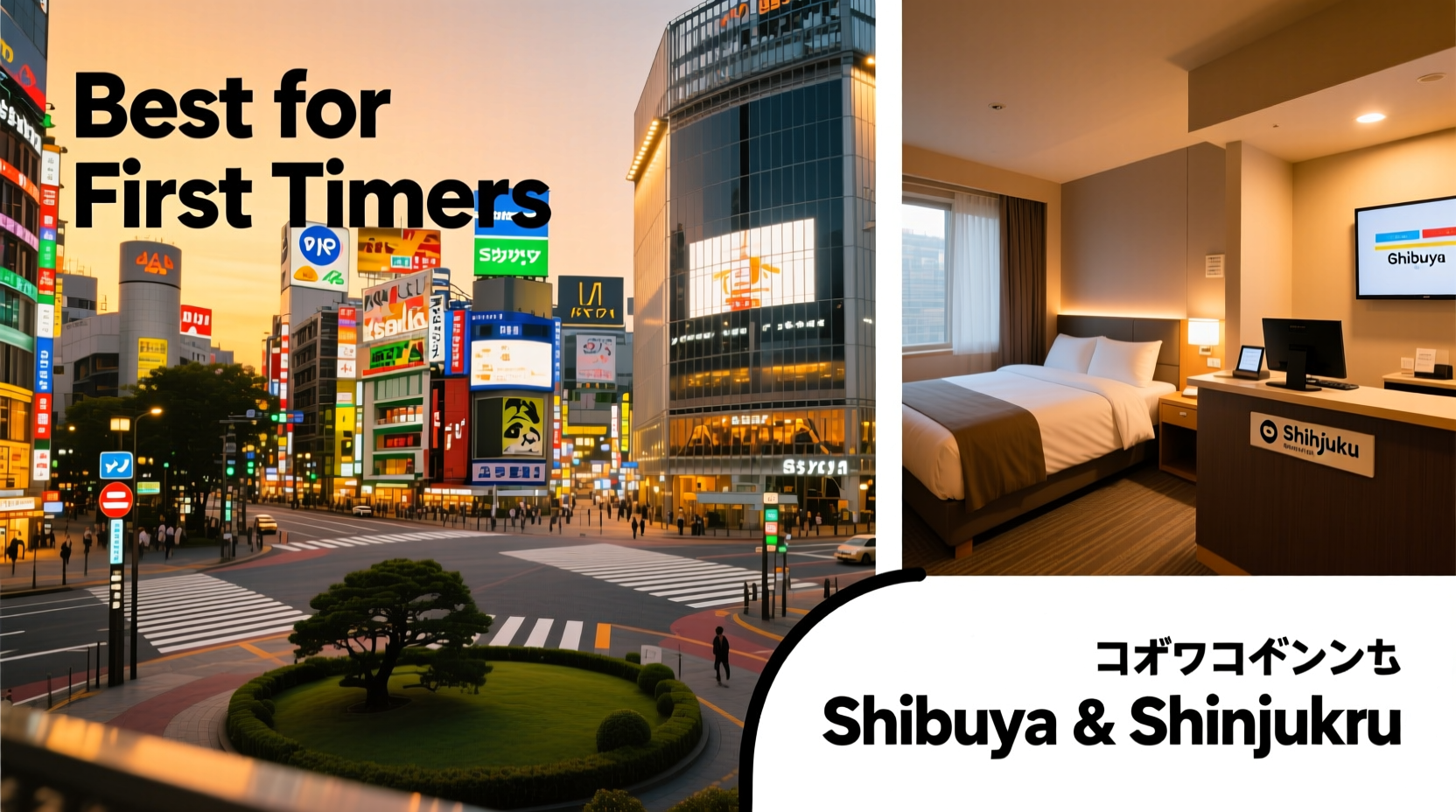
Famous for the Scramble Crossing and its vibrant street fashion, Shibuya appeals to younger travelers and pop culture enthusiasts. It’s a hub for music, fashion, and digital art installations like teamLab Planets (accessible via nearby Toyosu). The area has undergone massive redevelopment, making it cleaner and more walkable than ever.
Stay here if you want to feel the pulse of modern Japan. Hotels range from capsule options like Nine Hours to mid-range chains such as Shibuya Excel Hotel Tokyu.
3. Chiyoda – Where Tradition Meets Power
Home to the Imperial Palace, Tokyo Station, and the National Diet, Chiyoda is the political and historical core of Tokyo. It’s quieter than Shinjuku or Shibuya but offers elegant hotels like the Palace Hotel Tokyo and proximity to gardens, museums, and fine dining.
Ideal for travelers interested in history, architecture, or business travel. While less flashy, its central location makes day trips effortless.
4. Asakusa – Old Tokyo with a Cultural Soul
Asakusa preserves the atmosphere of pre-war Tokyo. The area centers around Senso-ji Temple, Tokyo’s oldest Buddhist temple, and Nakamise Street, lined with traditional snacks and souvenirs. It’s perfect for those seeking authentic culture, slower pacing, and photo-worthy streetscapes.
Accommodations include boutique ryokans (traditional inns) and Western-style hotels. Though slightly removed from the Yamanote Line, Asakusa is served by the Ginza and Tobu Skytree Lines, linking easily to Ueno and beyond.
5. Ueno – Culture, Parks, and Budget-Friendly Options
Ueno is a gateway to museums (Tokyo National Museum, Ueno Zoo), lush green spaces, and one of Tokyo’s liveliest markets. It’s a favorite among budget-conscious travelers and families. The area is also a transport node, with direct Shinkansen access via Tokyo Station and connections to Narita Airport via the Keisei Line.
Hotels here are often more affordable than in Shinjuku or Shibuya, without sacrificing convenience.
“First-time visitors should prioritize staying within the Yamanote Loop. It reduces decision fatigue and gives you breathing room to explore.” — Kenji Tanaka, Tokyo Travel Specialist at JTB Global Travel
Comparison Table: Best Areas at a Glance
| Area | Best For | Transit Access | Average Nightly Rate (USD) | Atmosphere |
|---|---|---|---|---|
| Shinjuku | Nightlife, shopping, business | Yamanote, Marunouchi, Toei Subway | $120–$300 | Fast-paced, urban |
| Shibuya | Youth culture, fashion, tech | Yamanote, Fukutoshin, Ginza Lines | $110–$280 | Vibrant, trendy |
| Chiyoda | History, business, luxury | Tokyo Station (Shinkansen + metro) | $180–$500 | Elegant, quiet |
| Asakusa | Culture, temples, photography | Ginza Line, Tobu Skytree Line | $80–$200 | Traditional, relaxed |
| Ueno | Museums, markets, budget stays | Yamanote, Keisei, Ginza Lines | $70–$160 | Lively, local |
Real Example: A First-Timer’s Experience in Shinjuku
Sophie, visiting from London, chose a mid-range hotel in Shinjuku for her first trip to Japan. She arrived late at night via the Narita Express and was relieved to step off directly into the illuminated heart of the city. Over five days, she used her hotel as a base to reach day trips to Nikko and Hakone via the Odakyu Romancecar from Shinjuku Station. She explored Golden Gai’s tiny bars, visited the free observatory, and appreciated the 24-hour convenience stores during late-night walks. “Staying in Shinjuku made me feel connected to Tokyo immediately,” she said. “I never felt lost, and I could always hop on a train back ‘home’ no matter where I wandered.”
Step-by-Step Guide to Choosing Your Ideal Neighborhood
- Define your priorities: Are you focused on sightseeing, food, nightlife, relaxation, or shopping?
- Check transit links: Use Google Maps or Japan Transit Planner to confirm walking distance to major train lines.
- Set a budget: Compare hotel prices across platforms like Booking.com, Agoda, or Airbnb, factoring in included breakfast and taxes.
- Read recent guest reviews: Look for mentions of cleanliness, noise levels, and staff helpfulness—especially regarding language support.
- Book early: Tokyo fills quickly during cherry blossom season (March–April) and autumn foliage (November).
Common Mistakes to Avoid
- Staying too far outside the city: Areas like Ikebukuro or Kichijoji are charming but may require longer commutes and extra transfers.
- Overlooking small print: Some \"hotels\" are actually capsule pods or share bathrooms. Confirm room type before booking.
- Ignoring noise levels: Rooms facing main streets in Shinjuku or Shibuya can be loud. Request a quiet-side room when possible.
- Choosing size over location: A larger Airbnb apartment in a remote ward may save space but cost more in time and train fares.
Frequently Asked Questions
Is it safe to stay in Tokyo as a first-time visitor?
Absolutely. Tokyo is one of the safest major cities in the world. Violent crime is extremely rare, and tourists generally feel secure walking at night. Just exercise normal caution with belongings in crowded areas like trains and markets.
Should I stay in a hotel or try a ryokan?
For first-timers, a modern hotel offers familiarity and ease. However, consider a one-night stay at a ryokan in Asakusa or nearby Hakone to experience tatami floors, futons, kaiseki meals, and onsen bathing—a quintessential Japanese tradition.
Are there any areas I should avoid?
No areas are outright dangerous, but some like Kabukicho have a reputation for host clubs and sex industry venues. These are generally safe and well-patrolled, but solo travelers uncomfortable with adult entertainment may prefer quieter districts like Chiyoda or Meguro.
Final Checklist Before Booking
- ✅ Proximity to a major train line (especially Yamanote)
- Ensures easy access to key destinations.
- ✅ English-speaking staff
- Helpful for check-in, directions, and emergencies.
- ✅ Free Wi-Fi and charging stations
- Essential for navigation and communication.
- ✅ In-room amenities (AC, private bathroom, safe)
- Basic comforts that make a difference after long days of walking.
- ✅ Positive reviews mentioning cleanliness and location accuracy
- Recent feedback is more reliable than star ratings alone.
Conclusion: Start Your Tokyo Journey with Confidence
Your choice of where to stay in Tokyo doesn’t just affect convenience—it shapes how you connect with the city. Whether you crave the electric buzz of Shibuya, the historic calm of Asakusa, or the polished efficiency of Chiyoda, the best location aligns with your pace, interests, and travel goals. By focusing on connectivity, safety, and authenticity, first-time visitors can unlock Tokyo’s magic without stress. Now that you know where to begin, take the next step: compare options, book with confidence, and prepare to fall in love with one of the world’s most dynamic capitals.




 浙公网安备
33010002000092号
浙公网安备
33010002000092号 浙B2-20120091-4
Comments
No comments yet. Why don't you start the discussion?