
Survival in *Sons of the Forest* hinges on more than just scavenging food and avoiding cannibals. One of the most critical decisions you’ll make is where to establish your base. A poorly chosen location can leave you vulnerable, isolated from resources, or constantly under attack. The right spot, however, offers safety, access to materials, and a solid foundation for long-term survival. This guide breaks down the top strategic locations, explains what makes them ideal, and provides actionable insights to help you build smarter.
Why Base Location Matters in Sons of the Forest
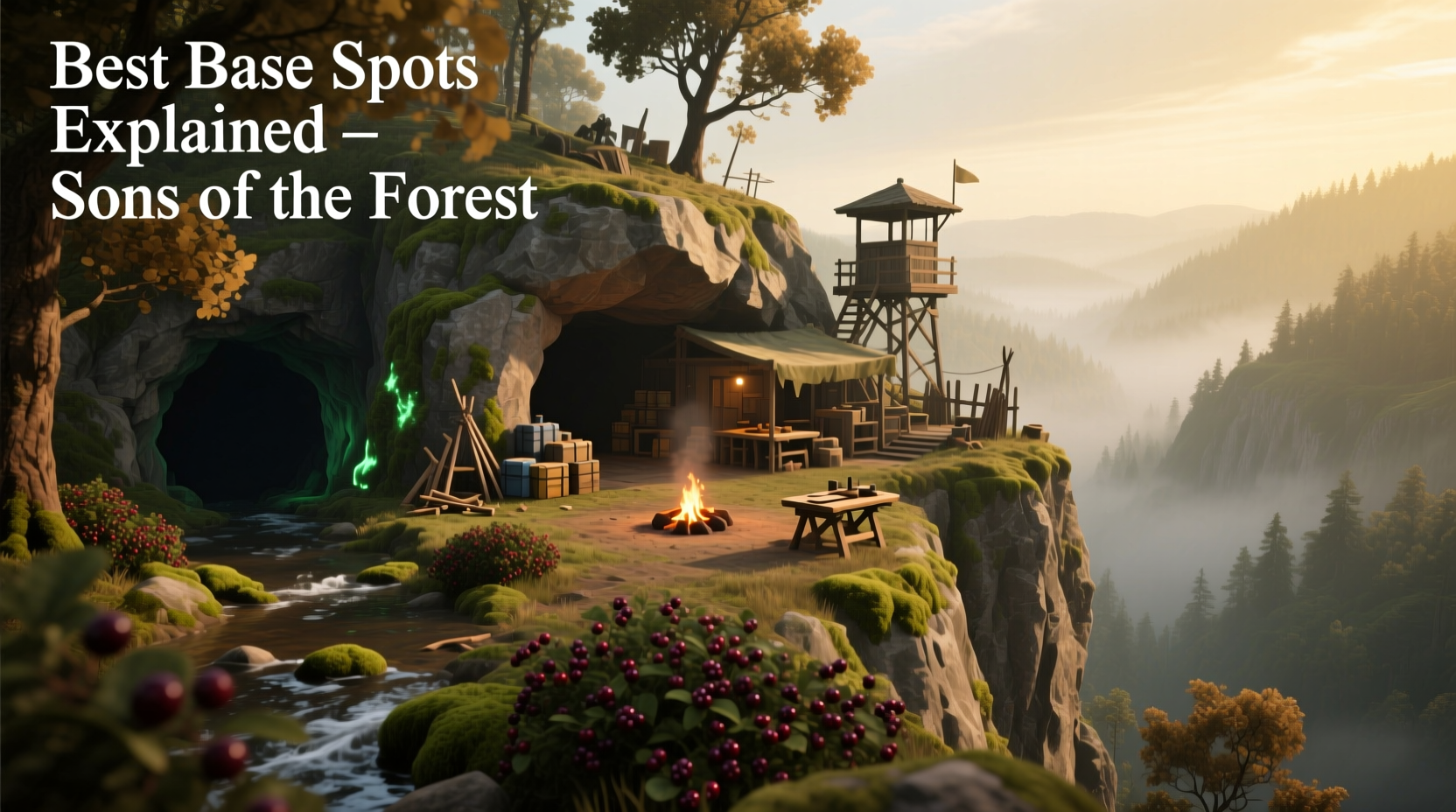
In *Sons of the Forest*, your base isn’t just shelter—it’s your command center. It stores supplies, protects your gear, and acts as a respawn point if you die. More importantly, an optimal base location reduces travel time to essential resources like fresh water, wood, stone, and food sources. It also minimizes exposure to hostile enemies, especially at night when mutants become more aggressive.
A well-placed base allows for scalability. You might start with a simple lean-to, but over time, you’ll want space for crop farming, weapon storage, and even traps or defensive structures. Choosing terrain that supports expansion is just as important as immediate survival needs.
Top 5 Strategic Base Locations
1. Northern Plateau (Near the Cave Entrance)
The high ground north of the initial crash site offers one of the safest starting zones. Elevated terrain provides natural visibility, making it easier to spot incoming threats. The nearby cave system supplies early-game resources like flint, stone, and mushrooms, while the surrounding pine trees offer abundant wood.
This area is slightly removed from the main mutant paths, reducing random attacks. It's also close enough to the beach to allow quick trips for saltwater collection or fishing, yet far enough inland to avoid swamp-based enemies.
2. Coastal Ridge (East of the Plane Wreck)
If you prioritize access to seafood and fast escape routes by raft, the coastal ridge is ideal. The steep cliffs provide natural barriers on multiple sides, limiting approach vectors for enemies. You can build your base nestled against the rock face, using the slope for drainage and protection from rain.
Fishing becomes a reliable food source here, and kelp can be harvested for crafting. However, this location requires vigilance—some mutants patrol the shoreline at night, so perimeter defenses are crucial.
3. Central Forest Clearing (Near the Radio Tower)
Located roughly in the middle of the island, this zone offers balanced access to nearly all biomes. From here, you’re within 5–7 minutes of the mountains, swamps, beaches, and caves. This central positioning makes it perfect for players who prefer exploration and frequent supply runs.
The open clearing allows room for large builds, crop gardens, and animal pens. Just be aware: its accessibility works both ways. Hostiles may wander through, so consider building watchtowers or noise-distracting decoys.
“Positioning your base near a crossroads biome gives you tactical flexibility. You’re never too far from your next objective.” — Alex Rivera, Survival Game Analyst
4. Hidden Valley (Behind the Waterfall)
One of the most secure—if obscure—locations is the hidden valley accessible behind a waterfall southwest of the temple ruins. This secluded spot is rarely patrolled and naturally concealed. The constant water flow masks sound, reducing enemy detection, and the damp soil supports mushroom farming and hydration.
However, it’s not beginner-friendly. Reaching it requires advanced climbing tools, and resupplying from distant areas takes time. Best suited for mid-to-late game bases when mobility and stealth are priorities.
5. Abandoned Camp Cluster (Southwest Zone)
These pre-existing shelters scattered across the southwest quadrant are goldmines for early-game settlers. They often contain useful loot—sleeping bags, weapons, notes—and provide instant cover. Building your base adjacent to or integrated with these camps saves construction time and materials.
The downside? These sites are sometimes guarded or located near enemy spawn points. Clear the area thoroughly before settling in, and reinforce walls with additional logs and spike traps.
Key Factors When Choosing Your Base Spot
Not all flat, scenic clearings make good bases. Consider these five criteria before hammering your first wall:
- Proximity to Resources: Are fresh water, wood, and food sources within a 3-minute walk?
- Elevation: Higher ground improves visibility and drainage, reducing flood risk during storms.
- Natural Defenses: Cliffs, rivers, or dense rock formations can act as barriers against enemies.
- Enemy Activity: Use stealth mode or binoculars to observe foot traffic for several in-game days.
- Expansion Potential: Does the terrain allow for future additions like gardens, storage sheds, or traps?
Do’s and Don’ts: Base-Building Checklist
| Do’s | Don’ts |
|---|---|
| Build near a stream or lake for consistent water access | Set up base directly in the swamp—high enemy density and poor footing |
| Use elevated platforms to avoid ground-level threats | Ignore wind direction when placing fire pits—smoke can attract attention |
| Construct storage chests early to prevent inventory overload | Place your base too close to loud wildlife (e.g., boars) that could draw mutants |
| Install ladders or ziplines for quick escape routes | Overbuild in one area without reinforcing defenses |
Step-by-Step: How to Secure and Expand Your Base
- Scout the Area: Spend 1–2 in-game days observing enemy patterns and resource availability.
- Establish Temporary Shelter: Pitch a tent or build a small hut to claim the spot.
- Gather Local Materials: Chop nearby trees, collect stones, and mine clay if available.
- Build Core Structures: Prioritize a locked storage chest, workbench, and bed for respawn anchoring.
- Add Defenses: Place spike pits, tripwires, or noise-makers around entry points.
- Expand Gradually: Add farming plots, weapon racks, and secondary exits as needed.
Real-World Example: A Player’s Base Evolution
Jordan, a veteran player, started near the plane wreck but was raided twice in one night. After relocating to the northern plateau, he built a two-story log cabin anchored into a rock ledge. He used the natural slope to channel rainwater into a barrel system and planted potatoes on a sunlit terrace. By week three, his base included a smokehouse, archery range, and motion-triggered alarm made from cans and string. The elevation allowed him to monitor mutant patrols via telescope, giving him early warning and time to prepare.
“Switching locations saved my campaign,” Jordan said. “I went from surviving day to day to actually thriving.”
Frequently Asked Questions
Can I move my base after building it?
Yes, but moving locks your old bed’s respawn function. To change your spawn point, simply sleep in your new bed. However, any stored items left behind remain vulnerable unless retrieved.
Is it safe to build underwater or on rafts?
Currently, the game doesn’t support submerged structures. Rafts can serve as mobile outposts but aren’t stable for permanent bases due to limited space and vulnerability to waves and enemies.
Should I build alone or with a teammate?
Duo or co-op play allows for faster construction and defense rotation. In solo mode, prioritize simplicity and passive traps. With a partner, you can afford larger, more complex designs.
Final Thoughts: Build Smart, Survive Longer
The best base in *Sons of the Forest* isn’t necessarily the biggest or most fortified—it’s the one that aligns with your playstyle and adapts to the island’s dangers. Whether you value isolation, central access, or natural fortification, the key is planning ahead and staying flexible. A strong foundation today means greater freedom tomorrow.




 浙公网安备
33010002000092号
浙公网安备
33010002000092号 浙B2-20120091-4
Comments
No comments yet. Why don't you start the discussion?