
Marvel vs. Capcom 2: New Age of Heroes remains one of the most beloved entries in the crossover fighting game genre. Since its original arcade release in 2000, it has seen multiple ports across consoles and digital platforms. While the core gameplay remains consistent—fast-paced, tag-team battles with a massive roster—the differences between versions can significantly impact the player’s experience. From input lag to netcode, character balance, and accessibility, not all releases are created equal. For both retro enthusiasts and competitive players, choosing the right version is crucial to enjoying the full depth of this classic title.
The Evolution of Marvel vs. Capcom 2 Across Platforms
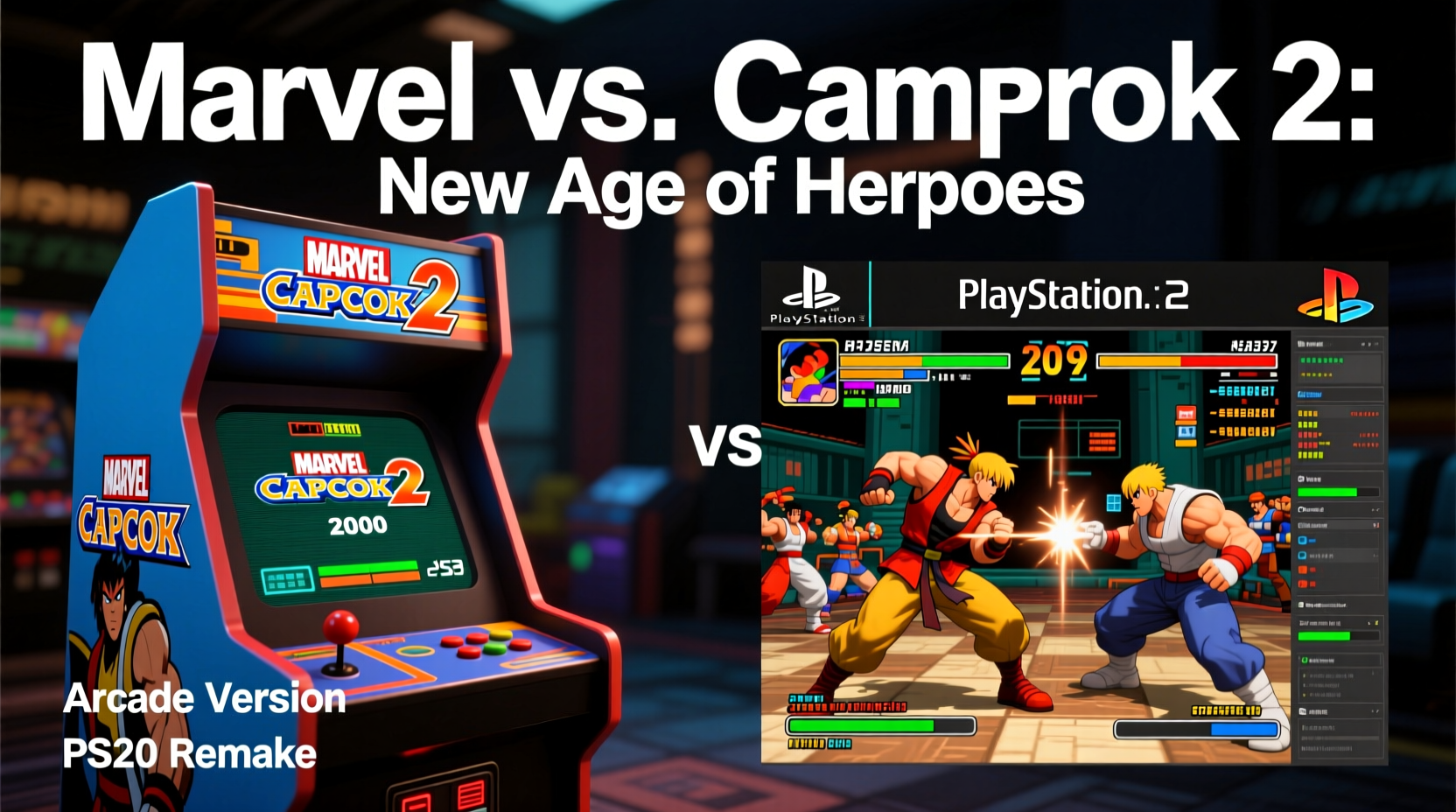
Marvel vs. Capcom 2 was initially developed for arcades using the Naomi hardware, setting the gold standard for responsiveness and timing. Over the years, it made its way to Dreamcast, PlayStation 2, Xbox, GameCube, iOS, and later re-released on PlayStation 3, Xbox 360, and even Steam. Each port brought subtle or significant changes in performance, audiovisual fidelity, and control mechanics.
The Dreamcast version, released shortly after the arcade original, is often praised for its near-perfect translation of the arcade experience. It maintained tight input response and faithful graphics, making it a favorite among purists. Meanwhile, the PS2 and Xbox versions introduced online play—an innovation at the time—but suffered from inconsistent netcode that limited reliable multiplayer competition.
The 2009 digital re-release on PlayStation Network and Xbox Live Arcade aimed to bring the game into the modern era. However, despite HD upscaling and Trophies/Achievements, these versions lacked rollback netcode, resulting in poor online performance. The absence of proper matchmaking and high latency made competitive play frustrating, especially as the community grew more serious about online tournaments.
Performance Comparison: Input Lag, Frame Rate, and Audio
A critical factor in any fighting game is input lag. Even a delay of a few frames can disrupt combo execution and defensive options. The original arcade and Dreamcast versions run at a rock-solid 60 frames per second with minimal input latency, closely matching the intended design. In contrast, the PS2 and Xbox ports exhibit slight frame drops during heavy visual effects, such as screen-filling hyper combos, which can affect precise timing.
The HD re-releases on PS3 and Xbox 360, while visually upscaled, do not improve upon the core performance. In fact, some users reported increased input lag due to display processing and HDMI upscaling on modern TVs. The audio also took a hit—while the iconic jazz-style soundtrack remained intact, compression artifacts were noticeable in the remastered versions compared to the CD-quality tracks on Dreamcast.
| Platform | Frame Rate | Input Lag | Online Play | Audio Quality |
|---|---|---|---|---|
| Arcade (Naomi) | 60 FPS (stable) | Lowest | No | Excellent |
| Dreamcast | 60 FPS | Very Low | No | CD Quality |
| PS2 / Xbox | ~58–60 FPS | Low-Moderate | Yes (peer-to-peer) | Good |
| PS3 / Xbox 360 | 60 FPS (emulated) | Moderate-High | Yes (poor netcode) | Fair (compressed) |
| iOS | Variable | High | No | Poor |
The table above highlights why the Dreamcast and arcade versions remain top choices for serious players. Despite lacking online functionality, their technical precision makes them ideal for training and local multiplayer sessions.
Netcode: The Defining Factor for Modern Play
In today’s fighting game community, netcode is non-negotiable. The original PS3 and Xbox 360 re-releases used delay-based netcode, which introduces artificial input delays to synchronize players. This results in choppy gameplay, unresponsive controls, and an overall frustrating experience—especially over long distances.
Rollback netcode, now standard in modern fighters like Street Fighter V and Guilty Gear Strive, predicts inputs and corrects discrepancies smoothly. Unfortunately, no official version of Marvel vs. Capcom 2 includes rollback netcode. This has led the community to take matters into their own hands.
Emulation via RetroArch or specialized setups using Dolphin (for GameCube ISOs) combined with services like Parsec or KC Fight Net allows players to simulate low-latency environments. These methods have revitalized online play, enabling global tournaments and weekly ladders. As a result, many competitive players now consider emulated Dreamcast or GameCube versions—played over optimized networks—as the de facto \"best\" experience available.
“Even without official rollback, the MvC2 community has kept the game alive through ingenuity and passion. Emulation with netplay is where the action is.” — Jason “J.T.” Valles, Competitive Fighting Game Commentator
Accessibility and Community Support
While the Dreamcast version offers the purest gameplay, its hardware is aging, and original copies are becoming harder to find. The PS2 and Xbox versions are more accessible but still require physical hardware and CRT televisions for optimal performance. Meanwhile, the digital re-releases, though delisted from major storefronts in 2013, can still be played by those who purchased them previously.
For new players, emulation presents the most practical entry point. Using open-source emulators like Flycast (Dreamcast) or Dolphin (GameCube), players can run the game on modern PCs with customizable controls, save states, and netplay integration. Communities on Discord, Reddit (r/Fighters), and EventHubs actively organize matches, share setup guides, and host monthly online tournaments.
This grassroots support has effectively turned emulation into the most sustainable and feature-rich way to enjoy Marvel vs. Capcom 2 in 2024. With mods that restore missing voice clips, enable 1080p output, and integrate leaderboards, the emulated experience surpasses even the original in versatility.
Step-by-Step Guide to Setting Up the Best MvC2 Experience
- Obtain a legal ROM: Dump your own Dreamcast GD-ROM or GameCube disc using appropriate hardware.
- Choose an emulator: Use Flycast for Dreamcast or Dolphin for GameCube compatibility.
- Configure input settings: Map your fight stick or controller with minimal polling delay.
- Enable netplay: Use Parsec, KCVS, or Slippi Netplay for low-latency online matches.
- Join a community: Participate in weekly ladders on servers like “MvC2 Online” or “Cross Counter Central.”
- Practice regularly: Use training mode to master combos, assists, and team synergy.
Real-World Example: How One Player Revived His MvC2 Journey
Diego Martinez, a longtime fan from Chicago, had not played Marvel vs. Capcom 2 since his college days in 2005. When he tried the Xbox 360 version in 2012, he was disappointed by the laggy online matches and eventually gave up. But in 2022, he joined a local fighting game meetup where someone introduced him to Dolphin emulator with netplay.
After setting up his old arcade stick on a PC, Diego began playing weekly matches with players from Japan, Brazil, and Germany. He joined a Discord group that hosted biweekly ranked events and even placed top 8 in a regional online tournament. “I never thought I’d play MvC2 competitively again,” he said. “But thanks to emulation and great netplay tools, it feels better than ever.”
His story reflects a broader trend: the game may be over two decades old, but the right setup can make it feel current and vibrant.
Frequently Asked Questions
Is there an official version with rollback netcode?
No. As of 2024, no official release of Marvel vs. Capcom 2 includes rollback netcode. Players rely on third-party solutions and emulation for smoother online experiences.
Can I still buy Marvel vs. Capcom 2 digitally?
The PS3 and Xbox 360 versions were delisted in 2013. If you purchased them before that date, you can still redownload them. Otherwise, physical copies or emulation are the only options.
Which version should beginners start with?
Beginners are best served by using emulated versions (Dreamcast or GameCube) on PC. These allow access to training tools, mod support, and active online communities. A CRT TV is not required, and modern displays work well with proper settings.
Final Verdict: Which Version Stands Out?
The original arcade and Dreamcast versions offer the most accurate representation of Marvel vs. Capcom 2’s intended design. However, when considering the full gaming experience—including online play, accessibility, and long-term sustainability—the **emulated Dreamcast or GameCube versions played over netplay-enabled platforms** stand out as the best choice in 2024.
These setups combine the precision of the original hardware with modern networking capabilities, creating a hybrid experience that honors the past while embracing the future. While not officially supported, this method has become the community standard for competitive and casual players alike.




 浙公网安备
33010002000092号
浙公网安备
33010002000092号 浙B2-20120091-4
Comments
No comments yet. Why don't you start the discussion?