
The debate over the greatest NBA players of all time is more than just a fan pastime—it’s a reflection of how the game has evolved across generations. From dominant big men to explosive guards, each era has produced transcendent athletes whose impact extended beyond statistics. While personal preference plays a role, certain names consistently rise to the top based on championships, accolades, influence, and longevity.
Understanding who truly stands at the pinnacle requires more than counting rings or points per game. It involves assessing legacy, adaptability, leadership, and cultural significance. This article dives deep into the careers of the most iconic players, compares their achievements, and provides context for why they’re considered the best in basketball history.
The Criteria for Greatness
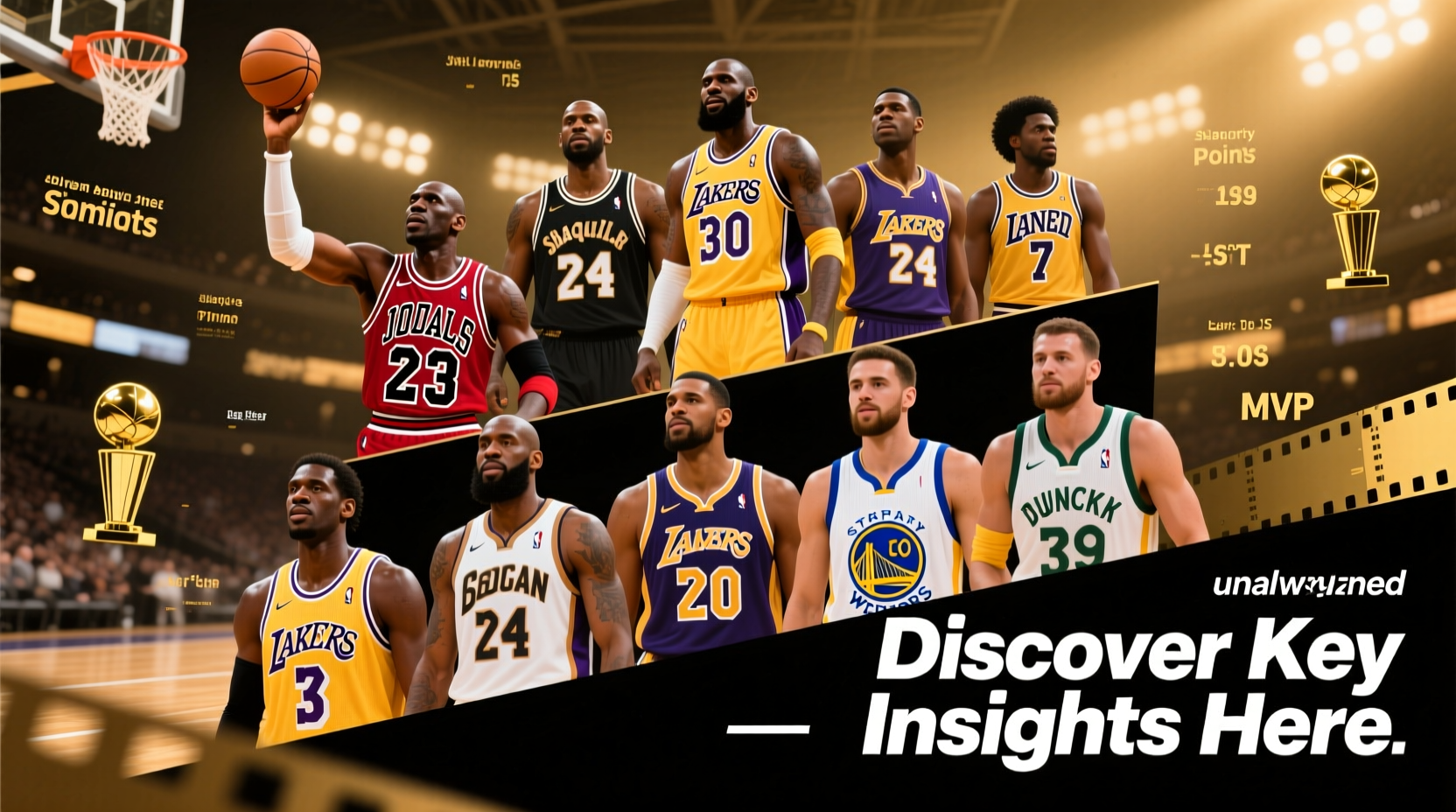
Ranking the best NBA players isn’t about a single stat line or one legendary season. True greatness is measured across multiple dimensions:
- Championships won – Success at the highest level under pressure.
- Individual awards – MVPs, All-NBA selections, Defensive Player of the Year honors.
- Career longevity – Sustained excellence over a decade or more.
- Impact on teammates – Elevating those around them, not just personal stats.
- Cultural influence – Shaping how the game is played, marketed, and perceived globally.
No player excels equally in every category, but the all-time greats dominate several. For instance, Michael Jordan wasn’t just a scorer—he transformed defense into offense and made winning a psychological expectation.
Top 5 Greatest NBA Players of All Time
While rankings vary, consensus among analysts, former players, and historians narrows the elite tier to a handful of names. Below is a widely accepted top five, with key reasons for their inclusion.
- Michael Jordan – 6× NBA Champion, 5× MVP, 14× All-Star. Revolutionized global popularity of the NBA.
- LeBron James – 4× NBA Champion, 4× MVP, all-time leading scorer. Unmatched versatility and sustained peak performance.
- Kareem Abdul-Jabbar – 6× NBA Champion, 6× MVP, 19× All-Star. Most points scored in NBA history (38,387).
- Magic Johnson – 5× NBA Champion, 3× MVP, revolutionized point guard play with size and vision.
- Larry Bird – 3× NBA Champion, 3× MVP, iconic rivalries that revitalized the league in the 1980s.
Each of these players led their teams to multiple titles while also defining eras. Jordan’s dominance in the 1990s set a standard for excellence; LeBron’s ability to excel across three decades showcases unprecedented physical and mental durability.
Statistical Comparison of Legends
| Player | NBA Championships | MVP Awards | Points (Career) | All-Star Appearances |
|---|---|---|---|---|
| Michael Jordan | 6 | 5 | 32,292 | 14 |
| LeBron James | 4 | 4 | 38,652 | 19 |
| Kareem Abdul-Jabbar | 6 | 6 | 38,387 | 19 |
| Magic Johnson | 5 | 3 | 17,707 | 12 |
| Larry Bird | 3 | 3 | 21,791 | 12 |
Note: While Magic and Bird have fewer total points, their impact came during a shorter career span and in an era with a slower pace. Their assist-to-turnover ratios and team success remain benchmarks.
Modern Era Contenders and Rising Legacies
In recent years, players like Stephen Curry, Kobe Bryant, and Tim Duncan have entered the GOAT conversation. Though not always ranked above the top five, their contributions are undeniable.
- Stephen Curry – Transformed basketball with long-range shooting, leading the Warriors to four titles in eight years. His offensive influence is arguably the most significant since Jordan.
- Kobe Bryant – Five-time champion with the Lakers, known for relentless work ethic and clutch performances. Embodied the \"Mamba Mentality\" that inspired a generation.
- Tim Duncan – Fundamental brilliance, two-time MVP, five-time champion. Coached by Gregg Popovich, he was the anchor of one of the most consistent dynasties in sports.
“Kobe had the talent of Jordan and the dedication of Jordan—but in a different era, where the game demanded more athleticism.” — Shaquille O’Neal, Hall of Fame Center
Duncan, often underrated due to his quiet demeanor, maintained a career PER (Player Efficiency Rating) of 22.2—the highest among non-guards with at least 1,000 games played.
Mini Case Study: The 1998 Finals – Jordan’s Last Shot
One moment encapsulates Michael Jordan’s legacy: Game 6 of the 1998 NBA Finals. With 40 seconds left and the Bulls trailing by one, Jordan stole the ball from Karl Malone, drove downcourt, and hit a jumper over Bryon Russell with 5.2 seconds remaining. The shot sealed Chicago’s sixth title in eight years.
This wasn’t just a game-winner—it was the culmination of a career built on preparation, confidence, and execution under pressure. What makes this moment iconic is that it was his final shot as a Bull, symbolizing both closure and perfection.
Jordan averaged 33.5 PPG in that series, despite battling flu-like symptoms earlier in the playoffs (remember “The Flu Game”?). His ability to deliver when it mattered most cemented his reputation as the ultimate closer.
Expert Insight: How Coaches Evaluate Greatness
Beyond fan sentiment, coaches and executives use nuanced criteria to assess elite players.
“Greatness isn’t just what you do when things go right. It’s how you respond when your shot isn’t falling, when the defense knows every move. That’s when leaders emerge.” — Gregg Popovich, Head Coach, San Antonio Spurs
Popovich emphasizes intangibles: communication, defensive focus, and decision-making in critical moments. These qualities explain why players like Duncan and Magic rank so highly among insiders, even if their highlight reels aren’t as flashy.
Frequently Asked Questions
Is LeBron James the GOAT?
Many argue yes, citing his all-around game, longevity, and scoring record. However, others believe Jordan’s six-for-six championship record and cultural impact give him the edge. The answer often depends on whether you prioritize versatility and durability (LeBron) or perfection in the spotlight (Jordan).
Why isn’t Wilt Chamberlain higher on the list?
Wilt was statistically dominant—scoring 100 points in a single game and averaging 50 PPG in a season. But he won only two championships and struggled in crucial playoff moments against Bill Russell. Individual stats aside, team success weighs heavily in legacy evaluations.
Can current players surpass Jordan or LeBron?
Potential candidates include Nikola Jokić and Giannis Antetokounmpo, both multi-MVP winners. However, surpassing legends requires not just excellence, but sustained dominance across a decade and multiple titles. No active player has yet matched that scale, though the next era could shift the balance.
Actionable Checklist: How to Analyze Player Greatness
Use this checklist to evaluate any player’s place in history:
- ✅ Count NBA championships and Finals performance
- ✅ Review MVP and All-NBA selections
- ✅ Assess peak seasons vs. career consistency
- ✅ Consider impact on teammates and team success
- ✅ Examine historical context—pace of play, competition level, rule changes
- ✅ Factor in cultural influence and media presence
Conclusion: Defining Greatness Beyond the Court
The best NBA players of all time aren’t defined solely by numbers—they changed how the game is played, inspired millions, and elevated the sport globally. Whether it’s Jordan’s flawless execution, LeBron’s athletic mastery, or Kareem’s skyhook that never aged, each legend brought something irreplaceable.
As new stars emerge, the conversation will continue evolving. But the foundation remains: greatness is earned through excellence, resilience, and legacy. Understanding these players’ journeys offers more than trivia—it reveals what it takes to achieve lasting impact.




 浙公网安备
33010002000092号
浙公网安备
33010002000092号 浙B2-20120091-4
Comments
No comments yet. Why don't you start the discussion?