
In times of crisis, a single number can mean the difference between life and death. Today, dialing 911 is second nature for millions across North America when help is needed immediately. But this universal emergency number wasn’t always in place. Before its adoption, reaching police, fire, or medical services required knowing multiple local numbers—a delay that often proved fatal. The creation of 911 revolutionized public safety by providing a simple, consistent way to summon emergency assistance. Its story is one of innovation, collaboration, and urgent necessity.
The Pre-911 Era: Chaos in Emergency Response
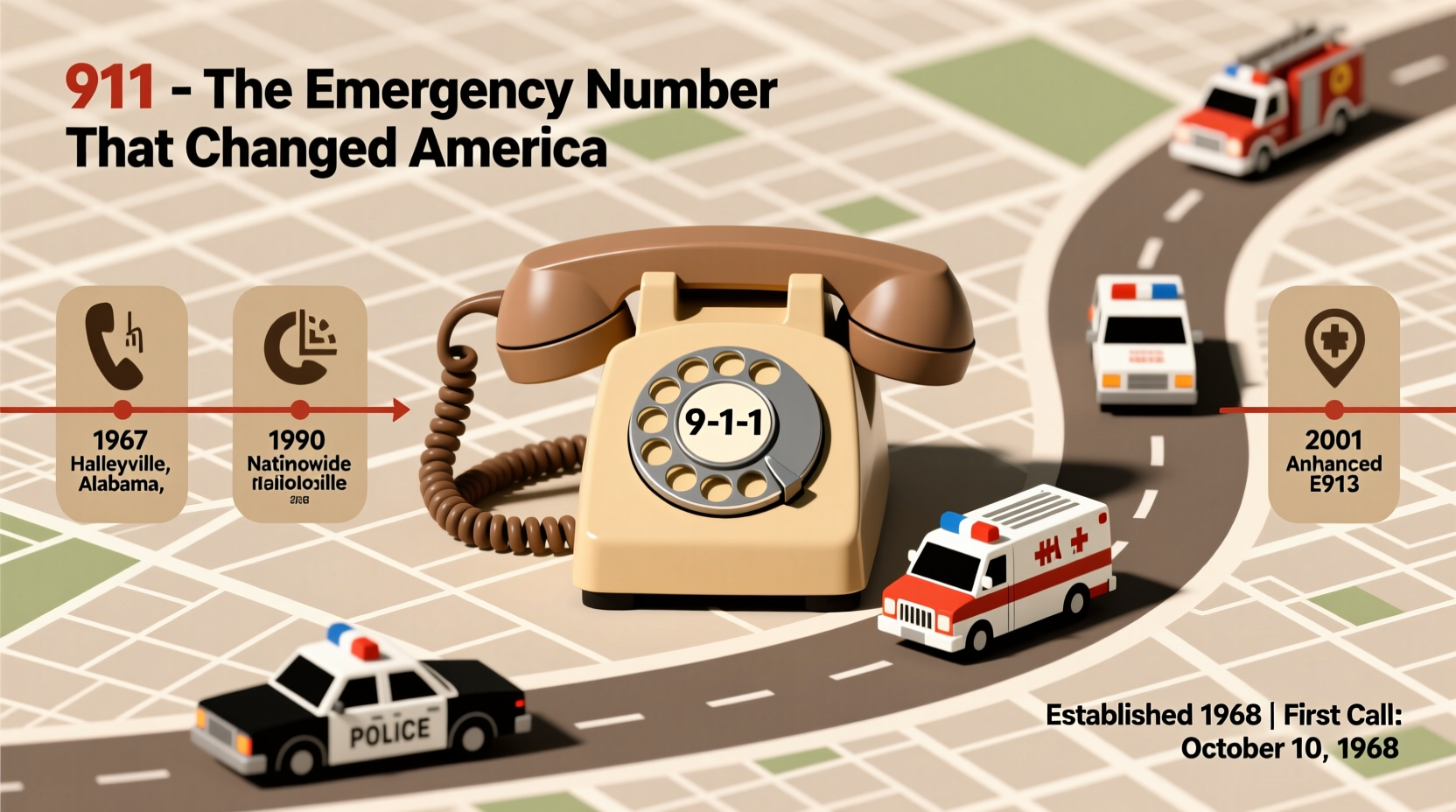
Prior to the establishment of a unified emergency number, contacting help was anything but straightforward. In the early 20th century, individuals had to look up specific phone numbers for police, fire departments, or ambulance services—numbers that varied from town to town and were not widely memorized. In rural areas, access was even more limited, sometimes requiring a call to a central switchboard operator who would then manually connect the caller to the appropriate service.
This fragmented system created dangerous delays. A 1957 Federal Communications Commission (FCC) report highlighted growing public concern over the lack of a standardized emergency contact method. In densely populated cities like New York, callers might have to remember different numbers for each borough. During emergencies, confusion compounded stress, and precious seconds were lost searching for the right number.
“Before 911, getting help was a game of chance. If you didn’t know the right number—or if lines were busy—you were on your own.” — Dr. Robert Winnet, Historian of Telecommunications Policy
The Birth of 911: A National Solution Emerges
The idea of a single national emergency number gained momentum in the 1960s. The catalyst came from an unlikely source: the President's Commission on Law Enforcement and Administration of Justice, which released a landmark report in 1967 recommending a “single, easy-to-remember number” for all emergency services.
Shortly after, the FCC partnered with AT&T to develop a nationwide system. After extensive research, AT&T announced in 1968 that it would implement 911 as the official emergency number across the United States. The choice of 911 was deliberate:
- Short and memorable – Easy to recall under stress.
- Compatible with existing phone systems – Worked efficiently with rotary dials, minimizing misdialing.
- Not already in use – Unlike 411 (information) or 611 (repair service), 911 had no prior assignment.
- Nationally available – Could be routed through the North American Numbering Plan without conflict.
The first 911 call was made on February 16, 1968, in Haleyville, Alabama. Speaker of the House Rankin Fite placed the historic call from the city’s police station to U.S. Representative Tom Bevill at the nearby law enforcement center. Though symbolic, the event marked the beginning of a new era in emergency response.
Implementation and Expansion Across the U.S.
Rolling out 911 nationwide was neither instantaneous nor uniform. While AT&T committed to supporting the system, actual implementation depended on local governments, telephone companies, and emergency service providers. By the mid-1970s, only a fraction of Americans had access to 911 service.
A major turning point came with the development of Enhanced 911 (E911) in the 1980s and 1990s. This upgrade allowed dispatchers to automatically identify a caller’s phone number and location, dramatically improving response times—especially for mobile callers. The integration of computer-aided dispatch (CAD) systems further streamlined coordination between emergency agencies.
By the early 2000s, 911 coverage reached over 93% of the U.S. population. Today, the system handles more than 240 million calls annually, with continuous improvements focused on text-to-911 capabilities, Next Generation 911 (NG911) digital infrastructure, and integration with smart devices.
Why 911? The Logic Behind the Digits
The selection of \"911\" was not arbitrary. AT&T evaluated several options before settling on this combination. Here’s a breakdown of why other numbers were rejected:
| Candidate Number | Reason for Rejection |
|---|---|
| 999 | Already used in the UK; caused confusion on international lines. |
| 111 | Too similar to long-distance prefixes; prone to accidental dialing. |
| 000 | Required multiple zero presses on rotary phones; inefficient. |
| 411 | Already assigned to directory assistance. |
911 struck the ideal balance: short, distinct, and technically feasible. On rotary phones, “9” took the longest to return to position, so placing it first minimized the chance of misdialing. The “1” in the middle acted as a separator, signaling that this was not a standard area code (which at the time never used 1 as a middle digit).
Global Perspectives: 911 vs. Other Emergency Numbers
While 911 is iconic in the U.S. and Canada, most of the world uses different emergency numbers. Europe predominantly uses **112**, a pan-European standard accessible even on locked phones and supported by all GSM carriers. The United Kingdom uses **999**, the world’s oldest emergency number, introduced in London in 1937 after a tragic house fire prompted reform.
Despite differences, many countries now support dual access. For example, both 911 and 112 work interchangeably in the U.S., Canada, and parts of Latin America due to harmonization efforts. Smartphones today are programmed to recognize either number regardless of location.
Emergency Numbers Around the World
- United States & Canada: 911
- European Union: 112 (also accepts 911 on mobiles)
- United Kingdom: 999 or 112
- Australia: 000
- India: 112 (unified number since 2016)
- China: 110 (police), 120 (ambulance)
Real-World Impact: A Case Study in Cincinnati
In 1974, Cincinnati became one of the first major cities to fully implement E911. Before the upgrade, emergency response times averaged 12 minutes. After integrating automatic location identification (ALI) and centralized dispatch centers, average response dropped to under six minutes.
One notable incident in 1977 demonstrated the system’s value: a child locked inside a hot car during summer heat called 911 using a neighbor’s phone. Dispatchers quickly identified the address via ALI and sent paramedics within 90 seconds. The child was rescued with mild dehydration but no lasting harm. City officials credited the speed of response directly to the reliability of the 911 infrastructure.
Frequently Asked Questions
Can I text 911?
Yes, in many areas—but only if voice calling isn't safe or possible. Text-to-911 is not available everywhere, and response may be slower. Always call when you can.
What happens if I accidentally dial 911?
Stay on the line and explain it was a mistake. Hanging up may prompt dispatchers to send officers to your location to ensure safety.
Does 911 work on cell phones?
Yes. Modern wireless networks transmit location data to Public Safety Answering Points (PSAPs). However, accuracy varies—always provide your exact location when possible.
How to Use 911 Responsibly: A Quick Checklist
To ensure the 911 system remains effective for everyone, follow these guidelines:
- Call only for true emergencies—life-threatening situations, active crimes, or fires.
- Stay calm and speak clearly when connected to the dispatcher.
- Provide your location, nature of emergency, and callback number.
- Do not hang up until instructed by the operator.
- Teach children how and when to use 911—role-play scenarios at home.
- Avoid prank calls—misuse of 911 is a criminal offense in most states.
Conclusion: A Lifeline That Evolved With Society
The story of 911 is more than a footnote in telecommunications history—it’s a testament to how public need can drive innovation. From its humble beginnings in a small Alabama town to a cornerstone of modern emergency response, 911 has saved countless lives through simplicity and reliability. As technology advances, the system continues to adapt, embracing digital communication while staying rooted in its core mission: connecting people to help in their darkest moments.




 浙公网安备
33010002000092号
浙公网安备
33010002000092号 浙B2-20120091-4
Comments
No comments yet. Why don't you start the discussion?