
The question of whether a hot dog qualifies as a sandwich has sparked fierce debates across dinner tables, sports arenas, and even academic circles. At first glance, the logic seems simple: meat between bread equals sandwich. But dig deeper, and the argument becomes far more nuanced. Culinary traditions, structural integrity, legal definitions, and cultural perception all play roles in why many experts and everyday eaters alike insist: a hot dog is not a sandwich.
This isn’t just semantics—it’s about how we define food categories and what those definitions mean for identity, regulation, and enjoyment. From baseball stadiums to Michelin-starred kitchens, the hot dog occupies a unique space that resists easy classification. Understanding why it stands apart from sandwiches reveals more than grammar; it uncovers how culture shapes our relationship with food.
The Sandwich Definition Problem
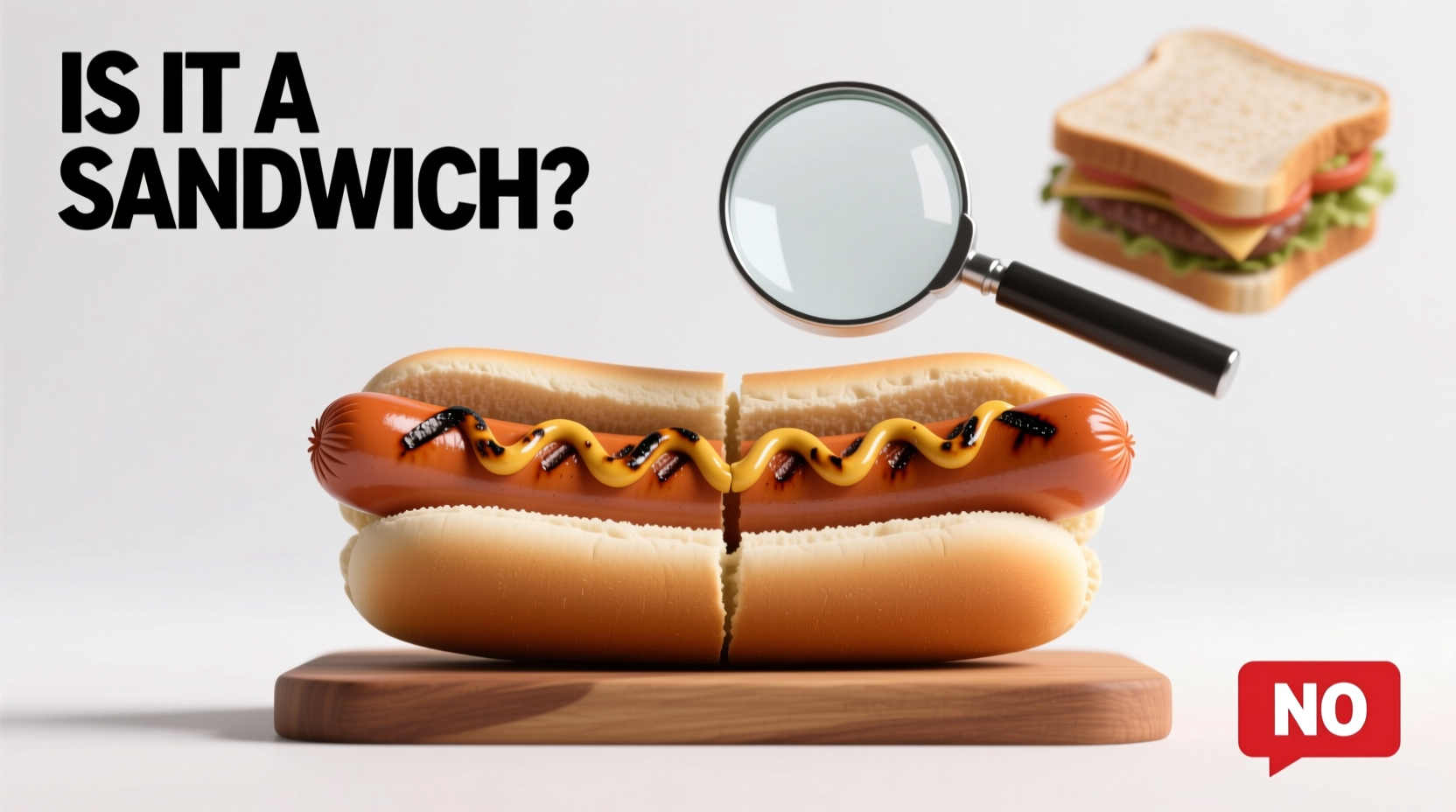
To determine whether a hot dog is a sandwich, we must first agree on what a sandwich actually is. Merriam-Webster defines a sandwich as “two or more slices of bread or a split roll having a filling in between.” By this definition, a hot dog—meat nestled in a split roll—technically qualifies.
But language doesn’t operate in a vacuum. In practice, people use words based on context, expectation, and shared understanding. While linguistically a hot dog might fit under the broad umbrella of \"sandwich,\" culturally it functions differently. It’s served, discussed, and consumed as its own distinct category—much like how a taco isn’t considered a type of burrito despite both being handheld filled foods.
Structural Differences Matter
One of the strongest arguments against classifying a hot dog as a sandwich lies in its structure. Traditional sandwiches are built with two separate pieces of bread or a sliced open bun placed flat. A hot dog uses a single piece of bread, split but still connected along one edge. This continuous base provides different textural support and eating mechanics.
Unlike a deli sandwich where ingredients sit between layers, a hot dog’s fillings are cradled within a U-shaped vessel. The experience of biting into a hot dog—where the bottom bun supports the sausage while the top gently folds over—is fundamentally different from the layered compression of a club or turkey sandwich.
Cultural Identity and Culinary Tradition
A hot dog carries symbolic weight beyond its ingredients. It’s tied to American pastimes: baseball games, backyard barbecues, Nathan’s Hot Dog Eating Contest. It has regional variations—the Chicago-style dog, the Detroit Coney, the New York street cart frank—that are celebrated as local icons. These aren’t sandwich variations; they’re entire culinary subcultures.
Consider this: if someone orders a “sandwich” at a ballpark, they expect a hoagie, burger, or wrap—not a hot dog. Menus consistently separate hot dogs from sandwiches, reinforcing their categorical distinction. Even nutrition labels often list them separately, acknowledging consumer expectations.
“A hot dog is its own entity. To call it a sandwich is like calling a poem a paragraph. Technically true, but misses the point.” — Dr. Helen Torres, Food Anthropologist, University of California
Legal and Regulatory Recognition
The U.S. Department of Agriculture (USDA) treats hot dogs and sandwiches differently in labeling and inspection standards. Hot dogs fall under processed meat products, regulated by specific guidelines for emulsification, casing, and sodium content. Sandwiches, when pre-packaged, follow different safety protocols based on ingredient combinations and shelf stability.
In 2015, the USDA briefly caused controversy when a document referred to hot dogs as “a type of sandwich,” prompting backlash from vendors and food historians. The phrasing was later clarified, emphasizing that while structurally similar, hot dogs are recognized as a distinct product category.
The Great Debate: Key Perspectives
The hot dog vs. sandwich debate isn’t monolithic. Different schools of thought offer compelling arguments from various angles:
- Linguistic Purists: Argue that if it fits the dictionary definition, it’s a sandwich. Language evolves through usage, and broad categories should include edge cases.
- Culinary Traditionalists: Maintain that cooking method, serving style, and cultural role matter more than technical construction.
- Structuralists: Focus on the physical form—continuous bun vs. separated bread—as a defining factor.
- Pragmatists: Suggest that categorization should serve practical purposes, such as menu design or nutritional tracking, not philosophical purity.
| Perspective | View on Hot Dogs | Key Reasoning |
|---|---|---|
| Linguistic | Yes, it's a sandwich | Fits dictionary criteria |
| Culinary | No, it's its own category | Different preparation and tradition |
| Structural | No, due to connected bun | Single-piece bread changes function |
| Regulatory | Treated separately | USDA and FDA classify differently |
| Cultural | Symbolically distinct | Associated with unique rituals and identity |
Mini Case Study: The Ballpark Menu Dilemma
In 2022, a minor-league baseball team in Ohio redesigned its concession menu using AI-generated categorization. The system grouped hot dogs under “Sandwiches” based on ingredient analysis. Fans immediately noticed—and protested. Social media lit up with memes: “Next they’ll say popcorn is a grain bowl.”
Within 48 hours, the team reverted the change and issued an apology. “We underestimated how strongly people identify the hot dog as its own thing,” said the stadium manager. The incident highlighted that food classification isn’t just logistical—it’s emotional.
Expert Consensus and Common Sense
While no universal rule settles the debate, a growing consensus among food professionals leans toward separation. Chefs, menu engineers, and cultural critics increasingly treat the hot dog as a parallel category to sandwiches, much like burgers or wraps.
Burgers, interestingly, face a similar but less contentious debate. They use a split round bun and contain a single main ingredient. Yet few argue burgers aren’t sandwiches—largely because they evolved from sandwich culture. Hot dogs, however, originated as street food with European roots (particularly German sausages in buns), carving their own path early on.
Checklist: How to Classify a Handheld Food Item
Use this practical checklist to assess whether a dish belongs in the sandwich category:
- Is the bread composed of two separate pieces or a fully split roll?
- Are the ingredients layered horizontally between bread surfaces?
- Is it commonly referred to as a sandwich in everyday conversation?
- Does it appear under “Sandwiches” on standard menus?
- Was it developed within sandwich-making culinary traditions?
If three or more answers are “yes,” it’s likely perceived as a sandwich. The hot dog typically scores only one or two.
Frequently Asked Questions
Isn’t everything with filling between bread a sandwich?
Not necessarily. By that logic, tacos, gyros, and burritos would also be sandwiches. Language and culture create functional categories that go beyond literal structure. We group foods based on how they’re made, served, and understood—not just their physical components.
What about a lobster roll or a bánh mì?
Lobster rolls use a hot dog-style bun and are often considered sandwiches because they evolved from New England seafood traditions that align with sandwich service. Bánh mì, though served in a split baguette, is recognized as a distinct Vietnamese dish. Cultural origin matters in classification.
Do dictionaries settle this debate?
Dictionaries reflect usage, not authority. While some define sandwiches broadly enough to include hot dogs, they also note that common usage distinguishes them. Definitions evolve, but so does cultural intuition—and both are valid.
Conclusion: Respecting Categories Without Rigidity
The hot dog isn’t a sandwich—not because of rigid rules, but because of shared understanding. It occupies its own culinary niche, shaped by history, structure, and tradition. Recognizing this doesn’t diminish the sandwich; it enriches our appreciation for food diversity.
Debates like this remind us that food is more than sustenance. It’s identity, memory, and community. Whether you side with the linguists or the traditionalists, the conversation itself reflects a deep cultural engagement with what we eat.




 浙公网安备
33010002000092号
浙公网安备
33010002000092号 浙B2-20120091-4
Comments
No comments yet. Why don't you start the discussion?