
It’s July. The sun is blazing, humidity hangs thick in the air, and yet you’re reaching for a sweater. While most people are complaining about the heat, you’re shivering at your desk or bundling up under blankets at night. If this sounds familiar, you're not imagining things—your body may be sending signals that something deeper is going on. Persistent feelings of coldness, especially when others around you feel warm, often point to underlying metabolic or physiological imbalances.
The human body maintains a core temperature of approximately 98.6°F (37°C) through a complex system of thermoregulation. When metabolism slows, hormone levels shift, or blood flow is compromised, your internal thermostat can go awry. This article explores the most common metabolic and systemic reasons why you might feel cold all the time—even during summer months—and offers actionable insights to help identify, understand, and address the root causes.
Hypothyroidism: When Your Metabolism Runs Too Slow
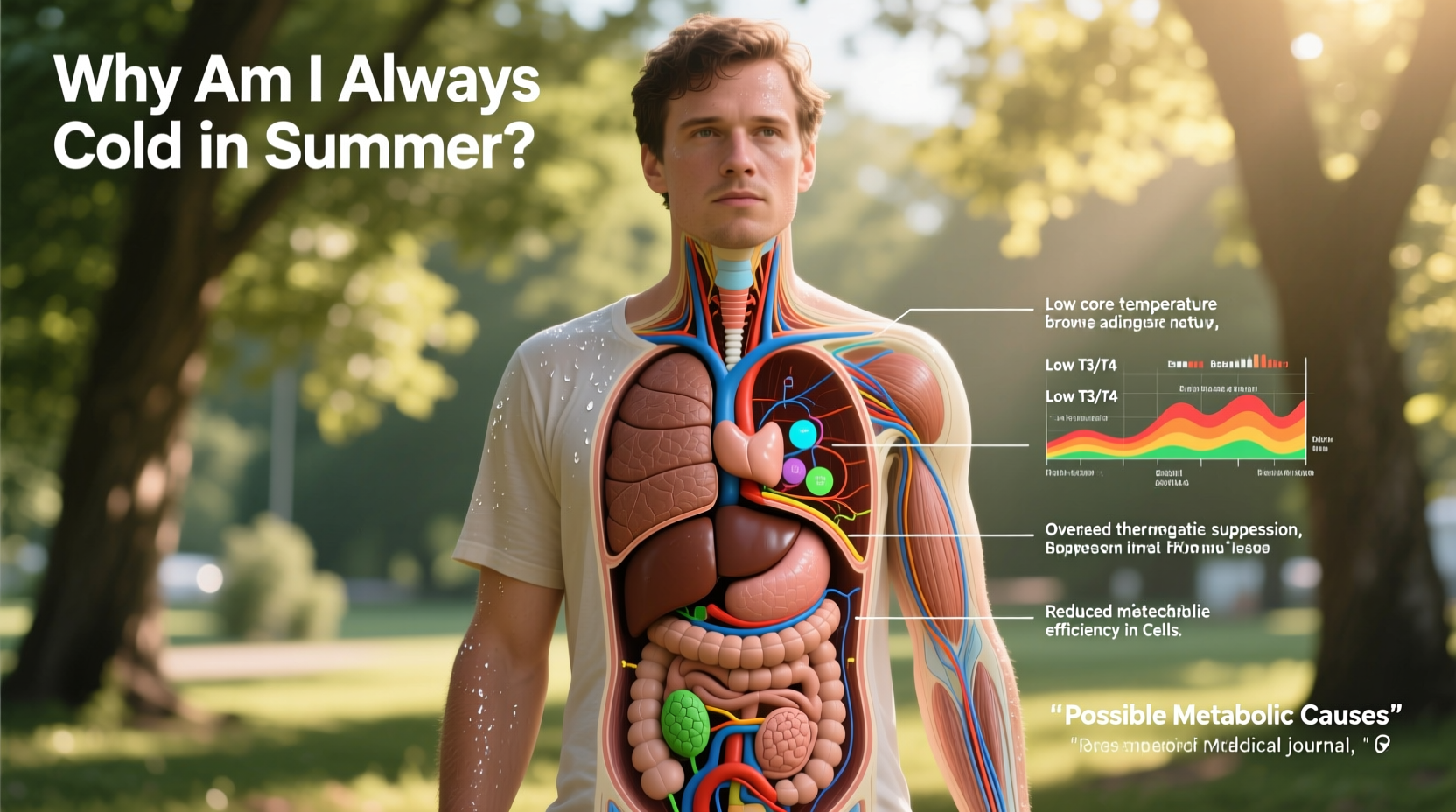
The thyroid gland, located in your neck, produces hormones that regulate your metabolic rate—the speed at which your body converts food into energy. When the thyroid is underactive (a condition known as hypothyroidism), your metabolism slows down, leading to reduced heat production. This makes you more sensitive to cold temperatures regardless of the weather.
Hypothyroidism affects nearly 5% of the U.S. population, with women being far more likely to develop it than men. Common symptoms include fatigue, weight gain, dry skin, hair loss, constipation, depression, and—significantly—a persistent feeling of coldness, particularly in the hands and feet.
Elevated TSH levels typically indicate that your pituitary gland is trying to stimulate an underperforming thyroid. Left untreated, hypothyroidism can lead to cardiovascular issues, infertility, and cognitive decline. However, it's highly manageable with synthetic thyroid hormone replacement (like levothyroxine), proper nutrition, and regular monitoring.
Anemia and Iron Deficiency: Oxygen Starvation and Cold Sensitivity
Iron is essential for producing hemoglobin, the protein in red blood cells that carries oxygen from your lungs to tissues throughout your body. When iron levels drop, your body can't deliver sufficient oxygen, impairing cellular respiration and energy production. This inefficiency reduces heat generation, making you feel cold—especially in extremities.
Anemia due to iron deficiency is one of the most common nutritional deficiencies worldwide, affecting over 25% of people globally. It’s especially prevalent among menstruating women, pregnant individuals, vegetarians, and those with gastrointestinal disorders like celiac disease or Crohn’s.
Beyond cold hands and feet, signs of iron deficiency include pale skin, shortness of breath, dizziness, brittle nails, and difficulty concentrating. A simple blood test measuring serum ferritin (stored iron), hemoglobin, and transferrin saturation can confirm diagnosis.
“Patients often come in complaining they’re freezing all the time. Once we correct their iron levels, many report feeling warmer within weeks.” — Dr. Lena Patel, Internal Medicine Specialist
Treatment involves dietary changes—increasing intake of heme iron from red meat, poultry, and fish—or supplementation when needed. Pairing non-heme iron sources (like spinach or lentils) with vitamin C-rich foods enhances absorption. However, iron supplements should only be taken under medical supervision, as excess iron can damage organs.
Poor Circulation and Raynaud’s Phenomenon
Your circulatory system delivers warm blood from your core to your limbs. When circulation is impaired, extremities receive less warmth, leading to chronic coldness in fingers and toes. While occasional cold hands are normal, constant coldness could signal vascular issues.
One specific condition, Raynaud’s phenomenon, causes small arteries in the fingers and toes to spasm excessively in response to cold or stress. During an episode, affected areas turn white, then blue, and finally red as circulation returns. Though primary Raynaud’s occurs on its own, secondary Raynaud’s can be linked to autoimmune diseases like lupus or scleroderma.
Other contributors to poor peripheral circulation include:
- Sedentary lifestyle
- Smoking (constricts blood vessels)
- Diabetes (can cause peripheral neuropathy)
- Peripheral artery disease (PAD)
| Cause | Key Symptoms | Diagnostic Test |
|---|---|---|
| Hypothyroidism | Cold intolerance, fatigue, weight gain, dry skin | TSH, Free T4 |
| Iron Deficiency Anemia | Pallor, weakness, cold extremities, fatigue | Ferritin, Hemoglobin, CBC |
| Raynaud’s Phenomenon | Color changes in fingers/toes, numbness, pain | Clinical history, capillaroscopy |
| Low Muscle Mass | Reduced heat production, easy chilling | Body composition analysis |
| Chronic Stress / Adrenal Fatigue | Low energy, cold sensitivity, sleep disruption | Cortisol testing (controversial) |
Low Body Weight and Muscle Mass: Less Furnace Power
Muscle tissue is metabolically active—it burns calories and generates heat even at rest. Individuals with low body fat or muscle mass have less insulation and fewer heat-producing cells, making them more susceptible to feeling cold.
This is particularly common among people recovering from eating disorders, older adults experiencing sarcopenia (age-related muscle loss), or those on very restrictive diets. Athletes in weight-class sports may also experience this if they maintain extremely low body fat percentages.
Inadequate caloric intake forces the body into energy-conservation mode, lowering basal metabolic rate. The result? Reduced internal heat, sluggish circulation, and a constant craving for warmth—even in hot environments.
Rebuilding healthy weight and muscle requires balanced nutrition rich in protein, healthy fats, and complex carbohydrates. For those struggling with disordered eating patterns, working with a registered dietitian or therapist is crucial for sustainable recovery.
Chronic Stress and Adrenal Function
Long-term stress impacts the hypothalamic-pituitary-adrenal (HPA) axis, which governs cortisol release and influences metabolism, immune function, and energy balance. While “adrenal fatigue” is not recognized as a medical diagnosis by mainstream endocrinology, prolonged stress can dysregulate hormonal systems involved in thermoregulation.
Some individuals under chronic stress report symptoms like low body temperature, fatigue, salt cravings, and cold intolerance. These may stem from disrupted thyroid function, altered glucose metabolism, or reduced cardiac output—all of which affect how efficiently your body generates and distributes heat.
Managing stress through mindfulness, adequate sleep, physical activity, and professional support can help restore balance. Monitoring heart rate variability (HRV) or working with a functional medicine practitioner may provide additional insights into autonomic nervous system health.
Mini Case Study: Sarah’s Summer Chill
Sarah, a 32-year-old graphic designer, began noticing she was the only one wearing long sleeves in her office during a 90°F summer day. Coworkers teased her about the thermostat, but she genuinely felt icy. Over several months, she also gained 10 pounds without changing her diet, felt constantly tired, and struggled with dry skin and hair thinning.
After visiting her primary care physician, a blood panel revealed elevated TSH and low free T4—clear markers of hypothyroidism. She started on levothyroxine and, within six weeks, reported feeling warmer, more energetic, and mentally sharper. Her sensitivity to cold decreased significantly, and she no longer needed extra layers indoors.
Sarah’s case illustrates how subtle symptoms can accumulate before a diagnosis is made. Cold intolerance was her earliest clue—but one easily dismissed until other signs emerged.
Action Plan: What You Can Do Now
If you're consistently cold despite warm surroundings, don’t ignore it. Use this checklist to investigate potential causes and take proactive steps:
📋 Metabolic Coldness Checklist- Track your symptoms for two weeks: note coldness, fatigue, weight changes, skin/hair issues.
- Schedule a blood test: request TSH, free T4, ferritin, hemoglobin, and complete blood count (CBC).
- Assess your diet: are you consuming enough iron, protein, iodine, and calories?
- Evaluate lifestyle factors: sedentary habits, smoking, stress levels, sleep quality.
- Check medication side effects: some antidepressants, beta-blockers, and migraine drugs can lower body temperature.
- Monitor menstrual cycles: heavy periods increase risk of iron deficiency.
- Consider environmental exposure: prolonged AC use may exacerbate perception of cold.
Frequently Asked Questions
Can anxiety make me feel cold?
Yes. Anxiety triggers the sympathetic nervous system, causing blood vessel constriction (vasoconstriction) in the extremities to prioritize core organs. This redirection of blood flow can leave hands and feet feeling cold, even if ambient temperature is warm. Hyperventilation during panic attacks may also alter blood pH and contribute to chills.
Is it normal to feel colder as I age?
To some extent, yes. Aging leads to thinner skin, reduced subcutaneous fat, slower metabolism, and diminished circulation—all of which impair thermal regulation. However, severe or sudden cold intolerance is not a normal part of aging and warrants medical evaluation.
Can dehydration cause cold sensations?
Indirectly, yes. Dehydration reduces blood volume, which can impair circulation and make it harder for your body to maintain warmth. Staying well-hydrated supports optimal blood flow and metabolic function.
Conclusion: Listen to Your Body’s Signals
Feeling cold when others are sweating isn’t just inconvenient—it can be a meaningful physiological signal. From underactive thyroid glands to nutrient deficiencies and circulatory challenges, multiple metabolic pathways influence your body’s ability to generate and retain heat. Ignoring persistent coldness risks missing treatable conditions that affect not only comfort but long-term health.
Start by paying attention to patterns. Are you frequently layering up while others aren’t? Do you have accompanying symptoms like fatigue, paleness, or weight changes? These clues matter. Request appropriate lab work, optimize nutrition, stay active, and consult a healthcare provider who listens.




 浙公网安备
33010002000092号
浙公网安备
33010002000092号 浙B2-20120091-4
Comments
No comments yet. Why don't you start the discussion?